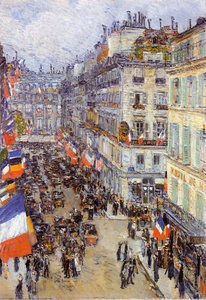
Childe Hassam portréja

A 100 legnevezesebb Childe Hassam festmény, egy galériaválaszték

Frissítve: november 2026 · rangsorolva népszerűségi pontszámunk alapján (minden mű keresései, látogatásai és megrendelései alapján) · 796 mű Childe Hassam alkotása a katalógusunkban

Röviden

Childe Hassam hagyatékából a leghíresebb alkotás Naplement a tengeren (1911). Röviddel ezután követik őket Celia thaxter's Garden, Isles of Shoals, Maine (1890) és end of the trolley line, oak park, illinois (1893). Katalógusunkban 796 mű található Childe Hassam alkotótól; a galéria megőrizte a világ által leginkább csodált 100 darabot, melyeket a dátummal, a múzeummal és a történetükkel együtt mutatunk be.

1859 – 1935, Boston Impressionism A legtöbb mű: Smithsonian American Art Museum

Childe Hassam legjobb 10 festménye: a galéria válogatása

1
Naplement a tengeren (1911) (1889) -ja Childe Hassam

Naplement a tengeren

1911 · Olajfestmény vászonon

Frederick Childe Hassam 1911-ben alkotott meg ezt a lenyűgöző tájképet, mely a nyugodt tenger és a tűzpiros égbolt harmonikus keverékét ábrázolja. A "Naplemente a tengeren" egy amerikai impresszionista remekmű, amely azonnal elvarázsolja a nézőt a tengerparti szépség és a pillanatnyi fények varázslatos világába. Hassam nem egyszerűen csak egy tájat festett; ő az érzéseket is megfogadta, a nyugalom, a békésesség, talán egy csendes melankólia pedig áthatja ezt a művet.

2
Celia thaxter's Garden, Isles of Shoals, Maine (1890) (1889) -ja Childe Hassam

Celia thaxter's Garden, Isles of Shoals, Maine

1890 · Oil On Canvas · Metropolitan Művészeti Múzeum, New York

In the delicate dance of Frederick Childe Hassam’s Celia Thaxter’s Garden, Isles of Shoals, Maine, we find more than a mere landscape; we encounter a profound meditation on the ephemeral nature of beauty. Painted in 1890, this masterpiece serves as a luminous window into the American Impressionist movement, capturing a moment where the boundaries between nature and light seem to dissolve. The scene unfolds within a vibrant coastal sanctuary, where…

3
end of the trolley line, oak park, illinois (1893) (1889) -ja Childe Hassam

end of the trolley line, oak park, illinois

1893 · Oil On Canvas

To stand before End of the Trolley Line, Oak Park, Illinois is to step through a shimmering veil directly into the late nineteenth century. Frederick Childe Hassam has gifted us more than just a painting; he has preserved a perfect moment in time—a vibrant tableau of American daily life. The scene unfolds with an almost nostalgic sweetness, capturing the rhythm and gentle bustle of a small town center. One can…

4
Mount Vernon Street, Boston (1890) (1889) -ja Childe Hassam

Mount Vernon Street, Boston

1890 · Oil On Canvas

The Painting's Context and Significance Frederick Childe Hassam's Mount Vernon Street, Boston, painted in 1890, is a quintessential representation of American Impressionism. This oil on canvas painting captures the essence of life in Boston during the late 19th century, showcasing the city's architectural grandeur and the daily activities of its residents. The Scene Unfolds The painting depicts a bustling street scene with several people walking down the street, some carrying…

5
Outskirts of East Gloucester (1918) (1889) -ja Childe Hassam

Outskirts of East Gloucester

1918 · Oil On Canvas

To stand before Outskirts of East Gloucester is to step through a veil of time and place, transported to a moment of perfect, sun-drenched repose in early twentieth-century America. Frederick Childe Hassam, the master chronicler of American light, has gifted us more than just a painting; he offers an immersion into the very soul of a small, enduring community. This 1918 canvas captures that quintessential American dream—a place where life…

6
Woman Sellillng Flowers (1888) (1889) -ja Childe Hassam

Woman Sellillng Flowers

1888 · Oil On Canvas

To gaze upon Woman Selling Flowers is to step directly into the vibrant, sun-drenched heart of late nineteenth-century Paris. Frederick Childe Hassam has gifted us more than just a painting; he offers an immersive sensory experience—the scent of blossoms mingling with the murmur of a bustling street market. The composition centers on a figure of quiet dignity: a woman arrayed in a luminous white dress, her hair neatly gathered in…

7
Gloucester Harbor (1918) (1889) -ja Childe Hassam

Gloucester Harbor

1918 · Oil On Panel

To stand before this depiction of Gloucester Harbor is to be instantly transported to a sun-drenched afternoon in the late nineteenth or early twentieth century. Frederick Childe Hassam, master chronicler of American life, has gifted us more than just a painting; he has captured an atmosphere—a palpable sense of tranquil industry and leisurely grace. The scene unfolds across a vast expanse of water, dotted with at least thirteen vessels, each…

8
Winter Nightfall in the City (1889) (1889) -ja Childe Hassam

Winter Nightfall in the City

1889 · Oil On Canvas

To stand before Winter Nightfall in the City is to be instantly enveloped by the crisp, evocative breath of a bygone era. Frederick Childe Hassam, master chronicler of American life, has captured more than just a snowy afternoon; he has bottled the very energy of urban existence during the chill embrace of winter. The scene unfolds on a bustling city street, blanketed in pristine snow that seems to absorb and…

9
The Quai St. Michel (1888) (1889) -ja Childe Hassam

The Quai St. Michel

1888 · Oil On Canvas

To stand before The Quai St. Michel is to be instantly transported across the Atlantic, to the vibrant, sun-drenched thoroughfares of late nineteenth-century Paris. Frederick Childe Hassam, a master chronicler of American and European life, has captured more than just a street scene; he has bottled a fleeting moment of urban grace. Painted in 1888, this oil on canvas pulsates with the energy of a bustling city day. One’s eye…

10
Street Scene, Montmartre (1889) (1889) -ja Childe Hassam

Street Scene, Montmartre

1889 · Oil On Canvas

To stand before Street Scene, Montmartre is to be instantly transported across the Atlantic and back to the vibrant heart of late 19th-century Paris. Frederick Childe Hassam has gifted us more than just a painting; he has captured a fleeting breath of Parisian existence—a moment imbued with the gentle bustle and undeniable romance of an era past. The scene unfolds on a sun-dappled street, alive with the murmur of unseen…

A Childe Hassam válogatás folytatódik: 11 – 100

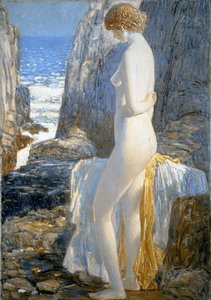
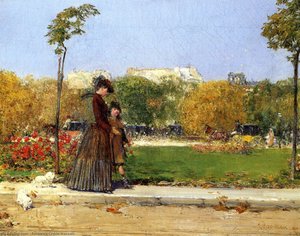
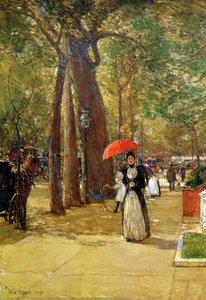
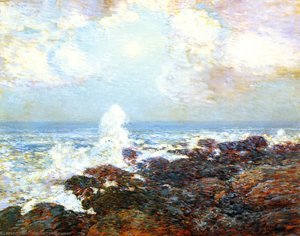
11Lower Manhattan (also known as Broad and Wall Streets) (1907) (1889) -ja Childe HassamLower Manhattan (also known as Broad and Wall Streets)1907 12Horticultural Building, World's Columbian Exposition, Chicago (1893) (1889) -ja Childe HassamHorticultural Building, World's Columbian Exposition, Chicago1893 13Nude, Appledore, Isle of Shoals (1913) (1889) -ja Childe HassamNude, Appledore, Isle of Shoals1913 · Kemper Museum of Contemporary Art 14Flags on Fifty-Seventh Street (1918) (1889) -ja Childe HassamFlags on Fifty-Seventh Street1918 15Montauk (1921) (1889) -ja Childe HassamMontauk1921 · Brooklyn Museum 16Mt. Beacon at Newburgh (1916) (1889) -ja Childe HassamMt. Beacon at Newburgh1916 17Elms, East Hampton, New York (1920) (1889) -ja Childe HassamElms, East Hampton, New York1920 18In the Park, Paris (1889) (1889) -ja Childe HassamIn the Park, Paris1889 19Laurel on the Ledges (1906) (1889) -ja Childe HassamLaurel on the Ledges1906 20Street Scene, Christmas Morning (1892) (1889) -ja Childe HassamStreet Scene, Christmas Morning1892 21Fifth avenue at Washington square Sun (1889) -ja Childe HassamFifth avenue at Washington square Sun 22Bastille Day, Boulevard Rochechouart, Paris (1889) -ja Childe HassamBastille Day, Boulevard Rochechouart, Paris 23Victory Day, May 1919 (1919) (1889) -ja Childe HassamVictory Day, May 19191919 24Duck Island (1906) (1889) -ja Childe HassamDuck Island1906 · Dallas Museum of Art 25Seascape - Isles of Shoals (1902) (1889) -ja Childe HassamSeascape - Isles of Shoals1902 · High Museum of Art 26the little pond, appledore (1890) (1889) -ja Childe Hassamthe little pond, appledore1890 · Art Institute of Chicago 27The Fourth of July, 1916 (also known as The Greatest Display of the American Flag Ever Seen in New York, Climax of the Preparedness Parade in May) (1916) (1889) -ja Childe HassamThe Fourth of July, 1916 (also known as The Greatest Display of the American Flag Ever Seen in New York, Climax of the Preparedness Parade in May)1916 · New York Historical Society 28Sunset on the Sea (1908) (1889) -ja Childe HassamSunset on the Sea1908 29The Sonata (1893) (1889) -ja Childe HassamThe Sonata1893 · Nelson-Atkins Múzeum 30Late Afternoon (also known as Sunset) (1903) (1889) -ja Childe HassamLate Afternoon (also known as Sunset)1903 31red cross drive, may (1918) (1889) -ja Childe Hassamred cross drive, may1918 32The Spanish Steps, Rome (1897) (1889) -ja Childe HassamThe Spanish Steps, Rome1897 33Early Evening, After Snowfall (1906) (1889) -ja Childe HassamEarly Evening, After Snowfall1906 34Spring in Central Park (also known as Springtime) (1898) (1889) -ja Childe HassamSpring in Central Park (also known as Springtime)1898 35The Goldfish Window (1916) (1889) -ja Childe HassamThe Goldfish Window1916 · Currier Gallery of Art 36Isle of Shoals, Moonlight (1890) (1889) -ja Childe HassamIsle of Shoals, Moonlight1890 37Street Scene with Hansom Cab (1887) (1889) -ja Childe HassamStreet Scene with Hansom Cab1887 38Washington Arch, Spring (1893) (1889) -ja Childe HassamWashington Arch, Spring1893 · The Phillips Collection 39World's Fair, Chicago (1889) -ja Childe HassamWorld's Fair, Chicago 40Horse Drawn Cabs at Evening, New York (1889) -ja Childe HassamHorse Drawn Cabs at Evening, New York 41At the Grand Prix in Paris (1889) -ja Childe HassamAt the Grand Prix in ParisNational Gallery of Art 42The Butterfly (1902) (1889) -ja Childe HassamThe Butterfly1902 · Huntington Museum of Art 43Havana (1895) (1889) -ja Childe HassamHavana1895 44Untitled (Study for 'Bathers') (1902) (1889) -ja Childe HassamUntitled (Study for 'Bathers')1902 · Portland Art Museum 45Notre Dame Katedrális Szerződése, Párizs, 1888 (1888) (1889) -ja Childe HassamNotre Dame Katedrális Szerződése, Párizs, 18881888 · Detroit Institute of Arts 46The Flag Outside Her Window, April 1918 (1918) (1889) -ja Childe HassamThe Flag Outside Her Window, April 19181918 47Summer Sea, Isles of Shoals (1902) (1889) -ja Childe HassamSummer Sea, Isles of Shoals1902 · Toledo Művészeti Múzeum 48Summer Porch at Mr. and Mrs. C.E.S. Wood's (1904) (1889) -ja Childe HassamSummer Porch at Mr. and Mrs. C.E.S. Wood's1904 49Nocturne, Railway Crossing, Chicago (1889) -ja Childe HassamNocturne, Railway Crossing, Chicago 50Paris Street Scene (1889) (1889) -ja Childe HassamParis Street Scene1889 51Street Scene Place Clichy, Paris (1897) (1889) -ja Childe HassamStreet Scene Place Clichy, Paris1897 · Rhode Island School of Design Museum of Art 52Sweeping Snow (1894) (1889) -ja Childe HassamSweeping Snow1894 · Cleveland Museum of Art 53Winter Midnight (1894) (1889) -ja Childe HassamWinter Midnight1894 54The Lorelei (1904) (1889) -ja Childe HassamThe Lorelei1904 · Walters Art Museum 55Fifth Avenue in Winter (1901) (1889) -ja Childe HassamFifth Avenue in Winter1901 56Pomona (1900) (1889) -ja Childe HassamPomona1900 · Smithsonian American Art Museum 57Improvisation (1899) (1889) -ja Childe HassamImprovisation1899 · Smithsonian American Art Museum 58La Fruitiere (also known as A Fruit Store) (1888) (1889) -ja Childe HassamLa Fruitiere (also known as A Fruit Store)1888 59Champs Elysées, Paris (1889) (1889) -ja Childe HassamChamps Elysées, Paris1889 60Spring Morning (1909) (1889) -ja Childe HassamSpring Morning1909 · Carnegie Museum of Art 61lower manhattan (broad and wall streets) (1907) (1889) -ja Childe Hassamlower manhattan (broad and wall streets)1907 62The Goldfish Window (1916) (1889) -ja Childe HassamThe Goldfish Window1916 · Currier Gallery of Art 63Strawberry Tea Set (1912) (1889) -ja Childe HassamStrawberry Tea Set1912 · Los Angeles County Museum of Art 64West Indian Girl (1914) (1889) -ja Childe HassamWest Indian Girl1914 · Harvard Art Museums 65sunday morning, appledore (1912) (1889) -ja Childe Hassamsunday morning, appledore1912 66Duck Island from Appledore (1911) (1889) -ja Childe HassamDuck Island from Appledore1911 67(The Green Gown) (1920) (1889) -ja Childe Hassam(The Green Gown)1920 · Gibbes Museum of Art 68fifth avenue (1919) (1889) -ja Childe Hassamfifth avenue1919 69flags on the friars club (1918) (1889) -ja Childe Hassamflags on the friars club1918 70New York Landscape (1918) (1889) -ja Childe HassamNew York Landscape1918 71Cat Boats, Newport (1901) (1889) -ja Childe HassamCat Boats, Newport1901 72Telegraph Hill - San Fraicisco (1914) (1889) -ja Childe HassamTelegraph Hill - San Fraicisco1914 73Study for Portrait of Mrs. Anna E. Little (1925) (1889) -ja Childe HassamStudy for Portrait of Mrs. Anna E. Little1925 · Metropolitan Művészeti Múzeum 74Maréchal Niel Roses (1919) (1889) -ja Childe HassamMaréchal Niel Roses1919 75Grand Prix Day (also known as Le Jour de Grand Prix) (1887) (1889) -ja Childe HassamGrand Prix Day (also known as Le Jour de Grand Prix)1887 · Művészeti Múzeum, Boston 76Mrs. Hassam at Villiers-le-Bel (1888) (1889) -ja Childe HassamMrs. Hassam at Villiers-le-Bel1888 77Hill of the Sun, San Anselmo, California (1914) (1889) -ja Childe HassamHill of the Sun, San Anselmo, California1914 78Clarissa (1912) (1889) -ja Childe HassamClarissa1912 79Spring Landscape with a Farmer and White Horse (1906) (1889) -ja Childe HassamSpring Landscape with a Farmer and White Horse1906 80Unknown (also known as The Old Brush House) (1902) (1889) -ja Childe HassamUnknown (also known as The Old Brush House)1902 81The Victorian Chair (1906) (1889) -ja Childe HassamThe Victorian Chair1906 · Smithsonian American Art Museum 82Church Procession, Spanish Steps (1883) (1889) -ja Childe HassamChurch Procession, Spanish Steps1883 83The New York Window (1912) (1889) -ja Childe HassamThe New York Window1912 · National Gallery of Art 84Spring, Navesink Highlands (1908) (1889) -ja Childe HassamSpring, Navesink Highlands1908 · Smithsonian American Art Museum 85Summer Sunlight (1892) (1889) -ja Childe HassamSummer Sunlight1892 · Izraeli Múzeum 86Confirmation Day (1889) (1889) -ja Childe HassamConfirmation Day1889 87Rigger's Shop, Provincetown (1900) (1889) -ja Childe HassamRigger's Shop, Provincetown1900 · New Britain Museum of American Art 88Flagstone Sidewalk, Portsmouth, New Hampshire (1916) (1889) -ja Childe HassamFlagstone Sidewalk, Portsmouth, New Hampshire1916 89Acorn Street, Boston (1889) -ja Childe HassamAcorn Street, Boston 90The Mill Pond (1902) (1889) -ja Childe HassamThe Mill Pond1902 91July Fourteenth, Rue Daunou (1910) (1889) -ja Childe HassamJuly Fourteenth, Rue Daunou1910 · Metropolitan Művészeti Múzeum 92Avenue of the Allies, Great Britain, 1918 (1889) -ja Childe HassamAvenue of the Allies, Great Britain, 1918Metropolitan Művészeti Múzeum 93The Victorian Chair (1906) (1889) -ja Childe HassamThe Victorian Chair1906 94Fire Opals (also known as Lady in Furs: Portrait of Mrs. Searle) (1912) (1889) -ja Childe HassamFire Opals (also known as Lady in Furs: Portrait of Mrs. Searle)1912 95The Holly Farm (1902) (1889) -ja Childe HassamThe Holly Farm1902 96Summer Evening (1886) (1889) -ja Childe HassamSummer Evening1886 97Mrs. Hassam in the Garden (1896) (1889) -ja Childe HassamMrs. Hassam in the Garden1896 98The Fireplace (1912) (1889) -ja Childe HassamThe Fireplace1912 99Tanagra (The Builders, New York) (1918) (1889) -ja Childe HassamTanagra (The Builders, New York)1918 · Smithsonian American Art Museum 100The Hovel and the Skyscraper (1904) (1889) -ja Childe HassamThe Hovel and the Skyscraper1904 · Pennsylvania Academy of Fine Arts

Childe Hassam híres festményei, korszakonként

A témák, amelyek Childe Hassam figyelmét meghúzták

A négy leggyakorobban előforduló téma ebben az eredeti művekben, mindegyik a legkiválóbb példájával.

A műemlékek, amelyek Childe Hassam eredeti műveit őrzik

A 8 olyan múzeum, amely a legtöbb ezen az oldalon szereplő festményet őrzi.

Múzeum Város Childe Hassam művei Ebből a listából származó festmények
Smithsonian American Art Museum, Washington, D.C.Smithsonian American Art Museum Washington, D.C. 13 Pomona, Improvisation, The Victorian Chair
Metropolitan Művészeti Múzeum, New YorkMetropolitan Művészeti Múzeum New York 15 Celia thaxter's Garden, Isles of Shoals, Maine, Study for Portrait of Mrs. Anna E. Little, July Fourteenth, Rue Daunou
National Gallery of Art, WashingtonNational Gallery of Art Washington 7 At the Grand Prix in Paris, The New York Window
Currier Gallery of Art, ManchesterCurrier Gallery of Art Manchester 2 The Goldfish Window, The Goldfish Window
Művészeti Múzeum, Boston, BostonMűvészeti Múzeum, Boston Boston 7 Grand Prix Day (also known as Le Jour de Grand Prix)
New Britain Museum of American Art, New BritainNew Britain Museum of American Art New Britain 7 Rigger's Shop, Provincetown
Portland Art Museum, PortlandPortland Art Museum Portland 6 Untitled (Study for 'Bathers')
Art Institute of Chicago, ChicagoArt Institute of Chicago Chicago 5 the little pond, appledore

Childe Hassam évtizede folgtva: az eredeti művek, amelyek meghatározzák az egyes korzakot

Művek évtizedenként

Váassz ki egy évtizedet, hogy megnézhesd az azt meghatározó eredetiműveket.

Gyűjtői kérdések Childe Hassam festményeivel kapcsolatban

Melyik művel a(z) Childe Hassam a leghíresebb?Fedje fel a választ

Naplement a tengeren (1911). Ezt követi Celia thaxter's Garden, Isles of Shoals, Maine (1890) és end of the trolley line, oak park, illinois (1893).

Hány éves volt Childe Hassam, amikor a Naplement a tengeren készült?Fedje fel a választ

52 éves: Naplement a tengeren 1911-ből származik, Childe Hassam pedig 1859-ben született.

Melyek a tíz leghíresebb Childe Hassam festmény?Fedje fel a választ

Naplement a tengeren, Celia thaxter's Garden, Isles of Shoals, Maine, end of the trolley line, oak park, illinois, Mount Vernon Street, Boston, Outskirts of East Gloucester, Woman Sellillng Flowers, Gloucester Harbor, Winter Nightfall in the City, The Quai St. Michel és Street Scene, Montmartre. A fenti rangsor a művek évszamarát és a múzeumát jelzi.

Hány festményet hagyott hátra Childe Hassam?Fedje fel a választ

Katalógusunkban 796 mű található Childe Hassam alkotótól, 1883 és 1925 év közötti időszakból.

Mely múzeumokban állnak Childe Hassam remekművei?Fedje fel a választ

Leginkább Smithsonian American Art Museum (Washington, D.C.), Metropolitan Művészeti Múzeum (New York) és National Gallery of Art (Washington) található. A fenti múzeumi táblázatban mindegyik felsorolásra került.

Mely években festette Childe Hassam leghíresebb műveit?Fedje fel a választ

1910s alatt: a jelen laphonon található 100 műből 29 készült ebben az időszakban, köztük Naplement a tengeren.

Mikszétek az első és az utolsó híres eredeti műve a(z) Childe Hassam alkotótól?Fedje fel a választ

Ezen az oldalon a leghitelesebb Church Procession, Spanish Steps (1883), a legutóbbi pedig Study for Portrait of Mrs. Anna E. Little (1925).

Milyen témaköröket választott leggyakrabban Childe Hassam?Fedje fel a választ

Woman (14), People (11) és Cityscape (10), a jelen oldalon található 100 műművészeti alkotás között.

Melyik technikát alkalmazta leggyakrabban Childe Hassam?Fedje fel a választ

Oil On Canvas, a jelen oldalon található 100 műből 65 darab esetén.

Mely művészeti irányba tartozik Childe Hassam?Fedje fel a választ

Impressionism, ezen az oldalon található eredetiek alapján.

Mely Childe Hassam művei láthatóak a Smithsonian American Art Museum kiállتításán?Fedje fel a választ

Pomona, Improvisation és The Victorian Chair: a Smithsonian American Art Museum, Washington, D.C. 5 művet őrzi ezen az oldalon.

Childe Hassam: életmű és életút

The Life of Frederick Childe Hassam

Frederick Childe Hassam was an American Impressionist painter whose life was rooted in the urban and coastal landscapes of the United States. Born on October 17, 1859, in the Dorchester neighborhood of Boston, Massachusetts, he entered a world that would eventually serve as the primary subject of his brush. He was known to all as "Childe," a name he adopted from his uncle.

His presence in the American art scene was marked by a steady evolution from his early beginnings to his established position as a leading figure of his movement. He moved through the changing social textures of the late 19th and early 20th centuries, capturing the energy of a nation in transition. He remained active in his craft until his death on August 27, 1935.

Early Life, Family and Training

Born in Dorchester, Massachusetts, Frederick Childe Hassam entered a household defined by both commerce and a quiet connection to New England roots. His father, Frederick Fitch Hassam, managed a cutlery business, while his mother, Rosa Delia Hawthorne, brought the influence of her native Maine to the family. This practical environment shaped the young artist's early years, as the necessity of supporting his family required him to leave high school at the age of seventeen.

His early professional life was rooted in the meticulous demands of commercial art. He found work as a draftsman and illustrator, a period that required a disciplined eye for detail and a firm grasp of composition. These years of practical application were not merely a means of survival; they provided a foundational understanding of line and form. While working these roles, he simultaneously cultivated his skills as a painter, moving from the rigid requirements of illustration toward a more expressive visual language.

To formalize his technical abilities, he studied engraving techniques at the Boston School of the Arts. This training in engraving, characterized by precision and the careful management of light and shadow, would later inform the way he approached color and atmosphere in his oil paintings. His development was a gradual process of refinement, transitioning from the structured world of wood engravings and commercial design toward the fluid, observational style that would eventually define his career.

Artistic Foundations and European Travels

The formative years of Hassam’s development were shaped by a significant departure from the familiar landscapes of New England. In 1883, he embarked on a period of travel that would fundamentally alter his perception of light and composition. His path took him through the United Kingdom, the Netherlands, France, Italy, Switzerland, and Spain. During these excursions, he found himself particularly drawn to the watercolor techniques of J. M. W. Turner, whose approach to atmosphere and light left a lasting impression on his developing sensibilities.

By 1886, his commitment to formalizing his craft led him to Paris for a three-year stint of study. He was enrolled for a brief time at the Académie Julian, an institution known for its crowded studios and lack of rigid discipline. This environment allowed him to encounter a wide variety of styles from international students. It was during these years in Europe that he began to move away from his earlier, more subdued color palettes, moving instead toward a more expressive way of handling light and color that would define his later career.

Technique and Impressionist Style

Hassam’s artistic output was vast, encompassing over 3,000 works that spanned a diverse range of media. He was as comfortable with the precision of wood engravings and etchings as he was with the fluidity of watercolors and oils. His early years as an illustrator provided a foundation in detailed drawing, a skill that remained present even as his style underwent a significant transformation. After his time in Paris, his approach to the canvas shifted; he adopted a lighter palette and a looser brushwork that allowed him to capture the fleeting qualities of light and atmosphere.

This evolution allowed him to achieve a unique blend of European influences and American subjects. He did not merely transplant foreign methods onto domestic soil; instead, he adapted them to suit the specific character of his surroundings. His work often sought to render the energy of a bustling city or the quietude of a coastal landscape through a sensitive application of color. This technical versatility ensured that his depictions of modern life felt both immediate and atmospheric.

The Ten American Painters

By 1897, the rigid structures of the established art world had become a source of friction for many progressive creators. In response to the conservative policies of the Society of American Artists, a group known as The Ten American Painters emerged to seek a more independent path. Hassam was central to this movement, serving as the first president of the collective. This group provided a necessary alternative for those seeking to exhibit their work outside of traditional academic constraints.

The collective was composed of artists who shared a desire for autonomy, including John Henry Twachtman, Willard Leroy Metcalf, and Edmund Tarbell. Through their independent exhibitions, they helped establish Impressionism as a legitimate movement within the United States. Hassam’s leadership within this circle helped steer the direction of American art toward a more modern, experimental sensibility. His involvement ensured that the group remained a significant force in the push for artistic independence.

Key Works and Patriotic Series

Hassam’s ability to translate atmosphere into color is evident in his varied subject matter, ranging from intimate domesticity to the expansive sea. In 1893, he produced The Sonata, a work now held by the Nelson-Atkins Museum of Art in Kansas City. His interest in the coast was equally profound, seen in the 1899 depiction of Gloucester, which captures the specific light of the New England shoreline. These works demonstrate a shift from his early illustrative roots toward a more fluid, atmospheric approach to the American landscape.

The onset of global conflict prompted a significant change in his thematic focus. Between 1916 and 1919, he turned his attention to the American flag, producing a series of paintings that documented the patriotic fervor of the era. These works moved away from quiet landscapes to capture the energy of a nation in transition. One notable piece, Victory Day, May 1919, focuses on the atmosphere in the streets following the armistice, recording a specific moment of civic emotion through his characteristic brushwork.

Legacy and Enduring Influence

Hassam’s impact on the American art landscape was felt through his ability to bridge the gap between European aesthetics and domestic sensibilities. He was instrumental in promulgating Impressionism to American collectors, dealers, and museums, helping to integrate these new visual languages into the national consciousness. By doing so, he helped establish American Impressionism as a distinct artistic movement, one that was no longer merely a derivative of French practice but a way to interpret the specific light and energy of the United States.

His presence in the American canon is cemented by the enduring placement of his work in significant public spaces. His paintings have found a permanent home in the White House, specifically within the Oval Office, where they contribute to the visual history of the nation's highest office. This placement reflects a broader recognition of his ability to capture the spirit of a changing country, from the bustling urbanity of New York to the quietude of the New England coast.

The reach of his influence extends through the generations of painters who followed his lead. His technical approach and his commitment to capturing the ephemeral qualities of light left a mark on the trajectory of American art. He moved the focus of the American painter away from traditional academic constraints and toward a more direct, observational engagement with the modern world.

Where to See the Works Today

The physical presence of Hassam’s vision remains scattered across several significant American institutions. In New York, the Metropolitan Museum of Art maintains a substantial collection, housing eleven of his works. The Brooklyn Museum also holds four pieces, offering a glimpse into his varied subject matter within the city's cultural landscape. These collections allow for a direct encounter with the light and atmosphere he sought to capture throughout his career.

Beyond the metropolitan centers of the East Coast, his influence is felt in the West and the Pacific Northwest. The Portland Art Museum in Portland preserves six of his paintings, while the Nelson-Atkins Museum of Art in Kansas City holds four. These holdings ensure that his approach to both urban and coastal scenes remains accessible to those studying the development of American Impressionism.