


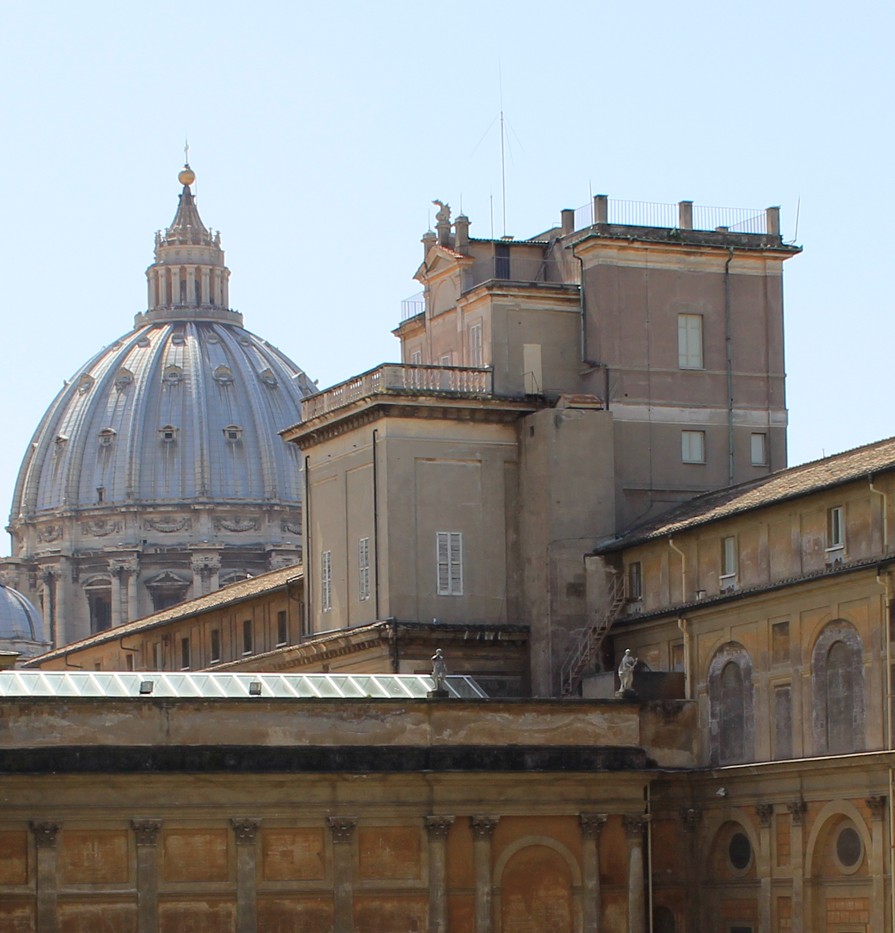
A Celestial Canvas Within Vatican Walls: Exploring the Torre dei Venti
Nestled within the historic Leonine City of Vatican City, the Torre dei Venti , or Tower of Winds, stands as a breathtaking testament to an ambitious convergence of scientific inquiry and artistic patronage. More than just a striking architectural landmark offering panoramic vistas of Rome, this tower represents a pivotal moment in European history: the formal adoption of the Gregorian calendar. It serves as a captivating repository for masterpieces crafted by Raphael and his contemporaries, where the precision of the stars meets the profound depth of human emotion. To step inside is to enter a space where the boundaries between the earthly and the divine begin to blur.
The architecture itself is an enduring marvel of the late Renaissance. Constructed in 1582 under the visionary patronage of Pope Gregory XIII, the tower’s cylindrical form is reinforced with elegant arches and adorned with intricate carvings that pay homage to Roman architectural traditions. This deliberate nod to classical antiquity reflects a period when the pursuit of knowledge was inseparable from the pursuit of beauty. At its very heart lies an observatory, a sanctuary of scientific discovery equipped with sophisticated instruments designed to meticulously track celestial movements. Within the Meridian Hall , the presence of a bronze astrolabe and sundial serves as a silent witness to the dedication of papal scholars who sought to correct the inaccuracies of the Julian calendar, forever altering our perception of time.
The interior of the tower is an immersive experience, illuminated by vibrant frescoes that depict biblical narratives alongside allegorical representations of the winds. These works are not merely decorative embellishments; they embody the humanist ideals of the Renaissance—the belief that human reason and keen observation are the primary pathways to comprehending God’s creation. The collection features extraordinary contributions from Raphael , including the monumental “The Transfiguration,” which captures a moment of divine ascension through masterful use of light and shadow, and the delicate “Study for St. Paul Preaching in Athens.” Through his unparalleled mastery of perspective and color, Raphael transforms the tower's walls into a window onto the infinite.
What distinguishes the Torre dei Venti from other Vatican museums is its singular ability to communicate a profound intellectual dialogue. It is a rare place where one can contemplate the sublime beauty of High Renaissance painting alongside the cold, precise measurements of astronomical science. Throughout its history, the tower has hosted notable exhibitions that explore these very connections between art and scientific thought, prompting visitors to reconsider how cultural developments are often driven by the same impulse to understand our place in the cosmos. For the art lover, the collector, or the designer seeking inspiration, the Torre dei Venti offers a timeless reminder that progress in human creativity and scientific discovery are two sides of the same celestial coin.
