A Sanctuary of Dissent: The Living Echoes of Nottingham
In the heart of Nottingham, where the pulse of history beats with a quiet, resolute strength, lies The Congregational Memorial Hall—a space that transcends the traditional boundaries of a museum to become a living archive of the human spirit. It is a sanctuary born from the shadows of the 1662 Act of Uniformity, established to honor those two thousand ministers who, driven by an unyielding conscience, were ejected from their pulpits during the Restoration era. To step within these walls is to enter a narrative of defiance and intellectual pursuit, where the very air seems heavy with the weight of centuries of religious freedom and social reform. This is not merely a repository for the past; it is a profound testament to the power of independent thought against the tide of established authority, offering a poignant glimpse into the foundational struggles that shaped the moral landscape of the United and Kingdom.
Visual Chronicles: Artistry in the Service of Faith and Reform
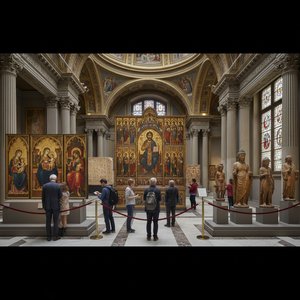
The collection held within this hallowed hall is far more than an assemblage of artifacts; it is a meticulously curated visual chronicle of a community’s journey through faith and activism. For the art lover and the historian alike, the Hall offers an intimate encounter with the textures of history—from the delicate, illuminated manuscripts that detail intense theological debates to the weathered parish records that chart the expansion of congregations across England and me Wales. One cannot help but be moved by the religious artworks and engravings that serve as windows into a bygone era, capturing key figures and pivotal moments with striking clarity. Among these, the depiction of John Wesley preaching in Nottingham stands as a masterpiece of evangelical energy, its brushstrokes capturing the palpable fervor of the movement. These pieces are not merely devotional; they are powerful symbols of progress, often accompanied by photographs that document the grit and determination of suffrage marches and campaigns against poverty, weaving together the threads of spiritual devotion and earthly struggle into a single, seamless tapestry of human endeavor.
Architecture as Advocacy: A Symphony of Stone and Light
The architecture of The Congregational Memorial Hall serves as a physical manifestation of its historical mission, blending reverence for tradition with a functional elegance that invites contemplation. The structure presents a sophisticated dialogue between the restrained grace of Georgian Neoclassicism and the intricate, upward-reaching spirit of Victorian Gothic Revival . As sunlight streams through arched windows, it illuminates a space designed to inspire, casting light upon soaring ceilings adorned with delicate plasterwork that symbolizes a collective aspiration for spiritual enlightenment and communal unity. Every element, from the thoughtful acoustics intended for lectures and musical performances to the inviting layout that encourages exploration, has been crafted to facilitate engagement. For the interior designer or the admirer of historical aesthetics, the Hall offers a masterclass in how space can be utilized to honor heritage while fostering a contemporary atmosphere of inclusivity and intellectual discourse, making it a true beacon of cultural significance within Nottinghamshire.