Portret William Spreat

Slike autora William Spreat: Najpoznatijih 7 djela, iz perspektive galerije

Ažurirano Studeni 2026 · rangirano prema našoj ocjeni popularnosti (pretraživanja, posjeti i narudžbe za svako djelo) · 7 djela William Spreat u našem katalogu

Ukratko

Iz perspektive galerije, najpoznatije djelo umjetnika William Spreat je Clifford Bridge on Teign (1881). Ogwell Mill, Devon (1847) i Evening on the River Walkham (1880) upotpunjuju triju koju svako oko prepoznaje. Od 7 djela umjetnika William Spreat u našem katalogu, galerija u nastavku prikazuje 7 najpoznatijih, od kojih je svako originalno, s navedenom godinom nastanka, muzejom i onim što ga čini jedinstvenim.

1816 – 1897 Romanticism Najviše djela: Royal Albert Memorial Museum

Top 10 najpopularnijih djela umjetnika William Spreat u galeriji

1
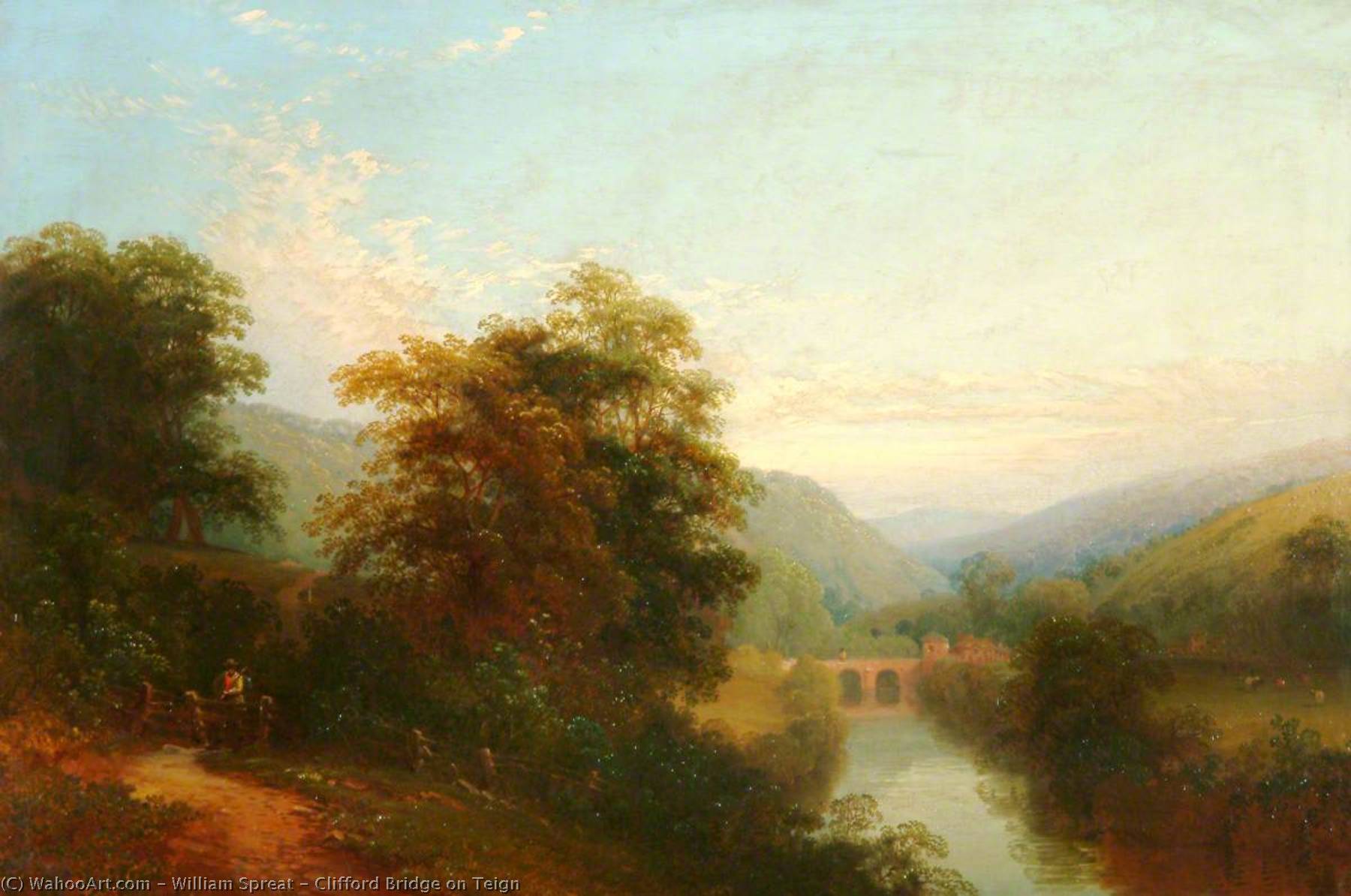
Clifford Bridge on Teign (1881) od William Spreat

Clifford Bridge on Teign

1881

The painting Clifford Bridge on Teign by William Spreat is a stunning representation of a tranquil landscape, showcasing the artist's mastery in capturing the essence of nature. Created in 1881, this oil on canvas piece measures 52 x 77 cm and is currently located at the Southampton City Art Gallery in the United Kingdom. Artistic Style and Composition The painting features a serene river flowing through the countryside, with mountains…

6
Dedham Bridge on Tavy (1881) od William Spreat

Dedham Bridge on Tavy

1881

The painting Dedham Bridge on Tavy by William Spreat is a beautiful representation of a tranquil landscape, showcasing the artist's mastery in capturing the essence of nature. Created in 1881, this oil on canvas piece measures 51 x 77 cm and is currently located at the Southampton City Art Gallery (United Kingdom). Composition and Style The composition of the painting depicts a picturesque scene of a river flowing through a…

Motivi koji su privukli pažnju William Spreat

Četiri teme koje se najčešće ponavljaju u ovim originalima, svaka s svojim vrhunskim primjerom.

Muzeji koji čuvaju originalna djela umjetnika William Spreat

1 muzeja u kojima se nalazi najviše djela s ove stranice.

Muzej Grad Djela autora William Spreat Slike iz ovog popisa
Royal Albert Memorial Museum, ExeterRoyal Albert Memorial Museum Exeter 3 Ogwell Mill, Devon, Holy Street Mill on the Teign, Devon, Bradley Vale, Newton Abbot, Devon

William Spreat, najprepoznatljivija djela svake godine

35 godina umjetnosti umjetnika William Spreat, od 1847 do 1881: galerija ih prati godinu po godinu, kroz njihova najpoznatija originalna djela.

Djela po godinama

Odaberite godinu kako biste vidjeli originalna djela.

Slike umjetnika William Spreat: odgovori galerije

Koja je najpoznatija slika umjetnika William Spreat?Otkrijte odgovor

Clifford Bridge on Teign (1881). Sljedeći su Ogwell Mill, Devon (1847) i Evening on the River Walkham (1880).

Koliko je godina William Spreat imao/la kada je dovršio/la Clifford Bridge on Teign?Otkrijte odgovor

65 godina: Clifford Bridge on Teign datira iz 1881, a William Spreat je rođen/a 1816.

Koliko je djela stvorio/la William Spreat?Otkrijte odgovor

Naš katalog sadrži 7 djela umjetnika William Spreat, datiranih od 1847 do 1881.

Gdje se nalaze najpoznatija originalna djela umjetnika William Spreat?Otkrijte odgovor

Većinom u Royal Albert Memorial Museum (Exeter). Gornja tablica muzeja navodi sve njih.

Kada je William Spreat stvorio svoje najpoznatije slike?Otkrijte odgovor

U 1880: 2 od 7 djela na ovoj stranici nastalo je tada, od čega je Evening on the River Walkham Evening on the River Walkham.

Koja su najranija i najkasnija poznata djela umjetnika William Spreat?Otkrijte odgovor

Na ovoj stranici najstarije djelo je iz Ogwell Mill, Devon (1847), a najnovije iz Clifford Bridge on Teign (1881).

Kojim se temama William Spreat najčešće bavio/la?Otkrijte odgovor

Landscape painting (2) i River valley scene (2), kroz svih 7 djela na ovoj stranici.

S kojim je umjetničkim pravcem William Spreat povezan/a?Otkrijte odgovor

Romanticism, sudeći po originalima na ovoj stranici.

Koje originale William Spreat ima u svojoj kolekciji Royal Albert Memorial Museum?Otkrijte odgovor

Ogwell Mill, Devon, Holy Street Mill on the Teign, Devon i Bradley Vale, Newton Abbot, Devon: Royal Albert Memorial Museum, Exeter posjeduje 3 djela s ove stranice.

William Spreat: umjetnik

The Visionary Landscapes of William Spreat

William Spreat (1816–1897) stands as a singular figure in Victorian landscape painting, recognized for his deeply expressive canvases that captured the spirit of Britain’s dramatic countryside and infused them with philosophical contemplation. Unlike many of his contemporaries who prioritized meticulous realism, Sprend pursued an artistic vision rooted in Romantic ideals—a fascination with sublime beauty and a belief in art's capacity to convey profound emotional truths. His distinctive style cemented him as one of the foremost landscape artists of his era, leaving behind a legacy that continues to inspire admiration for its lyrical quality and psychological depth.

Born in Worcestershire, England, Spreat’s formative years were marked by an upbringing steeped in intellectual curiosity, fostered by a father who was a clergyman with a passion for geology and natural history. This early exposure instilled within him a profound appreciation for the grandeur of the natural world—a fascination that would profoundly shape his artistic endeavors. Despite familial expectations favoring a conventional academic path, Spreat defied convention and pursued independent study under the tutelage of John Ruskin, the influential Victorian critic and artist who championed the moral significance of art. Ruskin’s teachings instilled in Spreat a conviction that landscape painting should serve as a vehicle for conveying spiritual ideas and exploring the relationship between humanity and nature—a guiding principle throughout his artistic career.

A Mastery of Atmosphere and Emotion

Spreat's artistic style quickly distinguished itself from prevailing trends, prioritizing emotional resonance over photographic accuracy. He eschewed detailed topographical representations in favor of compositions that prioritized atmosphere and mood, employing subtle tonal gradations and expressive brushstrokes to evoke feelings of tranquility or awe. His work often features the lush, verdant landscapes of the English countryside, where light and shadow dance across riverbanks and valleys to create a sense of living, breathing nature.

In masterpieces such as Clifford Bridge on Teign and Dedham Bridge on Tavy, one can observe his remarkable ability to balance serene realism with Romantic sentiment. These works often depict:

  • Tranquil Waterways: Rivers flowing through peaceful valleys, serving as the lifeblood of his compositions.
  • Lush Vegetation: Detailed yet atmospheric depictions of trees, bushes, and grazing livestock that ground the viewer in the pastoral beauty of Britain.
  • Atmospheric Perspective: The use of soft light and distant mountains to create a profound sense of depth and dimensionality.

His technique, particularly in oil on canvas, allowed him to capture the fleeting qualities of light, making his scenes feel as though they were caught in a moment of eternal stillness. Whether depicting the industrious Holy Street Mill on the Teign or the quiet solitude of Landscape with River and Fishermen, Spreat’s brushwork remained sensitive to the textures of the natural world.

Legacy and Historical Significance

The historical significance of William Spreat lies in his ability to bridge the gap between the meticulous observation of the naturalist and the emotional depth of the Romantic poet. While some of his works lean toward the Realism movement through their accurate depiction of everyday life, they are never devoid of a certain spiritual or psychological weight. His paintings do not merely record a location; they interpret an experience.

Today, Spreat's contributions to the Victorian art canon are preserved in esteemed institutions such as the Southampton City Art Gallery. His ability to infuse the English landscape with a sense of the sublime ensures that his work remains more than just historical documentation; it remains a window into a period when art sought to find the divine within the earthly, and where every river, bridge, and mountain held the potential for profound human connection.