Portret Théodore Géricault

The 100 Most Famous Théodore Géricault Paintings, Each One of a Kind

Ažurirano Listopad 2026 · rangirano prema našoj ocjeni popularnosti (pretraživanja, posjeti i narudžbe za svako djelo) · 183 djela Théodore Géricault u našem katalogu

In short

La Balsa de la Medusa (1818) is the Théodore Géricault painting that draws the most eyes; the original belongs to the Louvre, Pariz. After it, the eye goes to Nymph and Satyr (Jupiter and Antiope) (1820) and The Oath of Brutus after the Death of Lucretia (1815). Among the 183 works of Théodore Géricault in our catalog, these 100 are the most famous, each a unique original presented with its year, its museum and the reason it endures.

1791 – 1824, Rouen Romantic painting Najviše djela: Louvre

Top 10 paintings by Théodore Géricault, through the gallery's eye

1
La Balsa de la Medusa (1818) od Théodore Géricault

La Balsa de la Medusa

1818 · Ulje na platnu · Louvre, Pariz

Jedno Od Najvažnijih Djela Romantične umjetnosti Jean-Louis André Théodore Géricault, ime koje resonira duhom francuske romantike, rođen je u Rouenju 1791. godine među zvukovima revolucije i rastućom silom Napoleonskog snaženja. Iako je naslijedio udoban život kroz obiteljski kapital – uključujući trgovinu tobaca – njegova sudbina nije bila u zakonu ili trgovini već izražavanju umjetnosti. Njegova početna edukacija pod Carle Vernetom, majstorom engleskog sportskog slikarstva, uvješten je anatomijom i pokretanjem, što…

2
Nymph and Satyr (Jupiter and Antiope) (1820) od Théodore Géricault

Nymph and Satyr (Jupiter and Antiope)

1820 · Acrylic On Canvas · Musée des Beaux-Arts et de la Céramique, Rouen

The Allure of the Divine Encounter: Géricault’s *Nymph and Satyr* Jean-Louis André Théodore Géricault's *Nymph and Satyr*, painted in 1819, isn’t merely a depiction of a mythological scene; it’s a profound exploration of desire, transgression, and the inherent tension between innocence and primal instinct. Born amidst the tumultuous backdrop of post-revolutionary France, Géricault, already recognized for his dramatic intensity, sought to capture not just a narrative but an emotional truth—a…

4
Lions in a Mountainous Landscape (1818) od Théodore Géricault

Lions in a Mountainous Landscape

1818 · Acrylic On Canvas · Metropolitan Museum of Art, New York

This vigorous painting of six lions in a remote, spectrally illuminated lair—possibly intended to evoke the Atlas Mountains of Morocco—is an extraordinary example of Gericault’s spontaneous handling of paint. Rather than applying finishing touches to make a polished cabinet picture, the artist left the painting in a state known as an esquisse, or sketch, a work prized by fellow artists for its strength of directly capturing a subject or effect.…

5
The Kiss (1822) od Théodore Géricault

The Kiss

1822 · Acrylic On Canvas · Thyssen-Bornemisza Museum, Madrid

Théodore Géricault's "The Kiss," painted in 1816, isn’t merely a depiction of lovers entwined; it’s a visceral embodiment of the burgeoning Romantic movement’s fascination with raw emotion, dramatic intensity, and the sublime. This arresting work, housed within the Thyssen-Bornemisza Museum in Madrid, transcends simple representation to become a profound meditation on passion, vulnerability, and the very essence of human connection. Géricault, already a figure known for his unflinching portrayals of…

6
Wounded Soldiers Retrating from Russia (1814) od Théodore Géricault

Wounded Soldiers Retrating from Russia

1814 · Acrylic On Canvas · Musée des Beaux-Arts, Rouen

A Symphony of Suffering: Géricault’s “Wounded Soldiers Retrating from Russia” Jean-Louis André Théodore Géricault's "Wounded Soldiers Retrating from Russia" is not merely a painting; it’s a visceral embodiment of the horrors and human cost of war, rendered with an unprecedented level of realism and emotional intensity for its time. Completed in 1814, this monumental canvas—measuring a commanding 250 x 206 cm—captures a pivotal moment during Napoleon's disastrous invasion of Russia,…

7
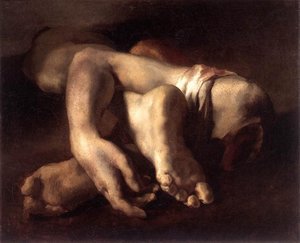
Study of Feet and Hands (1818) od Théodore Géricault

Study of Feet and Hands

1818 · Oil On Canvas · Musée Fabre, Montpellier

Jean-Louis André Théodore Géricault's "Study of Feet and Hands," painted in 1818, isn’t a grand statement of Romantic drama like his monumental “The Raft of the Medusa.” Instead, it offers a profoundly intimate glimpse into the artist’s meticulous process and a poignant meditation on the human form. This unassuming oil painting—measuring a modest 52 x 64 cm—is far more than just a preparatory sketch; it's a concentrated distillation of Géricault’s…

8
The Raft of the Medusa (detail) (1818) od Théodore Géricault

The Raft of the Medusa (detail)

1818 · Oil On Canvas · Louvre, Pariz

Jean-Louis André Théodore Géricault's "The Raft of the Medusa," a monumental detail from his 1818 painting, isn’t merely a depiction of shipwreck; it’s a visceral plunge into the depths of human suffering and political indictment. The scene, rendered with a dramatic intensity characteristic of Romanticism, captures the harrowing aftermath of the French frigate *Medusa*'s wreck off the coast of Mauritania in 1816. This disaster, largely attributed to the incompetence and…

10
The Wreck (1821) od Théodore Géricault

The Wreck

1821 · Oil On Canvas · Louvre, Pariz

Théodore Géricault's "The Wreck," painted in 1821, isn’t merely a seascape; it’s a visceral confrontation with the sublime—a raw depiction of humanity’s vulnerability against the overwhelming force of nature. Born amidst the turbulent currents of post-revolutionary France, Géricault, a figure both lauded and controversial within the burgeoning Romantic movement, channeled his own anxieties and the era's fascination with dramatic events into this monumental canvas. The painting immediately commands attention not…

Théodore Géricault's famous paintings, numbers 11 to 100

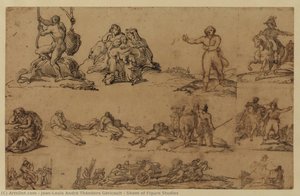
11The Horse Race (1816) od Théodore GéricaultThe Horse Race1816 · Thyssen-Bornemisza Museum 12Swiss Guard and Wounded Veteran (1819) od Théodore GéricaultSwiss Guard and Wounded Veteran1819 · Louvre 13Mazeppa (1823) od Théodore GéricaultMazeppa1823 · Château de Chantilly 14Two Horses (1809) od Théodore GéricaultTwo Horses1809 · The Phillips Collection 15A Turk (Mustapha) (1820) od Théodore GéricaultA Turk (Mustapha)1820 · Louvre 16A Carabinier with his Horse (1814) od Théodore GéricaultA Carabinier with his Horse1814 · Musée des Beaux-Arts 17Riderless Horse Races (detail) (1817) od Théodore GéricaultRiderless Horse Races (detail)1817 · Louvre 18Boxers (1818) od Théodore GéricaultBoxers1818 · Château de Chantilly 19Horse Market: Five Horses at the Stake (1816) od Théodore GéricaultHorse Market: Five Horses at the Stake1816 · Louvre 20The Epsom Derby (1821) od Théodore GéricaultThe Epsom Derby1821 · Louvre 21Mounted Trumpeters of Napoleon's Imperial Guard (1813) od Théodore GéricaultMounted Trumpeters of Napoleon's Imperial Guard1813 · National Gallery of Art 22Three Lovers (1817) od Théodore GéricaultThree Lovers1817 · J. Paul Getty Museum 23Portrait of Simon Bonnesoeur-Bourginire (1812) od Théodore GéricaultPortrait of Simon Bonnesoeur-Bourginire1812 · Minneapolis Institute of Art 24Equestrian portrait of Wincenty Krasiński. (1814) od Théodore GéricaultEquestrian portrait of Wincenty Krasiński.1814 · Narodni muzej u Varšavi 25The Wounded Cuirassier, study (1814) od Théodore GéricaultThe Wounded Cuirassier, study1814 · Brooklyn Museum 26Lion devouring a horse od Théodore GéricaultLion devouring a horseChâteau de Chantilly 27Français Étude de bras et de main realisé par Géricault por son oeuvre Le Radeau de la Méduse (1819) od Théodore GéricaultFrançais Étude de bras et de main realisé par Géricault por son oeuvre Le Radeau de la Méduse1819 28Untitled (ARJCHM) od Théodore GéricaultUntitled (ARJCHM)Louvre 29Scene from the Epidemic of Yellow Fever in Cadiz (1819) od Théodore GéricaultScene from the Epidemic of Yellow Fever in Cadiz1819 · Virginia Museum of Fine Arts 30The Raft of the Medusa, Louvre (1819) od Théodore GéricaultThe Raft of the Medusa, Louvre1819 31Head of a Drowned Man (1819) od Théodore GéricaultHead of a Drowned Man1819 32Portrait of a Young Man (1818) od Théodore GéricaultPortrait of a Young Man1818 · Minneapolis Institute of Art 33A study for a nude. (1801) od Théodore GéricaultA study for a nude.1801 · Narodni muzej u Varšavi 34Study of a Model (1818) od Théodore GéricaultStudy of a Model1818 · J. Paul Getty Museum 35The Martyrdom of Saint Peter (1814) od Théodore GéricaultThe Martyrdom of Saint Peter1814 · Kunstmuseum Basel 36The Wreck (1824) od Théodore GéricaultThe Wreck1824 · Louvre 37The Scotsman (1801) od Théodore GéricaultThe Scotsman1801 · Petit Palais 38Mater dolorosa, Copy after Ribera (1811) od Théodore GéricaultMater dolorosa, Copy after Ribera1811 · Kunstmuseum Basel 39Lion in Repose od Théodore GéricaultLion in ReposeWalters Art Museum 40Equestrian Portrait of Jérôme Bonaparte, after Antoine-Jean GROS (1813) od Théodore GéricaultEquestrian Portrait of Jérôme Bonaparte, after Antoine-Jean GROS1813 · Musée Eugène Delacroix 41Justice and Divine Vengeance Pursuing Crime (1811) od Théodore GéricaultJustice and Divine Vengeance Pursuing Crime1811 42Lying Lions (1812) od Théodore GéricaultLying Lions1812 43The Trumpeter of the Orleans Hussars (1813) od Théodore GéricaultThe Trumpeter of the Orleans Hussars1813 44The Trumpeter of the Lancers of the Guard (1813) od Théodore GéricaultThe Trumpeter of the Lancers of the Guard1813 · Burrell Collection 45The horse is out of the stable (1810) od Théodore GéricaultThe horse is out of the stable1810 · Musée Condé 46Un carabinier, vu à mi-corps (1814) od Théodore GéricaultUn carabinier, vu à mi-corps1814 47Portrait of Louise Vernet (1812) od Théodore GéricaultPortrait of Louise Vernet1812 48Head of a woundet Man (1814) od Théodore GéricaultHead of a woundet Man1814 · Wallraf-Richartz-Museum 49Untitled (ARJCJD) (1814) od Théodore GéricaultUntitled (ARJCJD)1814 50The Monomaniac of Child Abduction (1822) od Théodore GéricaultThe Monomaniac of Child Abduction1822 51Horse Race, Moving to the Right (1820) od Théodore GéricaultHorse Race, Moving to the Right1820 · Musée des Beaux-Arts de Caen 52The Raft of the Medusa (1818) od Théodore GéricaultThe Raft of the Medusa1818 53Etude d'un homme nu (Study of a Nude Man) (1817) od Théodore GéricaultEtude d'un homme nu (Study of a Nude Man)1817 · The New Art Gallery Walsall 54Mounted Jockey (1821) od Théodore GéricaultMounted Jockey1821 · Virginia Museum of Fine Arts 55Portrait of a Negro (1822) od Théodore GéricaultPortrait of a Negro1822 · Buffalo AKG Art Museum 56Portrait Study of a Youth (1819) od Théodore GéricaultPortrait Study of a Youth1819 · Kimbell Art Museum 57The White Horse Tavern (1821) od Théodore GéricaultThe White Horse Tavern1821 · Fogg Museum 58Cattle Market (1817) od Théodore GéricaultCattle Market1817 · Fogg Museum 59Fighting Horses (1820) od Théodore GéricaultFighting Horses1820 · Cleveland Museum of Art 60Wounded Soldiers in a Cart (1815) od Théodore GéricaultWounded Soldiers in a Cart1815 · Fitzwilliam Museum 61Shipwrecked on a Beach (The Tempest) (1822) od Théodore GéricaultShipwrecked on a Beach (The Tempest)1822 · Yale University Art Gallery 62Alexandre Colin (1815) od Théodore GéricaultAlexandre Colin1815 63The Raft of the Medusa (1818) od Théodore GéricaultThe Raft of the Medusa1818 64Course de Chevaux montés allant à gauche, au moment du départ (1822) od Théodore GéricaultCourse de Chevaux montés allant à gauche, au moment du départ1822 65Francisco de Moncada Marqués d'Aytona (1815) od Théodore GéricaultFrancisco de Moncada Marqués d'Aytona1815 · Amsterdam Museum 66Riderless Racers at Rome (1817) od Théodore GéricaultRiderless Racers at Rome1817 · Walters Art Museum 67Trumpeter of the Hussars (1817) od Théodore GéricaultTrumpeter of the Hussars1817 68Nude Warrior with a Spear (1816) od Théodore GéricaultNude Warrior with a Spear1816 · National Gallery of Art 69The Wild Horse Race at Rome (1817) od Théodore GéricaultThe Wild Horse Race at Rome1817 70The Raft of the Medusa, Detalj, (1819) od Théodore GéricaultThe Raft of the Medusa, Detalj,1819 71Portrait of a Negro (1800) od Théodore GéricaultPortrait of a Negro1800 · Palácio Nacional da Ajuda 72Head of a Youth (1824) od Théodore GéricaultHead of a Youth1824 · Art Gallery of South Australia 73Portrait d'homme (1825) od Théodore GéricaultPortrait d'homme1825 · Musée Fabre 74Equestrian Portrait of Charles V (1814) od Théodore GéricaultEquestrian Portrait of Charles V1814 · Fine Arts Museums of San Francisco 75Chestnut horse in a stable (1814) od Théodore GéricaultChestnut horse in a stable1814 · Cantor Arts Center at Stanford University 76Horses of the Auvergne (1822) od Théodore GéricaultHorses of the Auvergne1822 · University of Michigan Museum of Art 77A Prancing Grey Horse (1812) od Théodore GéricaultA Prancing Grey Horse1812 · Burrell Collection 78Sheet of Figure Studies (1818) od Théodore GéricaultSheet of Figure Studies1818 · Courtauld Gallery 79Portrait of an Artist in His Studio (1820) od Théodore GéricaultPortrait of an Artist in His Studio1820 · Louvre 80An Officer of the Chasseurs Commanding a Charge (1812) od Théodore GéricaultAn Officer of the Chasseurs Commanding a Charge1812 · Louvre 81Study of a nude man od Théodore GéricaultStudy of a nude manNarodni muzej u Varšavi 82The Plaster Kiln (1823) od Théodore GéricaultThe Plaster Kiln1823 · Louvre 83Officer of Chasseurs à Cheval of the Imperial Guard Charging (1812) od Théodore GéricaultOfficer of Chasseurs à Cheval of the Imperial Guard Charging1812 84Dogs Fighting Bears (1814) od Théodore GéricaultDogs Fighting Bears1814 · Foundation E.G. Bührle Collection 85Cheval gris au râtelier (1811) od Théodore GéricaultCheval gris au râtelier1811 86Untitled (ARJCGT) (1814) od Théodore GéricaultUntitled (ARJCGT)1814 87The Woman with Gambling Mania, ca (1822) od Théodore GéricaultThe Woman with Gambling Mania, ca1822 88Deutsch Firmenschild für einen Hufschmied, Detail (1814) od Théodore GéricaultDeutsch Firmenschild für einen Hufschmied, Detail1814 89Italian Landscape with Tomb (1818) od Théodore GéricaultItalian Landscape with Tomb1818 · Petit Palais 90A Cart Loaded with Kegs (1822) od Théodore GéricaultA Cart Loaded with Kegs1822 · Rhode Island School of Design Museum of Art 91Cinq chevaux vus par la croupe (1821) od Théodore GéricaultCinq chevaux vus par la croupe1821 92The Race of the Riderless Horses (1817) od Théodore GéricaultThe Race of the Riderless Horses1817 · J. Paul Getty Museum 93Dervish in His Stall (1820) od Théodore GéricaultDervish in His Stall1820 94Untitled (ARJCHB) (1819) od Théodore GéricaultUntitled (ARJCHB)1819 95Untitled (ARJCJF) (1818) od Théodore GéricaultUntitled (ARJCJF)1818 96Untitled (ARJCHV) (1817) od Théodore GéricaultUntitled (ARJCHV)1817 · Palais des Beaux-Arts de Lille 97German Der Page Mazeppa (1820) od Théodore GéricaultGerman Der Page Mazeppa1820 98English Anatomical Pieces (1819) od Théodore GéricaultEnglish Anatomical Pieces1819 · Musée des Beaux-Arts de Rouen 99A Shipwreck (1817) od Théodore GéricaultA Shipwreck1817 100Français Têtes coupées English Cut heads Português Cabeças cortadas (1818) od Théodore GéricaultFrançais Têtes coupées English Cut heads Português Cabeças cortadas1818

Théodore Géricault's famous paintings, period by period

The subjects that held Théodore Géricault's eye

The four subjects that come back most often in these originals, each with its finest example.

The museums that keep Théodore Géricault's originals

8 muzeja u kojima se nalazi najviše djela s ove stranice.

Muzej Grad Djela autora Théodore Géricault Slike iz ovog popisa
Louvre, ParizLouvre Pariz 20 La Balsa de la Medusa, The Raft of the Medusa (detail), Leda and the Swan
Château de Chantilly, ChantillyChâteau de Chantilly Chantilly 6 Mazeppa, Boxers, Lion devouring a horse
J. Paul Getty Museum, Los AngelesJ. Paul Getty Museum Los Angeles 3 Three Lovers, Study of a Model, The Race of the Riderless Horses
Narodni muzej u Varšavi, VaršavaNarodni muzej u Varšavi Varšava 3 Equestrian portrait of Wincenty Krasiński., A study for a nude., Study of a nude man
Burrell Collection, GlasgowBurrell Collection Glasgow 8 The Trumpeter of the Lancers of the Guard, A Prancing Grey Horse
Musée Fabre, MontpellierMusée Fabre Montpellier 4 Study of Feet and Hands, Portrait d'homme
Petit Palais, ParizPetit Palais Pariz 3 The Scotsman, Italian Landscape with Tomb
Thyssen-Bornemisza Museum, MadridThyssen-Bornemisza Museum Madrid 2 The Kiss, The Horse Race

Théodore Géricault across the decades: one unique original for each

Djela po desetljećima

Pick a decade to see the original that defines it.

Théodore Géricault's paintings: questions for the gallery

What is the single most famous work of Théodore Géricault?Reveal the answer

La Balsa de la Medusa (1818), Louvre, Pariz. Nymph and Satyr (Jupiter and Antiope) (1820) and The Oath of Brutus after the Death of Lucretia (1815) come next.

At what age did Théodore Géricault create La Balsa de la Medusa?Reveal the answer

27 years old: La Balsa de la Medusa dates from 1818, and Théodore Géricault was born in 1791.

Which ten paintings by Théodore Géricault are the most famous?Reveal the answer

La Balsa de la Medusa, Nymph and Satyr (Jupiter and Antiope), The Oath of Brutus after the Death of Lucretia, Lions in a Mountainous Landscape, The Kiss, Wounded Soldiers Retrating from Russia, Study of Feet and Hands, The Raft of the Medusa (detail), Leda and the Swan i The Wreck. The ranking above gives each one's year and museum.

How many works by Théodore Géricault are known?Reveal the answer

Our catalog holds 183 works by Théodore Géricault, dated from 1800 to 1824.

Where can the most famous Théodore Géricault originals be seen?Reveal the answer

Mostly in Louvre (Pariz), Château de Chantilly (Chantilly) i J. Paul Getty Museum (Los Angeles). The museum table above lists them all.

During which period did Théodore Géricault create the best-known paintings?Reveal the answer

In 1810s: 67 of the 100 works on this page were made then, La Balsa de la Medusa among them.

Which famous Théodore Géricault painting is the earliest, and which the latest?Reveal the answer

On this page, the earliest is Portrait of a Negro (1800) and the latest The Wreck (1824).

What subjects did Théodore Géricault favour?Reveal the answer

Man (12), Portrait (9) i Horse (8), across the 100 works on this page.

What materials did Théodore Géricault paint with most?Reveal the answer

Oil On Canvas, for 25 of the 100 works on this page.

Which movement does the work of Théodore Géricault belong to?Reveal the answer

Romantic painting, judging by the originals on this page.

What Théodore Géricault originals can I see at the Louvre?Reveal the answer

La Balsa de la Medusa, The Raft of the Medusa (detail) i Leda and the Swan: the Louvre, Pariz holds 14 of the works on this page.

Where can I order a hand-painted Théodore Géricault reproduction?Reveal the answer

Yes, as a reproduction: the original stays in its museum, but any painting on this page can be painted by hand for you, made to order one at a time, from the painting's own page.

Théodore Géricault: a portrait of the artist

Život iskovan u romantičnoj vatri

Jean-Louis André Théodore Géricault, ime koje odjekuje duhom francuskog romantizma, rođen je u svijetu na pragu dramatičnih promjena. U Rouen, Francuska, 1791. godine, njegovi su rani dani bili prožeti odjecima revolucije i rastućih ambicija Napoleona. Iako je naslijedio udobnu egzistenciju kroz obiteljske pravne i poslovne pothvate – uključujući tvrtku za duhan – Géricaultova sudbina nije bila u zakonu ili trgovini, već u području umjetničkog izražaja. Njegovo prvo obrazovanje pod vodstvom Carla Verneta, majstora engleske sportske umjetnosti, usadilo mu je oštar pogled na anatomiju i pokret, što se posebno očituje u njegovim prikazima konja. Međutim, upravo su njegove kasnije studije s Pierre-Narcisseom Guérinom pružile temelj klasične kompozicije, iako ga je Géricaultova nemirna duša ubrzo navela da samostalno traži znanje u hramovima Louvrea.

Louvre kao Akademija: Dijalog s majstorima

Od 1810. do 1815. godine Louvre postaje prava akademija Géricaulta. Uronio se u djela starih majstora – Rubensa, Titiana, Velázqueza i Rembrandta – ne samo kopirajući njihove tehnike, već ulazeći u duboki dijalog s njihovim umjetničkim filozofijama. Ovo je razdoblje bilo ključno za oblikovanje njegovog prepoznatljivog stila, obilježeno dramatičnim chiaroscuroom, dinamičnim kompozicijama i intenzivnom emocionalnošću koja ga je razlikovala od suvremenika. Nije samo replicirao; upijao je bit tih majstora, internalizirajući njihove pristupe svjetlu, sjeni i ljudskom obliku. Ovo samostalno obrazovanje potaknulo je jedinstveni umjetnički glas, koji će uskoro izazvati prevladajuće neoklasične konvencije. Njegova ranija djela, poput Napadačkog lovca (1812.), već su nagovještavala ovu novu osjetljivost, pokazujući hrabrost izvedbe i fascinaciju pokretom koja podsjeća na Rubensove energične platna. Nastavio je istraživati konjičke teme, usavršavajući svoje vještine u prikazivanju snage i gracioznosti konja – tematike koja će ostati ponavljajući motiv tijekom njegove karijere.

Splav Meduze: Spomenik ljudskoj patnji

Géricaultovo ime je neraskidivo povezano sa Splavom Meduze (1818.-1819.), monumentalnim platnom koje nadilazi puku povijesnu reprodukciju i postaje žestoka optužnica ljudske pogrešivosti i društvene nepravde. Inspiriran potresnom istinitom pričom o brodolomu francuske fregate Méduse 1816. godine, gdje su nemarnost i nesposobnost dovele do nezamislive patnje putnika, slika je visceralni prikaz očaja, nade i beznađa. Géricault se podvrgnuo temeljitom istraživanju, intervjuirajući preživjele, proučavajući leševe u bolnicama, čak i konstruirajući model splava u stvarnoj veličini kako bi osigurao točnost. Rezultat nije samo prikaz tragedije; to je impresivno iskustvo koje suočava gledatelja s golom realnošću ljudske patnje. Kompozicija, izgrađena oko dviju piramidalnih struktura – jedne koja predstavlja očaj i smrt, a druge nade i potencijalnog spasenja – stvara dinamičku napetost koja privlači pogled po platnu. Splav Meduze izazvao je kontroverze nakon izložbe na Salonu 1819., potaknuvši političku raspravu i učvršćujući Géricaultovu reputaciju kao hrabrog i nekonvencionalnog umjetnika. Utjecaj slike protezao se izvan umjetničkog svijeta, postajući simbol vladine nesposobnosti i ljudske otpornosti suočene s nezamislivim nedaćama.

Izvan Tragedije: Vojne teme i Umjetnička ostavština

Iako Splav Meduze ostaje njegovo najpoznatije djelo, Géricaultov umjetnički opus protezao se izvan ovog jedinstvenog remek-djela. Kontinuirano se vraćao vojnim temama, što je vidljivo u djelima poput Ranjenog konjanika (1814.) i Derbija u Epsomu (1821.), pokazujući fascinaciju dramom i ekspresivnom snagom. Ove slike otkrivaju njegovo kontinuirano istraživanje ljudskih emocija pod pritiskom, često usredotočujući se na fizički i psihološki danak sukoba. Poduzeo se i u portretiranje i litografiju, dodatno proširujući svoj umjetnički repertoar. Nažalost, Géricaultov život je prekinut bolešću u dobi od 32 godine 1824., nakon godina patnje od ozljeda nastalih padom s konja i kronične tuberkuloze. Njegova prerana smrt lišila je umjetnički svijet iznimnog talenta, ali njegov utjecaj na kasnije generacije umjetnika – posebno Eugènea Delacroixa – bio je dubok. Zapamćen je kao pionir romantizma, umjetnik koji se usudio suočiti se s teškim istinama i ugraditi snažnu emocionalnu rezonancu u svoje djelo koja nastavlja očaravati publiku danas. Njegova brončana figura leži, kist u ruci, na njegovom grobu na groblju Père Lachaise u Parizu, iznad niskog reljefa koji prikazuje potresnu scenu sa Splava Meduze, prikladan omaž umjetniku koji je posvetio svoj život hvatanju složenosti i proturječja ljudskog stanja.

Ključne karakteristike & Utjecaji

  • Romantizam: Géricault se smatra jednim od prvih francuskih romantičarskih slikara, udaljavajući se od neoklasičnih ideala prema emocionalnoj intenzivnosti i dramatičnom izrazu.
  • Dramatična kompozicija: Njegove su slike poznate po dinamičnim kompozicijama, često koristeći dijagonalne linije i kontrastno svjetlo i sjenu kako bi stvorile osjećaj pokreta i napetosti.
  • Realizam & Istraživanje: Géricault je bio posvećen realizmu, provodeći opsežno istraživanje – uključujući proučavanje leševa i intervjuiranje preživjelih – kako bi osigurao točnost i emocionalni utjecaj svog rada.
  • Utjecaj starih majstora: Crpio je inspiraciju iz baroknih majstora poput Rubensa, Titiana i Velázqueza, usvajajući njihove tehnike za dramatično osvjetljenje i ekspresivan kist.
  • Fokus na ljudsku patnju: Njegova umjetnost često prikazuje scene tragedije, očaja i tamnijih aspekata ljudskog iskustva, odražavajući romantičarsku fascinaciju intenzivnim emocijama.

Sva 183 djela umjetnika Théodore Géricault →