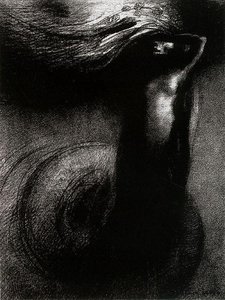
Portret Odilon Redon

The 100 Most Famous Odilon Redon Paintings, Each One of a Kind

Ažurirano Listopad 2026 · rangirano prema našoj ocjeni popularnosti (pretraživanja, posjeti i narudžbe za svako djelo) · 804 djela Odilon Redon u našem katalogu

In short

The cyclops (1914) is the Odilon Redon painting that draws the most eyes; the original belongs to the Kröller-Müller Museum, Otterlo. After it, the eye goes to The Black Pegasus and Woman and Centaur (1900). Among the 804 works of Odilon Redon in our catalog, these 100 are the most famous, each a unique original presented with its year, its museum and the reason it endures.

1840 – 1916, Bordeaux Symbolism Najviše djela: Musée d'Orsay

Top 10 paintings by Odilon Redon, through the gallery's eye

1
The cyclops (1914) od Odilon Redon

The cyclops

1914 · Kröller-Müller Museum, Otterlo

Odilon Redon's "The Cyclops," painted around 1914, isn’t merely a depiction of the Greek myth; it’s an immersion into a profoundly personal and unsettling dream world. This arresting work, now housed in the Kröller-Müller Museum in Otterlo, Netherlands, transcends simple illustration, offering instead a glimpse into the artist's subconscious – a realm populated by shadowy figures, potent symbols, and a palpable sense of yearning.

2
The Black Pegasus od Odilon Redon

The Black Pegasus

Oil On Canvas

To gaze upon Odilon Redon's The Black Pegasus is not merely to look at a painting; it is to step through a veil into the shimmering, melancholic landscape of the subconscious mind. This captivating oil on canvas transports the viewer beyond the mundane realities of the visible world, inviting an intimate communion with the realm of dreams and myth. The central figure—the magnificent black pegasus—is breathtaking in its impossible grace.…

3
Woman and Centaur (1900) od Odilon Redon

Woman and Centaur

1900 · Drawing

To stand before Odilon Redon’s Woman and Centaur is to step across the threshold into a dreamscape, a place where the boundaries between myth, instinct, and profound human emotion dissolve. Created in the year 1900, this work is not merely a depiction of two figures; it is a visual poem rendered in ink and shadow, embodying the very spirit of Symbolism. Redon, an artist forever drawn to the unseen realms…

4
Saint Sebastian (1900) od Odilon Redon

Saint Sebastian

1900 · Oil On Canvas · Musée d'Orsay, Pariz

A nude male figure, Saint Sebastian, occupies the center of this Symbolist composition, his pale skin illuminated against a dark, atmospheric backdrop. He is pierced by arrows, a physical manifestation of martyrdom and spiritual endurance. Large, vertical forms resembling ancient trees or rocky outcroppings loom over him, creating a sense of enclosure. The background features patches of ochre, gold, and cool blues that suggest a nebulous, dreamlike space.

5
The Martyrdom of Saint Sebastian (1910) od Odilon Redon

The Martyrdom of Saint Sebastian

1910 · Oil On Canvas · Kunstmuseum Basel, Basel

To stand before Odilon Redon's depiction of The Martyrdom of Saint Sebastian is to step across a threshold into the deep, resonant chambers of the Symbolist imagination. This 1910 oil on canvas does not merely record an event; it excavates a profound state of being—one caught between agonizing vulnerability and transcendent spiritual endurance. The composition immediately arrests the viewer with its intense chromatic drama. Saint Sebastian, bound to the base…

6
The Death of Ophelia (1905) od Odilon Redon

The Death of Ophelia

1905 · Oil On Canvas

The Death of Ophelia is a captivating painting by the French artist Odilon Redon, created in 1905. This oil on canvas piece is a representation of the tragic death of Ophelia from Shakespeare's play Hamlet. The painting is a prime example of the Symbolist art movement, which sought to represent absolute truths symbolically through language and metaphorical images. Symbols and Metaphors The painting features a woman sitting on a rock…

7
The Birth of Venus (1910) od Odilon Redon

The Birth of Venus

1910 · Oil On Canvas

The sea breathes with a quiet, rhythmic pulse as a figure begins to take shape upon the water. Venus lies reclined within a red boat, her form emerging from the depths of the ocean in a moment caught between sleep and awakening. The surface of the water reflects soft shades of blue and yellow, casting a warmth that settles over the scene like a gentle afternoon sun. There is a…

8
White Pegasus (1908) od Odilon Redon

White Pegasus

1908 · Oil On Canvas

To gaze upon Odilon Redon's White Pegasus is to step across a threshold into a realm where myth breathes and the spirit takes flight. This captivating oil on canvas, dating from 1908, is far more than a mere depiction of a winged horse; it is a profound meditation on freedom, purity, and the sublime mystery that underpins our visible reality. The composition centers around the magnificent white Pegasus, poised atop…

9
Breton Village (1890) od Odilon Redon

Breton Village

1890 · Oil On Canvas · National Gallery of Art, Washington

To gaze upon Odilon Redon's Breton Village is not merely to observe a scene; it is to step through a veil into a meticulously crafted dream. Painted in 1890, this work stands as a profound testament to the Post-Impressionist spirit—a movement that dared to look beyond the fleeting shimmer of natural light and instead plumb the depths of human emotion and subjective experience. Redon eschews the purely objective record of…

10
Sacred Heart (1910) od Odilon Redon

Sacred Heart

1910 · Painting

To gaze upon Odilon Redon’s Sacred Heart is to step through a veil into a realm where the spiritual meets the exquisitely tangible. Painted in 1910, this masterpiece transcends mere portraiture; it is a profound meditation on divine love and boundless compassion. The composition immediately draws the eye to the central figures—a woman, perhaps evoking the timeless grace of Mary, cradling a child whose form, rendered in striking black and…

Odilon Redon's famous paintings, numbers 11 to 100

11La Barque Mystique od Odilon RedonLa Barque Mystique 12Flower of Blood (1895) od Odilon RedonFlower of Blood1895 13The Green Horseman (1904) od Odilon RedonThe Green Horseman1904 14The Flame (Goddess of Fire) (1896) od Odilon RedonThe Flame (Goddess of Fire)1896 15Reflection od Odilon RedonReflection 16Portrait of Madame Redon with Ari (1902) od Odilon RedonPortrait of Madame Redon with Ari1902 17The Black Sun od Odilon RedonThe Black Sun 18The Cyclops (1914) od Odilon RedonThe Cyclops1914 · Kröller-Müller Museum 19Underwater Flora od Odilon RedonUnderwater Flora 20Death: My irony surpasses all others! (1889) od Odilon RedonDeath: My irony surpasses all others!1889 21Arbre sur fond jaune (1901) od Odilon RedonArbre sur fond jaune1901 22Prayer, Face, Flowers (1893) od Odilon RedonPrayer, Face, Flowers1893 · Musée d'Orsay 23Mystical Conversation (1896) od Odilon RedonMystical Conversation1896 · Museum of Fine Arts 24Siren (1900) od Odilon RedonSiren1900 · Kunstmuseum Basel 25On the Horizon, the Angel of Certitude, and in the Dark Sky, A Questioning Glance (1882) od Odilon RedonOn the Horizon, the Angel of Certitude, and in the Dark Sky, A Questioning Glance1882 · Los Angeles County Museum of Art 26Head with Flowers (1907) od Odilon RedonHead with Flowers1907 27Le Bouddha (The Buddha) od Odilon RedonLe Bouddha (The Buddha) 28The Road to Peyrelebade od Odilon RedonThe Road to Peyrelebade 29The Window (1907) od Odilon RedonThe Window1907 · Neue Pinakothek 30Lenor appears in front of the black sun of melancholy (1882) od Odilon RedonLenor appears in front of the black sun of melancholy1882 31Vision (1883) od Odilon RedonVision1883 32The Prisoner (Boulet) (1879) od Odilon RedonThe Prisoner (Boulet)1879 33Sita (1893) od Odilon RedonSita1893 34Portrait of Mademoiselle Jeanne Roberte de Domecy (1905) od Odilon RedonPortrait of Mademoiselle Jeanne Roberte de Domecy1905 35Screen for Olivier Sainsère (1903) od Odilon RedonScreen for Olivier Sainsère1903 36Les Origines — Plate 2 (1883) od Odilon RedonLes Origines — Plate 21883 37The Departure (1906) od Odilon RedonThe Departure1906 38Veiled Woman (1895) od Odilon RedonVeiled Woman1895 · Kröller-Müller Museum 39Woman in Red od Odilon RedonWoman in RedMusée d'Orsay 40The Gambler (1879) od Odilon RedonThe Gambler1879 41The Mask of the Red Death (1883) od Odilon RedonThe Mask of the Red Death1883 42Everywhere eyeballs are aflame (1888) od Odilon RedonEverywhere eyeballs are aflame1888 43Flowers (1909) od Odilon RedonFlowers1909 44I am still the great Isis! None has yet lifted my veil! My fruit is the Sun! (plate 16) (1896) od Odilon RedonI am still the great Isis! None has yet lifted my veil! My fruit is the Sun! (plate 16)1896 · MoMA - Museum of Modern Art 45untitled (5561) od Odilon Redonuntitled (5561) 46Saint George and the Dragon (Saint Georges et le dragon) (1909) od Odilon RedonSaint George and the Dragon (Saint Georges et le dragon)1909 · Barnes Foundation 47Cup of cognition (The Children's Cup) (1894) od Odilon RedonCup of cognition (The Children's Cup)1894 48The Dream (also known as Thought) (1908) od Odilon RedonThe Dream (also known as Thought)1908 49Hantise (Obsession) (1894) od Odilon RedonHantise (Obsession)1894 · British Museum 50The Mysterious Boat (1890) od Odilon RedonThe Mysterious Boat1890 51Yellow Tree (1900) od Odilon RedonYellow Tree1900 · Musée d'Orsay 52Woman and the mountain landscape (1865) od Odilon RedonWoman and the mountain landscape1865 53The Mystical Knight (Oedipus and the Sphinx) (1869) od Odilon RedonThe Mystical Knight (Oedipus and the Sphinx)1869 54Two trees (1875) od Odilon RedonTwo trees1875 55The Smiling Spider (1881) od Odilon RedonThe Smiling Spider1881 56Les Origines — Plate 1 (1883) od Odilon RedonLes Origines — Plate 11883 57Les Origines — Cover (1883) od Odilon RedonLes Origines — Cover1883 58Christ and the Samaritan Woman (The White Flower Bouquet) (1895) od Odilon RedonChrist and the Samaritan Woman (The White Flower Bouquet)1895 · Städel Museum 59Madness (1882) od Odilon RedonMadness1882 60There were also embryonic beings (1885) od Odilon RedonThere were also embryonic beings1885 61The Egg (1885) od Odilon RedonThe Egg1885 62A madman in a dismal landscape (1885) od Odilon RedonA madman in a dismal landscape1885 63In the balance (1880) od Odilon RedonIn the balance1880 64Flower of the swamp, a head human and sad (1885) od Odilon RedonFlower of the swamp, a head human and sad1885 65Upon awakening I saw the Goddess of the Intelligible with her severe and hard profile (1885) od Odilon RedonUpon awakening I saw the Goddess of the Intelligible with her severe and hard profile1885 66Profile of Light (1886) od Odilon RedonProfile of Light1886 · Scottish National Gallery 67Cauldron of the Sorceress (1879) od Odilon RedonCauldron of the Sorceress1879 68Red Boat with Blue Sails (1907) od Odilon RedonRed Boat with Blue Sails1907 69Anthony: Help me, O my God! (plate 2) (1896) od Odilon RedonAnthony: Help me, O my God! (plate 2)1896 70Immediately three goddesses arise (plate 11) (1896) od Odilon RedonImmediately three goddesses arise (plate 11)1896 71Helena (Ennoia) (plate 10) (1896) od Odilon RedonHelena (Ennoia) (plate 10)1896 72And the eyes without heads were floating like molluscs (plate 13) (1896) od Odilon RedonAnd the eyes without heads were floating like molluscs (plate 13)1896 73She draws from her bosom a sponge, perfectly black, and covers it with kisses (plate 8) (1896) od Odilon RedonShe draws from her bosom a sponge, perfectly black, and covers it with kisses (plate 8)1896 74The Old Woman: What are you afraid of? A wide black hole! Perhaps it is a void? (plate 19) (1896) od Odilon RedonThe Old Woman: What are you afraid of? A wide black hole! Perhaps it is a void? (plate 19)1896 75Here is the Good Goddess, the Idaean mother of the mountains (plate 15) (1896) od Odilon RedonHere is the Good Goddess, the Idaean mother of the mountains (plate 15)1896 76Oannès: I, the first consciousness of chaos, arose from the abyss that I might harden matter, and give law unto forms (plate 14) (1896) od Odilon RedonOannès: I, the first consciousness of chaos, arose from the abyss that I might harden matter, and give law unto forms (plate 14)1896 77My kisses have the taste of fruit which would melt in your heart! ... You distain me! Farewell! (plate 4) (1896) od Odilon RedonMy kisses have the taste of fruit which would melt in your heart! ... You distain me! Farewell! (plate 4)1896 78Different peoples inhabit the countries of the Ocean (plate 23) (1896) od Odilon RedonDifferent peoples inhabit the countries of the Ocean (plate 23)1896 79Portrait of Ari Redon (1898) od Odilon RedonPortrait of Ari Redon1898 80Auricular Cell (1894) od Odilon RedonAuricular Cell1894 81The Two Graces (1900) od Odilon RedonThe Two Graces1900 · Columbus Museum of Art 82Centaur (1900) od Odilon RedonCentaur1900 83Woman in a gothic arcade- woman with flowers (1905) od Odilon RedonWoman in a gothic arcade- woman with flowers1905 · Van Gogh muzej 84Profile of a Woman with a Vase of Flowers (1900) od Odilon RedonProfile of a Woman with a Vase of Flowers1900 85The Gothic Window (1900) od Odilon RedonThe Gothic Window1900 · Indianapolis Museum of Art 86The Chariot of Apollo (1907) od Odilon RedonThe Chariot of Apollo1907 · Pola Museum of Art 87Flowers in a Japanese Vase (1908) od Odilon RedonFlowers in a Japanese Vase1908 · Pola Museum of Art 88The Muse on Pegasus (1908) od Odilon RedonThe Muse on Pegasus1908 · The Museum of Modern Art, Gunma 89Stained Glass Window od Odilon RedonStained Glass Window 90The Captive (1914) od Odilon RedonThe Captive1914 · Wallraf-Richartz-Museum 91Evocation of Roussel (1912) od Odilon RedonEvocation of Roussel1912 · National Gallery of Art 92Jacob's Struggle with the Angel (1910) od Odilon RedonJacob's Struggle with the Angel1910 · Musée d'Orsay 93Dante's Vision (1914) od Odilon RedonDante's Vision1914 94Venetian Landscape (1908) od Odilon RedonVenetian Landscape1908 95Concern for the Absolute… Philosopher (1880) od Odilon RedonConcern for the Absolute… Philosopher1880 96Les yeux clos (Closed Eyes) od Odilon RedonLes yeux clos (Closed Eyes) 97Virgin of the Dawn (1890) od Odilon RedonVirgin of the Dawn1890 98Vase of Flowers (1904) od Odilon RedonVase of Flowers1904 · Virginia Museum of Fine Arts 99cyclops (1898) od Odilon Redoncyclops1898 100Landscape with Eve (1900) od Odilon RedonLandscape with Eve1900

Odilon Redon's famous paintings, period by period

The subjects that held Odilon Redon's eye

The four subjects that come back most often in these originals, each with its finest example.

The museums that keep Odilon Redon's originals

8 muzeja u kojima se nalazi najviše djela s ove stranice.

Muzej Grad Djela autora Odilon Redon Slike iz ovog popisa
Musée d'Orsay, ParizMusée d'Orsay Pariz 29 Saint Sebastian, Prayer, Face, Flowers, Woman in Red
Kröller-Müller Museum, OtterloKröller-Müller Museum Otterlo 7 The cyclops, The Cyclops, Veiled Woman
National Gallery of Art, WashingtonNational Gallery of Art Washington 7 Breton Village, Evocation of Roussel
Pola Museum of Art, HakonePola Museum of Art Hakone 5 The Chariot of Apollo, Flowers in a Japanese Vase
Kunstmuseum Basel, BaselKunstmuseum Basel Basel 2 The Martyrdom of Saint Sebastian, Siren
MoMA - Museum of Modern Art, New York CityMoMA - Museum of Modern Art New York City 9 I am still the great Isis! None has yet lifted my veil! My fruit is the Sun! (plate 16)
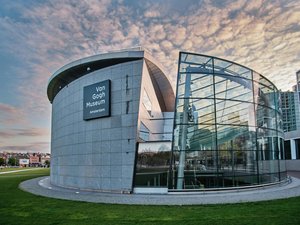
Van Gogh muzej, AmsterdamVan Gogh muzej Amsterdam 5 Woman in a gothic arcade- woman with flowers
British Museum, LondonBritish Museum London 2 Hantise (Obsession)

Odilon Redon across the decades: one unique original for each

Djela po desetljećima

Pick a decade to see the original that defines it.

Odilon Redon's paintings: questions for the gallery

What is the single most famous work of Odilon Redon?Reveal the answer

The cyclops (1914), Kröller-Müller Museum, Otterlo. The Black Pegasus and Woman and Centaur (1900) come next.

At what age did Odilon Redon create The cyclops?Reveal the answer

74 years old: The cyclops dates from 1914, and Odilon Redon was born in 1840.

Which ten paintings by Odilon Redon are the most famous?Reveal the answer

The cyclops, The Black Pegasus, Woman and Centaur, Saint Sebastian, The Martyrdom of Saint Sebastian, The Death of Ophelia, The Birth of Venus, White Pegasus, Breton Village i Sacred Heart. The ranking above gives each one's year and museum.

How many works by Odilon Redon are known?Reveal the answer

Our catalog holds 804 works by Odilon Redon, dated from 1865 to 1914.

Where can the most famous Odilon Redon originals be seen?Reveal the answer

Mostly in Musée d'Orsay (Pariz), Kröller-Müller Museum (Otterlo) i National Gallery of Art (Washington). The museum table above lists them all.

During which period did Odilon Redon create the best-known paintings?Reveal the answer

In 1900s: 29 of the 100 works on this page were made then, Woman and Centaur among them.

Which famous Odilon Redon painting is the earliest, and which the latest?Reveal the answer

On this page, the earliest is Woman and the mountain landscape (1865) and the latest The cyclops (1914).

What subjects did Odilon Redon favour?Reveal the answer

Dreamlike (12), Woman (8) i Flowers (8), across the 100 works on this page.

What materials did Odilon Redon paint with most?Reveal the answer

Oil On Canvas, for 18 of the 100 works on this page.

Which movement does the work of Odilon Redon belong to?Reveal the answer

Symbolism, judging by the originals on this page.

What Odilon Redon originals can I see at the Musée d'Orsay?Reveal the answer

Saint Sebastian, Prayer, Face, Flowers i Woman in Red: the Musée d'Orsay, Pariz holds 5 of the works on this page.

Where can I order a hand-painted Odilon Redon reproduction?Reveal the answer

Yes, as a reproduction: the original stays in its museum, but any painting on this page can be painted by hand for you, made to order one at a time, from the painting's own page.

Odilon Redon: a portrait of the artist

Rani život, obitelj i školovanje

Rođen kao Bertrand-Jean Redon 20. travnja 1840. u Bordeauxu, u regiji Akvitanija u Francuskoj, dječak koji će kasnije postati poznat kao Odilon Redon ušao je u svijet oblikovan porodičnim korijenima. Njegova majka, Marie Guérin, bila je francuski kreol s otoka Île Bourbon, i upravo iz njezina imena on će na kraju dobiti svoj odabrani pseudonim. Još u djetinjstvu bila je vidljiva određena vizualna potvrtnost; s deset godina osvojio je školsku nagradu za crtež, mali trijumf koji je nagovijestio senzibilitet koji će kasnije posvetiti svom umjetničkom radu.

Put prema umjetničkom životu nije bio jednostavan niti izravan. Iako je sa šesnaest godina započeo formalno školovanje crtanja, očeva želje prvobitno su ga vukle prema strukturiranom svijetu arhitekture. To ga je vodilo u Pariz, gdje je 1864. godine nakratko studirao slikarstvo pod vodstvom Jean-Léon Gérôme. Međutim, kruta zahtjevnost arhitektonskog školovanja nije odgovarala njegovom temperamentu. Nakon što nije položio upisni ispit za École des Beaux-Arts, vratio se u rodni Bordeaux kako bi tražio drugačiji način gledanja na svijet.

U tišini svog rodnog kraja, njegove su ruke pronašle nove teksture. Počeo je se baviti kiparstvom i polako ovladavati zamračnim, složenim umjetnostima bakropisa i litografije. Upravo pod vodstvom Rodolphe Bresdin te su tehničke vještine pustile korijen, pružajući mu alate za istraživanje mračnijih i ambiguitetnijih područja ljudske psihe. Te rane godine eksperimentiranja s linijom i kamenom postavile su temelj za sve što je uslijedilo.

Period monokromatskih "Noirs"

Tijek Redonova života poprimio je neočekivani obrat 1870. godine kada ga je francusko-pruski rat pozvao u vojnu službu. To razdoblje vojničkog dužnika prekinulo je njegov razvojni umjetnički put, no nije moglo ugasiti vizije koje su se mijele u njemu. Po povratku, usredotočio se na sjene, radeći gotovo isključivo u crno-bijeloj tehnici sve do svoje pedesete godine. Te je vizionarske radove počeo nazivati svojim noirs, što je termin koji je savršeno dočarao intenzivnu, mračnu prirodu njegovih istraživanja. Kroz te monokromatske studije, nastojao je dati oblik nevidljivom, udaljavajući se od doslovnog svijeta kako bi pronašao jezik čiste svjetlosti i tame.

Njegova metoda bila je raznolika poput stvorenja koja je prizivao. Savladao je umjetnost litografije i koristio crtež ugljenom za izgradnju svojih kompozicija, često slojevito primjenjujući različite materijale kako bi postigao specifičnu dubinu. Kombinirao je vin i uljeni ugljen s dodacima komprimiranog ugljena i crne šljire kako bi stvorio svoje specifične efekte. Ti su mu alati omogućili prikazivanje noćnih scena i čudnih, fantastičnih bića koja su se činila kao da izranjaju iz vrtljave magle. Njegove su ruke radile s promišljenom intenzitetom, koristeći tvrdoću crnog krede za ocrtavanje oblika nasuprot mekšim, atmosferskim dijelovima ugljena. Rezultati nisu bili obični crteži, već prozori u privatno, sjenovito kraljevstvo.

Evolucija u boju i simbolizam

Kako su se 1890-e približavale, nova svjetlost počela je prodirati u Redonov atelier. Teške, monokromatske sjene njegovih ranih godina ustupile su mjesto iznenadnom zagrljaju boje. Okrenuo se pastelama i uljanim bojama, pronalazivši u tim medijima način za izražavanje promjenjivih raspoloženja duše. To nije bio samo običan tehnički pomak, već duboko širenje njegove vizije. Odošao je od strogoće svojih studija ugljenom prema sanjivoj apstrakciji, u kojoj su se oblici činili kao da se rastapaju u svjetlosti i nijansi. Ova tranzicija označila je njegovo mjesto u samom srcu simbolističkog pokreta, dok je nastojao dati oblik neopipljivom kroz jezik boje.

Ova novopronađena luminoznost bila je duboko pod utjecajem dolaska japanske umjetnosti u Francusku. Redon se pronašao privlačen estetikom japanskih printova, otkrivajući mnogo toga čemu se mogao diviti u njihovoj plosatoj perspektivi i odvažnosti njihovih boja. Ta fascinacija omogućila mu je da odemo još dalje u carstvo sugestije, umjesto doslovnog prikazivanja. Njegove kompozicije počele su odražavati ovaj istočnjački utjecaj, miješajući osjećaj misterije s dekorativnijom, eteričnom kvalitetom. Svijet koji je slikao više nije bio mjesto čvrstih objekata, već prostor duhovnog i emocionalnog odjeka.

Ključna djela i značajni narudžbe

Kako se Odilon Redon udaljavao od sjena svojih ranih godina, njegov je kist pronašao novu svrhu zahvaljujući pokroviteljstvu onih koji su dijelili njegovu fascinaciju nevidljivim. Baron Robert de Domecy postao je značajna figura u tom razdoblju, naručujući umjetniku da zapiše likove svoje obitelji. Ti portreti barunice i njezine kćeri, Jeanne, omogućili su umjetniku da svoje evoluirajuće osjećaj za svjetlost primijeni na ljudski oblik, nastojeći otkriti unutarnji život koji se skriva ispod površine kože.

Njegova je mašta često skretala prema drevnim mitovima, ponovno ih zamišljajući kroz prizmu sanjlive apstrakcije. U jednom od značajnih uljanih slika, prikazao je mit o Polifemu i nimfi Galateji, poznat kao Sidov. Ovo djelo hvata giganta kako on svojim jednim okom gleda prema uspavanoj djevici, u kompoziciji koja odražava njegovu sposobnost spajanja klasične teme s osjećajem psihološke misterije. Slično tome, njegovo pastelno djelo iz 1900. godine, Portret Marie Botkine, poziva na dublji pogled u tihe, introspektivne dubine subjekta, prikazane mekim, svjetlucavim potezom koji definira njegov kasniji stil.

U svojim posljednjim godinama, utjecaj estetike Istoka postao je još izraženiji, što je dovelo do djela koja su prihvatila dekorativniju i ravniju perspektivu. Pred kraj života, oko 1916. godine, stvorio je Veliki buket u japanskoj vazi, djelo koje pokazuje kako su se načela japanske umjetnosti duboko utkanula u njegov vizualni jezik. Ovo kasno djelo prikazuje umjetnika koji je u potpunosti prihvaćio moć boje kako bi izrazio neopipljivo.

Tehnika i umjetnički stil

Odilon Redon koračao je kroz svijet umjetnosti kao crtač, litograf, pa i slikar, uvijek nastojeći staviti logiku vidljivog u službu onog nevidljivog. U svojim ranim godinama pronašao je duboki, snažan jezik u sjeni, radeći prvenstveno u crno-bijeloj tehnici. Savršeno je ovladao umjetnošću litografije, koristeći taj medij za postizanje suptilnih tonalnih gradacija koje su omogućavale svjetlosti da izroni iz duboke tame. Kako bi postigao veću preciznost, često je koristio crni krede za ocrtavanje specifičnih kompozicijskih elemenata preko širokih, mekih područja izrađenih ugljenom. Ta djela često su opisivana kao sinteza noćnih marea i snova, u kojima su se granice između fizičkog i zamišljenog počele zamagliti.

Kako je njegova ruka postajala sigurnija, njegov pristup teksturi i svjetlosti počeo se mijenjati. Od težinskih, monokromatskih dubina svojih ranih studija ugljenom, odmaknuo se prema upotrebi pastelâ i uljanih boja. Ta je tranzicija omogućila istraživanje drugačije vrste svjetiljosti, iako nikada nije izgubio svoju opsesiju podsviješću. Čak i kada je radio s bojom, njegove su kompozicije često zadržavale osjećaj misterije, kao da se motivi izranjaju iz sna, a ne iz fizičkog krajolika. Njegova sposobnost manipulacije različitim medijima omogućila mu je da najeludivije dijelove ljudske psihe pretvori u opipljive oblike.

Naslijeđe i utjecaj na modernu umjetnost

Valovi Redonove vizije dosegnuli su daleko izvan tihšina simbolističkih krugova, dotičući same temelje nadolazećeg stoljeća. Okrenuvši svoj pogled prema unutrašnjosti kako bi mapirao čudna, iracionalna prostranstva podsvijesti, on je pripremio tlo za nadrealiste. Njegova sposobnost da oblikuje logiku snova pružila je nacrt kasnijim umjetnicima poput Marcela Duchampa i Maxa Ernsta, koji su težili osloboditi um od okova razuma. On nije samo slikao scene; on je vizualizirao nevidljive struje ljudskih misli, stvarajući most između vidljivog svijeta i unutarnjeg psihološkog bića.

Ova opsjednutost subjektivnim iskustvom i emocionalnom težinom nevidljivog također je pronašla duboki odjek kod ekspresionističkih slikarja. Njegovo djelo sugeriralo je da prava esencija subjekta leži u tome kako se on osjeća, a ne u tome kako ga oko mjeri. Izvan njegovih platnena slika i pastelnih radova, njegova grafička umjetnost ostaje duboko postignuće. Njegove litografije i crteži ugljenom, te sjene istraživanja mraka i misterija, smatraju se jednim od najinovativnijih postignuća u litografiji i grafici devetnaestog stoljeća. Savršeno je ovladao suptilnim gradacijama tonova kako bi sugerirao svjetove koji su djelovali istovremeno drevno i potpuno novi.

  • Kiklop, oko 1914.
  • Smrt Ofelije, 1905.
  • Rođenje Venere, 1910.

Gdje danas možete vidjeti njegova djela

Kako biste susreli tragove njegove neizmjjerne mašte, potrebno je otploviti prema velikim spremištima europske umjetnosti. U Parizu, Musée d'Orsay čuva nekoliko njegovih djela, nudeći nam uvid u evoluciju njegove vizije i transformaciju duha. Oni koji traže njegove kasnije, svjetlija i bogatija istraživanja, možda će pronaći put do New Yorka, gdje Museum of Modern Art čuva djela koja odražavaju njegov prelazak prema svjetlucavoj, gotovo eteričnoj estetici.

Doseg njegovog utjecaja proteže se preko svih granica, nalazeći svoj dom u raznolikim kolekcijama širom svijeta. U Nizozemskoj, Kröller-Müller Museum u Otterluu hrani Kiklopove, remek-djelo koje savršeno hvata mitološke i sanjive kvalitete njegovog središnjeg i kasnijeg perioda stvaralaštva. Istovremeno, preko Atlantika, J. Paul Getty Museum u Los Angelesu čuva portret Baronice de Domecy, djelo koje tiho svjedoči o osobnim vezama i narudžbama koje su oblikovale njegov životni put.

  • Kiklopovi, Kröller-Müller Museum, Otterlo
  • Portret Baronice de Domecy, J. Paul Getty Museum, Los Angeles

Sva 804 djela umjetnika Odilon Redon →