Portret Nicolai Abraham Abildgaard

100 najpoznatijih djela umjetnika Nicolai Abraham Abildgaard, galerijska selekcija

Ažurirano Listopad 2026 · rangirano prema našoj ocjeni popularnosti (pretraživanja, posjeti i narudžbe za svako djelo) · 106 djela Nicolai Abraham Abildgaard u našem katalogu

Ukratko

Od svih originala koje je Nicolai Abraham Abildgaard ostavio, najpoznatiji je The Greek Poet Sappho and the Girl from Mytilene (1809) u kolekciji muzeja Statens Museum For Kunst, Kopenhagen. Samo iza njih slijede Cupid Playing the Lyre. (1782) i Christian V Presents Danish Law 1683 (1784). Naš katalog sadrži 106 djela umjetnika Nicolai Abraham Abildgaard; galerija je čuvala onih 100 koja svijet najviše divi, a svako je prikazano s datumom nastanka, muzejom i pričanom.

1743 – 1809, Kopenhagen Neoclassicism Najviše djela: Statens Museum For Kunst

Top 10 djela umjetnika Nicolai Abraham Abildgaard: izbor galerije

1
The Greek Poet Sappho and the Girl from Mytilene (1809) od Nicolai Abraham Abildgaard

The Greek Poet Sappho and the Girl from Mytilene

1809 · Acrylic On Canvas · Statens Museum For Kunst, Kopenhagen

Nicolai Abildgaard’s Sappho and Mytilene: A Vision of Romantic Idealism The painting “The Greek Poet Sappho and the Girl from Mytilene,” created by Nicolai Abraham Abildgaard in 1809, stands as a cornerstone of Danish neoclassical art and embodies the fervent spirit of Romantic idealism. More than just a depiction of two figures, it’s an exploration of beauty, longing, and the sublime—themes central to the artistic sensibilities of the era. Housed…

2
Cupid Playing the Lyre. (1782) od Nicolai Abraham Abildgaard

Cupid Playing the Lyre.

1782 · Oil On Canvas · Thorvaldsen Museum, Kopenhagen

In the quiet stillness of a mythological moment, Cupid Playing the Lyre. emerges from the shadows. This oil on canvas work, created by Nicolai Abildgaard around 1782, captures a solitary figure caught in a private, celestial act. The scene centers on a youthful, winged Cupid, whose presence brings a sense of soft grace to the composition. He leans toward a lyre that rests upon a stone pedestal, his delicate form…

3
Christian V Presents Danish Law 1683 (1784) od Nicolai Abraham Abildgaard

Christian V Presents Danish Law 1683

1784 · Oil On Canvas · Statens Museum For Kunst, Kopenhagen

Christian V Presents Danish Law 1683 is an oil painting by Nicolai Abildgaard. Created in 1784, this work functions as a history scene depicting a specific real event. The subject matter focuses on a Danish king presenting a body of law, capturing a moment of official legal or political significance. The scene is rendered in a documentary style that emphasizes the gravity of the proceedings.

4
Julia and Fulvia (1803) od Nicolai Abraham Abildgaard

Julia and Fulvia

1803 · Oil On Canvas · Statens Museum For Kunst, Kopenhagen

The oil on canvas painting titled Julia and Fulvia was executed by the artist Nicolai Abildgaard. This work depicts a literary scene or figure, focusing on the physical interaction between two female subjects. The composition centers on the tension between these figures within a classical setting.

6
Frederik II Builds Kronborg Castle at Elsinore (1782) od Nicolai Abraham Abildgaard

Frederik II Builds Kronborg Castle at Elsinore

1782 · Oil On Canvas · Statens Museum For Kunst, Kopenhagen

In this significant work of Danish history, Frederik II Builds Kronborg Castle at Elsinore, the artist Nicolai Abildgaard captures a moment of profound national construction. The painting centers on Frederick II of Denmark, depicted during the foundational stages of the Kronborg Castle at Elsinore. It is a scene that looks back at the 18th century through a lens of historical narrative, focusing on the architectural ambitions of the Danish monarchy.

7
Kulturens herredømme (1796) od Nicolai Abraham Abildgaard

Kulturens herredømme

1796 · Oil · Statens Museum For Kunst, Kopenhagen

The oil painting titled Kulturens herredømme, known in English as The supremacy of culture, was executed by the artist Nicolai Abildgaard. This work is identified by the accession number KMS1836. The composition features a monochromatic, black-and-white palette that emphasizes the play of light and shadow across the figures.

8
Christian VII Uniting the Ducal with the Royal Part of Holstein in 1767 (1790) od Nicolai Abraham Abildgaard

Christian VII Uniting the Ducal with the Royal Part of Holstein in 1767

1790 · Oil On Canvas · Statens Museum For Kunst, Kopenhagen

The composition centers on a seated male figure, identified as King Christian VII, positioned on the right side of the canvas. He is dressed in white and gold regalia, wearing a crown and holding a scepter. To his left, two female figures are positioned; one faces the viewer directly, while the other is seen in profile, gesturing toward the king. Above the central group, a dark eagle flies through a…

9
Magnus Stenbock Surrenders the Fortress of Tønningen to Frederik IV in 1714 (1785) od Nicolai Abraham Abildgaard

Magnus Stenbock Surrenders the Fortress of Tønningen to Frederik IV in 1714

1785 · Oil On Canvas · Statens Museum For Kunst, Kopenhagen

In the grand tapestry of European history, few moments capture the gravity of shifting power quite like the scene depicted in Nicolai Abraham Abildgaard’s 1785 masterpiece, Magnus Stenbock Surrenders the Fortress of Tønningen to Frederik IV in 1714. This evocative oil painting serves as a window into a pivotal era of military diplomacy and sovereign command. The composition is masterfully orchestrated, drawing the viewer into a crowded, dynamic tableau where…

10
The robber's housekeeper comforts the young girl by telling the myth of Amor and Psyche. Motif from Apulejus, The Golden Donkey (1808) od Nicolai Abraham Abildgaard

The robber's housekeeper comforts the young girl by telling the myth of Amor and Psyche. Motif from Apulejus, The Golden Donkey

1808 · Oil On Canvas · Statens Museum For Kunst, Kopenhagen

The robber's housekeeper comforts the young girl by telling the myth of Amor and Psyche. Motif from Apulejus, The Golden Donkey is an oil on canvas work created about 1808. This piece captures a quiet, narrative moment between two figures, framed by the presence of a donkey in the shadows. The scene draws its inspiration from the literary motifs found in Apuleius's writings.

Izbor umjetnika Nicolai Abraham Abildgaard se nastavlja, od 11 do 100

11Apollo charging the Parcae to visit Ceres, who has fled from the Earth (1809) od Nicolai Abraham AbildgaardApollo charging the Parcae to visit Ceres, who has fled from the Earth1809 · Statens Museum For Kunst 12Christian III Succouring Denmark (1780) od Nicolai Abraham AbildgaardChristian III Succouring Denmark1780 · Statens Museum For Kunst 13Christian III Succouring Denmark (1780) od Nicolai Abraham AbildgaardChristian III Succouring Denmark1780 · Statens Museum For Kunst 14The Construction of Copenhagen´s Dock in the Reign of Christian VI (1786) od Nicolai Abraham AbildgaardThe Construction of Copenhagen´s Dock in the Reign of Christian VI1786 · Statens Museum For Kunst 15The Prayers of the Potuans at the Feast of the Unfathomable God (1785) od Nicolai Abraham AbildgaardThe Prayers of the Potuans at the Feast of the Unfathomable God1785 · Statens Museum For Kunst 16A farewell scene (1783) od Nicolai Abraham AbildgaardA farewell scene1783 · Nivaagaards Malerisamling 17Rome as Ruler of the World (1784) od Nicolai Abraham AbildgaardRome as Ruler of the World1784 · Statens Museum For Kunst 18The Triumph of a Potuan, whose Reform Proposal has been Approved (1785) od Nicolai Abraham AbildgaardThe Triumph of a Potuan, whose Reform Proposal has been Approved1785 · Statens Museum For Kunst 19Absolute Monarchy Assigned to Frederik III in 1660 (1783) od Nicolai Abraham AbildgaardAbsolute Monarchy Assigned to Frederik III in 16601783 · Statens Museum For Kunst 20The Establishment of Schools (1781) od Nicolai Abraham AbildgaardThe Establishment of Schools1781 · Statens Museum For Kunst 21Asiatic Trade (1782) od Nicolai Abraham AbildgaardAsiatic Trade1782 · Statens Museum For Kunst 22Niels Klim thinks he hears the Deacon when he is awakened by a Bull (1785) od Nicolai Abraham AbildgaardNiels Klim thinks he hears the Deacon when he is awakened by a Bull1785 · Statens Museum For Kunst 23Standardization of Weights and Measures in 1683 (1784) od Nicolai Abraham AbildgaardStandardization of Weights and Measures in 16831784 · Statens Museum For Kunst 24The Foundation of the Royal Library (1783) od Nicolai Abraham AbildgaardThe Foundation of the Royal Library1783 · Statens Museum For Kunst 25Richard III wakes up from his nightmare in his tent in Bosworth (1785) od Nicolai Abraham AbildgaardRichard III wakes up from his nightmare in his tent in Bosworth1785 · Statens Museum For Kunst 26Alexander's messenger at the Persian philosopher (1785) od Nicolai Abraham AbildgaardAlexander's messenger at the Persian philosopher1785 27Alexander the Great and an officer visit Diogenes. (1785) od Nicolai Abraham AbildgaardAlexander the Great and an officer visit Diogenes.1785 28The Prince Royal Frederik awakens the sleeping Fama with the help of Clio. Study. (1783) od Nicolai Abraham AbildgaardThe Prince Royal Frederik awakens the sleeping Fama with the help of Clio. Study.1783 · The Museum of National History at Frederiksborg Castle 29Richard III Before the Battle of Bosworth (1780) od Nicolai Abraham AbildgaardRichard III Before the Battle of Bosworth1780 · Randers Kunstmuseum 30The Archangel Michael and Satan Disputing about the Body of Moses (1785) od Nicolai Abraham AbildgaardThe Archangel Michael and Satan Disputing about the Body of Moses1785 · ARoS Aarhus Kunstmuseum 31Niels Klim Receives the Homage of the Quamites. (1787) od Nicolai Abraham AbildgaardNiels Klim Receives the Homage of the Quamites.1787 · Statens Museum For Kunst 32King Priam Pleading with Achilles for the Corpse of Hector (1794) od Nicolai Abraham AbildgaardKing Priam Pleading with Achilles for the Corpse of Hector1794 · Statens Museum For Kunst 33The Foundation of the Copenhagen Fire Insurance (1786) od Nicolai Abraham AbildgaardThe Foundation of the Copenhagen Fire Insurance1786 · Statens Museum For Kunst 34Mercury by the Seashore (1794) od Nicolai Abraham AbildgaardMercury by the Seashore1794 · Statens Museum For Kunst 35Richard III (1787) od Nicolai Abraham AbildgaardRichard III1787 36Achilles and the Centaur Cheiron (1796) od Nicolai Abraham AbildgaardAchilles and the Centaur Cheiron1796 · Statens Museum For Kunst 37Thetis Immersing her Infant Son Achilles in the River Styx to Make him Invulnerable (1796) od Nicolai Abraham AbildgaardThetis Immersing her Infant Son Achilles in the River Styx to Make him Invulnerable1796 · Statens Museum For Kunst 38The Death of Achilles (1796) od Nicolai Abraham AbildgaardThe Death of Achilles1796 · Statens Museum For Kunst 39Philosophy. Allegorical figure. (1800) od Nicolai Abraham AbildgaardPhilosophy. Allegorical figure.1800 · Statens Museum For Kunst 40The Slave Davus and the Maid Mysis. From Terence´s Andria. (1804) od Nicolai Abraham AbildgaardThe Slave Davus and the Maid Mysis. From Terence´s Andria.1804 · Statens Museum For Kunst 41Christian I Raising the Province of Holstein to the State of a Duchy in 1460 (1778) od Nicolai Abraham AbildgaardChristian I Raising the Province of Holstein to the State of a Duchy in 14601778 · Statens Museum For Kunst 42Jurisprudence. Allegorical Figure (1800) od Nicolai Abraham AbildgaardJurisprudence. Allegorical Figure1800 · Statens Museum For Kunst 43Achilles and the Daughters of Lycomedes (1796) od Nicolai Abraham AbildgaardAchilles and the Daughters of Lycomedes1796 · Statens Museum For Kunst 44Theology. Allegorical figure (1800) od Nicolai Abraham AbildgaardTheology. Allegorical figure1800 · Statens Museum For Kunst 45Simo and his former slave Sosia. From Terence´s Andria. (1803) od Nicolai Abraham AbildgaardSimo and his former slave Sosia. From Terence´s Andria.1803 · Statens Museum For Kunst 46Julia and Fulvia (1800) od Nicolai Abraham AbildgaardJulia and Fulvia1800 · National Museum of Art, Architecture and Design 47Portrait of the artist's son Marcus Aurelius Abildgaard. (1797) od Nicolai Abraham AbildgaardPortrait of the artist's son Marcus Aurelius Abildgaard.1797 48Fingal gives his weapons to Oscar. (1796) od Nicolai Abraham AbildgaardFingal gives his weapons to Oscar.1796 · Kunsten Museum of Modern Art Aalborg 49Allegory of Philosophy (1800) od Nicolai Abraham AbildgaardAllegory of Philosophy1800 50Allegory of Protestantism (1809) od Nicolai Abraham AbildgaardAllegory of Protestantism1809 · Ribe Kunstmuseum 51The Catholic Worldview, Allegory (1809) od Nicolai Abraham AbildgaardThe Catholic Worldview, Allegory1809 · Ribe Kunstmuseum 52The Oath of Fealty in 1660 (1806) od Nicolai Abraham AbildgaardThe Oath of Fealty in 16601806 · Statens Museum For Kunst 53Odysseus Takes Counsel with Teiresias. From Homer´s Odyssey (1809) od Nicolai Abraham AbildgaardOdysseus Takes Counsel with Teiresias. From Homer´s Odyssey1809 · Statens Museum For Kunst 54Fotis sees her Lover Lucius Transformed into an Ass. Motif from Apeleius' The Golden Ass (1809) od Nicolai Abraham AbildgaardFotis sees her Lover Lucius Transformed into an Ass. Motif from Apeleius' The Golden Ass1809 · Statens Museum For Kunst 55Tarquin and the Sibyl (1809) od Nicolai Abraham AbildgaardTarquin and the Sibyl1809 · Statens Museum For Kunst 56Hierarchy at its Peak at the time of the Crusades (1784) od Nicolai Abraham AbildgaardHierarchy at its Peak at the time of the Crusades1784 · Statens Museum For Kunst 57The Revival of Learning, the Invention of Printing and Gunpowder and the Discovery of America (1784) od Nicolai Abraham AbildgaardThe Revival of Learning, the Invention of Printing and Gunpowder and the Discovery of America1784 · Statens Museum For Kunst 58Papirius and his Mother (1809) od Nicolai Abraham AbildgaardPapirius and his Mother1809 · Statens Museum For Kunst 59Alexander the Great and Diogenes. (1809) od Nicolai Abraham AbildgaardAlexander the Great and Diogenes.1809 · Kunsten Museum of Modern Art Aalborg 60Fotis sees her Lover Lucius Transformed into an Ass. Motif from Apeleius' The Golden Ass (1809) od Nicolai Abraham AbildgaardFotis sees her Lover Lucius Transformed into an Ass. Motif from Apeleius' The Golden Ass1809 · Statens Museum For Kunst 61Tibullus Lamenting outside the Door of his Beloved (1808) od Nicolai Abraham AbildgaardTibullus Lamenting outside the Door of his Beloved1808 · Statens Museum For Kunst 62Christian IV Aboard his Flagship "The Trinity" (1782) od Nicolai Abraham AbildgaardChristian IV Aboard his Flagship "The Trinity"1782 · Statens Museum For Kunst 63Two Young Men Confessing to Alexander the Great their Conspiracy against Him (1800) od Nicolai Abraham AbildgaardTwo Young Men Confessing to Alexander the Great their Conspiracy against Him1800 · Statens Museum For Kunst 64Niels Klim Attends the Sentencing of the Deceased Potuan Prince. (1785) od Nicolai Abraham AbildgaardNiels Klim Attends the Sentencing of the Deceased Potuan Prince.1785 · Statens Museum For Kunst 65The Abolition of Adscription in 1788 (1790) od Nicolai Abraham AbildgaardThe Abolition of Adscription in 17881790 · Statens Museum For Kunst 66Frederik V as Patron of Science and Arts (1787) od Nicolai Abraham AbildgaardFrederik V as Patron of Science and Arts1787 · Statens Museum For Kunst 67The Midwife Taking Leave of the Girl from Andros (from Terence's Andria ) (1801) od Nicolai Abraham AbildgaardThe Midwife Taking Leave of the Girl from Andros (from Terence's Andria )1801 · Statens Museum For Kunst 68Nature Untamed (1784) od Nicolai Abraham AbildgaardNature Untamed1784 · Statens Museum For Kunst 69Hamlet Delivering a Letter Written by Himself to the Queen of Scotland (1776) od Nicolai Abraham AbildgaardHamlet Delivering a Letter Written by Himself to the Queen of Scotland1776 · Statens Museum For Kunst 70From Ludvig Holbergs´s The Journey of Niels Klim to The World Underground (1785) od Nicolai Abraham AbildgaardFrom Ludvig Holbergs´s The Journey of Niels Klim to The World Underground1785 · Statens Museum For Kunst 71Frederik II Builds Kronberg Castle at Elsinore (1781) od Nicolai Abraham AbildgaardFrederik II Builds Kronberg Castle at Elsinore1781 · Statens Museum For Kunst 72The Dying Messalina and Her Mother (1797) od Nicolai Abraham AbildgaardThe Dying Messalina and Her Mother1797 · Statens Museum For Kunst 73The Greek Poet Anacreon and Bathyll (1808) od Nicolai Abraham AbildgaardThe Greek Poet Anacreon and Bathyll1808 · Statens Museum For Kunst 74Christian I Elevates Holstein to a Duchy in 1474 (1778) od Nicolai Abraham AbildgaardChristian I Elevates Holstein to a Duchy in 14741778 · Statens Museum For Kunst 75Socrates in Prison (1784) od Nicolai Abraham AbildgaardSocrates in Prison1784 · Ny Carlsberg Glyptotek 76Niels Klim in Potu (1785) od Nicolai Abraham AbildgaardNiels Klim in Potu1785 · Statens Museum For Kunst 77Allegory on the Right of Citizenship (1790) od Nicolai Abraham AbildgaardAllegory on the Right of Citizenship1790 · Statens Museum For Kunst 78Fingal Sees the Ghosts of his Forefathers by Moonlight (1782) od Nicolai Abraham AbildgaardFingal Sees the Ghosts of his Forefathers by Moonlight1782 · Statens Museum For Kunst 79Male Figure after Michelangelo's 'Last Judgement' in the Sistine Chapel (1774) od Nicolai Abraham AbildgaardMale Figure after Michelangelo's 'Last Judgement' in the Sistine Chapel1774 · Statens Museum For Kunst 80Ismene and Antogone Plead with Theseus (1799) od Nicolai Abraham AbildgaardIsmene and Antogone Plead with Theseus1799 · Statens Museum For Kunst 81Hamlet and His Mother (1778) od Nicolai Abraham AbildgaardHamlet and His Mother1778 · Statens Museum For Kunst 82Richard III terrified by nightmarish visions. Shakespeare, Act 5, Scene 9 od Nicolai Abraham AbildgaardRichard III terrified by nightmarish visions. Shakespeare, Act 5, Scene 9Nivaagaards Malerisamling 83Amor and Psyche embracing each other od Nicolai Abraham AbildgaardAmor and Psyche embracing each otherNivaagaards Malerisamling 84Two Roman warriors watching a seated man embracing a child od Nicolai Abraham AbildgaardTwo Roman warriors watching a seated man embracing a child 85Scenes from 'Niels Klim's Subterranean Journey' od Nicolai Abraham AbildgaardScenes from 'Niels Klim's Subterranean Journey'Hamburger Kunsthalle 86Audhumla od Nicolai Abraham AbildgaardAudhumlaStatens Museum For Kunst 87The Doctor's Wife Reveals Her Husband's Intention of Anatomising Niels Klim (1787) od Nicolai Abraham AbildgaardThe Doctor's Wife Reveals Her Husband's Intention of Anatomising Niels Klim1787 · Statens Museum For Kunst 88The Finding of the Infant Moses od Nicolai Abraham AbildgaardThe Finding of the Infant MosesStatens Museum For Kunst 89Adam and Eve (1780) od Nicolai Abraham AbildgaardAdam and Eve1780 · Nationalmuseum 90Catullus, and Lesbia Seeking Comfort in his Arms for the Death of her Sparrow (1809) od Nicolai Abraham AbildgaardCatullus, and Lesbia Seeking Comfort in his Arms for the Death of her Sparrow1809 · Nivaagaards Malerisamling 91A view of Schie Church in Sweden od Nicolai Abraham AbildgaardA view of Schie Church in SwedenSorø Art Museum 92Adrastos Slays Himself on Atys' Tomb od Nicolai Abraham AbildgaardAdrastos Slays Himself on Atys' TombARoS Aarhus Kunstmuseum 93Lover Pamfilus in conversation with his forslagne serve Davus od Nicolai Abraham AbildgaardLover Pamfilus in conversation with his forslagne serve DavusStatens Museum For Kunst 94Portrait of Nicolai Abraham Abildgaard od Nicolai Abraham AbildgaardPortrait of Nicolai Abraham Abildgaard 95Ossian's swansong od Nicolai Abraham AbildgaardOssian's swansongStatens Museum For Kunst 96Hamlet Shows His Mother the Ghost of His Father od Nicolai Abraham AbildgaardHamlet Shows His Mother the Ghost of His Father 97Fingal Sees the Ghosts of His Ancestors in the Moonlight od Nicolai Abraham AbildgaardFingal Sees the Ghosts of His Ancestors in the Moonlight 98Jupiter Weighing the Fate of Man od Nicolai Abraham AbildgaardJupiter Weighing the Fate of ManRibe Kunstmuseum 99Sitting male nude with the face partly covered by his raised arms od Nicolai Abraham AbildgaardSitting male nude with the face partly covered by his raised arms 100The Wounded Philoctetes (1775) od Nicolai Abraham AbildgaardThe Wounded Philoctetes1775 · Nacionalna galerija Danske

Slavna djela Nicolai Abraham Abildgaard po razdobljima

Motivi koji su privukli pažnju Nicolai Abraham Abildgaard

Četiri teme koje se najčešće ponavljaju u ovim originalima, svaka s svojim vrhunskim primjerom.

Muzeji koji čuvaju originalna djela umjetnika Nicolai Abraham Abildgaard

8 muzeja u kojima se nalazi najviše djela s ove stranice.

Muzej Grad Djela autora Nicolai Abraham Abildgaard Slike iz ovog popisa
Statens Museum For Kunst, KopenhagenStatens Museum For Kunst Kopenhagen 70 The Greek Poet Sappho and the Girl from Mytilene, Christian V Presents Danish Law 1683, Julia and Fulvia
Nivaagaards Malerisamling, NibeNivaagaards Malerisamling Nibe 4 A farewell scene, Richard III terrified by nightmarish visions. Shakespeare, Act 5, Scene 9, Amor and Psyche embracing each other
Ribe Kunstmuseum, EsbjergRibe Kunstmuseum Esbjerg 3 Allegory of Protestantism, The Catholic Worldview, Allegory, Jupiter Weighing the Fate of Man
ARoS Aarhus Kunstmuseum, AarhusARoS Aarhus Kunstmuseum Aarhus 2 The Archangel Michael and Satan Disputing about the Body of Moses, Adrastos Slays Himself on Atys' Tomb
Kunsten Museum of Modern Art Aalborg, AalborgKunsten Museum of Modern Art Aalborg Aalborg 2 Fingal gives his weapons to Oscar., Alexander the Great and Diogenes.
The Museum of National History at Frederiksborg Castle, HillerødThe Museum of National History at Frederiksborg Castle Hillerød 2 The Prince Royal Frederik awakens the sleeping Fama with the help of Clio. Study.
Nationalmuseum, StockholmNationalmuseum Stockholm 2 Adam and Eve
Sorø Art Museum, SorøSorø Art Museum Sorø 2 A view of Schie Church in Sweden

Nicolai Abraham Abildgaard desetljeće po desetljeće: original koji definira svako od njih

Djela po desetljećima

Odaberite desetljeće kako biste vidjeli original koji ga definira.

Pitanja kolekcionara o slikama umjetnika Nicolai Abraham Abildgaard

Po kojem je djelu Nicolai Abraham Abildgaard najpoznatiji/a?Otkrijte odgovor

The Greek Poet Sappho and the Girl from Mytilene (1809), Statens Museum For Kunst, Kopenhagen. Nakon njih slijede Cupid Playing the Lyre. (1782) i Christian V Presents Danish Law 1683 (1784).

Koliko je godina Nicolai Abraham Abildgaard imao/la kada je nastalo djelo The Greek Poet Sappho and the Girl from Mytilene?Otkrijte odgovor

66 godina: The Greek Poet Sappho and the Girl from Mytilene datira iz 1809, a Nicolai Abraham Abildgaard je rođen/a 1743.

Koja su deset najpoznatijih djela umjetnika Nicolai Abraham Abildgaard?Otkrijte odgovor

The Greek Poet Sappho and the Girl from Mytilene, Cupid Playing the Lyre., Christian V Presents Danish Law 1683, Julia and Fulvia, The Potuans are Surprised to see Niels Klim Genuflect in front of the Wise Prince., Frederik II Builds Kronborg Castle at Elsinore, Kulturens herredømme, Christian VII Uniting the Ducal with the Royal Part of Holstein in 1767, Magnus Stenbock Surrenders the Fortress of Tønningen to Frederik IV in 1714 i The robber's housekeeper comforts the young girl by telling the myth of Amor and Psyche. Motif from Apulejus, The Golden Donkey. Gornji rang prikazuje godinu i muzej za svako od njih.

Koliko je slika ostavio/la Nicolai Abraham Abildgaard?Otkrijte odgovor

Naš katalog sadrži 106 djela umjetnika Nicolai Abraham Abildgaard, datiranih od 1774 do 1809.

U kojim se muzejima nalaze remek-djela umjetnika Nicolai Abraham Abildgaard?Otkrijte odgovor

Većinom u Statens Museum For Kunst (Kopenhagen), Nivaagaards Malerisamling (Nibe) i Ribe Kunstmuseum (Esbjerg). Gornja tablica muzeja navodi sve njih.

U kojim je godinama Nicolai Abraham Abildgaard naslikao svoja najpoznatija djela?Otkrijte odgovor

U 1780s: 40 od 100 djela na ovoj stranici nastalo je tada, od čega je Cupid Playing the Lyre. Cupid Playing the Lyre..

Koja su prva i posljednja poznata originalna djela umjetnika Nicolai Abraham Abildgaard?Otkrijte odgovor

Na ovoj stranici najstarije djelo je iz Male Figure after Michelangelo's 'Last Judgement' in the Sistine Chapel (1774), a najnovije iz The Greek Poet Sappho and the Girl from Mytilene (1809).

Koje je motive Nicolai Abraham Abildgaard najčešće birao?Otkrijte odgovor

Man (35), Woman (33) i Drapery (20), kroz svih 100 djela na ovoj stranici.

Koju je tehniku najčešće koristio/la Nicolai Abraham Abildgaard?Otkrijte odgovor

Oil On Canvas, za 53 od 100 djela na ovoj stranici.

Pripada li Nicolai Abraham Abildgaard kojem umjetničkom pokretu?Otkrijte odgovor

Neoclassicism, sudeći po originalima na ovoj stranici.

Koji se radovi umjetnika Nicolai Abraham Abildgaard nalaze u muzeju Statens Museum For Kunst?Otkrijte odgovor

The Greek Poet Sappho and the Girl from Mytilene, Christian V Presents Danish Law 1683 i Julia and Fulvia: Statens Museum For Kunst, Kopenhagen posjeduje 70 djela s ove stranice.

Nicolai Abraham Abildgaard: život i djelo

Rano djetinjstvo i umjetni temelji

Nicolai Abraham Abildgaard, rođen u Kopenhagenu 11. rujna 1743. godine, izrastao je iz obitelji duboko uronjene u svijet umjetnosti i znanosti. Njegov otac, Søren Abildgaard, bio je cijenjeni antikaški crtač koji je mladom Nicolaiju ulijeio rano poštovanje prema klasičnim oblicima i pedantnom promatranju. Ovaj obiteljski utjecaj pokazao se temeljnim dok je Abildgaard započinjao svoj umjetnički put, primivši prvu obuku kod lokalnog majstora slikarstva prije službenog upisa u Novu kraljevsku dansku akademiju umjetnosti 1764. godine. Njegov talent brzo je postao očigledan; od 1764. do 1767. godine neprestano je osvajao priznanja i medalje koje su potvrđivale njegov rastući vještinu. Ti rani uspjesi kulminirali su dodjelom stipendije za putovanje 1mla 1767. godine – ključne prilike koja će oblikovati tijek njegovog umjetničkog razvoja, iako je bilo pet godina prije nego što ju je napokon mogao iskoristiti. Tijekom tih formativnih godina na Akademiji, Abildgaard je crpeo znanje iz podučavanja Johana Edvarda Mandelberga i Johannesa Wiedewelta, upijajući njihove tehnike i perspektive dok je istovremeno gradio vlastiti jedinstveni put.

Rimsko buđenje: Promjena perspektive

Godine 1772. Nicolai Abildgaard napokon je ostvario svoj dugo iščekivani san o putovanju u Rim. Ovo petogodišnje boravište pokazalo se transformativnim, označavavši ključnu prekretnicu u njegovoj umjetničkoj evoluciji. Uronjen u srce klasične antike, posvetio se proučavanju ne samo skulpture, već i arhitekture, dekoracije te veličanstvenih freski koje krase Palazzo Farnese. Posjet Napulju 1776. godine s kolegom umjetnikom Jensom Juelom dodatno je proširio njegove horizonte. Rim nije bio samo mjesto tehničkog proučavanja; bio je to intelektualni preporod. Abildgaard se duboko posvetio povijesnom slikarstvu, nastojeći ovladati njegovim složenostima i narativnom snagom. Crpio je inspiraciju iz remek-djela majstora – Annibale Carracci, Raphael, Titian i Michelangelo – upijajući njihove kompozicijske strategije, dramatičnu upotrebu svjetla i duboko razumijevanje ljudske anatomije. Međutim, njegova izloženost nije bila ograničena na strogi klasicizam. Utjecaj umjetnika poput Johana Tobiasa Sergela i Johann Heinricha Füssli počeo je suptilno mijenacija njegove estetske osjetljivosti, uvodeći rane romantičarske senzibilitete u njegovo djelo. Istovremeno, Abildgaard je njegovio duboko poštovanje prema književnosti, pronalazeći inspiraciju u djelima Shakespearea, Homera i Ossiana – narativima koji će kasnije prožeti njegova platna slojevima značenja i emocionalne rezonance.

Kraljevske naracije i nacionalni identitet

Povratkom u Kopenhagen u prosincu 1777. godine, Abildgaard je odmah prepoznat kao usrednja zvijezda. Brzo je osigurao profesuru na Akademiji 1778. godine, a ubrzo nakon toga, oko 1780., stupio na prestižnu poziciju kraljevskog povijesnog slikara. Ta imenovanja donijelo je s sobom monumentalni posao od strane danske vlade: stvaranje serije slika koje prikazuju povijest Danske za Dvoranu vitezova (Riddersal) u palači Christiansborg. Ovaj projekt postao je presudno djelo njegove karijere. To nisu bile puke povijesne ilustracije; to su bili pažljivo konstruirani narativi osmišljeni da slave monarhiju i ulijeću osjećaj nacionalnog ponosa. Abildgaard je majstorski kombinirao točne povijesne prikaze s alegorijskim elementima i mitološkim referencama, stvarajući vizualno zadivljujuće i intelektualno poticajno kompozicije. Također je surađivao s Johanom Edvardom Mandelbergom na dekorativnim programima za palaču Fredensborg, čime je dodatno učvrstio svoju poziciju vodeće umjetničke figure Danske.

Sinteza stilova: Klasicizam i romantizam

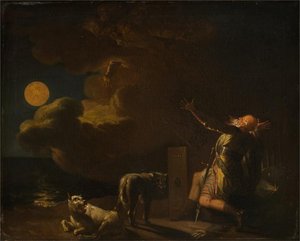
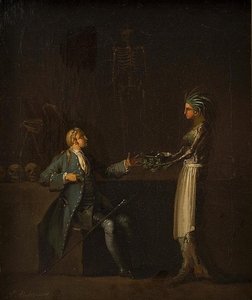
Umjetnički stil Nicolaija Abildgaarda predstavlja fascinantnu sintezu neklasičarskog strogog reda i novonastalih romantičarskih osjećaja. Iako utemeljen u principima klasične kompozicije, jasnoće i anatomske točnosti, njegova djela prožeta su dramatičnim osvjetljenjem, bogatim paletama boja i pedantnom pažnjom do detalja koji nagovještaju dublju emocionalnu podteklinu. Istaknuta djela poput „Christian I uzdiže Holstein u hertogstvo 1474.“ exemplificiraju ovu mješavinu – dostojanstvena povijesna scena prikazana s klasičnom preciznošću, ali prožeta osjećajem veličanstvenosti i teatralnosti. Druga djela, poput jezivog „Noćnog košmara“, pokazuju njegovu spremnost istraživati mračnije psihološke teme, najavljujući punokrvni romantizam koji će uskoro dominirati europskom umjetnošću. Njegovo istraživanje protezalo se izvan povijesnog slikarstva; „Duh Culmina pojavljuje se svojoj majci“ prikazuje njegovu vještinu u portretiranju natprirodnih događaja s dramatičnim intenzitetom, dok djela poput „Povrijeđenog Philoctetesa“ otkrivaju osjetljivost prema ljudskoj patnji i ranjivosti. On nije samo replicirao povijesne ili mitološke scene; on ih je interpretirao kroz prizmu vlastite umjetničke vizije, prožimajući ih slojevima simboličkog značenja dostupnim profinjenoj publici. Njegova slikovna alegorija postala je zaštitni znak njegovog stila, koristeći simbole kao vizualnu skraćenicu za složene ideje i emocije.

Naslijeđe i trajni utjecaj

Abildgaard je služio kao direktor Akademije tijekom 1789. do 1791. godine, a ponovno od 1801. do svoje smrti u Kopenhagenu 14. studenog 1809. godine. Tijekom cijele svoje karijere njegovao je generaciju talentiranih umjetnika, uključujući Asmusa Jacoba Carstensa, Bertela Thorvaldsena, J. L. Lunda i, možda najznačajnije, Christoffera Wilhelma Eckersberga. Eckersberg, često nazivani „ocem danske slike“, postavio bi temelje Zlatnog doba danske slike, nadograđujući principe koje mu je Abildacija usadio. Abildgaardov utjecaj protezao se izvan njegovih izravnih učenika; on je temeljito oblikovao umjetnički krajolik Danske, premošćujući jaz između klasicizma i romantizma. Njegovo djelo nije samo odražavalo kulturne vrijednosti svog vremena, već je i predvidjelo buduće umjetničke trendove, značajno doprinoseći razvoju nordijskog romantizma i ostavljajući neizbrisiv trag u povijesti danske umjetnosti. On ostaje ključna figura u razumijevanju prijelaza iz ideala prosvjetiteljstva u emocionalni intenzitet 19. stoljeća.