Portret Jacques Bellange

Slike autora Jacques Bellange: Najpoznatijih 17 djela, iz perspektive galerije

Ažurirano Listopad 2026 · rangirano prema našoj ocjeni popularnosti (pretraživanja, posjeti i narudžbe za svako djelo) · 17 djela Jacques Bellange u našem katalogu

Ukratko

Iz perspektive galerije, najpoznatije djelo umjetnika Jacques Bellange je The Three Marys at the Tomb (1620), čiji se original nalazi u muzeju British Museum, London. Amazon on horseback (1606) i Annunciation of Mary upotpunjuju triju koju svako oko prepoznaje. Od 17 djela umjetnika Jacques Bellange u našem katalogu, galerija u nastavku prikazuje 17 najpoznatijih, od kojih je svako originalno, s navedenom godinom nastanka, muzejom i onim što ga čini jedinstvenim.

1575 – 1616, Bassigny Northern mannerism Najviše djela: British Museum

Top 10 najpopularnijih djela umjetnika Jacques Bellange u galeriji

1
The Three Marys at the Tomb (1620) od Jacques Bellange

The Three Marys at the Tomb

1620 · Engraving · British Museum, London

Jacques Bellange’s “The Three Marys at the Tomb,” painted around 1620, is not merely a depiction of a biblical scene; it's a profound meditation on grief, faith, and the mysteries surrounding Christ’s death and resurrection. This arresting engraving, now housed within the walls of the Art Institute of Chicago, offers a rare glimpse into the intensely personal style of a Northern Mannerist artist largely obscured by history – Jacques Bellange…

2
Amazon on horseback (1606) od Jacques Bellange

Amazon on horseback

1606 · Etching · Château de Chantilly, Chantilly

In the delicate yet commanding lines of Jacques Bellange’s Amazon on horseback, we encounter a window into the enigmatic world of Northern Mannerism. Created in 1606, this evocative work transcends mere illustration, offering instead a dramatic tableau of power and myth. The subject—a woman clad in regal, flowing attire—perches atop her steed with an air of sovereign authority. As she grips her sword, the viewer is immediately drawn into a…

Slike autora Jacques Bellange, rangirane od 11 do 17

Slavna djela Jacques Bellange po razdobljima

Motivi koji su privukli pažnju Jacques Bellange

Četiri teme koje se najčešće ponavljaju u ovim originalima, svaka s svojim vrhunskim primjerom.

Muzeji koji čuvaju originalna djela umjetnika Jacques Bellange

5 muzeja u kojima se nalazi najviše djela s ove stranice.

Muzej Grad Djela autora Jacques Bellange Slike iz ovog popisa
British Museum, LondonBritish Museum London 2 The Three Marys at the Tomb, The Annunciation
Château de Chantilly, ChantillyChâteau de Chantilly Chantilly 2 Amazon on horseback, Gentleman in ancient costume
Staatliche Kunsthalle Karlsruhe, KarlsruheStaatliche Kunsthalle Karlsruhe Karlsruhe 2 Annunciation of Mary, Angel of the Annunciation
Royal Library, WindsorRoyal Library Windsor 1 Hurdy-Gurdy Player
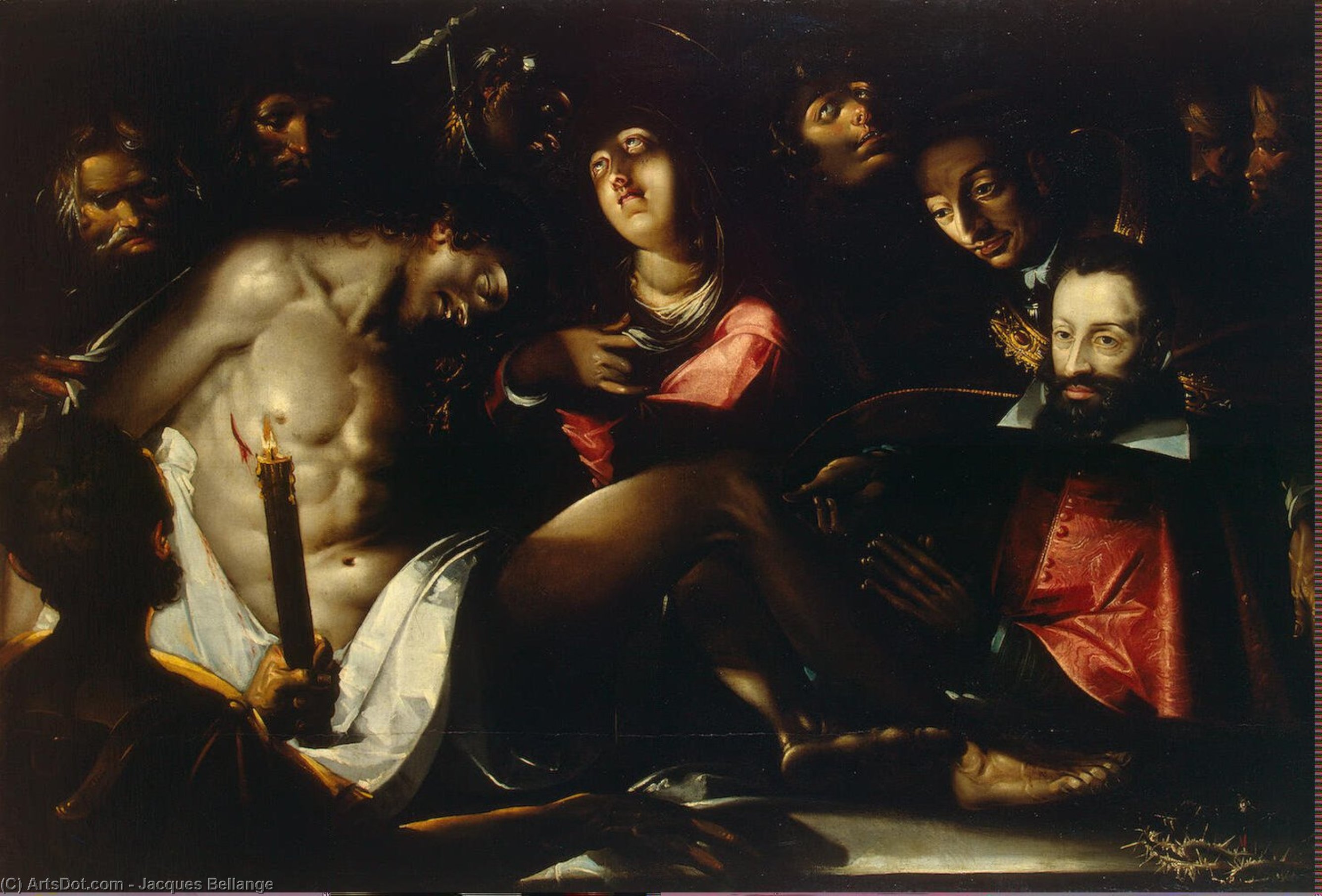
Ermitaž, Sankt PeterburgErmitaž Sankt Peterburg 1 Lamentation

Jacques Bellange, najprepoznatljivija djela svake godine

Deset godina, od 1606 do 1615, bilo je dovoljno za Jacques Bellange: galerija ih prolazi godinu po godinu, jedan poznati original za drugim.

Djela po godinama

Odaberite godinu kako biste vidjeli originalna djela.

Slike umjetnika Jacques Bellange: odgovori galerije

Koja je najpoznatija slika umjetnika Jacques Bellange?Otkrijte odgovor

The Three Marys at the Tomb (1620), British Museum, London. Nakon njih slijede Amazon on horseback (1606) i Annunciation of Mary.

Koje su najpoznatije slike umjetnika Jacques Bellange?Otkrijte odgovor

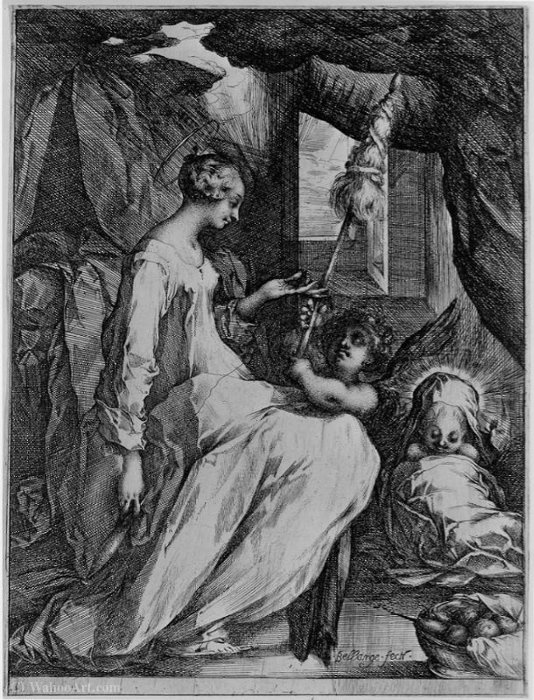
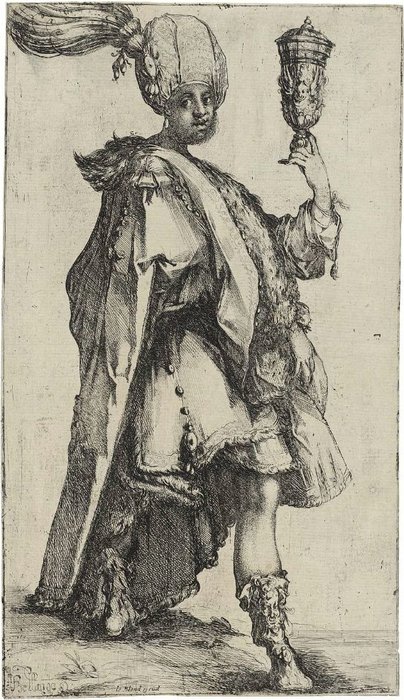
The Three Marys at the Tomb, Amazon on horseback, Annunciation of Mary, Angel of the Annunciation, Gardener with basket, a sequence of four teachers, The Virgin with a Spindle, he Virgin and Child with the Magdalen and Saint Anne, Military figures outside a city, Balthasar i Melchior, seen from behind, wearing a mantle trimmed with fur and a hat adorned with feathers. Gornji rang prikazuje godinu i muzej za svako od njih.

Koliko je djela stvorio/la Jacques Bellange?Otkrijte odgovor

Naš katalog sadrži 17 djela umjetnika Jacques Bellange, datiranih od 1606 do 1615.

Gdje se nalaze najpoznatija originalna djela umjetnika Jacques Bellange?Otkrijte odgovor

Većinom u British Museum (London), Château de Chantilly (Chantilly) i Staatliche Kunsthalle Karlsruhe (Karlsruhe). Gornja tablica muzeja navodi sve njih.

Kada je Jacques Bellange stvorio svoje najpoznatije slike?Otkrijte odgovor

U 1606: 2 od 17 djela na ovoj stranici nastalo je tada, od čega je Amazon on horseback Amazon on horseback.

Koja su najranija i najkasnija poznata djela umjetnika Jacques Bellange?Otkrijte odgovor

Na ovoj stranici najstarije djelo je iz Amazon on horseback (1606), a najnovije iz Lamentation (1615).

Kojim se temama Jacques Bellange najčešće bavio/la?Otkrijte odgovor

Mourning (2), Virgin (2) i Portrait (2), kroz svih 17 djela na ovoj stranici.

U kojem je mediju Jacques Bellange najviše radio/la?Otkrijte odgovor

Engraving, za 2 od 17 djela na ovoj stranici.

S kojim je umjetničkim pravcem Jacques Bellange povezan/a?Otkrijte odgovor

Northern mannerism, sudeći po originalima na ovoj stranici.

Koje originale Jacques Bellange ima u svojoj kolekciji British Museum?Otkrijte odgovor

The Three Marys at the Tomb i The Annunciation: British Museum, London posjeduje 2 djela s ove stranice.

Jacques Bellange: umjetnik

A Shadowy Master of the Northern Mannerist Spirit

Jacques Bellange remains one of the most enigmatic and captivating figures in the history of European printmaking. A master of the Northern Mannerist style, his life was lived in the twilight of the late Renaissance, a period defined by elongated forms, theatrical tension, and an almost feverish psychological intensity. Though much of his personal biography remains shrouded in the mists of the early 17th century, his artistic legacy is vibrantly clear through the intricate lines of his etchings. Born around 1575 in the Bâse-les-Vosges region of France, Bellange emerged from a landscape of shifting borders and intense religious fervor, eventually finding his creative home within the sophisticated courtly circles of Nancy.

The traces of his early life are as delicate and elusive as his etchings. While historical records regarding his family origins are sparse, scholars often point to his rapid ascent within the Duchy of Lorraine as evidence of a significant, perhaps even noble, connection. There is much speculation that he may have been the illegitimate son of a high-ranking patron, a theory supported by the prestigious title of "knight" attributed to him and his seamless integration into the court of the Dukes of Lorraine. By 1595, he was already established in La Mothe, honing a craft that would soon transform the medium of printmaking into a vehicle for profound emotional expression.

The Elegance of the Lorraine Court

Bellange’s career reached its zenith under the patronage of Henri II and Philippe III, the Dukes of Lorraine. This period of courtly stability provided him with the luxury of time and resources, allowing him to refine a technique that was uniquely his own. Unlike many of his contemporaries who focused on the clarity of the High Renaissance, Bellange embraced the complexities of Mannerism. His work is characterized by a restless energy, where figures seem to twist and writhe with an almost supernatural grace. In the halls of Nancy, he developed a visual language that blended the sacred with the profane, creating works that were as much about the human psyche as they were about religious devotion.

His mastery of the etching needle allowed him to manipulate light and shadow with unprecedented drama. Through the meticulous use of hatching and cross-hatching, he could conjure textures ranging from the heavy folds of ancient drapery to the weathered skin of a street performer. This technical prowess is perhaps most evident in his ability to imbue even the simplest subject with a sense of profound mystery. Whether depicting a noble figure or a common musician, Bellange’s hand is unmistakable, leaving behind a trail of silvery, luminous lines that seem to vibrate with life.

A Legacy Etched in Light and Shadow

The true significance of Jacques Bellange lies in his ability to capture the ephemeral. His oeuvre serves as a window into a world of intense spiritual struggle and theatrical beauty. Some of his most enduring works demonstrate this range:

  • The Three Marys at the Tomb: A striking example of his religious gravity, where dramatic figures and intricate details converge to create a moment of profound biblical tension.
  • Hurdy-Gurdy Player: A masterpiece of character study, showcasing his ability to use complex linework to capture the hunched, weary essence of a street musician, imbuing a common subject with deep psychological depth.
  • Gentleman in Ancient Costume: An exploration of the Mannerist obsession with historical fantasy and stylized elegance, featuring a warrior adorned in attire that evokes a sense of mythic grandeur.

Though his life was cut short in 1616, Bellange’s influence endured far beyond the borders of Lorraine. His rediscovery in the 20th century brought a renewed appreciation for the expressive potential of the etched line and the enduring power of the Mannerist aesthetic. Today, he is celebrated not merely as a court artist, but as a pioneer who pushed the boundaries of printmaking, leaving an indelible mark on the history of Western art through his hauntingly beautiful, shadow-drenched visions.