Portret Honoré Daumier

100 najpoznatijih djela umjetnika Honoré Daumier, galerijska selekcija

Ažurirano Listopad 2026 · rangirano prema našoj ocjeni popularnosti (pretraživanja, posjeti i narudžbe za svako djelo) · 355 djela Honoré Daumier u našem katalogu

Ukratko

Od svih originala koje je Honoré Daumier ostavio, najpoznatiji je Honoré Daumier Želimo Barabu (Ecce Homo) We want Barabbas (Ecce Homo) (1852) u kolekciji muzeja Museum Folkwang, Essen. Samo iza njih slijede The Third-class Carriage (1860) i Unknown, maybe Hippolyte Lucien-Joseph Lucas (1807-1878), a Journalist, maybe P.Mendez de Vigo (1790-1860) a Spanish General, but Most Probably the Count Pelet de la Lozere (1785-1871), a Politician (1833). Naš katalog sadrži 355 djela umjetnika Honoré Daumier; galerija je čuvala onih 100 koja svijet najviše divi, a svako je prikazano s datumom nastanka, muzejom i pričanom.

1808 – 1879, Marseille Realizam Najviše djela: Musée d'Orsay

Top 10 djela umjetnika Honoré Daumier: izbor galerije

1
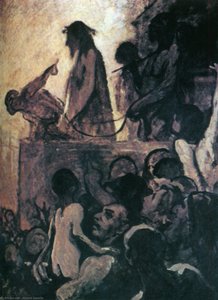
Honoré Daumier Želimo Barabu (Ecce Homo) We want Barabbas (Ecce Homo) (1852) od Honoré Daumier

Honoré Daumier Želimo Barabu (Ecce Homo) We want Barabbas (Ecce Homo)

1852 · Ulje na platnu · Museum Folkwang, Essen

Moćan prikaz ljudske patnje i socijalne pravde Ovo uvjerljivo umjetničko djelo bilježi dirljivu biblijsku scenu koja duboko odjekuje temama suosjećanja, nepravde i društvene kritike. Izvedena u sirovom, ekspresivnom stilu, scena poziva gledatelje u trenutak kolektivne emocije i moralnog promišljanja. Figure, prikazane s gestalnom neposrednošću, izazivaju osjećaj hitnosti i ljudske ranjivosti, čineći ovo djelo dubokom izjavom o društvenoj savjesti i duhovnoj empatiji. Umjetnički stil i tehnika Stvoreno 1852. godine od strane…

2
The Third-class Carriage (1860) od Honoré Daumier

The Third-class Carriage

1860 · Oil On Canvas · Metropolitan Museum of Art, New York

In the crowded, dimly lit confines of a mid-19th-century railway carriage, Honoré Daumier captures more than just a moment in transit; he captures the very essence of human endurance. The Third-class Carriage serves as a profound window into the burgeoning urban reality of France during the Second Empire. As the industrial revolution reshaped the landscape of Europe, Daumier turned his gaze away from the gilded salons of the aristocracy and…

3
Unknown, maybe Hippolyte Lucien-Joseph Lucas (1807-1878), a Journalist, maybe P.Mendez de Vigo (1790-1860) a Spanish General, but Most Probably the Count Pelet de la Lozere (1785-1871), a Politician (1833) od Honoré Daumier

Unknown, maybe Hippolyte Lucien-Joseph Lucas (1807-1878), a Journalist, maybe P.Mendez de Vigo (1790-1860) a Spanish General, but Most Probably the Count Pelet de la Lozere (1785-1871), a Politician

1833 · Clay / Terracotta · Musée d'Orsay, Pariz

This evocative portrait captures more than just the likeness of an elderly gentleman; it arrests a moment in time, freezing the very essence of 19th-century Parisian intellectual life. The subject, whose identity is suggested by the possibilities of a journalist or politician, possesses a gaze that seems to look past the viewer, into some distant, weighty contemplation. Rendered with the unmistakable hand of Honoré Daumier, the piece transcends mere portraiture;…

4
Ratapoil (front view) (1850) od Honoré Daumier

Ratapoil (front view)

1850 · Bronze · Musée d'Orsay, Pariz

Honoré Daumier's "Ratapoil (front view)," created around 1850, is more than just a bronze sculpture; it’s a potent distillation of 19th-century French social commentary and political critique. This arresting figure, rendered with remarkable dynamism and a touch of unsettling realism, offers a captivating window into the turbulent world of post-Revolutionary France – a world grappling with nascent democracy, imperial ambitions, and the pervasive inequalities of its society. The sculpture’s enduring…

5
Intermission at the Comédie Française (1858) od Honoré Daumier

Intermission at the Comédie Française

1858 · Watercolor · Ermitaž, Sankt Peterburg

Honoré Daumier's “Intermission at the Comédie Française,” painted in 1858, isn’t merely a depiction of an elderly gathering; it’s a meticulously crafted observation of a specific moment frozen in time – and brimming with unspoken commentary. The artwork immediately draws the viewer into a densely packed scene: rows upon rows of men, their faces etched with age and lined with contemplation, are absorbed in reading newspapers or pamphlets within the…

6
Ratapoil (1850) od Honoré Daumier

Ratapoil

1850 · Bronze · Staatliche Kunsthalle Karlsruhe, Karlsruhe

The photograph captures a pivotal moment – a frozen dance of energy and emotion rendered in the enduring medium of bronze. This exquisite reproduction offers an intimate encounter with "Ratapoil," a sculpture by the visionary artist Honoré Daumier, born in Marseille in 1808 and tragically lost in 1879. More than just a depiction of a figure, it’s a window into the social anxieties and artistic fervor that defined mid-19th century…

7
Ratapoil (rear view) (1850) od Honoré Daumier

Ratapoil (rear view)

1850 · Sculpture · Musée d'Orsay, Pariz

In this rear view of the sculpture Ratapoil, we encounter a figure that seems to embody the very essence of 19th-century Parisian character. The work, dating from 1850, presents a silhouette that is both dynamic and deeply human. There is a certain tension in the posture; the figure leans with one hand on a hip, a cane held in the other, suggesting a man caught in a moment of restless…

8
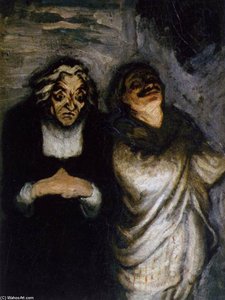
Scene from a Comedy (1858) od Honoré Daumier

Scene from a Comedy

1858 · Oil On Canvas · Musée d'Orsay, Pariz

Honoré Daumier's "Scene from a Comedy," painted in 1858, isn’t merely a depiction of two figures; it’s a meticulously crafted snapshot of Parisian society and the biting social commentary that defined the artist’s career. Housed within the walls of the Musée d’Orsay, this oil on canvas offers a rare glimpse into Daumier's world – a world brimming with observation, critique, and an undeniable sense of humor laced with profound sadness.…

9
Ratapoil (1850) od Honoré Daumier

Ratapoil

1850 · Acrylic On Canvas · Artizon Museum, Tokyo

Honoré Daumier's "Ratapoil," created in 1850, isn’t merely a sculpture; it’s a distilled embodiment of the anxieties and frustrations simmering beneath the surface of mid-19th century France. This arresting figure, rendered in cast iron with a deliberate roughness that mirrors its subject matter, captures a moment of profound disillusionment – a silent indictment of societal hypocrisy and the precariousness of human existence. The sculpture’s power lies not just in its…

10
Family on the Barricades in 1848 (1854) od Honoré Daumier

Family on the Barricades in 1848

1854 · Oil · Národní Galerie, Prag

In the heart of Honoré Daumier’s 1854 masterpiece, Family on the Barricades in 1848, we find a moment suspended in the amber of history. This is not merely a painting of a political uprising; it is a profound psychological study of human resilience. As the Second French Revolution tore through the streets of Paris, Daumier captured the very essence of the era's turbulent spirit. The scene presents a family huddled…

Izbor umjetnika Honoré Daumier se nastavlja, od 11 do 100

11The Print Collector (1865) od Honoré DaumierThe Print Collector1865 · Art Institute of Chicago 12The Republic (1848) od Honoré DaumierThe Republic1848 · Musée d'Orsay 13Comedy scene (scene from Molière) (1862) od Honoré DaumierComedy scene (scene from Molière)1862 · Musée d'Orsay 14On a Bridge at Night (1848) od Honoré DaumierOn a Bridge at Night1848 · The Phillips Collection 15Les Gens de Justice: Vous m (1845) od Honoré DaumierLes Gens de Justice: Vous m1845 16Burden (1850) od Honoré DaumierBurden1850 · Ermitaž 17Street Musicians (1855) od Honoré DaumierStreet Musicians1855 · Art Institute of Chicago 18Count Antoine-Maurice-Apollinaire d'Argout (1782-1858), Minister and Peer of France (1832) od Honoré DaumierCount Antoine-Maurice-Apollinaire d'Argout (1782-1858), Minister and Peer of France1832 · Musée d'Orsay 19The Studio (1870) od Honoré DaumierThe Studio1870 · J. Paul Getty Museum 20Jean-Marie Fruchard (1788-1872), Deputy (1833) od Honoré DaumierJean-Marie Fruchard (1788-1872), Deputy1833 · Musée d'Orsay 21Load (Washerwoman) (1853) od Honoré DaumierLoad (Washerwoman)1853 · Národní Galerie 22Clément-François-Victor-Gabriel Prunelle (1774-1853), Doctor, Major of Lyon and Deputy (1832) od Honoré DaumierClément-François-Victor-Gabriel Prunelle (1774-1853), Doctor, Major of Lyon and Deputy1832 · Musée d'Orsay 23The Intoxication of Silène (1850) od Honoré DaumierThe Intoxication of Silène1850 24Two Lawyers (1860) od Honoré DaumierTwo Lawyers1860 · Art Institute of Chicago 25Outside the Print–Seller's Shop (1860) od Honoré DaumierOutside the Print–Seller's Shop1860 · Dallas Museum of Art 26Exit from the Theater (1863) od Honoré DaumierExit from the Theater1863 · The Nelson-Atkins Museum of Art 27Felix Barthe od Honoré DaumierFelix Barthe 28The Uprising (L (1848) od Honoré DaumierThe Uprising (L1848 · The Phillips Collection 29Le Peintre (The Painter) (1865) od Honoré DaumierLe Peintre (The Painter)1865 · Scottish National Gallery 30The Defender (1865) od Honoré DaumierThe Defender1865 · Musée d'Orsay 31The Good Samaritan (1855) od Honoré DaumierThe Good Samaritan1855 · Burrell Collection 32The Loge (In the Theatre Boxes) (1856) od Honoré DaumierThe Loge (In the Theatre Boxes)1856 · Walters Art Museum 33Susannah and the Elders (1853) od Honoré DaumierSusannah and the Elders1853 · Burrell Collection 34Penelopa's Dream (1842) od Honoré DaumierPenelopa's Dream1842 · Bibliothèque Nationale 35Jean-Auguste Chevandier de Valdrome, Parliamentarian (The Fool) (1832) od Honoré DaumierJean-Auguste Chevandier de Valdrome, Parliamentarian (The Fool)1832 · Musée d'Orsay 36The Washerwoman (1863) od Honoré DaumierThe Washerwoman1863 · Musée d'Orsay 37Masks of 1831 (1832) od Honoré DaumierMasks of 18311832 · Minneapolis Institute of Art 38Remembrances of St. Pelagie. (Souvenir de ste Pélagie) (1834) od Honoré DaumierRemembrances of St. Pelagie. (Souvenir de ste Pélagie)1834 39Mr. Joliv (Adolphe Joliv) (1833) od Honoré DaumierMr. Joliv (Adolphe Joliv)1833 · Musée d'art et d'histoire Paul Eluard 40Celebrités du Juste Milieu (1835) od Honoré DaumierCelebrités du Juste Milieu1835 · Zimmerli Art Museum at Rutgers University 41Grand Staircase of the Palace of Justice (1848) od Honoré DaumierGrand Staircase of the Palace of Justice1848 42The Conclusion of a Speech à la Demosthene (1848) od Honoré DaumierThe Conclusion of a Speech à la Demosthene1848 43Neighbourhood gossip (1855) od Honoré DaumierNeighbourhood gossip1855 · The Mesdag Collection 44Une salle d'attente (The Waiting Room) (1851) od Honoré DaumierUne salle d'attente (The Waiting Room)1851 · Buffalo AKG Art Museum 45Second-Class Carriage (1849) od Honoré DaumierSecond-Class Carriage1849 · Rhode Island School of Design Museum of Art 46Mme Pipelet, the Concierge (1849) od Honoré DaumierMme Pipelet, the Concierge1849 · Rhode Island School of Design Museum of Art 47Hunters by the fireside (1850) od Honoré DaumierHunters by the fireside1850 48Head of a Man (1855) od Honoré DaumierHead of a Man1855 · National Museum Cardiff 49The Miller, His Son and the Donkey (1849) od Honoré DaumierThe Miller, His Son and the Donkey1849 · Burrell Collection 50Bathers (1853) od Honoré DaumierBathers1853 51On the Shore (1853) od Honoré DaumierOn the Shore1853 52Return from the Market (1856) od Honoré DaumierReturn from the Market1856 · Museum collection Am Römerholz 53The Confidence or The Kiss of Judas (1859) od Honoré DaumierThe Confidence or The Kiss of Judas1859 · Petit Palais 54Four Heads (1857) od Honoré DaumierFour Heads1857 · Burrell Collection 55Head of an Old Woman (1858) od Honoré DaumierHead of an Old Woman1858 56Painting by Honoré Daumier (1862) od Honoré DaumierPainting by Honoré Daumier1862 57Scapin (1861) od Honoré DaumierScapin1861 · Harvard Art Museums 58Count Auguste-Hilarion de Kératry (1769-1859), Deputy, Peer of France (1832) od Honoré DaumierCount Auguste-Hilarion de Kératry (1769-1859), Deputy, Peer of France1832 · Musée d'Orsay 59The Beautiful Narcissus (1842) od Honoré DaumierThe Beautiful Narcissus1842 · Bibliothèque Nationale 60Sancho Panza, Resting Under a Tree (1865) od Honoré DaumierSancho Panza, Resting Under a Tree1865 61The Painter (1867) od Honoré DaumierThe Painter1867 · Musée des Beaux-Arts 62Au Palais de Justice (At the Law Courts) (1865) od Honoré DaumierAu Palais de Justice (At the Law Courts)1865 · Rhode Island School of Design Museum of Art 63The Two Colleagues (Lawyers) (1867) od Honoré DaumierThe Two Colleagues (Lawyers)1867 · Brooklyn Museum 64A Third Class Carriage (1865) od Honoré DaumierA Third Class Carriage1865 · National Museum Cardiff 65François-Pierre-Guillaume Guizot (1787-1874), Deputy, Minister and Historian (1833) od Honoré DaumierFrançois-Pierre-Guillaume Guizot (1787-1874), Deputy, Minister and Historian1833 · Musée d'Orsay 66Two Singers od Honoré DaumierTwo SingersHarvard Art Museums 67Jean-Claude Fulchiron (1774-1859), Deputy, Peer of France, and Poet (1832) od Honoré DaumierJean-Claude Fulchiron (1774-1859), Deputy, Peer of France, and Poet1832 · Musée d'Orsay 68Don Quixote and the Windmills (1850) od Honoré DaumierDon Quixote and the Windmills1850 · Art Institute of Chicago 69The Serenade (1858) od Honoré DaumierThe Serenade1858 · Scottish National Gallery 70The Print Amateur (1855) od Honoré DaumierThe Print Amateur1855 · Harvard Art Museums 71Le Wagon de troisième classe, huile sur toile The Coach of third class, oil on fabric od Honoré DaumierLe Wagon de troisième classe, huile sur toile The Coach of third class, oil on fabric 72Jacques Lefévre (1777-1856), Banker and Deputy (1833) od Honoré DaumierJacques Lefévre (1777-1856), Banker and Deputy1833 · Musée d'Orsay 73The Print Collector (1862) od Honoré DaumierThe Print Collector1862 · Burrell Collection 74Don Quixote and the Dead Mule (1860) od Honoré DaumierDon Quixote and the Dead Mule1860 · Metropolitan Museum of Art 75The Strong Man (1865) od Honoré DaumierThe Strong Man1865 · The Phillips Collection 76Head of Pasquin (1863) od Honoré DaumierHead of Pasquin1863 · Dallas Museum of Art 77Baron Joseph de Podenas (1782-1851), Deputy (1833) od Honoré DaumierBaron Joseph de Podenas (1782-1851), Deputy1833 · Musée d'Orsay 78Charles Philipon (1800-1861), Journalist and Director of the Magazines Caricature and Charivari (1833) od Honoré DaumierCharles Philipon (1800-1861), Journalist and Director of the Magazines Caricature and Charivari1833 · Musée d'Orsay 79Rue Transnonain, April 15, 1834 (1834) od Honoré DaumierRue Transnonain, April 15, 18341834 · Bibliothèque Nationale 80Theater Audience (1856) od Honoré DaumierTheater Audience1856 · Nacionalni muzej zapadne umjetnosti 81Don Quixote Reading (1866) od Honoré DaumierDon Quixote Reading1866 · National Museum Cardiff 82Les Avocats et Les Plaideurs: Enfin! Nous avons obtenu la séparation de biens (1851) od Honoré DaumierLes Avocats et Les Plaideurs: Enfin! Nous avons obtenu la séparation de biens1851 83Le Ventre Legislatif (1834) od Honoré DaumierLe Ventre Legislatif1834 84Avant l (1865) od Honoré DaumierAvant l1865 85Two Drinkers (Les Deux buveurs) od Honoré DaumierTwo Drinkers (Les Deux buveurs)Barnes Foundation 86Two Lawyers od Honoré DaumierTwo Lawyers 87Crispin et Scapin ou Scapin et Sylvestre, huile sur toile Crispin and Scapin or Scapin and Sylvestre, oil on fabric od Honoré DaumierCrispin et Scapin ou Scapin et Sylvestre, huile sur toile Crispin and Scapin or Scapin and Sylvestre, oil on fabric 88Une cause célèbre, crayon et aquarelle A famous cause, pencil and watercolour od Honoré DaumierUne cause célèbre, crayon et aquarelle A famous cause, pencil and watercolour 89Don Quixote and Sancho Panza (1864) od Honoré DaumierDon Quixote and Sancho Panza1864 · Burrell Collection 90Don Quixote and Sancho Panza (1870) od Honoré DaumierDon Quixote and Sancho Panza1870 · Courtauld Gallery 91The Reader od Honoré DaumierThe Reader 92Street Scene (1864) od Honoré DaumierStreet Scene1864 · Museum Boijmans Van Beuningen 93Charles-Léonard Gallois (1774-1851), Publicist and Historian, Republican (1833) od Honoré DaumierCharles-Léonard Gallois (1774-1851), Publicist and Historian, Republican1833 · Musée d'Orsay 94André-Marie-Jean-Jacques Dupin, Also Called Dupin the Elder od Honoré DaumierAndré-Marie-Jean-Jacques Dupin, Also Called Dupin the Elder 95Le Drame, huile sur toile The Drama, oils on fabric od Honoré DaumierLe Drame, huile sur toile The Drama, oils on fabric 96The Hypochondriac (Le Malade imaginaire) od Honoré DaumierThe Hypochondriac (Le Malade imaginaire)Barnes Foundation 97To the Street (1850) od Honoré DaumierTo the Street1850 · The Phillips Collection 98Three Lawyers (1857) od Honoré DaumierThree Lawyers1857 · The Phillips Collection 99Honoré Daumier Le Martyre de saint Sébastien, esquisse, huile sur panneau The Martyrdom of Sebastien saint, draft, oil on panel (1850) od Honoré DaumierHonoré Daumier Le Martyre de saint Sébastien, esquisse, huile sur panneau The Martyrdom of Sebastien saint, draft, oil on panel1850 100Mother (1855) od Honoré DaumierMother1855 · Narodni muzej Srbije

Slavna djela Honoré Daumier po razdobljima

Motivi koji su privukli pažnju Honoré Daumier

Četiri teme koje se najčešće ponavljaju u ovim originalima, svaka s svojim vrhunskim primjerom.

Muzeji koji čuvaju originalna djela umjetnika Honoré Daumier

8 muzeja u kojima se nalazi najviše djela s ove stranice.

Muzej Grad Djela autora Honoré Daumier Slike iz ovog popisa
Musée d'Orsay, ParizMusée d'Orsay Pariz 33 Unknown, maybe Hippolyte Lucien-Joseph Lucas (1807-1878), a Journalist, maybe P.Mendez de Vigo (1790-1860) a Spanish General, but Most Probably the Count Pelet de la Lozere (1785-1871), a Politician, Ratapoil (front view), Ratapoil (rear view)
Burrell Collection, GlasgowBurrell Collection Glasgow 9 The Good Samaritan, Susannah and the Elders, The Miller, His Son and the Donkey
The Phillips Collection, Washington, D.C.The Phillips Collection Washington, D.C. 8 On a Bridge at Night, The Uprising (L, The Strong Man
Art Institute of Chicago, ChicagoArt Institute of Chicago Chicago 4 The Print Collector, Street Musicians, Two Lawyers
National Museum Cardiff, CardiffNational Museum Cardiff Cardiff 8 Head of a Man, A Third Class Carriage, Don Quixote Reading
Rhode Island School of Design Museum of Art, ProvidenceRhode Island School of Design Museum of Art Providence 4 Second-Class Carriage, Mme Pipelet, the Concierge, Au Palais de Justice (At the Law Courts)
Bibliothèque Nationale, ParizBibliothèque Nationale Pariz 3 Penelopa's Dream, The Beautiful Narcissus, Rue Transnonain, April 15, 1834
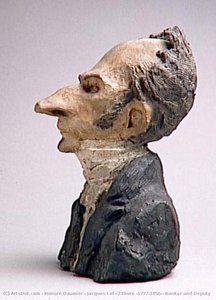
Harvard Art Museums, CambridgeHarvard Art Museums Cambridge 3 Scapin, Two Singers, The Print Amateur

Honoré Daumier desetljeće po desetljeće: original koji definira svako od njih

Djela po desetljećima

Odaberite desetljeće kako biste vidjeli original koji ga definira.

Pitanja kolekcionara o slikama umjetnika Honoré Daumier

Po kojem je djelu Honoré Daumier najpoznatiji/a?Otkrijte odgovor

Honoré Daumier Želimo Barabu (Ecce Homo) We want Barabbas (Ecce Homo) (1852), Museum Folkwang, Essen. Nakon njih slijede The Third-class Carriage (1860) i Unknown, maybe Hippolyte Lucien-Joseph Lucas (1807-1878), a Journalist, maybe P.Mendez de Vigo (1790-1860) a Spanish General, but Most Probably the Count Pelet de la Lozere (1785-1871), a Politician (1833).

Koliko je godina Honoré Daumier imao/la kada je nastalo djelo Honoré Daumier Želimo Barabu (Ecce Homo) We want Barabbas (Ecce Homo)?Otkrijte odgovor

44 godina: Honoré Daumier Želimo Barabu (Ecce Homo) We want Barabbas (Ecce Homo) datira iz 1852, a Honoré Daumier je rođen/a 1808.

Koja su deset najpoznatijih djela umjetnika Honoré Daumier?Otkrijte odgovor

Honoré Daumier Želimo Barabu (Ecce Homo) We want Barabbas (Ecce Homo), The Third-class Carriage, Unknown, maybe Hippolyte Lucien-Joseph Lucas (1807-1878), a Journalist, maybe P.Mendez de Vigo (1790-1860) a Spanish General, but Most Probably the Count Pelet de la Lozere (1785-1871), a Politician, Ratapoil (front view), Intermission at the Comédie Française, Ratapoil, Ratapoil (rear view), Scene from a Comedy, Ratapoil i Family on the Barricades in 1848. Gornji rang prikazuje godinu i muzej za svako od njih.

Koliko je slika ostavio/la Honoré Daumier?Otkrijte odgovor

Naš katalog sadrži 355 djela umjetnika Honoré Daumier, datiranih od 1832 do 1870.

U kojim se muzejima nalaze remek-djela umjetnika Honoré Daumier?Otkrijte odgovor

Većinom u Musée d'Orsay (Pariz), Burrell Collection (Glasgow) i The Phillips Collection (Washington, D.C.). Gornja tablica muzeja navodi sve njih.

U kojim je godinama Honoré Daumier naslikao svoja najpoznatija djela?Otkrijte odgovor

U 1850s: 34 od 100 djela na ovoj stranici nastalo je tada, od čega je Honoré Daumier Želimo Barabu (Ecce Homo) We want Barabbas (Ecce Homo) Honoré Daumier Želimo Barabu (Ecce Homo) We want Barabbas (Ecce Homo).

Koja su prva i posljednja poznata originalna djela umjetnika Honoré Daumier?Otkrijte odgovor

Na ovoj stranici najstarije djelo je iz Count Antoine-Maurice-Apollinaire d'Argout (1782-1858), Minister and Peer of France (1832), a najnovije iz The Studio (1870).

Koje je motive Honoré Daumier najčešće birao?Otkrijte odgovor

People (19), Satire (15) i Man (15), kroz svih 100 djela na ovoj stranici.

Koju je tehniku najčešće koristio/la Honoré Daumier?Otkrijte odgovor

Oil On Canvas, za 16 od 100 djela na ovoj stranici.

Pripada li Honoré Daumier kojem umjetničkom pokretu?Otkrijte odgovor

Realizam, sudeći po originalima na ovoj stranici.

Koji se radovi umjetnika Honoré Daumier nalaze u muzeju Musée d'Orsay?Otkrijte odgovor

Unknown, maybe Hippolyte Lucien-Joseph Lucas (1807-1878), a Journalist, maybe P.Mendez de Vigo (1790-1860) a Spanish General, but Most Probably the Count Pelet de la Lozere (1785-1871), a Politician, Ratapoil (front view) i Ratapoil (rear view): Musée d'Orsay, Pariz posjeduje 19 djela s ove stranice.

Honoré Daumier: život i djelo

Početak života i umjetnički poziv Honoréa Daumiera

Honoré-Victorin Daumier rođen je u Marseilleu 1808. godine, a njegov život bio je duboko isprepleten s burnim događajima devetnaestostoljetne Francuske. Rano djetinstvo obilježeno je književnim ambicijama oca i preseljenjem u Pariz 1814. godine, što ga je uronilo u grad koji je vrveo umjetničkom energijom. Iako mu je prvotno bila predodređena pravna karijera, mladom Daumieru su sklonosti neporecivo bile usmjerene prema umjetnosti. Učio je kod Alexandrea Lenoir-a, upijajući klasične utjecaje uz divljenje dramatičnom chiaroscuro-u Rubensa, a svoje vještine dalje brusio u Académie Suisse. Ova temeljna obuka pokazala se ključnom u oblikovanju njegovog prepoznatljivog stila – snažne kombinacije realizma i ekspresivnog crteža. Međutim, nije samo umjetnička tehnika definirala Daumiera; bila je to duboka osjetljivost na socijalne nepravde i političke apsurde koji su ga okruživali. Njegova obitelj se borila s financijskim poteškoćama, što je utjecalo na njegov pogled na svijet i kasnije umjetničko stvaralaštvo.

Oštro pero: Karikatura i društvena kritika

Daumierova karijera doista je procvala nakon Revolucije iz 1830. godine, događaja koji je nepovratno promijenio tijek francuske povijesti i istovremeno pružio plodno tlo za njegov rastući satirični talent. Brzo se etablirao kao majstor litografije, isprva anonimno doprinoseći raznim publikacijama prije nego što je postigao priznanje kroz rad s *Le Charivari*, žustrim nezavisnim strip-časopisom koji je osnovao Charles Philipon. Upravo je ovdje Daumierov genij u potpunosti procvjetao. Njegove karikature nisu bile samo humoristični prikazi; bile su oštre optužbe buržoazije, pravnog sustava i političke elite. Bez straha se rugao kralju Louis-Philippeu, zaradivši šestomjesečni zatvor 1832. godine zbog posebno gorke karikature. To iskustvo, umjesto da ga ušuti, samo je učvrstilo njegovu predanost razotkrivanju hipokrizije i osporavanju autoriteta kroz umjetnost. Njegove litografije postale su vizualni manifesti, uhvativši duh neslaganja i nudeći kritički komentar na društvene mahine njegova vremena. Ogroman volumen njegove produkcije tijekom tog razdoblja je zapanjujući – tisuće litografija koje su služile kao popularna zabava i snažne političke izjave. Njegov rad često prikazuje pravosuđe, parlament i visoko društvo u ironičnom i karikaturalnom svjetlu, ističući njihove mane i pretencioznost.

Iznad karikature: Slikarska i skulptorska vizija

Iako je Daumier najpoznatiji po svojoj litografiji, ograničiti ga samo na područje karikature bio bi ozbiljna nepravda. Bio je i posvećen slikar i kipar, iako je priznanje za ova djela stiglo kasnije u životu. Njegova slika, često prikazujuća scene iz svakodnevnog pariške života – treći razred vagona, praonice rublja, odvjetnike – prožeta je dubokim osjećajem realizma i empatije. To nisu idealizirani portreti, već nepristrasni prikazi poteškoća i borbe. Majstorski je koristio slobodne poteze kista i dramatično osvjetljenje kako bi prenio emocije i atmosferu, najavljujući neke od tehnika koje su kasnije prihvatili impresionisti. Njegov skulptorski rad, uglavnom izrađen od gline (mnoga djela ostala nepečena tijekom njegovog života), otkriva sličnu predanost prikazivanju ljudske figure s iskrenošću i emocionalnom dubinom. Te se skulpture, ponovno otkrivene nakon njegove smrti, pokazuju izvanredan talent za modeliranje i sposobnost prenošenja psihološke složenosti kroz fizičke geste.

Trajno nasljeđe: Utjecaj i povijesni značaj

Utjecaj Honoréa Daumiera na povijest umjetnosti je neosporan. Premostio je jaz između romantizma i realizma, utirući put budućim generacijama umjetnika koji su nastojali prikazati svijet kakav zaista jest – sa svim manama. Njegova neumoljiva društvena kritika utjecala je na umjetnike poput Gustava Courbeta i Édouarda Maneta, dok je njegova inovativna upotreba litografije revolucionirala grafičko stvaralaštvo. Njegov rad nastavlja odjekivati ​​danas, podsjećajući nas na moć umjetnosti da osporava autoritet, razotkriva nepravdu i svjedoči o ljudskom stanju. Muzej d'Orsay u Parizu posjeduje značajnu zbirku njegovih slika i skulptura, nudeći posjetiteljima pogled u svijet koji je tako živo prikazao. Njegove litografije su široko dostupne kroz kolekcije poput onih pronađenih na OriginalUniqueArt, osiguravajući da njegova satirična genijalnost nastavlja poticati razmišljanje i inspirirati dijalog. Daumier nije bio samo umjetnik; bio je kroničar svog vremena – vizualni pjesnik koji je koristio svoj talent kako bi dao glas onima bez glasa i tražio odgovornost od moćnika. Njegovo nasljeđe traje kao svjedočanstvo trajnog značaja umjetnosti kao sile za društvenu promjenu.