Portret George Catlin

100 najpoznatijih djela umjetnika George Catlin, svako jedinstveno

Ažurirano Listopad 2026 · rangirano prema našoj ocjeni popularnosti (pretraživanja, posjeti i narudžbe za svako djelo) · 908 djela George Catlin u našem katalogu

Ukratko

Say-say-gon, Hail Storm, War Chief (1845) je slika autora George Catlin koja privlači najviše pogleda; original se nalazi u muzeju Smithsonian American Art Museum, Washington, D.C.. Nakon toga, pogled se usmjerava na Sky se ró ka, Second Chief of the Tribe (1834) i Ee mat lá , King Phillip, Second Chief (1838). Među 908 djela umjetnika George Catlin u našem katalogu, ovih 100 su najpoznatija, od kojih je svako jedinstveni original predstavljen s godinom nastanka, muzejom i razlogom zbog kojeg je vječno.

1796 – 1872, Wilkes-Barre Romanticism Najviše djela: Smithsonian American Art Museum

Top 10 djela George Catlin kroz oči galerije

1
Say-say-gon, Hail Storm, War Chief (1845) od George Catlin

Say-say-gon, Hail Storm, War Chief

1845 · Oil On Canvas · Smithsonian American Art Museum, Washington, D.C.

George Catlin’s arresting oil on canvas, "Say-say-gon, Hail Storm, War Chief," is far more than a mere portrait; it is a profound historical document rendered with the immediacy of a living memory. Created in 1845, this work plunges the viewer directly into the dramatic confluence of cultures at the American frontier. The subject—a Native American man adorned with feathers and bearing an air of solemn authority—commands attention through his unwavering,…

2
Sky se ró ka, Second Chief of the Tribe (1834) od George Catlin

Sky se ró ka, Second Chief of the Tribe

1834 · Oil On Canvas · Smithsonian American Art Museum, Washington, D.C.

To stand before this portrait of Sky se ró ka, Second Chief of the Tribe, is to encounter not merely paint on canvas, but a profound echo from a bygone era. George Catlin’s masterful rendering captures more than just a likeness; it arrests a moment in time—a moment steeped in dignity, contemplation, and the quiet weight of history. The subject dominates the composition with an undeniable presence. His gaze, seemingly…

3
Ee mat lá , King Phillip, Second Chief (1838) od George Catlin

Ee mat lá , King Phillip, Second Chief

1838 · Oil On Canvas · Smithsonian American Art Museum, Washington, D.C.

Before us rests a profoundly moving portrait, George Catlin’s evocative depiction of Ee mat lá , King Phillip, Second Chief. This 1838 work transcends mere representation; it is a solemn meditation on culture, resilience, and the passing of time. The subject commands attention with an undeniable dignity that seems to emanate from within the very texture of the paint. Catlin has gifted us not just a likeness, but a window…

4
Eeh nís kim, Crystal Stone, Wife of the Chief (1832) od George Catlin

Eeh nís kim, Crystal Stone, Wife of the Chief

1832 · Oil On Canvas · Smithsonian American Art Museum, Washington, D.C.

To stand before George Catlin’s portrait, Eeh nís kim, Crystal Stone, Wife of the Chief, is to step across the threshold of time itself. This 1832 oil painting is far more than a mere likeness; it is a profound historical document rendered with the delicate touch of an artist obsessed with preservation. Catlin, whose life spanned the collision of two worlds—the burgeoning American frontier and the ancient cultures of Native…

5
Steeh tcha kó me co, Great King (called Ben Perryman), a Chief (1834) od George Catlin

Steeh tcha kó me co, Great King (called Ben Perryman), a Chief

1834 · Oil On Canvas · Smithsonian American Art Museum, Washington, D.C.

To stand before George Catlin’s Steeh tcha kó me co, Great King (called Ben Perryman), a Chief is to step across the threshold of time itself. This arresting portrait, executed in 1834, is far more than a mere likeness; it is a profound historical document rendered with the passionate brushstrokes of Romanticism. Catlin, forever drawn to the edges of civilization, captured here the dignity and complex spirit of an Indigenous…

6
Cáh be múb bee, He Who Sits Everywhere, a Brave (1835) od George Catlin

Cáh be múb bee, He Who Sits Everywhere, a Brave

1835 · Oil On Canvas · Smithsonian American Art Museum, Washington, D.C.

To stand before George Catlin’s depiction of Cáh be múb bee, He Who Sits Everywhere, a Brave is to step across the threshold of time and into a world both vividly real and deeply mythic. Painted in 1835, this work transcends mere portraiture; it is an eloquent testament to a vanishing culture, rendered with the passionate intensity characteristic of Romanticism blended seamlessly with meticulous Realism. The central figure commands attention,…

7
Os ce o lá, The Black Drink, a Warrior of Great Distinction (1838) od George Catlin

Os ce o lá, The Black Drink, a Warrior of Great Distinction

1838 · Oil On Canvas · Smithsonian American Art Museum, Washington, D.C.

To stand before George Catlin’s Os ce o lá, The Black Drink, a Warrior of Great Distinction is not merely to observe a painting; it is to step across the threshold of time. This arresting portrait, executed in 1838, captures more than just the likeness of an Indigenous man, believed to be from the Shawnee tribe—it arrests the viewer with the profound weight of cultural memory. Catlin, forever positioned as…

8
Stán au pat, Bloody Hand, Chief of the Tribe (1832) od George Catlin

Stán au pat, Bloody Hand, Chief of the Tribe

1832 · Oil On Canvas · Smithsonian American Art Museum, Washington, D.C.

To stand before George Catlin’s portrait, Stán au pat, Bloody Hand, Chief of the Tribe, is to step across the threshold of time itself. Painted in 1832, this work transcends mere depiction; it is a profound act of witnessing. Catlin, whose life spanned the tumultuous collision between burgeoning American civilization and the ancient ways of the Native American peoples, captured more than just a likeness on canvas. He immortalized a…

9
Wa kon chásh kaw, He Who Comes on the Thunder (1828) od George Catlin

Wa kon chásh kaw, He Who Comes on the Thunder

1828 · Oil On Canvas · Smithsonian American Art Museum, Washington, D.C.

George Catlin’s depiction, *Wa kon chásh kaw, He Who Comes on the Thunder*, is far more than a mere portrait; it is a vibrant, arresting tableau vivant plucked from the heart of a vanishing world. The scene immediately immerses the viewer in the raw energy and profound cultural richness of the American frontier in 1828. At the center stands the principal figure, radiating an almost mythic power. His outstretched arms…

10
Wah chee háhs ka, Man Who Puts All Out of Doors (1835) od George Catlin

Wah chee háhs ka, Man Who Puts All Out of Doors

1835 · Painting · Smithsonian American Art Museum, Washington, D.C.

To stand before George Catlin’s depiction of Wah chee háhs ka, Man Who Puts All Out of Doors is to step across the threshold of time itself. This painting, executed in 1835, is far more than a mere portrait; it is a profound ethnographic document imbued with the raw energy of a culture on the precipice of change. Catlin, forever drawn to the mystery and resilience of Native American life,…

Slavna djela umjetnika George Catlin, od 11. do 100. broj

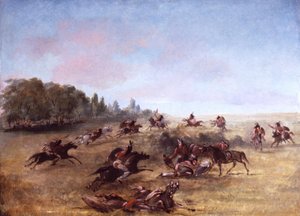
11Né-hee-ó-ee-wóo-tis, Wolf on the Hill, Chief of the Tribe (1832) od George CatlinNé-hee-ó-ee-wóo-tis, Wolf on the Hill, Chief of the Tribe1832 · Smithsonian American Art Museum 12Mún ne o ye, a Woman (1832) od George CatlinMún ne o ye, a Woman1832 · Smithsonian American Art Museum 13Mah táhp ta a, Rushes through the Middle, a Brave (1832) od George CatlinMah táhp ta a, Rushes through the Middle, a Brave1832 · Smithsonian American Art Museum 14A'h tee wát o mee, a Woman (1830) od George CatlinA'h tee wát o mee, a Woman1830 · Smithsonian American Art Museum 15Chin cha pee, Fire Bug That Creeps, Wife of Pigeon's Egg Head (1832) od George CatlinChin cha pee, Fire Bug That Creeps, Wife of Pigeon's Egg Head1832 · Smithsonian American Art Museum 16A'h sha la cóots ah, Mole in the Forehead, Chief of the Republican Pawnee (1832) od George CatlinA'h sha la cóots ah, Mole in the Forehead, Chief of the Republican Pawnee1832 · Smithsonian American Art Museum 17Stu mick o súcks, Buffalo Bull's Back Fat, Head Chief, Blood Tribe (1832) od George CatlinStu mick o súcks, Buffalo Bull's Back Fat, Head Chief, Blood Tribe1832 18Du cór re a, Chief of the Tribe, and His Family (1830) od George CatlinDu cór re a, Chief of the Tribe, and His Family1830 · Smithsonian American Art Museum 19Ish a ró yeh, He Who Carries a Wolf, a Distinguished Brave (1834) od George CatlinIsh a ró yeh, He Who Carries a Wolf, a Distinguished Brave1834 · Smithsonian American Art Museum 20Mun ne pús kee, He Who Is Not Afraid Ko ha túnk a, Big Crow and Nah cóm ee shee, Man of the Bed, Three Young Warriors (1834) od George CatlinMun ne pús kee, He Who Is Not Afraid Ko ha túnk a, Big Crow and Nah cóm ee shee, Man of the Bed, Three Young Warriors1834 · Smithsonian American Art Museum 21Hidatsa Village, Earth covered Lodges, on the Knife River, 1810 Miles above St. Louis (1832) od George CatlinHidatsa Village, Earth covered Lodges, on the Knife River, 1810 Miles above St. Louis1832 · Smithsonian American Art Museum 22Two Comanche Girls (1834) od George CatlinTwo Comanche Girls1834 · Smithsonian American Art Museum 23Náh se ús kuk, Whirling Thunder, Eldest Son of Black Hawk (1832) od George CatlinNáh se ús kuk, Whirling Thunder, Eldest Son of Black Hawk1832 · Smithsonian American Art Museum 24Le sháw loo láh le hoo, Big Elk, Chief of the Skidi (Wolf) Pawnee (1832) od George CatlinLe sháw loo láh le hoo, Big Elk, Chief of the Skidi (Wolf) Pawnee1832 · Smithsonian American Art Museum 25Wash ka mon ya, Fast Dancer, a Warrior (1844) od George CatlinWash ka mon ya, Fast Dancer, a Warrior1844 · Smithsonian American Art Museum 26No ho mun ya, One Who Gives No Attention (1844) od George CatlinNo ho mun ya, One Who Gives No Attention1844 · Smithsonian American Art Museum 27Shón ka ki he ga, Horse Chief, Grand Pawnee Head Chief (1832) od George CatlinShón ka ki he ga, Horse Chief, Grand Pawnee Head Chief1832 · Smithsonian American Art Museum 28Kid á day, a Distinguished Brave (1834) od George CatlinKid á day, a Distinguished Brave1834 · Smithsonian American Art Museum 29Tchán dee, Tobacco, an Oglala Chief (1832) od George CatlinTchán dee, Tobacco, an Oglala Chief1832 · Smithsonian American Art Museum 30Tóh to wah kón da pee, Blue Medicine, a Medicine Man of the Ting ta to ah Band (1835) od George CatlinTóh to wah kón da pee, Blue Medicine, a Medicine Man of the Ting ta to ah Band1835 · Smithsonian American Art Museum 31Hee láh dee, Pure Fountain, Wife of The Smoke (1832) od George CatlinHee láh dee, Pure Fountain, Wife of The Smoke1832 · Smithsonian American Art Museum 32Lay láw she kaw, Goes Up the River, an Aged Chief (1830) od George CatlinLay láw she kaw, Goes Up the River, an Aged Chief1830 · Smithsonian American Art Museum 33Wá nah de túnk ah, Big Eagle (or Black Dog), Chief of the O hah kas ka toh y an te Band (1835) od George CatlinWá nah de túnk ah, Big Eagle (or Black Dog), Chief of the O hah kas ka toh y an te Band1835 · Smithsonian American Art Museum 34Shon ta yi ga, Little Wolf, a Famous Warrior (1844) od George CatlinShon ta yi ga, Little Wolf, a Famous Warrior1844 · Smithsonian American Art Museum 35Big Bend on the Upper Missouri, 1900 Miles above St. Louis (1832) od George CatlinBig Bend on the Upper Missouri, 1900 Miles above St. Louis1832 · Smithsonian American Art Museum 36Battle Between Sioux and Sac and Fox (1848) od George CatlinBattle Between Sioux and Sac and Fox1848 · Smithsonian American Art Museum 37H'co a h'co a h'cotes min, No Horns on His Head, a Brave (1832) od George CatlinH'co a h'co a h'cotes min, No Horns on His Head, a Brave1832 · Smithsonian American Art Museum 38Eé shah kó nee, Bow and Quiver, First Chief of the Tribe (1834) od George CatlinEé shah kó nee, Bow and Quiver, First Chief of the Tribe1834 · Smithsonian American Art Museum 39Fort Pierre, Mouth of the Teton River, 1200 Miles above Saint Louis (1832) od George CatlinFort Pierre, Mouth of the Teton River, 1200 Miles above Saint Louis1832 · Smithsonian American Art Museum 40Lay lóo ah pee ái shee kaw, Grass, Bush, and Blossom, Semicivilized (1830) od George CatlinLay lóo ah pee ái shee kaw, Grass, Bush, and Blossom, Semicivilized1830 · Smithsonian American Art Museum 41Mah kée mee teuv, Grizzly Bear, Chief of the Tribe (1831) od George CatlinMah kée mee teuv, Grizzly Bear, Chief of the Tribe1831 · Smithsonian American Art Museum 42Ha na tá nu maúk, Wolf Chief, Head Chief of the Tribe (1832) od George CatlinHa na tá nu maúk, Wolf Chief, Head Chief of the Tribe1832 · Smithsonian American Art Museum 43Prairie Bluffs Burning (1832) od George CatlinPrairie Bluffs Burning1832 · Smithsonian American Art Museum 44Hard Hickory, an Amiable Man (1831) od George CatlinHard Hickory, an Amiable Man1831 · Smithsonian American Art Museum 45Bread, Chief of the Tribe (1831) od George CatlinBread, Chief of the Tribe1831 · Smithsonian American Art Museum 46On sáw kie, The Sauk, in the Act of Praying (1830) od George CatlinOn sáw kie, The Sauk, in the Act of Praying1830 · Smithsonian American Art Museum 47Ye hów lo gee, The Cloud, a Chief (1838) od George CatlinYe hów lo gee, The Cloud, a Chief1838 · Smithsonian American Art Museum 48Wá hón ga shee, No Fool, a Great Fop (1832) od George CatlinWá hón ga shee, No Fool, a Great Fop1832 · Smithsonian American Art Museum 49Máh to tóh pa, Four Bears, Second Chief in Mourning (1832) od George CatlinMáh to tóh pa, Four Bears, Second Chief in Mourning1832 · Smithsonian American Art Museum 50W'y ee yogh, Man of Sense, a Brave (1832) od George CatlinW'y ee yogh, Man of Sense, a Brave1832 · Smithsonian American Art Museum 51Is sa wáh tám ah, Wolf Tied with Hair, a Chief (1834) od George CatlinIs sa wáh tám ah, Wolf Tied with Hair, a Chief1834 · Smithsonian American Art Museum 52Ru ton ye wee ma, Strutting Pigeon, Wife of White Cloud (1844) od George CatlinRu ton ye wee ma, Strutting Pigeon, Wife of White Cloud1844 · Smithsonian American Art Museum 53Meach o shín gaw, Little White Bear, a Distinguished Brave (1832) od George CatlinMeach o shín gaw, Little White Bear, a Distinguished Brave1832 · Smithsonian American Art Museum 54Mandan Dance (also known as The Last Race, Mandan O-kee-pa Ceremony) (1832) od George CatlinMandan Dance (also known as The Last Race, Mandan O-kee-pa Ceremony)1832 55Tul lock chísh ko, Drinks the Juice of the Stone, in Ball player's Dress (1834) od George CatlinTul lock chísh ko, Drinks the Juice of the Stone, in Ball player's Dress1834 · Smithsonian American Art Museum 56Há-tchoo-túc-knee, Snapping Turtle, a Half-breed (1834) od George CatlinHá-tchoo-túc-knee, Snapping Turtle, a Half-breed1834 · Smithsonian American Art Museum 57White Sand Bluffs, on Santa Rosa Island, Near Pensacola (1835) od George CatlinWhite Sand Bluffs, on Santa Rosa Island, Near Pensacola1835 58Little Wolf (Shon-ta-ye-ga) (1846) od George CatlinLittle Wolf (Shon-ta-ye-ga)1846 59La-dóo-ke-a, Buffalo Bull, a Grand Pawnee Warrior (1832) od George CatlinLa-dóo-ke-a, Buffalo Bull, a Grand Pawnee Warrior1832 · Smithsonian American Art Museum 60Hón-je-a-pút-o, Wife of Bear-catcher (1832) od George CatlinHón-je-a-pút-o, Wife of Bear-catcher1832 · Smithsonian American Art Museum 61Tuch-ee, A Celebrated War Chief of the Cherokees (1834) od George CatlinTuch-ee, A Celebrated War Chief of the Cherokees1834 · Virginia Museum of Fine Arts 62Múk-a-tah-mish-o-káh-kaik, Black Hawk, Prominent Sac Chief (1832) od George CatlinMúk-a-tah-mish-o-káh-kaik, Black Hawk, Prominent Sac Chief1832 · Smithsonian American Art Museum 63The White Cloud, Head Chief of the Iowas (1844) od George CatlinThe White Cloud, Head Chief of the Iowas1844 · National Gallery of Art 64Bird (1839) od George CatlinBird1839 · Smithsonian American Art Museum 65Háw che ke súg ga, He Who Kills the Osages, Chief of the Tribe (1832) od George CatlinHáw che ke súg ga, He Who Kills the Osages, Chief of the Tribe1832 · Smithsonian American Art Museum 66Mó-sho-la-túb-bee, He Who Puts Out and Kills, Chief of the Tribe (1834) od George CatlinMó-sho-la-túb-bee, He Who Puts Out and Kills, Chief of the Tribe1834 · Smithsonian American Art Museum 67Portrait of a Gentleman (1827) od George CatlinPortrait of a Gentleman1827 · Metropolitan Museum of Art 68Boy Chief - Ojibbeway (1843) od George CatlinBoy Chief - Ojibbeway1843 · National Gallery of Art 69Mounted War Party Scouring a Thicket (1848) od George CatlinMounted War Party Scouring a Thicket1848 · Smithsonian American Art Museum 70See-non-ty-a, an Iowa Medicine Man (1844) od George CatlinSee-non-ty-a, an Iowa Medicine Man1844 · National Gallery of Art 71The Cheyenne Brothers Starting on Their Fall Hunt (1861) od George CatlinThe Cheyenne Brothers Starting on Their Fall Hunt1861 · National Gallery of Art 72Tul lock chísh ko, Drinks the Juice of the Stone (1834) od George CatlinTul lock chísh ko, Drinks the Juice of the Stone1834 · Smithsonian American Art Museum 73Wah pón jee a, The Swan, a Warrior (1830) od George CatlinWah pón jee a, The Swan, a Warrior1830 · Smithsonian American Art Museum 74Nóm ba mon nee, Double Walker, a Brave (1832) od George CatlinNóm ba mon nee, Double Walker, a Brave1832 · Smithsonian American Art Museum 75Naugh háigh hee kaw, He Who Moistens the Wood (1828) od George CatlinNaugh háigh hee kaw, He Who Moistens the Wood1828 · Smithsonian American Art Museum 76Turtle Hunt (1869) od George CatlinTurtle Hunt1869 77Ru-ton-wee-me, Pigeon on the Wing (1844) od George CatlinRu-ton-wee-me, Pigeon on the Wing1844 · Smithsonian American Art Museum 78William Clark (1832) od George CatlinWilliam Clark1832 · National Portrait Gallery 79Peh-tó-pe-kiss, Eagle's Ribs, a Piegan Chief (1832) od George CatlinPeh-tó-pe-kiss, Eagle's Ribs, a Piegan Chief1832 · Smithsonian American Art Museum 80Canoe Race Near Sault Ste. Marie (1837) od George CatlinCanoe Race Near Sault Ste. Marie1837 · Smithsonian American Art Museum 81Elk and Buffalo Grazing among Prairie Flowers, Texas (1848) od George CatlinElk and Buffalo Grazing among Prairie Flowers, Texas1848 · Smithsonian American Art Museum 82Túnk aht óh ye, Thunderer, a Boy, and Wun pán to mee, White Weasel, a Girl (1834) od George CatlinTúnk aht óh ye, Thunderer, a Boy, and Wun pán to mee, White Weasel, a Girl1834 · Smithsonian American Art Museum 83An Old Nayas Indian, His Granddaughter, and a Boy (1875) od George CatlinAn Old Nayas Indian, His Granddaughter, and a Boy1875 · National Gallery of Art 84Mrs. George Catlin (Clara Bartlet Gregory) (1830) od George CatlinMrs. George Catlin (Clara Bartlet Gregory)1830 · Metropolitan Museum of Art 85Theodore Burr Catlin, in Indian Costume (1840) od George CatlinTheodore Burr Catlin, in Indian Costume1840 · Smithsonian American Art Museum 86Háh nee, The Beaver, a Warrior (1834) od George CatlinHáh nee, The Beaver, a Warrior1834 · Smithsonian American Art Museum 87Pash ee pa hó, Little Stabbing Chief, the Younger, One of Black Hawk's Braves (1832) od George CatlinPash ee pa hó, Little Stabbing Chief, the Younger, One of Black Hawk's Braves1832 · Smithsonian American Art Museum 88Kotz a tó ah, Smoked Shield, a Distinguished Warrior (1834) od George CatlinKotz a tó ah, Smoked Shield, a Distinguished Warrior1834 · Smithsonian American Art Museum 89Eé hee a duck cée a, He Who Ties His Hair Before (1832) od George CatlinEé hee a duck cée a, He Who Ties His Hair Before1832 · Smithsonian American Art Museum 90Three Blackfoot Men (1862) od George CatlinThree Blackfoot Men1862 · National Gallery of Art 91Pash ee pa hó, Little Stabbing Chief, a Venerable Sauk Chief (1835) od George CatlinPash ee pa hó, Little Stabbing Chief, a Venerable Sauk Chief1835 · Smithsonian American Art Museum 92View on the Missouri, Alluvial Banks Falling in, 600 Miles above St. Louis (1832) od George CatlinView on the Missouri, Alluvial Banks Falling in, 600 Miles above St. Louis1832 · Smithsonian American Art Museum 93Two Apachee Warriors and a Woman (1862) od George CatlinTwo Apachee Warriors and a Woman1862 · National Gallery of Art 94Camanchees Lancing a Buffalo Bull (1865) od George CatlinCamanchees Lancing a Buffalo Bull1865 · National Gallery of Art 95Lengua Indians Ascending the Rapids of the Rio Uruguay (1861) od George CatlinLengua Indians Ascending the Rapids of the Rio Uruguay1861 · National Gallery of Art 96Mauhees Encampment (1869) od George CatlinMauhees Encampment1869 · National Gallery of Art 97A Lagoon of the Upper Amazon (1871) od George CatlinA Lagoon of the Upper Amazon1871 · National Gallery of Art 98The Last Race, Mandan O-Kee-Pa Ceremony (1832) od George CatlinThe Last Race, Mandan O-Kee-Pa Ceremony1832 · Smithsonian American Art Museum 99Assinneboine Chief before and after Civilization (1869) od George CatlinAssinneboine Chief before and after Civilization1869 · National Gallery of Art 100Nayas Village at Sunset (1875) od George CatlinNayas Village at Sunset1875 · National Gallery of Art

Slavna djela George Catlin po razdobljima

Motivi koji su privukli pažnju George Catlin

Četiri teme koje se najčešće ponavljaju u ovim originalima, svaka s svojim vrhunskim primjerom.

Muzeji koji čuvaju originalna djela umjetnika George Catlin

5 muzeja u kojima se nalazi najviše djela s ove stranice.

Muzej Grad Djela autora George Catlin Slike iz ovog popisa
Smithsonian American Art Museum, Washington, D.C.Smithsonian American Art Museum Washington, D.C. 471 Say-say-gon, Hail Storm, War Chief, Sky se ró ka, Second Chief of the Tribe, Ee mat lá , King Phillip, Second Chief
National Gallery of Art, WashingtonNational Gallery of Art Washington 345 The White Cloud, Head Chief of the Iowas, Boy Chief - Ojibbeway, See-non-ty-a, an Iowa Medicine Man
Metropolitan Museum of Art, New YorkMetropolitan Museum of Art New York 4 Portrait of a Gentleman, Mrs. George Catlin (Clara Bartlet Gregory)
Virginia Museum of Fine Arts, RichmondVirginia Museum of Fine Arts Richmond 1 Tuch-ee, A Celebrated War Chief of the Cherokees
National Portrait Gallery, Washington, D.C.National Portrait Gallery Washington, D.C. 1 William Clark

George Catlin kroz desetljeća: jedan jedinstveni original za svako

Djela po desetljećima

Odaberite desetljeće kako biste vidjeli original koji ga definira.

Slike umjetnika George Catlin: pitanja za galeriju

Koje je najpoznatije djelo umjetnika George Catlin?Otkrijte odgovor

Say-say-gon, Hail Storm, War Chief (1845), Smithsonian American Art Museum, Washington, D.C.. Nakon njih slijede Sky se ró ka, Second Chief of the Tribe (1834) i Ee mat lá , King Phillip, Second Chief (1838).

U kojoj je dobi George Catlin stvorio/la Say-say-gon, Hail Storm, War Chief?Otkrijte odgovor

49 godina: Say-say-gon, Hail Storm, War Chief datira iz 1845, a George Catlin je rođen/a 1796.

Koja su deset najpoznatijih slika umjetnika George Catlin?Otkrijte odgovor

Say-say-gon, Hail Storm, War Chief, Sky se ró ka, Second Chief of the Tribe, Ee mat lá , King Phillip, Second Chief, Eeh nís kim, Crystal Stone, Wife of the Chief, Steeh tcha kó me co, Great King (called Ben Perryman), a Chief, Cáh be múb bee, He Who Sits Everywhere, a Brave, Os ce o lá, The Black Drink, a Warrior of Great Distinction, Stán au pat, Bloody Hand, Chief of the Tribe, Wa kon chásh kaw, He Who Comes on the Thunder i Wah chee háhs ka, Man Who Puts All Out of Doors. Gornji rang prikazuje godinu i muzej za svako od njih.

Koliko je poznatih djela umjetnika George Catlin?Otkrijte odgovor

Naš katalog sadrži 908 djela umjetnika George Catlin, datiranih od 1827 do 1871.

Gdje se mogu vidjeti najpoznatiji originali umjetnika George Catlin?Otkrijte odgovor

Većinom u Smithsonian American Art Museum (Washington, D.C.), National Gallery of Art (Washington) i Metropolitan Museum of Art (New York). Gornja tablica muzeja navodi sve njih.

U kojem je razdoblju George Catlin stvorio/la svoje najpoznatije slike?Otkrijte odgovor

U 1830s: 72 od 100 djela na ovoj stranici nastalo je tada, od čega je Sky se ró ka, Second Chief of the Tribe Sky se ró ka, Second Chief of the Tribe.

Koje je najranije, a koje najkasnije poznato djelo George Catlin?Otkrijte odgovor

Na ovoj stranici najstarije djelo je iz Portrait of a Gentleman (1827), a najnovije iz A Lagoon of the Upper Amazon (1871).

Koje je motive George Catlin preferirao?Otkrijte odgovor

Native american (58), Indigenous culture (27) i Portraiture (27), kroz svih 100 djela na ovoj stranici.

S kojim je materijalima George Catlin najčešće slikao?Otkrijte odgovor

Oil On Canvas, za 69 od 100 djela na ovoj stranici.

Kojem umjetničkom pravcu pripada rad George Catlin?Otkrijte odgovor

Romanticism, sudeći po originalima na ovoj stranici.

Koje originale umjetnika George Catlin mogu vidjeti u muzeju Smithsonian American Art Museum?Otkrijte odgovor

Say-say-gon, Hail Storm, War Chief, Sky se ró ka, Second Chief of the Tribe i Ee mat lá , King Phillip, Second Chief: Smithsonian American Art Museum, Washington, D.C. posjeduje 78 djela s ove stranice.

George Catlin: portret umjetnika

Rani život i pravno obrazovanje

George Catlin rođen je 1796. godine u Wilkes-Barre, Pennsylvania, kao peto od četrnaestoročnoga djeteta. Njegovo rano okruženje oblikovale su surove stvarnosti američke granice, a to je bilo posebno izraženo kroz priče njegove majke, Polly Sutton. Ona je preživjela zarobjavanje tijekom indijanskog napada, što je bila činjenica koja je pružala stalnu, gotovo fizičku povezanost s indijanskim kulturama koje će on kasnije dokumentirati. Ta osobna povijest usidrila je njegov interes za Zapad puno prije nego što je ikada uzeo kist u profesionalne svrhe.

Njegov put prvotno nije bio usmjeren prema platnu. S sedamnaest godina upisao je pravni fakultet Litchfield kako bi se pripremio za pravničku karijeru, što je bio smjer koji su mu nametnuli roditelji. Napokon je stekao profesionalni status kada je 1819. godine primljen u odvjetničku komoru. Međutim, pravnička profesija nije uspjela zadržati njegovu pozornost. Pravo je prakticirao samo dvije godine, smatrajući sudnicu lošim zamjenikom za svoja stvarna interesiranja. Do trenutka kada je napustio pravničke knjige, impuls za proučavanjem umjetnosti i putovanjem već je postao njegov glavni pokretač.

Ekspedicije i Indijanska galerija

Catlinovo djelo dobiva svoju težinu i značaj iz samog razmjera njegovog kretanja kroz američki Divlji Zapad. Tijekom 1830-ih poduzeo je pet opsežnih ekspedicija, plovivši uz rijeku Missouri kako bi dosegao teritorije plemena Mandan, Sioux, Blackfeet i Choctaw. To nisu bili puki turistički izleti; on se kroz ove krajeve kretao s jasnim ciljem dokumentiranja specifičnih plemenskih života, prikupljajući kako uljiva djela, tako i fizičke artefakte. Ta masivna akumulacija vizualnih i materijalnih dokaza na kraju je oblikovala njegovu Indijansku galeriju, kolekciju koja premašuje 500 slika.

Upravo razmjeri ove kolekcije čine njegov rad povijesno značajnim. George Catlin nije slikao puka iz sjećanja; on je rezultate svojih putovanja prikupio u jedinstvenu, masivnu cjelinu. Taj napor da sastavi sveobuhvatnu kroniku granice kasnije je proširen njegovim putovanjima kroz Južnu i Srednju Ameriku između 1852. i 1857. godine. Njegov fokus ostao je na etnografskoj stvarnosti naroda koje je susretao, dajući prednost dokumentiranju njihovih običaja i izgleda u usporedbi s puka slikanjem pejzaža.

Umjetnički stil i dokumentacija

Catlinov pristup pokretao je specifičan, neodglađiv osjećaj hitnosti: potreba za dokumentiranjem načina života za koji je vjerovao da nestaje. Nije se zadovoljavao puka karikaturom ili površnim stereotipima koji su bili česti u 19. stoljeću. Umjesto toga, fokusirao se na pojedinca, pokušavajući uhvatiti specifično dostojanstvo plemenskih vođa i kinetičku energiju koja se nazire u tradicionalnim ceremonijama. Njegov potezi četkicom davali su prednost pedantnim detaljima, osiguravajući da teksture ceremonijalnih odijela i specifičnosti svakodnevice budu zabilježeni s etnografskom preciznošću. Bio je to promišljen pokušaj očuvanja esencije tih kultura prije nego što ih zapadna ekspanzija neizbježno i nepovratno promijeni.

Vizualni dojam njegovih djela temelji se na bogatom korištenju boje i detaljnom okruženju koje pruža kontekst. Rijetko je slikao subjekte u izolaciji; umjesto toga, smetao ih je u složene pozadine koje su pružale ključne informacije o njihovom stanju i situaciji. Ti su okruženja često uključivala specifične pejzaže, tipi ili ceremonijalne predmete koji su svoje subjekte učinili autentičnima u njihovom stvarnom svijetu. Uključivanjem tih elemenata, George Catlin je nadmašio puku portretistiku i stvorio sveobuhvatan vizualni zapis američke granice. Njegova sposobnost da dočara atmosferu scene — od prašine prkosa do strukture kampova — pretvorila je njegove slike u povijesne dokaze, a ne samo u estetske vježbe.

  • Mó-sho-la-túb-bee, He Who Puts Out and Kills, Chief of the Tribe (1834)
  • Ball-play of the Choctaw--Ball Up (1850)

Ključna djela i značajna platna

George Catlinovo stvaralaštvo djeluje kao vizualni zapis specifičnih, proživljenih trenutaka, a ne samo kao puka portretna umjetnost. Njegov prikaz iz 1834. godine, Mó-sho-la-túb-bee, He Who Puts Out and Kills, Chief of the Tribe, hvata vođu s nepokolebljivim pogledom, koji kroz izravno i neukrašeno prisustvo projicira autoritet. Slično tome, Ball-play of the Choctaw odmiče se od statičnog poziranja kako bi dokumentirao kinetičku energiju tradicionalne igre. Ova djela pružaju detaljne informacije neophodne za razumijevanje plemenskih društvenih struktura i zajedničkih aktivnosti.

Umjetnik se također usredotočio na presjek čovjeka i njegovog okruženja. Prairie Meadows Burning bilježi kontrolirano spaljivanje prahovine uz prateće jahače, hvatajući specifičnu ekološku i društvenu praksu. Njegov prikaz Pipestone Quarry, Coteau Des Prairies identificira mjesto od dubokog duhovnog značaja za mnoge plemena. Čak i njegovi intimniji ili neobičniji motivi nose veliku težinu; Oó-je-en-á-he-a, Woman Who Lives in a Bear, naslikano oko 1832. godine, nudi uvid u specifičan kulturni narativ, dok Little Wolf (Shon-ta-ye-ga), izvršeno 1846. godine, ostaje značajno djelo njegove kasnije dokumentacije.

  • Mó-sho-la-túb-bee, He Who Puts Out and Kills, Chief of the Tribe (1834)
  • Little Wolf (Shon-ta-ye-ga) (1846)

Publikacije i turneje

Catlinovi napori da osigura trajno utočište za svoju Indijsku galeriju zahtijevali su nešto više od samog vizualnog dokaza; oni su zahtijevali javnu prisutnost. Kroz 1840-e i 50-e godine, svoju je kolekciju nosio na turneje kroz glavne europske centre, izlažući je u Londonu, Parizu i Berlinu. Te su izložbe bile daleko od pasivnog promatranja; George Catlin je svoje slike pratio javnim predavanjima, koristeći svoja osobna sjećanja na život među američkim Indijancima kako bi slikama pružio živi, govorni kontekst. Ta je kombinacija vida i riječi bila promišljen pokušaj da se stvarnost granice učini opipljivom publici koja je bila daleko od obala rijeke Missouri.

Njegov pisani rad pružio je intelektualni okvir njegovoj vizualnoj dokumentaciji. Godine 1841. objavio je djelo Manners, Customs, and Condition of the North American Indians, tekst koji je pokušao kodificirati zapažanja prikupljena tijekom njegovih ekspedicija. Kasnije, 1868. godine, izdao je Last Rambles amongst the Indians of the Rocky Mountains and the Andes. Ove publikacije nisu bile puke putopisne knjige; bile su to pokušaje da se specifični, nestajući društveni poredak fiksira u trajan povijesni zapis. Koristio je pisano слово kako bi potvrdio legitimitet svojih slika, osiguravši da njegova zapažanja prežive čak i kada njegova financijska stabilnost više nije postojala.

Kasne godine i smrt

Financijska nestabilnost obilježila je posljednje desetljeće Georgea Catlina. Unatoč njegovim neumornim naporima da osigura nacionalno naslijeđe za svoju kolekciju, umjetnik je većinu svog kasnijeg života proveo u borbi za povrat investicija. U pragmatičnom pokušaju da povrati sredstva, ponovno je izradio preko 400 slika u manju "kolekciju skica". Bio je to promišljen potez s ciljem monetizacije djela njegovog života, no ipak, nije uspio osigurati značajne prihode koji su mu bili potrebni za stabilnost.

Borba za solventnost trajala je sve do njegove smrti. George Catlin preminuo je 23. prosinca 1872. godine u Jersey Cityju, New Jersey. Otišao je u vječni počinak na groblju Green-Wood u Brooklynu. Njegov odlazak označio je kraj života posvećenog dokumentiranju granice koja je, upravo kroz širenje koju je on sam predvidio, ubrzano nestajala pred očima svijeta.

Naslijeđe i povijesni značaj

Catlinova važnost leži u njegovoj ulozi kao primarnog vizualnog izvora. Bio je prvi čovjek bijele rase koji je prikazao Indijance ravnica unutar njihovog izvornog teritorija, pružajući izravan zapis života prije potpunog utjecaja zapadne ekspansije. Njegine slike nude uvid u kulture koje su u devadesetom i šesnaestom stoljeću često bile pogrešno predstavljene ili ignorirane u glavnim povijesnim narativima. Umjesto oslanjanja na posredovane relacije, njegovo djelo kroz izravno promatranje hvata specifičnosti plemenskih običaja i društvenih struktura.

Povijesna vrijednost njegovog stvaralaštva opipljiva je i konkretna. Njegova dokumentacija pruža uvid u religijska vjerovanja i ceremonijalne tradicije koje bi inače mogle biti izgubljene u vrtlogu vremena. Ta arhivska kvaliteta donijela mu je značajno priznanje u kasnijim godinama. Uvršten je u Nacionalni hedžof rijeka (National Rivers Hall of Fame) 2001. godine, te u Hedžof umjetnosti i zabave okruga Luzerne 2023. godine. Ove počasti potvrđuju težinu njegovog doprinosa američkim povijesnim i kulturnim registrima.

Gdje danas možete vidjeti njegova djela

Catlinov vizualni zapis raspršen je kroz nekoliko vodećih svjetskih institucija, zbog čega je sveobstrana proučavanja njegovog stvaralaštva pitanje posjeta specifičnim kolekcijama. Najznačajnija koncentracija njegovih radova nalazi se u Washingtonu, D.C. Smithsonian American Art Museum posjeduje 25 njegovih slika, pružajući najtemeljitiji uvid u njegovu etnografsku dokumentaciju. U neposrednoj blizini, National Gallery of Art u Washingtonu također čuva jedno od njegovih djela u svojoj stalnoj kolekciji.

Izvan glavnog grada, njegova prisutnost osjeća se u drugim regionalnim muzejima koji čuvaju pojedinačna pladna. Denver Art Museum posjeduje jedno djelo, dok Virginia Museum of Fine Arts u Richmondu čuva drugo. Ta raspršena nalazišta odražavaju fragmentiranost njegove originalne Indijanske galerije te poteškoće s kojima se suočavao pokušavajući osigurati jedno trajno stanište svojoj kolekciji tijekom života.