


1


Ažurirano Studeni 2026 · rangirano prema našoj ocjeni popularnosti (pretraživanja, posjeti i narudžbe za svako djelo) · 60 djela Peter Jacob Horemans u našem katalogu
Ukratko
Od svih originala koje je Peter Jacob Horemans ostavio, najpoznatiji je Portrait of Frau Heigl (1738) u kolekciji muzeja Bavarske državne slikopisne zbirke, München. Samo iza njih slijede Kitchen Still Life with Coffee Drinker (1765) i Musical Still Life with Horn Player (1765). Naš katalog sadrži 60 djela umjetnika Peter Jacob Horemans; galerija je čuvala onih 58 koja svijet najviše divi, a svako je prikazano s datumom nastanka, muzejom i pričanom.


 The Smoker1764 · Bavarske državne slikopisne zbirke
12
 Hunting Still Life with Hunter1765 · Bavarske državne slikopisne zbirke
13
 Hunting Still Life with Hunter1765 · Bavarske državne slikopisne zbirke
14
 Kitchen Interior with Beer Drinker1765 · Bavarske državne slikopisne zbirke
15
 Kitchen Still Life with Female Figure Counting Money and Parrot1760 · Bavarske državne slikopisne zbirke
16
 Still Life with Violinist1763 · Bavarske državne slikopisne zbirke
17
 The Tailor's Workshop1759
18
 Still life with a distinguished gentleman1762 · Bavarske državne slikopisne zbirke
19
 Fruit still life with a female figure drinking wine1764 · Bavarske državne slikopisne zbirke
20
 Kitchen still life with female figure and parrot (An allegory of feeling)1760 · Bavarske državne slikopisne zbirke
21
 Shoemakers-shop1759
22
 Still Life with Female Figure1770 · Bavarske državne slikopisne zbirke
23
 Kitchen Still Life with Female Figure and Parrot1771 · Bavarske državne slikopisne zbirke
24
 Court Musician Felix Reiner with Bassoon1774 · Bavarske državne slikopisne zbirke
25
 Court Musician with Violin (Johann Georg Holzbogen)1774 · Bavarske državne slikopisne zbirke
26
 Still Life "The Treasurer"1773 · Bavarske državne slikopisne zbirke
27
 Kitchen Still Life with Female Figure and Parrot1771 · Bavarske državne slikopisne zbirke
28
 Portrait of District Administrator Josef Heigl1768 · Bavarske državne slikopisne zbirke
29
 Spring (Johanna de Lasence Having Coffee in the Garden)1767 · Bavarske državne slikopisne zbirke
30
 Self-portrait in the artist's atelier1766 · Bavarske državne slikopisne zbirke
31
 Bildnis eines Silberdieners1772 · Bavarske državne slikopisne zbirke
32
 Portrait of court sculptor Roman Anton Boos (1730-1810) in his studio next to a bust of elector Maximilian III1766 · Bavarske državne slikopisne zbirke
33
 Hunting a wild boar1773 · Narodni muzej u Varšavi
34
 Hunting with falcons1773 · Narodni muzej u Varšavi
35
 Picnic in the park1776 · Lenbachhaus
36
 Concert in the garden1776 · Lenbachhaus
37
 Still Life with Plucked Chicken1764 · Bavarske državne slikopisne zbirke
38
 Still Life with Pork Knuckle and Squirrel1765 · Bavarske državne slikopisne zbirke
39
 Still Life with Dead Partridge1764 · Bavarske državne slikopisne zbirke
40
 Still Life with Fish1765 · Bavarske državne slikopisne zbirke
41
 Still Life with Pork Knuckle and Parrot1765 · Bavarske državne slikopisne zbirke
42
 Still Life with Fruit1765 · Bavarske državne slikopisne zbirke
43
 Still Life with Dead Lamb1765 · Bavarske državne slikopisne zbirke
44
 Still Life with Dead Hare1764 · Bavarske državne slikopisne zbirke
45
 Still Life with Fruit1765 · Bavarske državne slikopisne zbirke
46
 Still Life with Kitchen Utensils and Plucked Chicken1765 · Bavarske državne slikopisne zbirke
47
 Still Life with Kitchen Utensils and Dead Partridge1765 · Bavarske državne slikopisne zbirke
48
 Still Life with Lobster1765 · Bavarske državne slikopisne zbirke
49
 Still Life with Lobster1766 · Bavarske državne slikopisne zbirke
50
 Still Life with Grapes and Apples1768 · Bavarske državne slikopisne zbirke
51
 Fruit Still Life1770 · Bavarske državne slikopisne zbirke
52
 Still Life with Crabs1766 · Bavarske državne slikopisne zbirke
53
 Fruit Still Life1768 · Bavarske državne slikopisne zbirke
54
 Fruit Snack1770 · Bavarske državne slikopisne zbirke
55
 Still Life with Fruit and Dead Birds1771 · Bavarske državne slikopisne zbirke
56
 Still Life with Fruit and Dead Birds1771 · Bavarske državne slikopisne zbirke
57
 A Musical Gathering at the Court of the Elector Karl Albrecht of Bavaria1730 · Metropolitan Museum of Art
58
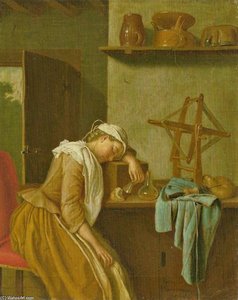 Schlafendes KüchenmädchenBavarske državne slikopisne zbirke
4 muzeja u kojima se nalazi najviše djela s ove stranice.
| Muzej | Grad | Djela autora Peter Jacob Horemans | Slike iz ovog popisa |
|---|---|---|---|
 Bavarske državne slikopisne zbirke |
München | 51 | Portrait of Frau Heigl, Kitchen Still Life with Coffee Drinker, Musical Still Life with Horn Player |
 Narodni muzej u Varšavi |
Varšava | 2 | Hunting a wild boar, Hunting with falcons |
 Lenbachhaus |
München | 2 | Picnic in the park, Concert in the garden |
 Metropolitan Museum of Art |
New York | 1 | A Musical Gathering at the Court of the Elector Karl Albrecht of Bavaria |
Odaberite desetljeće kako biste vidjeli original koji ga definira.

Portrait of Frau Heigl (1738), Bavarske državne slikopisne zbirke, München. Nakon njih slijede Kitchen Still Life with Coffee Drinker (1765) i Musical Still Life with Horn Player (1765).
38 godina: Portrait of Frau Heigl datira iz 1738, a Peter Jacob Horemans je rođen/a 1700.
Portrait of Frau Heigl, Kitchen Still Life with Coffee Drinker, Musical Still Life with Horn Player, Still Life with Female Figure with Flowers, Still Life with Elegant Lady, Still Life with Fruit and Female Figure, The Soup Eater, Still Life with Female Figure with Beer Glass, Still Life with Female Figure i Musical Still Life with Male Figure. Gornji rang prikazuje godinu i muzej za svako od njih.
Naš katalog sadrži 60 djela umjetnika Peter Jacob Horemans, datiranih od 1730 do 1776.
Većinom u Bavarske državne slikopisne zbirke (München), Narodni muzej u Varšavi (Varšava) i Lenbachhaus (München). Gornja tablica muzeja navodi sve njih.
U 1760s: 36 od 58 djela na ovoj stranici nastalo je tada, od čega je Kitchen Still Life with Coffee Drinker Kitchen Still Life with Coffee Drinker.
Na ovoj stranici najstarije djelo je iz A Musical Gathering at the Court of the Elector Karl Albrecht of Bavaria (1730), a najnovije iz Picnic in the park (1776).
Portrait of Frau Heigl, Kitchen Still Life with Coffee Drinker i Musical Still Life with Horn Player: Bavarske državne slikopisne zbirke, München posjeduje 51 djela s ove stranice.