Early Life and Artistic Training
John Elwyn, born William John Davies in Adpar, Newcastle Emlyn, South Cardiganshire, on November 20, 1916, was steeped in the traditions of a rural
Welsh landscape from his earliest years. His childhood unfolded amidst the
rolling hills and close-knit communities of West Wales, experiences that would profoundly shape his artistic vision for decades to come. He attended Carmarthen School of Art from 1935 to 1937, laying the groundwork for his future career, followed by studies at the Bristol College of Art (1937–1938) and ultimately the prestigious Royal College of Art in London (1938–1940 and 1946–1947). It was during his time at the Royal College that he adopted the name John Elwyn, a deliberate choice reflecting his deep connection to his homeland. The rigorous training provided him with technical skills – particularly in
watercolor techniques – alongside exposure to broader artistic movements, though he remained steadfastly rooted in his own distinctive style. His conscientious objection during World War II led him away from formal study and into the more immediate realities of
rural labor, working as a forestry worker and later in market gardening in Cardiff’s Quaker community—a period that would inform his later depictions of
agricultural life.
The Development of a Distinctive Style
Elwyn's artistic journey wasn't immediately defined by grand pronouncements or radical experimentation. Initially influenced by the British watercolour tradition, particularly the work of artists like
William Orpen, he gradually developed a unique approach characterized by a remarkable sensitivity to light and atmosphere. His early works, produced in the late 1940s and early 1950s, depicted scenes of everyday
rural life – chapel gatherings, festivals, and funerals—rendered with a quiet dignity and an intimate understanding of Welsh social customs. These paintings weren’t merely representations; they were imbued with a palpable sense of community and tradition. A pivotal shift occurred in the mid-1950s when Elwyn began to focus on the lives of miners and their surroundings near Pont-Rhyd-y-Fen, capturing the harsh beauty of the Swansea Valley landscape and the stoic resilience of its inhabitants. This period marked a move towards greater
social commentary within his work. Later, between 1955 and 1960, he explored the changing seasons in his own garden at Winchester, moving toward a more introspective style.
Abstraction and Return to Landscape
In the early 1960s, Elwyn embarked on a period of experimentation with abstraction, driven by a desire to explore the inner structures of natural forms – the intricate patterns within blooms and seed pods. This phase, lasting approximately ten years, saw him moving away from direct representation, focusing instead on capturing the essence of his subjects through color and form. However, he didn’t remain confined to
abstract expressionism for long. Around 1970, Elwyn made a conscious decision to return to
landscape painting, drawing upon his lifelong memories of Cardiganshire. This return was not simply a nostalgic retreat; it represented a deepening of his artistic commitment to portraying the region's unique character and spirit. He continued to draw inspiration from the
rolling hills, solitary farms, and quiet villages that defined his childhood, creating paintings that were both evocative and deeply personal.
Recognition and Legacy
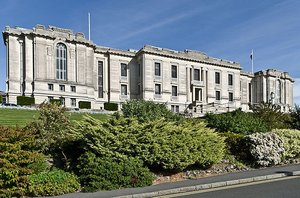
Throughout his career, John Elwyn received numerous accolades recognizing his contribution to Welsh art. He was elected a member of the Royal Cambrian Academy in 1979, an honor bestowed upon artists who have demonstrated exceptional skill and dedication to their craft. In 1982, he became an Honorary Member of the Gorsedd of Bards, a prestigious organization dedicated to preserving Welsh culture and tradition. In 1996, on his 80th birthday, the National Library of Wales staged a major retrospective exhibition showcasing his extensive body of work, accompanied by a comprehensive monograph by Robert Meyrick. His paintings are now held in significant public collections across Wales and beyond, including the National Library of Wales, the National Museum of Wales, and Leeds University. John Elwyn’s legacy lies not only in the beauty of his paintings but also in their profound evocation of Welsh identity—a testament to a life dedicated to capturing the spirit of a landscape and its people. He died on November 13, 1997, leaving behind a substantial body of work that continues to resonate with viewers today.