Portret Jean Cooke

7 najpoznatijih djela umjetnika Jean Cooke, svako jedinstveno

Ažurirano Studeni 2026 · rangirano prema našoj ocjeni popularnosti (pretraživanja, posjeti i narudžbe za svako djelo) · 7 djela Jean Cooke u našem katalogu

Ukratko

Self Portrait (1954) je slika autora Jean Cooke koja privlači najviše pogleda. Nakon toga, pogled se usmjerava na Blast Boadicea (1966) i Not Waving, Just Painting (1996). Među 7 djela umjetnika Jean Cooke u našem katalogu, ovih 7 su najpoznatija, od kojih je svako jedinstveni original predstavljen s godinom nastanka, muzejom i razlogom zbog kojeg je vječno.

1927 – 2008, South London Najviše djela: Royal Academy of Arts

Top 10 djela Jean Cooke kroz oči galerije

2
Blast Boadicea (1966) od Jean Cooke

Blast Boadicea

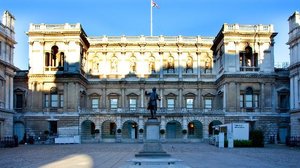
1966 · Oil On Canvas · Royal Academy of Arts, London

Jean Cooke produced Blast Boadicea in 1966. This oil on canvas functions as a self-portrait, capturing the artist in a moment of intense personal scrutiny. The work is currently held in the collection of the Royal Academy of Arts, London.

7
Union Wharf od Jean Cooke

Union Wharf

The painting Union Wharf by Jean Cooke is a stunning representation of a bustling harbor scene, showcasing the artist's skill in capturing the essence of everyday life. Measuring 61 x 77 cm, this oil on canvas piece is part of the Government Art Collection in London, United Kingdom. A Glimpse into the Artist's World Jean Cooke's work is a testament to her ability to balance color and composition, creating a…

Muzeji koji čuvaju originalna djela umjetnika Jean Cooke

5 muzeja u kojima se nalazi najviše djela s ove stranice.

Muzej Grad Djela autora Jean Cooke Slike iz ovog popisa
Royal Academy of Arts, LondonRoyal Academy of Arts London 1 Blast Boadicea
Usher Gallery, LincolnUsher Gallery Lincoln 1 Not Waving, Just Painting
St Hilda's College, Oxford, OxfordSt Hilda's College, Oxford Oxford 1 Mary Bennett, Principal (1965–1980)
Lincoln College, OxfordLincoln College Oxford 1 Egon Joseph Wellesz (1885–1974), Fellow (1938–1960)
Government Art Collection, LondonGovernment Art Collection London 1 Union Wharf

Jean Cooke kroz desetljeća: jedan jedinstveni original za svako

Djela po desetljećima

Odaberite desetljeće kako biste vidjeli original koji ga definira.

Slike umjetnika Jean Cooke: pitanja za galeriju

Koje je najpoznatije djelo umjetnika Jean Cooke?Otkrijte odgovor

Self Portrait (1954). Sljedeći su Blast Boadicea (1966) i Not Waving, Just Painting (1996).

U kojoj je dobi Jean Cooke stvorio/la Self Portrait?Otkrijte odgovor

27 godina: Self Portrait datira iz 1954, a Jean Cooke je rođen/a 1927.

Koliko je poznatih djela umjetnika Jean Cooke?Otkrijte odgovor

Naš katalog sadrži 7 djela umjetnika Jean Cooke, datiranih od 1954 do 1996.

Gdje se mogu vidjeti najpoznatiji originali umjetnika Jean Cooke?Otkrijte odgovor

Većinom u Royal Academy of Arts (London), Usher Gallery (Lincoln) i St Hilda's College, Oxford (Oxford). Gornja tablica muzeja navodi sve njih.

Koje je najranije, a koje najkasnije poznato djelo Jean Cooke?Otkrijte odgovor

Na ovoj stranici najstarije djelo je iz Self Portrait (1954), a najnovije iz Not Waving, Just Painting (1996).

Jean Cooke: portret umjetnika

Jean Cooke (1927–2008): Ungardening – A Quiet Revolution

Jean Cooke was born in London on February 18, 1927, to Arthur Oregon Cooke and his wife. Arthur owned a shop in Blackheath, London where he sold hardware supplies and groceries. Until she was about 6+1⁄2 years old, Cooke spent a lot of time in her father’s shop. Her mother saw little value in education and kept her out of school until then. Her mother had an artistic spirit, creating “beautiful colours to decorate the walls by subtly mixing odd touches of paint.” As a young girl she drew, painted and modeled figures and heads in plasticine. She attended Blackheath High School.

Early Artistic Training & Influences

Cooke began her art studies in 1943 at Central School of Arts and Crafts. She studied life drawing under Bernard Meninsky, textile design, and illustration at the Central School until 1945. Cooke then studied sculpture at Goldsmiths College and pottery at Camberwell College of Arts. Interested in becoming a teacher, she enrolled in the teacher education course at Goldsmiths, which she completed in 1950. Initially, Cooke was most interested in pursuing sculpture, partly because oils were expensive and clay was free at the college. One of her works won a prize, but after suffering a biking accident where she had dislocated her thumb, she worked in pottery. In 1950 she established a pottery workshop in Sussex. Her artistic sensibilities were profoundly shaped by artists like Gwen John and Paula Modersohn-Becker—artists who championed intimacy, observation, and an uncompromising engagement with the materiality of their subjects.

Marriage & Domestic Life: A Complex Relationship

Cooke married John Bratby in 1953. Bratby, a fellow artist, was initially supportive of Cooke’s ambitions but later became increasingly controlling, restricting her painting time to three morning hours and engaging in affairs. Their relationship was marked by emotional turmoil and physical abuse—a reality that Cooke bravely confronted throughout her life, documenting it in her paintings and speaking openly about its impact on her artistic practice. Despite the difficulties, Cooke acknowledged Bratby’s influence on her work, describing him as “an enlivening, inspiring effect.”

Career Highlights & Artistic Style

Cooke's career blossomed after she began teaching at Royal College of Art in 1964. She lectured until 1974 and continued to exhibit her works at the Royal Academy exhibition for decades. Her distinctive style—characterized by meticulous detail, subtle color palettes, and a focus on capturing quiet moments—earned her recognition as one of Britain’s leading landscape painters. Notable commissions included portraits of Mary Bennett (Principal of St Hilda's College) and Walter Oakeshott (Lincoln College), reflecting her commitment to artistic excellence and her ability to convey profound emotion through visual imagery. Her work is held in prestigious collections across the UK, including Tate and the Royal Academy.

Legacy & Recognition

Jean Cooke died on August 6, 2008, leaving behind a remarkable body of work that continues to inspire artists and scholars alike. Her unflinching honesty about her personal life—particularly her experiences with domestic violence—challenged societal norms and paved the way for greater openness about trauma and artistic expression. Cooke’s legacy resides not only in her stunning paintings but also in her courageous advocacy for vulnerable individuals and her unwavering belief in the transformative power of art.