Portret Jean Bourdichon

4 najpoznatijih djela umjetnika Jean Bourdichon, svako jedinstveno

Ažurirano Studeni 2026 · rangirano prema našoj ocjeni popularnosti (pretraživanja, posjeti i narudžbe za svako djelo) · 4 djela Jean Bourdichon u našem katalogu

Ukratko

The Wealthy Man (1500) je slika autora Jean Bourdichon koja privlači najviše pogleda; original se nalazi u muzeju École Nationale Supérieure des Beaux-Arts, Pariz. Nakon toga, pogled se usmjerava na Adoration of the Magi i Manuscript Leaf with the Annunciation from a Book of Hours (1485). Među 4 djela umjetnika Jean Bourdichon u našem katalogu, ovih 4 su najpoznatija, od kojih je svako jedinstveni original predstavljen s godinom nastanka, muzejom i razlogom zbog kojeg je vječno.

1457 – 1521, Tours Najviše djela: École Nationale Supérieure des Beaux-Arts

Top 10 djela Jean Bourdichon kroz oči galerije

2
Adoration of the Magi od Jean Bourdichon

Adoration of the Magi

Manuscript · Louvre, Pariz

The scene unfolds within the quiet intimacy of a stable, where the light seems to emanate from the infant itself. Mary sits as a pillar of calm, her blue cloak a deep, celestial weight against the wooden structure. In her lap, the child is swathed in white, a small spark of divinity amidst the earthly textures of the barn. Three figures approach, their presence marked by the heavy weight of…

3
Manuscript Leaf with the Annunciation from a Book of Hours (1485) od Jean Bourdichon

Manuscript Leaf with the Annunciation from a Book of Hours

1485

As part of a daily cycle of prayers in honor of the Virgin, Matins is habitually illustrated by an Annunciation, with the angel Gabriel announcing to Mary that she will bear the infant Jesus. Inhabitual, however, are details of this composition by Jean Bourdichon of Tours, the foremost illuminator to the court of France during the reigns of Louis XI, Charles VIII, Louis XII, and Francis I (1461-1547). Despite his…

Muzeji koji čuvaju originalna djela umjetnika Jean Bourdichon

3 muzeja u kojima se nalazi najviše djela s ove stranice.

Muzej Grad Djela autora Jean Bourdichon Slike iz ovog popisa
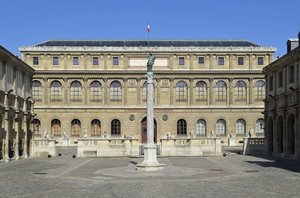
École Nationale Supérieure des Beaux-Arts, ParizÉcole Nationale Supérieure des Beaux-Arts Pariz 1 The Wealthy Man
Louvre, ParizLouvre Pariz 1 Adoration of the Magi
Certosa di San Martino, NapuljCertosa di San Martino Napulj 1 Madonna with Child and saints

Jean Bourdichon kroz godine: jedinstvena originalna djela svakog umjetnika

Dugogodišnja karijera od 16 godina, od 1485 do 1500: najpoznatiji originali umjetnika Jean Bourdichon, prikazani godinu po godinu.

Djela po godinama

Odaberite godinu kako biste vidjeli originalna djela.

Slike umjetnika Jean Bourdichon: pitanja za galeriju

Koje je najpoznatije djelo umjetnika Jean Bourdichon?Otkrijte odgovor

The Wealthy Man (1500), École Nationale Supérieure des Beaux-Arts, Pariz. Nakon njih slijede Adoration of the Magi i Manuscript Leaf with the Annunciation from a Book of Hours (1485).

U kojoj je dobi Jean Bourdichon stvorio/la The Wealthy Man?Otkrijte odgovor

43 godina: The Wealthy Man datira iz 1500, a Jean Bourdichon je rođen/a 1457.

Koliko je poznatih djela umjetnika Jean Bourdichon?Otkrijte odgovor

Naš katalog sadrži 4 djela umjetnika Jean Bourdichon, datiranih od 1485 do 1500.

Gdje se mogu vidjeti najpoznatiji originali umjetnika Jean Bourdichon?Otkrijte odgovor

Većinom u École Nationale Supérieure des Beaux-Arts (Pariz), Louvre (Pariz) i Certosa di San Martino (Napulj). Gornja tablica muzeja navodi sve njih.

U kojem je razdoblju Jean Bourdichon stvorio/la svoje najpoznatije slike?Otkrijte odgovor

U 1500: 2 od 4 djela na ovoj stranici nastalo je tada, od čega je The Wealthy Man The Wealthy Man.

Koje je najranije, a koje najkasnije poznato djelo Jean Bourdichon?Otkrijte odgovor

Na ovoj stranici najstarije djelo je iz Manuscript Leaf with the Annunciation from a Book of Hours (1485), a najnovije iz The Wealthy Man (1500).

Jean Bourdichon: portret umjetnika

Jean Bourdichon (c.1457-1521): A Pioneer of Humanist Gothic

Jean Bourdichon stands as a singular figure in the artistic landscape of late Gothic France, bridging the gap between the austere formality of medieval tradition and the burgeoning humanist spirit of the Renaissance. Born around 1457 in Tours, he emerged from a milieu steeped in ecclesiastical patronage—a circumstance that profoundly shaped his artistic trajectory and ensured his legacy would endure for centuries. While biographical details remain scarce, scholarly consensus points to Bourdichon’s formative years spent absorbing the stylistic conventions of Reims Cathedral and other monumental churches, establishing him firmly within the Gothic canon.
  • Early Influences: Bourdichon's artistic education likely commenced under the tutelage of Jean Félibert, a prominent Reims painter known for his meticulous depictions of religious iconography. This mentorship instilled in Bourdichon a dedication to precision and detail—characteristics that would become hallmarks of his oeuvre.
  • The Book of Hours Tradition: Bourdichon’s fame rests primarily upon his contribution to the Book of Hours tradition, a devotional manuscript illuminated with exquisitely rendered scenes from the Gospels and saints' lives. These works exemplify Bourdichon’s mastery of sfumato—a technique pioneered by Leonardo da Vinci—allowing him to achieve unparalleled atmospheric depth and luminosity.
  • Notable Commissions: Bourdichon secured prestigious commissions from aristocratic patrons, notably François Ier, demonstrating his ability to adapt stylistic innovations to the demands of royal clientele. His portraits of François Ier and his family are considered masterpieces of humanist portraiture, capturing not merely physical likeness but also psychological nuance.

A Synthesis of Gothic Style and Renaissance Humanism

Bourdichon’s artistic vision transcended mere stylistic imitation; he skillfully blended the grandeur of Gothic formalism with the intellectual currents of humanist thought. Unlike many of his contemporaries who clung rigidly to medieval conventions, Bourdichon embraced perspectival illusion—a technique championed by Filippo Brunelleschi—to create images that conveyed a sense of spatial realism previously unattainable in religious painting. This daring experimentation reflects Bourdichon’s engagement with Renaissance ideals of observation and anatomical accuracy.
  • Technique: Bourdichon's meticulous brushwork, combined with his masterful use of sfumato, resulted in paintings characterized by velvety gradations of tone—a technique that imbues his compositions with an ethereal quality.
  • Subject Matter: Bourdichon’s subjects consistently revolved around religious themes—the Annunciation, the Nativity, and depictions of saints—yet he approached these narratives with a humanist sensibility, portraying figures with dignity and compassion.

Major Achievements & Legacy

Jean Bourdichon's contribution to French art history is undeniable. His Book of Hours, particularly the Très Sainte Anne manuscript housed in the Musée National Jean-Jacques Henner, stands as a testament to his artistic genius and represents one of the finest examples of sfumato achieved during the fifteenth century. Furthermore, his portraits of François Ier solidified Bourdichon’s reputation as a humanist artist—a figure who skillfully navigated the transition between medieval and Renaissance aesthetics. His influence extended beyond his immediate contemporaries, inspiring subsequent generations of painters to explore innovative techniques and embrace humanistic ideals. Today, Bourdichon's works continue to captivate audiences worldwide, securing his place among the most celebrated artists of his era.

Further Exploration

For deeper insights into Jean Bourdichon’s life and art, consult resources such as Wikipedia () and The Getty Museum (), where you can admire reproductions of his masterpieces—including “Adoration of the Magi” and “The Wealthy Man”—and delve into scholarly analyses of his stylistic innovations.