Portret Isami Doi

17 najpoznatijih djela umjetnika Isami Doi, galerijska selekcija

Ažurirano Studeni 2026 · rangirano prema našoj ocjeni popularnosti (pretraživanja, posjeti i narudžbe za svako djelo) · 17 djela Isami Doi u našem katalogu

Ukratko

Od svih originala koje je Isami Doi ostavio, najpoznatiji je (The Wayward Muse, portfolio) Somewhere There Is a Mountain Called Parnassus Where You and I Must Go Anon and Oft (1952). Samo iza njih slijede Near Coney Island (1937) i (The Wayward Muse, portfolio) Quand Vous Regardez l'Essor, Etc (1952). Naš katalog sadrži 17 djela umjetnika Isami Doi; galerija je čuvala onih 17 koja svijet najviše divi, a svako je prikazano s datumom nastanka, muzejom i pričanom.

1903 – 1965

Top 10 djela umjetnika Isami Doi: izbor galerije

1
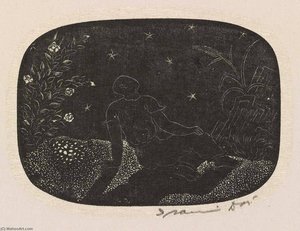
(The Wayward Muse, portfolio) Somewhere There Is a Mountain Called Parnassus Where You and I Must Go Anon and Oft (1952) od Isami Doi

(The Wayward Muse, portfolio) Somewhere There Is a Mountain Called Parnassus Where You and I Must Go Anon and Oft

1952 · Painting

This piece belongs to a period in the artist's development where the boundaries between the physical and the symbolic began to blur. The title suggests a destination—a mountain of myth—which informs the way the figures are placed within the landscape. By integrating these classical undertones with a sense of human activity, the work moves beyond simple representation. It captures a moment that feels both grounded in a specific place and…

2
Near Coney Island (1937) od Isami Doi

Near Coney Island

1937 · Lithograph

In the black and white lithograph Near Coney Island by Isami Doi, a quiet, rural landscape unfolds under a heavy, dramatic sky. The scene captures a small village nestled closely against the edge of a body of water, where the land meets the ripples of a river or lake. Every inch of the composition feels densely packed, as overlapping forms create a sense of depth that pulls the eye through…

Izbor umjetnika Isami Doi se nastavlja, od 11 do 17

Isami Doi iz godine u godinu: originalna djela koja definiraju svaku od njih

Od 1937 do 1952, Isami Doi je stvarao tijekom 16 godina: ovaj izbor prati tu dugogodišnju karijeru godinu po godinu, kroz njegova najfinija originalna djela.

Djela prema godinama

Odaberite godinu kako biste vidjeli originalna djela.

Pitanja kolekcionara o slikama umjetnika Isami Doi

Po kojem je djelu Isami Doi najpoznatiji/a?Otkrijte odgovor

(The Wayward Muse, portfolio) Somewhere There Is a Mountain Called Parnassus Where You and I Must Go Anon and Oft (1952). Sljedeći su Near Coney Island (1937) i (The Wayward Muse, portfolio) Quand Vous Regardez l'Essor, Etc (1952).

Koliko je godina Isami Doi imao/la kada je nastalo djelo (The Wayward Muse, portfolio) Somewhere There Is a Mountain Called Parnassus Where You and I Must Go Anon and Oft?Otkrijte odgovor

49 godina: (The Wayward Muse, portfolio) Somewhere There Is a Mountain Called Parnassus Where You and I Must Go Anon and Oft datira iz 1952, a Isami Doi je rođen/a 1903.

Koja su deset najpoznatijih djela umjetnika Isami Doi?Otkrijte odgovor

(The Wayward Muse, portfolio) Somewhere There Is a Mountain Called Parnassus Where You and I Must Go Anon and Oft, Near Coney Island, (The Wayward Muse, portfolio) Quand Vous Regardez l'Essor, Etc, (The Wayward Muse, portfolio) Once I Grew Happily in the Sun, (The Wayward Muse, portfolio) Frontispiece, (The Wayward Muse, portfolio) What Fortunes and Misfortunes Await Me Here, (The Wayward Muse, portfolio) Proserpine, Once Again the Hills and Vales Throb with Savage Glee, (The Wayward Muse, portfolio) Relentless and Swift Is the Flow of the Great River, (The Wayward Muse, portfolio) Long before Man, Long after Man i (The Wayward Muse, portfolio) No More the Walls Surround, Etc. Gornji rang prikazuje godinu i muzej za svako od njih.

Koliko je slika ostavio/la Isami Doi?Otkrijte odgovor

Naš katalog sadrži 17 djela umjetnika Isami Doi, datiranih od 1937 do 1952.

U kojim je godinama Isami Doi naslikao svoja najpoznatija djela?Otkrijte odgovor

U 1952: 16 od 17 djela na ovoj stranici nastalo je tada, od čega je (The Wayward Muse, portfolio) Somewhere There Is a Mountain Called Parnassus Where You and I Must Go Anon and Oft (The Wayward Muse, portfolio) Somewhere There Is a Mountain Called Parnassus Where You and I Must Go Anon and Oft.

Koja su prva i posljednja poznata originalna djela umjetnika Isami Doi?Otkrijte odgovor

Na ovoj stranici najstarije djelo je iz Near Coney Island (1937), a najnovije iz (The Wayward Muse, portfolio) Somewhere There Is a Mountain Called Parnassus Where You and I Must Go Anon and Oft (1952).

Isami Doi: život i djelo

The Soul of the Islands: The Artistic Journey of Isami Doi

Born in 1903 to Japanese immigrants on the island of Oahu, Isami Doi’s life was a profound bridge between cultures and continents. While his roots were firmly planted in the volcanic soil of the Hawaiian Islands, his artistic spirit was forged in the cosmopolitan intensity of New York City and the classical light of Paris. This unique trajectory allowed him to weave together the rugged, natural grandeur of Kauai with the sophisticated principles of modernism. His early years at the University of Hawaii provided a foundational connection to his homeland, but it was his time in Manhattan—studying under masters like Albert Bierstadt and exploring the rigorous color theories of Josef Albers at Columbia University—that equipped him with the technical vocabulary to transform landscape into emotion.

Doi’s early aesthetic was deeply rooted in the tradition of tonal harmony and naturalism. Influenced by Bierstadt’s sweeping landscapes, his initial works often utilized muted duns, browns, and earthy hues to capture the dramatic mountains of Kauai. These early pieces possessed a subtle, almost discreet erotic quality, finding beauty in the textures of the earth and the soft gradations of light. A landmark moment in his burgeoning career arrived in 1929 with his first solo exhibition at the Honolulu Museum of Art, where his prints and paintings immediately established him as a vital new voice in the Hawaiian art scene. His ability to render the landscape not just as scenery, but as a living, breathing entity, earned him national recognition, including being named one of the fifty best printmakers in America for his work Woodstock Village.

From Classical Symbolism to Abstract Spirit

As Doi’s career progressed, his work underwent a mesmerizing metamorphosis, moving away from literal representation toward a deeply personal symbolic language. Mid-way through his journey, the artist began to integrate classical motifs inherited from Greek and Roman mythology. He introduced elements such as centaurs, sphinxes, and broken columns into his compositions, creating a dialogue between the ancient Mediterranean world and the Pacific landscape. This period reflected an artist grappling with the weight of history and the permanence of myth, blending the physical reality of Hawaii with the intellectual heritage of Western civilization.

However, it was the deepening of his spiritual life that ultimately led him toward the threshold of pure abstraction. The symbols of the classical world gradually dissolved into more primal, elemental forms. His palette shifted dramatically; the muted tones of his youth gave way to vibrant oranges and vermilions, colors that signified flickering flames and divine light. In this stage of his evolution, Doi utilized a simplified Buddha shape as a personal hieroglyph for meditation, signaling a move toward a Zen-like minimalism. This transition was not merely stylistic but spiritual, as he sought to capture the essence of existence through color and form rather than through recognizable figures.

A Lasting Legacy of Light and Landscape

In his final years during the 1960s, Doi’s work came full circle. He set aside the complex symbols of his middle period to return to the cliffs of Kauai, yet he viewed them through an entirely new lens. No longer just landscapes to be observed, these geological formations became spiritual entities in themselves. His late abstract paintings, such as Early Spring, represent a pinnacle of his achievement, where the distinction between the physical world and the spiritual realm vanishes into fluid, energetic strokes.

The historical significance of Isami Doi lies in his role as a pioneer of Hawaiian Abstract Expressionism. He successfully navigated the complexities of being a second-generation Japanese American artist, creating a body of work that is simultaneously local and universal. His legacy is preserved in prestigious institutions such as:

  • The National Gallery of Art in Washington, DC, which holds his significant contributions to American printmaking.
  • The Honolulu Museum of Art, where his early mastery of the Hawaiian landscape remains a cornerstone of the collection.
  • The Hawaii State Art Museum, housing works that showcase his unique integration of classical and Pacific motifs.

Through his teaching of printmaking, drawing, and metalwork, and his ability to find the infinite within the local, Isami Doi remains an enduring icon of American modernism, reminding us that art is a continuous journey from the observation of nature to the realization of the soul.