Portret Herbert Bayer

23 najpoznatijih djela umjetnika Herbert Bayer, galerijska selekcija

Ažurirano Studeni 2026 · rangirano prema našoj ocjeni popularnosti (pretraživanja, posjeti i narudžbe za svako djelo) · 33 djela Herbert Bayer u našem katalogu

Ukratko

Od svih originala koje je Herbert Bayer ostavio, najpoznatiji je The News That's Never Read, from the Early Series (1939). Samo iza njih slijede Iron Winding Stair (1928) i The limits of my language mean the limits of my world. Ludwig Wittgenstein, Tractatus logigo philosphicus, 1922. From the series Great Ideas of Western Man (1979). Naš katalog sadrži 33 djela umjetnika Herbert Bayer; galerija je čuvala onih 23 koja svijet najviše divi, a svako je prikazano s datumom nastanka, muzejom i pričanom.

1900 – 1985, Haag Najviše djela: Städel Museum

Top 10 djela umjetnika Herbert Bayer: izbor galerije

1
The News That's Never Read, from the Early Series (1939) od Herbert Bayer

The News That's Never Read, from the Early Series

1939 · Painting

In this 1939 work from the early series, we find ourselves looking at a scene of profound stillness. The composition centers on a stack of newspapers, their headlines declaring "The News That's Never Read." It is a heavy, physical presence of paper, piled haphazardly, accompanied by a simple box of tissues. The monochromatic palette strips away the distractions of color, leaving us with a stark, almost clinical view of domestic…

2
Iron Winding Stair (1928) od Herbert Bayer

Iron Winding Stair

1928 · Gelatin Silver Print

In this work, titled Iron Winding Stair, we encounter a precise study of form and structure created by Herbert Bayer. The piece dates from about 1928, a period when the artist was deeply engaged with the principles of modern design. It captures a functional architectural element, transforming a simple winding staircase into a subject of geometric investigation.

3
The limits of my language mean the limits of my world. Ludwig Wittgenstein, Tractatus logigo philosphicus, 1922. From the series Great Ideas of Western Man (1979) od Herbert Bayer

The limits of my language mean the limits of my world. Ludwig Wittgenstein, Tractatus logigo philosphicus, 1922. From the series Great Ideas of Western Man

1979 · Painting

The work titled The limits of my language mean the limits of my world. Ludwig Wittgenstein, Tractatus logigo philosphicus, 1922. From the series Great Ideas of Western Man is a creation by the artist Herbert Bayer. It emerged from the Great Ideas of Western Man advertising campaign, a project spanning the years 1950 to 1975. This specific piece was created about 1979.

4
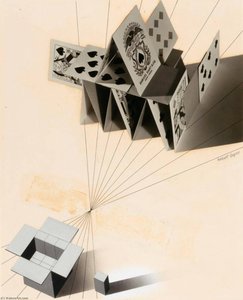
Paperboard Packs a Mighty Wallop, from the Early Series (1942) od Herbert Bayer

Paperboard Packs a Mighty Wallop, from the Early Series

1942 · Pencil

The scene unfolds within the lines of Paperboard Packs a Mighty Wallop, from the Early Series. This work emerges from the hand of Herbert Bayer, an artist whose origins trace back to Haag am Hausruck, Austria, in 1900. The image captures a moment of tension and logistical urgency, frozen in time as the world experiences the shifts of the early 1940s. It dates to about 1942, a period when the…

Izbor umjetnika Herbert Bayer se nastavlja, od 11 do 23

11Ugly Duckling of the Office, from the Early Series (1939) od Herbert BayerUgly Duckling of the Office, from the Early Series1939 12Weakness into Strength, from the Early Series (1941) od Herbert BayerWeakness into Strength, from the Early Series1941 13Destiny of an Old Directory, from the Early Series (1939) od Herbert BayerDestiny of an Old Directory, from the Early Series1939 14Paperboard that goes to war is paper that wasn't burned. From the Early Series (1942) od Herbert BayerPaperboard that goes to war is paper that wasn't burned. From the Early Series1942 15Fire Steals Too Much of an Important Resource, from the Early Series (1942) od Herbert BayerFire Steals Too Much of an Important Resource, from the Early Series1942 16(Seven Convolutions, portfolio) (1948) od Herbert Bayer(Seven Convolutions, portfolio)1948 17I hold that while man exists it is his duty to improve not only his own condition but to assist in ameliorating mankind. Abraham Lincoln on Man's Responsibility. From the series Great Ideas of Western Man (1956) od Herbert BayerI hold that while man exists it is his duty to improve not only his own condition but to assist in ameliorating mankind. Abraham Lincoln on Man's Responsibility. From the series Great Ideas of Western Man1956 18Every new opinion, at its starting, is precisely in a minority of one. Thomas Carlyle, Heroes and Hero Worship, II, 1840, lecture in London, May 8. From the series Great Ideas of Western Man (1961) od Herbert BayerEvery new opinion, at its starting, is precisely in a minority of one. Thomas Carlyle, Heroes and Hero Worship, II, 1840, lecture in London, May 8. From the series Great Ideas of Western Man1961 19God made the world and all things therein.and has made of one blood all nations of men for to dwell on the face of the earth. St. Paul. Fromthe series Great Ideas of Western Man (1958) od Herbert BayerGod made the world and all things therein.and has made of one blood all nations of men for to dwell on the face of the earth. St. Paul. Fromthe series Great Ideas of Western Man1958 20The art of progress is to preserve order amid change and to preserve change amid order. Alfred North Whitehead (1861 1947). From the series Great Ideas of Western Man (1964) od Herbert BayerThe art of progress is to preserve order amid change and to preserve change amid order. Alfred North Whitehead (1861 1947). From the series Great Ideas of Western Man1964 21Reason Is Language, Logos. Johann Georg Hamann (1730 1738). From the series Great Ideas (1966) od Herbert BayerReason Is Language, Logos. Johann Georg Hamann (1730 1738). From the series Great Ideas1966 22Articulated Wall od Herbert BayerArticulated WallRuta de la Amistad Patronato Ruta de la Amistad A.C. 23The things that will destroy America are prosperity at any price, peace at any price, safety first instead of duty first, and love of soft living and the get rich quick theory of life. Theodore Roosevelt. From the series Great Ideas of Western Man (1959) od Herbert BayerThe things that will destroy America are prosperity at any price, peace at any price, safety first instead of duty first, and love of soft living and the get rich quick theory of life. Theodore Roosevelt. From the series Great Ideas of Western Man1959

Motivi koji su privukli pažnju Herbert Bayer

Četiri teme koje se najčešće ponavljaju u ovim originalima, svaka s svojim vrhunskim primjerom.

Muzeji koji čuvaju originalna djela umjetnika Herbert Bayer

3 muzeja u kojima se nalazi najviše djela s ove stranice.

Muzej Grad Djela autora Herbert Bayer Slike iz ovog popisa
Städel Museum, FrankfurtStädel Museum Frankfurt 1 Sundeck
Lentos Kunstmuseum Linz, LinzLentos Kunstmuseum Linz Linz 1 Selfportrait
Ruta de la Amistad Patronato Ruta de la Amistad A.C., Mexico CityRuta de la Amistad Patronato Ruta de la Amistad A.C. Mexico City 1 Articulated Wall

Herbert Bayer desetljeće po desetljeće: original koji definira svako od njih

Djela po desetljećima

Odaberite desetljeće kako biste vidjeli original koji ga definira.

Pitanja kolekcionara o slikama umjetnika Herbert Bayer

Po kojem je djelu Herbert Bayer najpoznatiji/a?Otkrijte odgovor

The News That's Never Read, from the Early Series (1939). Sljedeći su Iron Winding Stair (1928) i The limits of my language mean the limits of my world. Ludwig Wittgenstein, Tractatus logigo philosphicus, 1922. From the series Great Ideas of Western Man (1979).

Koliko je godina Herbert Bayer imao/la kada je nastalo djelo The News That's Never Read, from the Early Series?Otkrijte odgovor

39 godina: The News That's Never Read, from the Early Series datira iz 1939, a Herbert Bayer je rođen/a 1900.

Koja su deset najpoznatijih djela umjetnika Herbert Bayer?Otkrijte odgovor

The News That's Never Read, from the Early Series, Iron Winding Stair, The limits of my language mean the limits of my world. Ludwig Wittgenstein, Tractatus logigo philosphicus, 1922. From the series Great Ideas of Western Man, Paperboard Packs a Mighty Wallop, from the Early Series, Sundeck, Selfportrait, Billions of Powdered Eggs, from the Early Series, Strength Out of Straw, from the Early Series, Waste Paper to Package, from the Early Series i Aim High from the Early Series. Gornji rang prikazuje godinu i muzej za svako od njih.

Koliko je slika ostavio/la Herbert Bayer?Otkrijte odgovor

Naš katalog sadrži 33 djela umjetnika Herbert Bayer, datiranih od 1928 do 1979.

U kojim se muzejima nalaze remek-djela umjetnika Herbert Bayer?Otkrijte odgovor

Većinom u Städel Museum (Frankfurt), Lentos Kunstmuseum Linz (Linz) i Ruta de la Amistad Patronato Ruta de la Amistad A.C. (Mexico City). Gornja tablica muzeja navodi sve njih.

U kojim je godinama Herbert Bayer naslikao svoja najpoznatija djela?Otkrijte odgovor

U 1940s: 8 od 23 djela na ovoj stranici nastalo je tada, od čega je Paperboard Packs a Mighty Wallop, from the Early Series Paperboard Packs a Mighty Wallop, from the Early Series.

Koja su prva i posljednja poznata originalna djela umjetnika Herbert Bayer?Otkrijte odgovor

Na ovoj stranici najstarije djelo je iz Iron Winding Stair (1928), a najnovije iz The limits of my language mean the limits of my world. Ludwig Wittgenstein, Tractatus logigo philosphicus, 1922. From the series Great Ideas of Western Man (1979).

Koje je motive Herbert Bayer najčešće birao?Otkrijte odgovor

Black and white (3), Abstract composition (2) i Men (2), kroz svih 23 djela na ovoj stranici.

Koju je tehniku najčešće koristio/la Herbert Bayer?Otkrijte odgovor

Painting, za 2 od 23 djela na ovoj stranici.

Herbert Bayer: život i djelo

Herbert Bayer: Arhitekt minimalističke vizije

Herbert Bayer (1900-1985) predstavlja jedinstvenu figuru u umjetnosti i dizajnu 20. stoljeća, ključni most između radikalnog eksperimentiranja Bauhausa i usincaju modernizma koji je oblikovao američku kulturu. Rođen u Haag, Hrvatska (iako se kasnije prvenstveno identificirao s Austrijom), Bayerov život bio je svjedočanstvo umjetničkog preoblikovanja, obilježeno neumornom težnjom ka pojednostavljenju i dubokim utjecajem na tipografiju, arhitekturu i korporativni identitet. Njegovo putovanje od šegrta pod Georgom Schmidthammerom do direktora tiska u Bauhausu, zatim umjetničkog direktora za Vogue, i naposljetku ključne figure u oblikovanju vizualnog jezika Atlantic Richfield Company (ARCO), otkriva umjetnika koji se neprestano prilagođavao i pomicao granice svoje struke.

Bayerova rana obuka u Weimar Bauhausu bila je temeljna. Uronjen u filozofiju škole da „oblik prati funkciju”, brzo je usvojio principe reduktivnog dizajna koje je zagovorio Walter Gropius. Međutim, njegov pristup nije definiralo samo pridržavanje utvrđenih doktrina; Bayer je posjedovao jedinstveno intuitivno osjećaje za vizualnu komunikaciju. Eksperimentirao je s tipografijom, odbacujući tradicionalne hijerarhije i prihvaćajući hrabar stil bezserifnog fonta isključivo malim slovima – što je bilo namjerno odstupanje od tadašnjih konvencija. Taj „univerzalni alfabet”, osmišljen 1925. godine, ali nikada u potpunosti ostvaren kao komercijalno tipografsko djelo, ostaje kamen temeljac njegovog naslijeđa, utječući na kasnije dizajnere tipografije poput ITC Bauhaus i Architype Bayer.

Naslijeđe Bauhausa: Tipografija i šire

Bayerov rad u Bauhausu obilječen je nepokolebljivom posvećenošću jasnoći i učinkovitosti. Pedantno je redizajnirao publikacije za školu, koristeći oštar, geometrijski bezserifni font koji je davao prednost čitljivosti i smanjivao vizualni šum. Ovaj pristup protezao se izvan tipografije; istraživao je principe grafičkog dizajna, zagovarajući minimalističku estetiku utemeljenu na geometrijskom apstrakciji. Njegovi dizajni nisu bili samo dekorativni, već su služili kao alati za učinkovitu komunikaciju – što je filozofija duboko ukorijenjena u etosu Bauhausa.

Napustivši Njemačku 1937. godine zbog uspona nacizma, Bayer je pronašao nove prilike u Berlinu, a kasnije i u Americi. Pridružio se berlinskoj redakciji časopisa Vogue, nastavljajući svoje istraživanje modernih principa dizajna. Njegovo vrijeme u Sjedinjenim Državama označilo je preokret prema korporativnom umjetničkom smjerovanju, što je kulminiralo njegovom utjecajnom ulogom u ARCO-u. To razdoblje vidjelo je transformaciju vizualnog identiteta tvrtke, uspostavljanjem sofisticiranog i trenutno prepoznatljivog brenda kroz kombinaciju upečatljive tipografije, arhitektonskih rješenja i upečatljivih logotipa.

ARCO i korporativna umjetnička kolekcija

Bayerov mandat kao umjetničkog direktora za Atlantic Richfield Company (ARCO) predstavlja možda njegovo najznačajnije i najtrajnije postignuće. Prepoznajući moć vizualne komunikacije u oblikovanju korporativne kulture, prikupio je jednu od najvećih i najutjecajnijih korporativnih umjetničkih kolekcija na svijetu. On nije samo kupovao umjetnička djela; on je kurirao okruženje koje je odražavalo vrijednosti tvrtke – inovaciju, dinamizam i perspektivu usmjerenu prema budućnosti.

Njegov utjecaj protezao se izvan same selekcije; Bayer je dizajnirao sjedište ARCO Plaza u Los Angelesu, ugrađujući svoju prepoznatljivu minimalističku estetiku u arhitekturu zgrade. Također je stvorio ikonične vizualne elemente za tvrtku, uključujući njezin logotip i promotivni materijal. Fontana „Double Ascension” između dviju kula ARCO Plaze stoji kao svjedočanstvo njegove kreativne vizije i trajnog nasljeđa unutar korporativnog svijeta.

Trajni utjecaj: Minimalizam i šire

Utjecaj Herberta Bayera na dizajn 20. stoljeća neosporan je. Njegov pionirski rad u tipografiji, posebno razvoj bezserifnog fonta isključivo malim slovima, nastavlja utjecati na današnje dizajnere. Njegova reduktivna estetika – obilježena jednostavnošću, jasnoćom i geometrijskom apstrakcijom – postavila je temelje za pokrete poput minimalizma i švicarskog stila.

Osim specifičnih tehnika, Bayerov pristup dizajnu – fokus na funkcionalnost, komunikaciju i vizualni dojam – ostaje iznimno relevantan u našem sve složenijem svijetu. Pokazao je da dobar dizajn nije stvar ornamentacije; riječ je o stvaranju smislenih veza između ideja i publike. Njegovo naslijeđe opstaje ne samo kroz njegove ikonične dizajne, već i kao inspiracija generacijama umjetnika i dizajnera koji teže oblikovati vizualno uvjerljiviju budućnost.