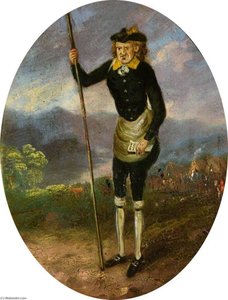
Portret George James

12 najpoznatijih djela umjetnika George James, svako jedinstveno

Ažurirano Listopad 2026 · rangirano prema našoj ocjeni popularnosti (pretraživanja, posjeti i narudžbe za svako djelo) · 12 djela George James u našem katalogu

Ukratko

Bhairo Raghunath Mehendale, Diplomatic Agent to the Peshwa at Poona (1792) je slika autora George James koja privlači najviše pogleda; original se nalazi u muzeju Britanska knjižnica, London. Nakon toga, pogled se usmjerava na Charles Leslie ('Mussel Mou'd Charlie'), 1677- 1782. Jacobite ballad-singer (1780) i Madhu Rao Narayan, the Maratha Peshwa with Nana Fadnavis and Attendants (1792). Među 12 djela umjetnika George James u našem katalogu, ovih 12 su najpoznatija, od kojih je svako jedinstveni original predstavljen s godinom nastanka, muzejom i razlogom zbog kojeg je vječno.

1749 – 1795, London Najviše djela: Britanska knjižnica

Top 10 djela George James kroz oči galerije

1
Bhairo Raghunath Mehendale, Diplomatic Agent to the Peshwa at Poona (1792) od George James

Bhairo Raghunath Mehendale, Diplomatic Agent to the Peshwa at Poona

1792 · Oil On Canvas · Britanska knjižnica, London

Bhairo Raghunath Mehendale is rendered in oil on canvas, captured in a half-length pose that emphasizes his status as a high-ranking official. He is depicted with a long white beard and a turban, his gaze directed away from the viewer. The composition places him as the central figure, with subtle presence of other individuals in the background. His attire and facial features are rendered with a focus on individual character…

2
Charles Leslie ('Mussel Mou'd Charlie'), 1677- 1782. Jacobite ballad-singer (1780) od George James

Charles Leslie ('Mussel Mou'd Charlie'), 1677- 1782. Jacobite ballad-singer

1780 · Oil · Skotska nacionalna galerija portreta, Edinburgh

Charles Leslie ('Mussel Mou'd Charlie'), 1677- 1782. Jacobite ballad-singer by George James presents a full-length portrait of a single subject. The man is positioned slightly off-center against a dark, indistinct background. This vertical composition focuses attention entirely on the figure, isolating him within a somber, shadowed space.

3
Madhu Rao Narayan, the Maratha Peshwa with Nana Fadnavis and Attendants (1792) od George James

Madhu Rao Narayan, the Maratha Peshwa with Nana Fadnavis and Attendants

This oil painting on canvas, dating to 1792, presents a formal portrait of three men dressed in traditional Indian attire. The composition is structured symmetrically, featuring a central figure seated prominently upon a richly patterned rug. He is flanked by two attendants, creating a sense of hierarchical order. The setting suggests a grand interior or palace, indicated by the presence of a draped curtain and an architectural column in the…

Slavna djela umjetnika George James, od 11. do 12. broj

Motivi koji su privukli pažnju George James

Četiri teme koje se najčešće ponavljaju u ovim originalima, svaka s svojim vrhunskim primjerom.

Muzeji koji čuvaju originalna djela umjetnika George James

5 muzeja u kojima se nalazi najviše djela s ove stranice.

Muzej Grad Djela autora George James Slike iz ovog popisa
Britanska knjižnica, LondonBritanska knjižnica London 3 Bhairo Raghunath Mehendale, Diplomatic Agent to the Peshwa at Poona, Hugh Seton, Mahadaji Sindhia
Skotska nacionalna galerija portreta, EdinburghSkotska nacionalna galerija portreta Edinburgh 2 Charles Leslie ('Mussel Mou'd Charlie'), 1677- 1782. Jacobite ballad-singer, Arthur Johnston, c 1577 - 1641. Poet and physician
Yale Center for British Art, New HavenYale Center for British Art New Haven 2 A Whole Length of a Lady of Petrella, in the Kingdom of Naple, A Whole Length of a Lady of Neturrio, a Sea-port in the Pope's Territorie
Royal Asiatic Society of Great Britain And Ireland, LondonRoyal Asiatic Society of Great Britain And Ireland London 1 Madhu Rao Narayan, the Maratha Peshwa with Nana Fadnavis and Attendants
The National Trust For Scotland, TurriefThe National Trust For Scotland Turrief 1 Charles Leslie of Aberdeen (1677–1782)

George James kroz desetljeća: jedan jedinstveni original za svako

Djela po desetljećima

Odaberite desetljeće kako biste vidjeli original koji ga definira.

Slike umjetnika George James: pitanja za galeriju

Koje je najpoznatije djelo umjetnika George James?Otkrijte odgovor

Bhairo Raghunath Mehendale, Diplomatic Agent to the Peshwa at Poona (1792), Britanska knjižnica, London. Nakon njih slijede Charles Leslie ('Mussel Mou'd Charlie'), 1677- 1782. Jacobite ballad-singer (1780) i Madhu Rao Narayan, the Maratha Peshwa with Nana Fadnavis and Attendants (1792).

U kojoj je dobi George James stvorio/la Bhairo Raghunath Mehendale, Diplomatic Agent to the Peshwa at Poona?Otkrijte odgovor

43 godina: Bhairo Raghunath Mehendale, Diplomatic Agent to the Peshwa at Poona datira iz 1792, a George James je rođen/a 1749.

Koja su deset najpoznatijih slika umjetnika George James?Otkrijte odgovor

Bhairo Raghunath Mehendale, Diplomatic Agent to the Peshwa at Poona, Charles Leslie ('Mussel Mou'd Charlie'), 1677- 1782. Jacobite ballad-singer, Madhu Rao Narayan, the Maratha Peshwa with Nana Fadnavis and Attendants, Lord Cardross (1742–1829), Earl of Buchan, Findlay Esq., Aide de Camp to Sir Charles Malet, Hugh Seton, Mahadaji Sindhia, Arthur Johnston, c 1577 - 1641. Poet and physician, A Whole Length of a Lady of Petrella, in the Kingdom of Naple i A Whole Length of a Lady of Neturrio, a Sea-port in the Pope's Territorie. Gornji rang prikazuje godinu i muzej za svako od njih.

Koliko je poznatih djela umjetnika George James?Otkrijte odgovor

Naš katalog sadrži 12 djela umjetnika George James, datiranih od 1765 do 1794.

Gdje se mogu vidjeti najpoznatiji originali umjetnika George James?Otkrijte odgovor

Većinom u Britanska knjižnica (London), Skotska nacionalna galerija portreta (Edinburgh) i Yale Center for British Art (New Haven). Gornja tablica muzeja navodi sve njih.

U kojem je razdoblju George James stvorio/la svoje najpoznatije slike?Otkrijte odgovor

U 1790s: 5 od 12 djela na ovoj stranici nastalo je tada, od čega je Bhairo Raghunath Mehendale, Diplomatic Agent to the Peshwa at Poona Bhairo Raghunath Mehendale, Diplomatic Agent to the Peshwa at Poona.

Koje je najranije, a koje najkasnije poznato djelo George James?Otkrijte odgovor

Na ovoj stranici najstarije djelo je iz Lord Cardross (1742–1829), Earl of Buchan (1765), a najnovije iz Hugh Seton (1794).

S kojim je materijalima George James najčešće slikao?Otkrijte odgovor

Oil On Canvas, za 2 od 12 djela na ovoj stranici.

Koje originale umjetnika George James mogu vidjeti u muzeju Britanska knjižnica?Otkrijte odgovor

Bhairo Raghunath Mehendale, Diplomatic Agent to the Peshwa at Poona, Hugh Seton i Mahadaji Sindhia: Britanska knjižnica, London posjeduje 3 djela s ove stranice.

George James: portret umjetnika

A Life Bridging Worlds: The Artistic Journey of James Wales

James Wales, born in the Scottish coastal town of Peterhead in 1747, embarked on a life that would see him traverse continents and capture the likenesses of figures from vastly different cultural spheres. His story is not merely one of artistic talent, but of adaptation, observation, and a unique ability to bridge the gap between European portraiture traditions and the rich visual landscape of late 18th-century India. Initially honing his skills in Aberdeen, where he sold portraits, Wales’s ambition led him south to London, seeking wider recognition. He found it, exhibiting works at both the Royal Academy and the Society of Artists – a testament to his growing reputation as a skilled portraitist within the established art circles of Britain. However, the true turning point in Wales's career came with his journey eastward in 1791, a move that would define his artistic legacy.

From London Salons to the Courts of India

The allure of India, and specifically the Maratha Empire, proved irresistible to Wales. He arrived during a period of significant political change and cultural vibrancy, quickly establishing himself as a sought-after portraitist among the ruling elite. Unlike many European artists who focused solely on depicting British colonial figures, Wales actively sought commissions from Indian nobility – most notably Sawai Madhavrao Scindia, the young ruler of Gwalior, and Nana Fadnavis, the influential Maratha statesman. These portraits weren’t simply exercises in technical skill; they were acts of cultural exchange, reflecting a degree of respect and understanding rarely seen in contemporary representations of India. Wales's style, rooted in British academic portraiture, subtly adapted to incorporate elements of local aesthetics – a delicate balance between his artistic training and the preferences of his Indian patrons. He wasn’t merely *painting* Indians; he was engaging with their culture on a personal level, attempting to capture not just physical resemblance but also something of their character and status.

Documenting Ancient Splendor: The Ellora Caves

Beyond portraiture, Wales possessed an insatiable curiosity for the historical and archaeological wonders of India. He dedicated considerable time to documenting the magnificent cave temples of Elephanta and, more significantly, Ellora. His meticulous drawings and paintings of these ancient sites weren’t simply artistic endeavors; they were acts of preservation, capturing a visual record of monuments that were relatively unknown in Europe at the time. The resulting publication, Hindoo Excavations in the Mountain of Ellora near Aurungabad in the Decan, released in 1803, was groundbreaking. It offered European audiences their first detailed glimpse into the intricate carvings and architectural grandeur of these rock-cut temples, sparking a renewed interest in Indian history and art. The book’s impact extended beyond academic circles, influencing artists and designers with its exotic imagery and complex compositions.

A Legacy Forged Through Cultural Exchange

Wales's artistic development was marked by a willingness to learn and adapt. While his early work adhered closely to the conventions of British portraiture – emphasizing realism, refined technique, and formal composition – his time in India infused his style with a new sensitivity to color, pattern, and symbolism. He skillfully blended European techniques with local aesthetics, creating portraits that were both technically accomplished and culturally nuanced. His depictions of Maratha figures are particularly noteworthy for their dignified portrayal of Indian nobility, challenging prevailing stereotypes and offering a more respectful representation of Indian society. His work stands as a testament to the power of art to transcend cultural boundaries, fostering understanding and appreciation between different worlds.

Family & Historical Significance

The personal life of James Wales was also intertwined with his artistic journey. His daughter, Susanna Wales, followed in her father’s footsteps, becoming a skilled portraitist herself. Her marriage to Sir Charles Malet, 1st Baronet – whom she met during her father's time in India – further cemented the family’s connection to the region and its political landscape. Wales’s historical significance lies not only in his artistic achievements but also in his role as a cultural intermediary. He wasn’t simply an artist *in* India; he was an active participant in the exchange of ideas, images, and perspectives between Europe and the Maratha Empire. His portraits offer invaluable insights into the lives and personalities of key figures during a pivotal period in Indian history, while his documentation of the Ellora Caves ensured that these ancient monuments were brought to the attention of a wider global audience.
  • Pioneered portraiture of Indian nobility.
  • Published influential depictions of the Ellora Caves.
  • Bridged European and Indian artistic traditions.
His work continues to resonate today, reminding us of the power of art to connect cultures and illuminate the past.