1


Ažurirano Studeni 2026 · rangirano prema našoj ocjeni popularnosti (pretraživanja, posjeti i narudžbe za svako djelo) · 55 djela Emile Eisman Semenovsky u našem katalogu
Ukratko
Od svih originala koje je Emile Eisman Semenovsky ostavio, najpoznatiji je Marguerite (1882). Samo iza njih slijede The Maiden of Spring (1882) i Gypsy Girl (1886). Naš katalog sadrži 55 djela umjetnika Emile Eisman Semenovsky; galerija je čuvala onih 53 koja svijet najviše divi, a svako je prikazano s datumom nastanka, muzejom i pričanom.


 The Maiden Of Spring
12
 Mädchenportrait
13
 Hide And Seek
14
 Beauty Unmasked
15
 Elegant Woman with Hat
16
 Harem beauty
17
 A Young Beauty In An Embroidered Vest
18
 Friquette
19
 Mädchenporträt
20
 An Eastern Beauty
21
 Lady with coffee cup
22
 Eastern Beauty
23
 Coquette
24
 Neapolitan Maidens
25
 Lady Dressed as a Shepherdess
26
 A Lady with Flowers
27
 Junge Frau Bei Einem Bluehendem Kirschbaum
28
 Autumn
29
 Girl with Red Umbrella
30
 An Oriental Beauty
31
 A Lady Styling her Hair
32
 Gathering the Wild Fruit
33
 A Languid Beauty
34
 Une Beauté Orientale. Huile Sur Panneau
35
 Elegant Lady with Pink Ribbons
36
 Ortrait Of A Spanish Woman
37
 The love note
38
 Jeune Fille Tenant Une Colombe. Huile Sur Panneau
39
 Young Girl With Flowers In Her Hair
40
 Elégante Aux Roses Jaunes
41
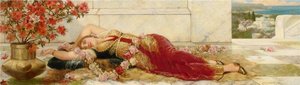 A Languid Harem Beauty
42
 Ein Wärmendes Plätzchen
43
 The Nun
44
 Elegant Maidens On A Terrace; And Maidens In A Boat
45
 The Feathered Hat
46A Harem Beauty
47
 Elegant Lady with Yellow Roses
48
 The Hat
49
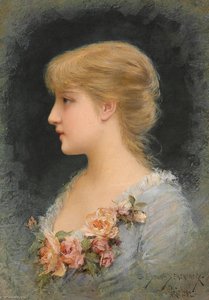 Portrait of a Girl
50
 Girl with Hat
51
 L'Orientale
52
 The Fruit Seller Catching Butterflies two paintings
53
 Portrait Of A Woman In A White Head Scarf; And Portrait Of A Woman In A Red Tunic With Gold TrimKunsthistorisches Museum
Četiri teme koje se najčešće ponavljaju u ovim originalima, svaka s svojim vrhunskim primjerom.
1 muzeja u kojima se nalazi najviše djela s ove stranice.
| Muzej | Grad | Djela autora Emile Eisman Semenovsky | Slike iz ovog popisa |
|---|---|---|---|
 Kunsthistorisches Museum |
Beč | 1 | Portrait Of A Woman In A White Head Scarf; And Portrait Of A Woman In A Red Tunic With Gold Trim |
Odabir obuhvaća radove umjetnika Emile Eisman Semenovsky kroz 12 godina, od 1882 do 1893, čuvajući najizvornija djela svake godine.
Odaberite godinu kako biste vidjeli originalna djela.
Marguerite (1882). Sljedeći su The Maiden of Spring (1882) i Gypsy Girl (1886).
23 godina: Marguerite datira iz 1882, a Emile Eisman Semenovsky je rođen/a 1859.
Marguerite, The Maiden of Spring, Gypsy Girl, Leisure Moments, Genre Scene, Lady in a Hat, A Parisian Beauty, The Black Hat, Tea-time i A Reclining Beauty. Gornji rang prikazuje godinu i muzej za svako od njih.
Naš katalog sadrži 55 djela umjetnika Emile Eisman Semenovsky, datiranih od 1882 do 1893.
Većinom u Kunsthistorisches Museum (Beč). Gornja tablica muzeja navodi sve njih.
U 1882: 2 od 53 djela na ovoj stranici nastalo je tada, od čega je Marguerite Marguerite.
Na ovoj stranici najstarije djelo je iz Marguerite (1882), a najnovije iz Genre Scene (1893).
Women (11), Russian art (7) i Clothing (6), kroz svih 53 djela na ovoj stranici.
Academic realism i Realism, sudeći po originalima na ovoj stranici.
Émile Eisman-Semenowsky remains a captivating figure in the late nineteenth-century Parisian art scene, an artist whose work serves as a bridge between the rigorous discipline of academic realism and the fleeting, luminous qualities of Impressionism. Born in Poland around 1857, his early life is shrouded in much of the mystery that often surrounds artists of great talent but sparse documentation. Likely of Jewish descent, he moved through the cultural landscapes of Eastern Europe before finding his creative home in France. This movement between worlds—from the traditions of his Polish roots to the avant-garde energy of Paris—imbued his work with a unique perspective, allowing him to capture a sense of "otherness" that would become his artistic hallmark.
His training in Paris placed him at the heart of a transformative era. During this time, the art world was deeply enamored with Orientalism, a movement characterized by a romanticized fascination with the cultures and landscapes of the East. Eisman-Semenowsky did not merely observe this trend; he mastered it through a technique he famously referred to as “butterfly painting.” This method utilized delicate, evocative brushwork that mimicked the ephemeral beauty of nature, allowing him to render textures—the sheen of silk, the softness of skin, and the intricate patterns of embroidered vests—with an almost tactile grace. His ability to blend the structural precision of classical portraiture with the light-drenched spontaneity of Impressionism created a visual language that felt both timeless and modern.
The heart of Eisman-Semenowsky’s oeuvre lies in his profound devotion to the female form, often presented through the lens of exoticized beauty. His portraits are rarely mere likenesses; they are atmospheric studies of grace and ornamentation. In works such as "A Young Beauty In An Imperial Vest," one can observe how he uses warm tones and rich textures to celebrate a sense of cultural opulence. He had a remarkable talent for capturing the interplay of light on fabric, making the viewer feel the weight of heavy embroidery and the lightness of sheer veils. This focus on genre painting allowed him to tell stories of a romanticized world, where every subject seemed caught in a moment of quiet, dignified splendor.
Beyond the purely decorative, his work often touched upon the soulful connection between the subject and their environment. Whether depicting a girl with a vibrant red umbrella or a young woman amidst soft, romantic roses, there is an underlying sense of narrative depth. His paintings frequently feature:
Though his life ended in 1911, the impact of Eisman-Semenowsky’s vision continues to resonate within the history of nineteenth-century art. He stood at a pivotal moment when the boundaries of painting were being redrawn, and he navigated this transition with unparalleled elegance. His significance lies not only in his technical mastery but in his ability to synthesize disparate influences—the academic, the impressionistic, and the exotic—into a cohesive and emotionally stirring body of work. Today, his paintings remain cherished for their ability to transport the viewer to a world of idealized beauty, reminding us of an era when the canvas was a window into the most enchanting corners of the human imagination.