
1


Ažurirano Studeni 2026 · rangirano prema našoj ocjeni popularnosti (pretraživanja, posjeti i narudžbe za svako djelo) · 2 djela Daniel Sarrabat u našem katalogu
Ukratko
Iz perspektive galerije, najpoznatije djelo umjetnika Daniel Sarrabat je Noah and His Children Giving Thanks to God for Having Escaped the Deluge (1688), čiji se original nalazi u muzeju Musée des Beaux-Arts de Lyon, Lyon. Od 2 djela umjetnika Daniel Sarrabat u našem katalogu, galerija u nastavku prikazuje 2 najpoznatijih, od kojih je svako originalno, s navedenom godinom nastanka, muzejom i onim što ga čini jedinstvenim.
2 muzeja u kojima se nalazi najviše djela s ove stranice.
| Muzej | Grad | Djela autora Daniel Sarrabat | Slike iz ovog popisa |
|---|---|---|---|
 Musée des Beaux-Arts de Lyon |
Lyon | 1 | Noah and His Children Giving Thanks to God for Having Escaped the Deluge |
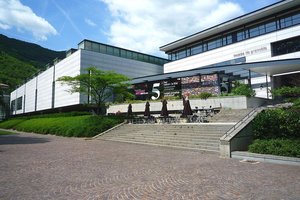 Musée de Grenoble |
Grenoble | 1 | Saint Nicolas dote les trois jeunes filles pauvres |
Svako datirano originalno djelo umjetnika Daniel Sarrabat na ovoj stranici nastalo je 1688: evo ih, prvo najpoznatija.
Odaberite godinu kako biste vidjeli originalna djela.
Noah and His Children Giving Thanks to God for Having Escaped the Deluge (1688)
22 godina: Noah and His Children Giving Thanks to God for Having Escaped the Deluge datira iz 1688, a Daniel Sarrabat je rođen/a 1666.
Naš katalog sadrži 2 djela umjetnika Daniel Sarrabat.
Većinom u Musée des Beaux-Arts de Lyon (Lyon) i Musée de Grenoble (Grenoble). Gornja tablica muzeja navodi sve njih.
Born in 1666, Daniel Sarrabat entered a world where art and intellect were woven into the very fabric of his domestic life. He was raised within a family of artists and scholars, a lineage that seemed destined to shape his hands and his mind. This creative inheritance was not a solitary one; his brother, Isaac Sarrabat, would eventually find his own path as a popular engraver. The family's connection to the craft ran deep, reaching back to his uncle, Daniel Sarrabat I, who had been a skilled engraver and stonecutter.
The boy's early years were spent absorbing the traditions of his kin, yet his talent required the guidance of masters to truly flourish. He sought out the instruction of Bon Boullogne, a teacher who would help refine his developing eye and technique. Through this apprenticeship, the foundations of his skill were laid, preparing him for the rigorous path that lay ahead. His training was not merely a matter of technique, but a preparation for a life spent translating history and emotion onto canvas.
The promise of his talent became undeniable when he secured the prestigious Prix de Rome in 1688. This victory opened the gates to Italy, allowing him to immerse himself in the classical traditions that would shape his hand. He arrived in Rome to study at the French Academy, a period of intense observation and growth that would define his early years as a painter.
His time in the Eternal City was marked by significant achievement. In 1690, he demonstrated his command of composition and narrative by winning first prize in Rome. This honor was earned through his painting of "Noah and his family out of the ark," a work that showcased his ability to handle complex biblical scenes. His presence in Rome lasted from about 1685 until 1694, a long sojourn that allowed him to absorb the light and form of the Italian masters before he eventually returned to France.
After his time in Rome, Sarrabat settled in Lyon in 1695, making the city the foundation of his professional life. He did not merely exist within the local scene but became a central figure in its artistic landscape. His career reached its peak between 1716 and 1732, a period when his hand was sought after for various commissions. He moved through the city's social circles, working as both a history artist and a portraitist, capturing the likenesses of his contemporaries while also tackling grander, more complex narratives.
In his approach to the canvas, Sarrabat remained steadfast in his devotion to the classical tradition. While the tastes of the era began to shift toward the lighter, more decorative impulses of the Rococo, he chose to follow the artistic ideal of Nicolas Poussin. This commitment to a more structured and rational style defined his output. His works sought to uphold the dignity of history painting, maintaining a sense of order and classical poise that stood apart from the more whimsical trends emerging in the French court.
