Portret Christoph Weiditz

3 najpoznatijih djela umjetnika Christoph Weiditz, svako jedinstveno

Ažurirano Studeni 2026 · rangirano prema našoj ocjeni popularnosti (pretraživanja, posjeti i narudžbe za svako djelo) · 3 djela Christoph Weiditz u našem katalogu

Ukratko

Portrait Medal of Francisco de los Cobos y Molina (1531) je slika autora Christoph Weiditz koja privlači najviše pogleda; original se nalazi u muzeju National Gallery of Art, Washington. Nakon toga, pogled se usmjerava na Portrait of Charles de Solier, Sire de Morette (1530) i Venus or Fortune (1550). Među 3 djela umjetnika Christoph Weiditz u našem katalogu, ovih 3 su najpoznatija, od kojih je svako jedinstveni original predstavljen s godinom nastanka, muzejom i razlogom zbog kojeg je vječno.

1498 – 1559, Freiburg im Breisgau Najviše djela: National Gallery of Art

Top 10 djela Christoph Weiditz kroz oči galerije

1
Portrait Medal of Francisco de los Cobos y Molina (1531) od Christoph Weiditz

Portrait Medal of Francisco de los Cobos y Molina

1531 · Bronze · National Gallery of Art, Washington

Christoph Weiditz's "Portrait Medal of Francisco de los Cobos y Molina," crafted around 1531, is more than a simple likeness; it’s a meticulously rendered window into the world of 16th-century Spanish nobility and the burgeoning art of portraiture. This bronze medallion, now housed in the National Gallery of Art in Washington D.C., exemplifies Weiditz's unique ability to imbue metal with psychological depth—a hallmark that set him apart from his contemporaries.…

2
Portrait of Charles de Solier, Sire de Morette (1530) od Christoph Weiditz

Portrait of Charles de Solier, Sire de Morette

1530 · Sculpture · Victoria and Albert Museum, London

Christoph Weiditz's "Portrait of Charles de Solier, Sire de Morette" is more than just a likeness; it’s a meticulously crafted window into the world of 16th-century diplomacy and aristocratic identity. Executed around 1534-1535 in boxwood, this medallion offers a remarkably intimate glimpse into the character of Charles de Solier, a prominent French ambassador serving under Francis I. The piece transcends mere portraiture, embodying the Renaissance fascination with capturing not just…

3
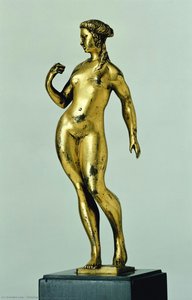
Venus or Fortune (1550) od Christoph Weiditz

Venus or Fortune

1550

This female nude is standing with her curvaceously swinging hips in a stylishly balanced contrapposto, so that she affords a harmonious silhouette no matter which side she is viewed from. Her head is turned to her left, toward her upraised arm; in her left hand she once held some attribute that would have made identification of the figure easy. It was once speculated that the missing object was a mirror,…

Motivi koji su privukli pažnju Christoph Weiditz

Četiri teme koje se najčešće ponavljaju u ovim originalima, svaka s svojim vrhunskim primjerom.

Muzeji koji čuvaju originalna djela umjetnika Christoph Weiditz

2 muzeja u kojima se nalazi najviše djela s ove stranice.

Muzej Grad Djela autora Christoph Weiditz Slike iz ovog popisa
National Gallery of Art, WashingtonNational Gallery of Art Washington 1 Portrait Medal of Francisco de los Cobos y Molina
Victoria and Albert Museum, LondonVictoria and Albert Museum London 1 Portrait of Charles de Solier, Sire de Morette

Christoph Weiditz kroz godine: jedinstvena originalna djela svakog umjetnika

Dugogodišnja karijera od 21 godina, od 1530 do 1550: najpoznatiji originali umjetnika Christoph Weiditz, prikazani godinu po godinu.

Djela po godinama

Odaberite godinu kako biste vidjeli originalna djela.

Slike umjetnika Christoph Weiditz: pitanja za galeriju

Koje je najpoznatije djelo umjetnika Christoph Weiditz?Otkrijte odgovor

Portrait Medal of Francisco de los Cobos y Molina (1531), National Gallery of Art, Washington. Nakon njih slijede Portrait of Charles de Solier, Sire de Morette (1530) i Venus or Fortune (1550).

U kojoj je dobi Christoph Weiditz stvorio/la Portrait Medal of Francisco de los Cobos y Molina?Otkrijte odgovor

33 godina: Portrait Medal of Francisco de los Cobos y Molina datira iz 1531, a Christoph Weiditz je rođen/a 1498.

Koliko je poznatih djela umjetnika Christoph Weiditz?Otkrijte odgovor

Naš katalog sadrži 3 djela umjetnika Christoph Weiditz, datiranih od 1530 do 1550.

Gdje se mogu vidjeti najpoznatiji originali umjetnika Christoph Weiditz?Otkrijte odgovor

Većinom u National Gallery of Art (Washington) i Victoria and Albert Museum (London). Gornja tablica muzeja navodi sve njih.

Koje je najranije, a koje najkasnije poznato djelo Christoph Weiditz?Otkrijte odgovor

Na ovoj stranici najstarije djelo je iz Portrait of Charles de Solier, Sire de Morette (1530), a najnovije iz Venus or Fortune (1550).

Koje je motive Christoph Weiditz preferirao?Otkrijte odgovor

Medal (2) i Renaissance (2), kroz svih 3 djela na ovoj stranici.

Christoph Weiditz: portret umjetnika

The Master of the Metal Disc: The Life and Legacy of Christoph Weiditz

In the vibrant, transformative landscape of the German Renaissance, few artists possessed the ability to condense the grandeur of human character into the small, intimate circumference of a bronze medal as masterfully as Christoph Weiditz. Born around 1500 in Freiburg im Breisgau, Weiditz emerged from a lineage deeply embedded in the artistic fabric of Europe. He was the son of the sculptor Hans Weiditz the elder and the brother of the renowned woodcut artist Hans Weiditz the Younger. This rich familial heritage provided him with a foundational understanding of form, texture, and the burgeoning humanist ideals that were sweeping through the Holy Roman Empire. As his career progressed, moving eventually to the influential artistic hub of Augsburg, Weiditz would distinguish himself as one of the four preeminent German medallists of his era, standing alongside luminaries such as Hans Schwarz, Friedrich Hagenauer, and Matthes Gebel.

The artistry of Weiditz is defined by a fascinating stylistic journey, a metamorphosis that mirrors the broader shifts in European art history. His early works are often characterized by a naïve German aesthetic, possessing a charming simplicity and a sincere, almost folk-like devotion to detail. During this period, his compositions reflected the serene and idealized beauty championed by Renaissance humanism. However, as he matured, Weidict’s hand grew more complex, embracing the sophisticated, elongated, and intellectually dense language of Mannerism. This evolution allowed him to move beyond mere physical likeness, imbuing his portraits with a psychological depth and a subtle tension that captured the very essence of his subjects' status and spirit.

A Vision in Bronze and Gold

Weiditz was far more than a simple engraver; he was a polymath of the decorative arts, working with the precision of a goldsmith and the vision of a painter. His mastery extended across various media, including sculpture and painting, yet it is in his portrait medals that his true genius resides. These small, precious objects served as much more than commemorative tokens; they were profound vehicles for symbolism and identity. Through meticulous craftsmanship, he could render the intricate textures of a velvet doublet or the noble sternness of a diplomat's gaze with breathtaking clarity.

His notable achievements include works that captured the likenesses of the era's most influential figures, such as:

Beyond the formal portraits of the elite, Weiditz’s travels also left an indelible mark on his repertoire. During his time in Spain between 1528 and 1529, he engaged deeply with the local culture, producing drawings of the vibrant folk costumes of the Iberian Peninsula. This ethnographic eye added a layer of observational realism to his work, bridging the gap between high-court portraiture and the lived reality of the people.

Historical Significance and Enduring Influence

The historical importance of Christoph Weiditz lies in his role as a bridge between eras. He stood at the crossroads of the late Middle Ages and the sophisticated complexity of the Mannerist period, capturing the transition from a world of idealized types to one of individualistic, psychological exploration. His ability to infuse metal with expressive power helped elevate the medium of the medal from a craft-based tradition to a high art form capable of profound communication.

Though his name may not always command the same immediate recognition as Dürer, Weiditz’s contribution to the German Renaissance is indispensable. He provided the visual vocabulary for an age of discovery and self-reflection, leaving behind a legacy of works that continue to fascinate collectors and historians alike. Through his delicate touch and technical brilliance, he ensured that the fleeting moments of human dignity and the intricate details of cultural identity were preserved in the enduring permanence of bronze and gold.