Portret Carl Holsøe

27 najpoznatijih djela umjetnika Carl Holsøe, galerijska selekcija

Ažurirano Studeni 2026 · rangirano prema našoj ocjeni popularnosti (pretraživanja, posjeti i narudžbe za svako djelo) · 28 djela Carl Holsøe u našem katalogu

Ukratko

Od svih originala koje je Carl Holsøe ostavio, najpoznatiji je Interior with the artist's wife sewing at the window. (1881). Samo iza njih slijede Interior with the artist's wife reading a book by the window. (1881) i Interior with a Girl Sewing (1888). Naš katalog sadrži 28 djela umjetnika Carl Holsøe; galerija je čuvala onih 27 koja svijet najviše divi, a svako je prikazano s datumom nastanka, muzejom i pričanom.

1863 – 1935, Aarhus Realism Najviše djela: Statens Museum For Kunst

Top 10 djela umjetnika Carl Holsøe: izbor galerije

1
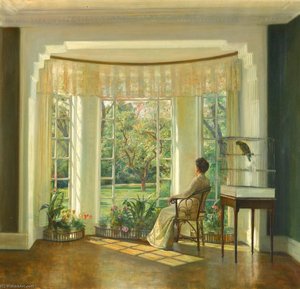
Interior with the artist's wife sewing at the window. (1881) od Carl Holsøe
Interior with the artist's wife sewing at the window.

1881 · Oil On Canvas

Interior with the artist's wife sewing at the window. is a quiet study by Carl Holsøe, painted about 1881. The work captures a solitary moment of domestic life, focusing on a woman seated by a window, absorbed in her sewing. It is a scene that prioritizes the stillness of a room and the subtle presence of a person within a structured space.

2
Interior with the artist's wife reading a book by the window. (1881) od Carl Holsøe

Interior with the artist's wife reading a book by the window.

1881 · Oil On Canvas

The quietude of a private moment finds its form in Interior with the artist's wife reading a book by the window., an oil on canvas painted by Carl Holsøe. Created about 1881, the work captures a stillness that feels as though it is happening right now, just as the light shifts across the room. The scene rests within the intimate confines of a domestic space, where the soft glow from…

4
Interior with Girl (1905) od Carl Holsøe

Interior with Girl

1905 · Oil On Canvas · Bavarske državne slikopisne zbirke, München

A soft, pale light spills from a window on the far left, washing over a domestic scene that feels suspended in a moment of profound stillness. A young girl sits at a table, her form a gentle, organic curve against the rigid, rectangular lines of the room. The scene is rendered in a monochromatic palette, where every detail relies on the subtle interplay of gray, white, and deep black. There…

5
Interior from the artist's home. (1914) od Carl Holsøe

Interior from the artist's home.

1914 · Oil On Canvas

Interior from the artist's home. is a painting by Carl Holsøe. This work was created in 1914. The artist, Carl Holsøe, was born in Aarhus, Denmark, in 1863 and died in Asserbo in 1935. His practice focused primarily on domestic interior scenes, often capturing the specific arrangement of objects and the way light occupies a room.

6
An Italian village with women at the fountain (1916) od Carl Holsøe

An Italian village with women at the fountain

1916 · Oil On Canvas · Imago Museum, Pescara

In "An Italian village with women at the fountain" by Carl Holsøe, we find ourselves observing a quiet moment of daily life. The scene is set within a tranquil Italian village, where the composition is anchored by a stone fountain. Three women are gathered in the central courtyard, their presence providing a soft human element to the structured environment. This central gathering is framed by architectural structures on the left…

7
Self portrait (1920) od Carl Holsøe

Self portrait

1920 · Oil On Canvas

In this 1920 self-portrait, we find the artist, Carl Holsøe, seated within the sanctuary of his studio. The composition is intentionally asymmetrical, placing the figure slightly to the right and creating a sense of lived-in space. An easel rests in the lower foreground, a subtle reminder of the creative act that has just occurred or is about to begin. The atmosphere is one of profound stillness, where the air itself…

8
Mother and Child by a window (1935) od Carl Holsøe

Mother and Child by a window

1935 · Oil On Canvas

Soft, diffused light spills through a large window, washing the room in a gentle glow that seems to suspend time itself. Within this intimate interior, a mother and her child occupy a space of profound stillness. The scene is a quiet study of domesticity, where the weight of the world is replaced by the soft textures of fabric and the warmth of wood. The mother, dressed in dark, solid tones,…

9
Last Autumn (1935) od Carl Holsøe

Last Autumn

1935 · Oil On Canvas

In Last Autumn by Carl Holsøe, a quietude settles over a solitary interior. Created about 1935, the scene captures a lone woman seated in a room where time seems to have paused. She faces a small wooden chest or table, her dark dress providing a sharp, heavy contrast against the pale, muted tones of her surroundings. To her side, a large, closed white door dominates the space, creating a sense…

10
Interior with Mother and Child. (1881) od Carl Holsøe

Interior with Mother and Child.

1881 · Oil On Canvas

Interior with Mother and Child. is an oil on canvas by Carl Holsøe. Created in 1881, the work belongs to a period when the artist was developing his specific approach to domestic spaces. Holsøe was born in Aarhus, Denmark, in 1863 and remained a significant figure in Danish art until his death in Asserbo in 1935.

Izbor umjetnika Carl Holsøe se nastavlja, od 11 do 27

Slavna djela Carl Holsøe po razdobljima

Motivi koji su privukli pažnju Carl Holsøe

Četiri teme koje se najčešće ponavljaju u ovim originalima, svaka s svojim vrhunskim primjerom.

Muzeji koji čuvaju originalna djela umjetnika Carl Holsøe

3 muzeja u kojima se nalazi najviše djela s ove stranice.

Muzej Grad Djela autora Carl Holsøe Slike iz ovog popisa
Statens Museum For Kunst, KopenhagenStatens Museum For Kunst Kopenhagen 3 Interior with a Girl Sewing, Interior with a Girl Reading, Interior with the Artist's Wife Emilie Heise
Imago Museum, PescaraImago Museum Pescara 2 An Italian village with women at the fountain, Village in the Apennine Mountains.
Bavarske državne slikopisne zbirke, MünchenBavarske državne slikopisne zbirke München 1 Interior with Girl

Carl Holsøe desetljeće po desetljeće: original koji definira svako od njih

Djela po desetljećima

Odaberite desetljeće kako biste vidjeli original koji ga definira.

Pitanja kolekcionara o slikama umjetnika Carl Holsøe

Po kojem je djelu Carl Holsøe najpoznatiji/a?Otkrijte odgovor

Interior with the artist's wife sewing at the window. (1881). Sljedeći su Interior with the artist's wife reading a book by the window. (1881) i Interior with a Girl Sewing (1888).

Koliko je godina Carl Holsøe imao/la kada je nastalo djelo Interior with the artist's wife sewing at the window.?Otkrijte odgovor

18 godina: Interior with the artist's wife sewing at the window. datira iz 1881, a Carl Holsøe je rođen/a 1863.

Koja su deset najpoznatijih djela umjetnika Carl Holsøe?Otkrijte odgovor

Interior with the artist's wife sewing at the window., Interior with the artist's wife reading a book by the window., Interior with a Girl Sewing, Interior with Girl, Interior from the artist's home., An Italian village with women at the fountain, Self portrait, Mother and Child by a window, Last Autumn i Interior with Mother and Child.. Gornji rang prikazuje godinu i muzej za svako od njih.

Koliko je slika ostavio/la Carl Holsøe?Otkrijte odgovor

Naš katalog sadrži 28 djela umjetnika Carl Holsøe, datiranih od 1881 do 1935.

U kojim se muzejima nalaze remek-djela umjetnika Carl Holsøe?Otkrijte odgovor

Većinom u Statens Museum For Kunst (Kopenhagen), Imago Museum (Pescara) i Bavarske državne slikopisne zbirke (München). Gornja tablica muzeja navodi sve njih.

U kojim je godinama Carl Holsøe naslikao svoja najpoznatija djela?Otkrijte odgovor

U 1880s: 5 od 27 djela na ovoj stranici nastalo je tada, od čega je Interior with the artist's wife sewing at the window. Interior with the artist's wife sewing at the window..

Koja su prva i posljednja poznata originalna djela umjetnika Carl Holsøe?Otkrijte odgovor

Na ovoj stranici najstarije djelo je iz Interior with the artist's wife sewing at the window. (1881), a najnovije iz Mother and Child by a window (1935).

Koje je motive Carl Holsøe najčešće birao?Otkrijte odgovor

Woman (16), Table (14) i Window (13), kroz svih 27 djela na ovoj stranici.

Koju je tehniku najčešće koristio/la Carl Holsøe?Otkrijte odgovor

Oil On Canvas, za 19 od 27 djela na ovoj stranici.

Pripada li Carl Holsøe kojem umjetničkom pokretu?Otkrijte odgovor

Realism, sudeći po originalima na ovoj stranici.

Koji se radovi umjetnika Carl Holsøe nalaze u muzeju Statens Museum For Kunst?Otkrijte odgovor

Interior with a Girl Sewing, Interior with a Girl Reading i Interior with the Artist's Wife Emilie Heise: Statens Museum For Kunst, Kopenhagen posjeduje 3 djela s ove stranice.

Carl Holsøe: život i djelo

Arhitekt tišine: Život i naslijeđe umjetnika Carl Holsøe

Carl Vilhelm Holsøe (1863. – 1935.) ostaje jedan od najevokativnijih glasova danske umjetnosti, majstor onog tišog trenutka koji je transformirao svakodnevne okvire domaćinstva u duboke meditacije o svjetlu i prostoru. Rođen u Aarhusu u obitelji duboko ukorijenjenoj u arhitektonskoj tradiciji, Carl Holsøe posjedovao je urođeno razumijevanje strukturne harmonije od najranijih godina. Kao sin cijenjenog arhitekta N.P.C. Holsøea, njegov pogled bio je prirodno usmjeren prema logici linija, težini sjena i načinu na koji prostor disao. To rano uranjanje u geometriju građevina pružilo je tihu podlogu umjetničkoj viziji koja bi na kraju stavila atmosfersku dušu interijera ispred njegovog pukog fizičkog sadržaja.

Njegovo formalno putovanje kroz Kraljevsku dansku akademiju likovnih umjetnosti u Kopenhagenu i Kunstnernes Frie Studieskoler dovelo ga je pod mentorstvo velikana poput Pedera Severina Krøyera. Dok su ga te studije utemeljili u tehničkoj briljantnosti impresionizma, Holsøeovo srce naginjalo je prema kontemplativnijem realizmu. Pronašao je duboku inspiraciju u nizozemskim majstorima, posebno u svjetlosnom miru Johannesa Vermeera i dramatičnom chiaroscuru Rembrandta. Od njih je naučio da jedan zrak svjetlosti koji pada preko drvenog poda može nositi jednaku emocionalnu težinu kao i velika povijesna epopeja.

Majstorstvo svjetla i unutarnjeg svijeta

Holsøe i njegovi suvremenici često su istraživali granice domestičkog sfere, ali Holsøeov pristup bio je jedinstveno okarakteriziran promišljenom suzdržanošću. Njegov proboj na izložbi u Charlottenborgu 1886. godine, s djelom pod naslovom Interijer, kritičari su proglasili gotovo "manifestom". To je označilo dolazak umjetnika kojem nisu bili potrebni grandiozni gestovi da bi privukao pažnju; umjesto toga, koristio je pedantnu, gotovo arhitektonsku preciznost kako bi uhvatio suptilne promjene svjetla i tišinu samoće.

Njegova tehnika bila je delikatna ravnoteža discipliniranog poteza četkicom i atmosferske osjetljivosti. U njegovim najslavnijim djelima, kao što su Djevojka u interijeru ili Sunčano osvijetljen interijer, gledatelj je pozvan u svijet u kojem se vrijeme čini suspendiranim. Tu postoji duboki osjećaj nepomičnosti, često postignut kroz prigušenu paletu koja naglašava teksturu i ton iznad živopisne boje. To majstorstvo omogućilo mu je da uzdigne jednostavne domaće scene—ženu koja čita, sunčano osvijetljeni kutak ili tihi hodnik—u duhovna iskustva. Njegov česti model i supruga, Emilie Heise, često je krasila ova platna, dajući ljudsku toplinu inače strogo i strukturiranim okruženjima koja je stvarao.

Priznanja i povijesni značaj

Tijekom svoje plodne karijere, Holsøe je bio stalno prisutan na danskoj umjetničkoj sceni, redovito izlažući na proljetnim i jesenjim izložbama u Charlottenborgu. Njegov talent prepoznat je prestižnim priznanjima, uključujući godišnju akademijsku medalju 1901. i 1908. godine, te zlatnu medalju u Münchenu 1891. godine. Izvan njegovih individualnih postignuća, bio je vitalni dio umjetničke tkanine svog doba, održavajući prijateljstva s drugim titanima danske slikarstva, kao što je Vilhelm Hammershøi. Zapravo, vrlo slično Hammershøiju, Holsøeovo djelo zauzima prostor u kojem se preklapaju domace i metafizičko, čineći ga kamenom temeljcem skandinavskog slikarstva interijera.

Trajna važnost Carl Holsøea leži u njegovoj sposobnosti pronaći iznimno u običnom. On nije samo slikao sobe; slikao je osjećaj boravka u njima—samoću, mir i prolaznu ljepotu koja prolazi kroz popodne. Njegovo naslijeđe nastavlja odjekivati u svakome tko pronalazi ljepotu u tišim kutovima svijeta, dokazujući da se najdublje priče često pričaju šaputanjem, a ne vikanjem.