Portret Bob Brighton

36 najpoznatijih djela umjetnika Bob Brighton, galerijska selekcija

Ažurirano Studeni 2026 · rangirano prema našoj ocjeni popularnosti (pretraživanja, posjeti i narudžbe za svako djelo) · 36 djela Bob Brighton u našem katalogu

Ukratko

Od svih originala koje je Bob Brighton ostavio, najpoznatiji je Squares on Copper (2009) u kolekciji muzeja Sheffield Central Library, Sheffield. Samo iza njih slijede Turquoise Squares (2009) i Small Squares 3 (2009). Naš katalog sadrži 36 djela umjetnika Bob Brighton; galerija je čuvala onih 36 koja svijet najviše divi, a svako je prikazano s datumom nastanka, muzejom i pričanom.

1936 – 2017 Abstract art Najviše djela: Sheffield Central Library

Top 10 djela umjetnika Bob Brighton: izbor galerije

1
Squares on Copper (2009) od Bob Brighton

Squares on Copper

2009 · Sheffield Central Library, Sheffield

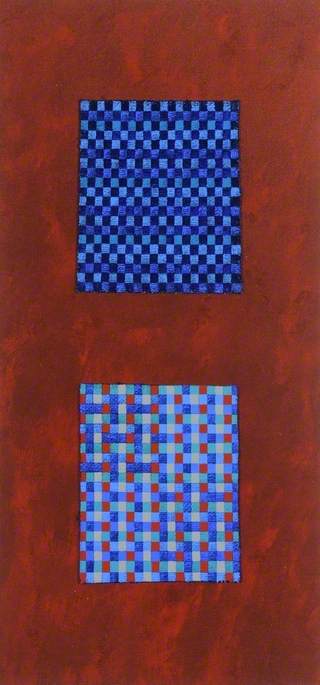
The painting Squares on Copper by Bob Brighton is a thought-provoking artwork that showcases the artist's unique style and technique. Created in 2009, this painting features three squares of different colors, each with its own distinct character. The use of color and composition in this piece is reminiscent of the works of other notable artists, such as Imre Von Santho, who was known for his captivating portraits like Jabot. Background…

2
Turquoise Squares (2009) od Bob Brighton

Turquoise Squares

2009 · Painting · Sheffield Central Library, Sheffield

In the captivating realm of abstract expressionism, few works achieve the hypnotic clarity found in Bob Brighton’s Turquoise Squares. Created in 2009, this piece serves as a masterclass in visual rhythm, inviting the viewer into a meticulously structured world where color and form exist in perfect equilibrium. The painting presents a mesmerizing checkerboard of blue squares set against a lush, verdant background. Each square is delicately framed by a crisp…

3
Small Squares 3 (2009) od Bob Brighton

Small Squares 3

2009 · Sheffield Central Library, Sheffield

In the quiet intersection of structural precision and chromatic vitality lies Small Squares 3, a mesmerizing exploration of form by the late British master Bob Brighton. To encounter this piece is to step into a world where chaos is meticulously tamed through the language of geometry. Created in 2009, this work serves as a profound testament to Brighton’s lifelong pursuit of visual rhythm. The painting does not merely present shapes;…

Izbor umjetnika Bob Brighton se nastavlja, od 11 do 36

Slavna djela Bob Brighton po razdobljima

Motivi koji su privukli pažnju Bob Brighton

Četiri teme koje se najčešće ponavljaju u ovim originalima, svaka s svojim vrhunskim primjerom.

Muzeji koji čuvaju originalna djela umjetnika Bob Brighton

3 muzeja u kojima se nalazi najviše djela s ove stranice.

Muzej Grad Djela autora Bob Brighton Slike iz ovog popisa
Sheffield Central Library, SheffieldSheffield Central Library Sheffield 20 Squares on Copper, Turquoise Squares, Small Squares 3
Chelsea And Westminster Hospital, LondonChelsea And Westminster Hospital London 4 19 21.10.96 (panel 3 of 4), 5 6.8.96 (panel 1 of 4), 4.4.96–18.4.96 (panel 4 of 4)
Imperial College London, LondonImperial College London London 2 Untitled, Untitled

Bob Brighton iz godine u godinu: originalna djela koja definiraju svaku od njih

Od 1994 do 2009, Bob Brighton je stvarao tijekom 16 godina: ovaj izbor prati tu dugogodišnju karijeru godinu po godinu, kroz njegova najfinija originalna djela.

Djela po godinama

Odaberite godinu kako biste vidjeli originalna djela.

Pitanja kolekcionara o slikama umjetnika Bob Brighton

Po kojem je djelu Bob Brighton najpoznatiji/a?Otkrijte odgovor

Squares on Copper (2009), Sheffield Central Library, Sheffield. Nakon njih slijede Turquoise Squares (2009) i Small Squares 3 (2009).

Koliko je godina Bob Brighton imao/la kada je nastalo djelo Squares on Copper?Otkrijte odgovor

73 godina: Squares on Copper datira iz 2009, a Bob Brighton je rođen/a 1936.

Koja su deset najpoznatijih djela umjetnika Bob Brighton?Otkrijte odgovor

Squares on Copper, Turquoise Squares, Small Squares 3, 15.9.94, 21.9.94, 12.10.94, 580, 19 21.10.96 (panel 3 of 4), 5 6.8.96 (panel 1 of 4) i 581. Gornji rang prikazuje godinu i muzej za svako od njih.

Koliko je slika ostavio/la Bob Brighton?Otkrijte odgovor

Naš katalog sadrži 36 djela umjetnika Bob Brighton, datiranih od 1994 do 2009.

U kojim se muzejima nalaze remek-djela umjetnika Bob Brighton?Otkrijte odgovor

Većinom u Sheffield Central Library (Sheffield), Chelsea And Westminster Hospital (London) i Imperial College London (London). Gornja tablica muzeja navodi sve njih.

U kojim je godinama Bob Brighton naslikao svoja najpoznatija djela?Otkrijte odgovor

U 2009: 16 od 36 djela na ovoj stranici nastalo je tada, od čega je Squares on Copper Squares on Copper.

Koja su prva i posljednja poznata originalna djela umjetnika Bob Brighton?Otkrijte odgovor

Na ovoj stranici najstarije djelo je iz 15.9.94 (1994), a najnovije iz Squares on Copper (2009).

Koje je motive Bob Brighton najčešće birao?Otkrijte odgovor

Geometric (4), Squares (4) i Pattern (4), kroz svih 36 djela na ovoj stranici.

Koju je tehniku najčešće koristio/la Bob Brighton?Otkrijte odgovor

Painting, za 3 od 36 djela na ovoj stranici.

Pripada li Bob Brighton kojem umjetničkom pokretu?Otkrijte odgovor

Abstract art, sudeći po originalima na ovoj stranici.

Koji se radovi umjetnika Bob Brighton nalaze u muzeju Sheffield Central Library?Otkrijte odgovor

Squares on Copper, Turquoise Squares i Small Squares 3: Sheffield Central Library, Sheffield posjeduje 20 djela s ove stranice.

Bob Brighton: život i djelo

The Geometric Soul of Bob Brighton

Bob Brighton, a name now synonymous with the captivating world of geometric squares and abstract color fields, wasn’t initially destined for the art world. Born in 1936 in Hastings, East Sussex, his early life was rooted in the practicalities of carpentry – a trade he learned from his father, a skilled craftsman. This foundational experience, working with wood and understanding its inherent structure, would profoundly influence his later artistic explorations. Brighton’s journey into art began somewhat unexpectedly, driven by a desire to create order out of chaos, a need to impose visual rhythm on the seemingly random. He initially experimented with collage techniques, but it wasn't until he discovered the power of simple geometric forms – primarily squares – that his unique style truly emerged. This shift represents a deliberate move away from representational art and towards an intensely focused exploration of color, shape, and composition.

Early Influences and Artistic Evolution

Brighton’s artistic development wasn't entirely solitary; he drew inspiration from a diverse range of sources. The reductive aesthetic of Piet Mondrian, with its emphasis on primary colors and orthogonal lines, undoubtedly played a significant role in shaping his approach to composition. However, Brighton’s work transcends mere mimicry. He developed a distinctly personal vocabulary within this framework, prioritizing the interplay of color and the dynamic tension between positive and negative space. The influence of Josef Albers' "Homage to the Square" is also evident – Albers’ exploration of how colors interact when placed adjacent to each other served as a crucial guide for Brighton, demonstrating that the meaning of a color isn’t inherent but rather emerges from its relationship with others. Furthermore, his background in carpentry instilled an appreciation for structure and precision, which he translated into the deliberate arrangement of his squares. Early works often featured muted palettes and subtle variations in tone, gradually evolving towards bolder, more saturated colors as his style matured.

The Rise of the Squares: Technique and Process

Brighton’s technique was remarkably consistent yet subtly nuanced. He typically began with a large sheet of paper – often watercolor paper – and would meticulously draw a grid of squares using a ruler and pencil. The size, spacing, and orientation of these squares were determined intuitively, reflecting his subconscious state at the time. He then applied acrylic paint directly to the surface, building up layers of color through a process of controlled layering and blending. Crucially, he avoided brushes, preferring instead to use sponges, rags, and other tools to manipulate the paint and create textures and variations in tone. This hands-on approach resulted in a tactile quality to his work – a sense that the paintings are not merely flat surfaces but rather three-dimensional entities. The repetition of squares creates a mesmerizing visual rhythm, while the subtle shifts in color and value maintain a dynamic tension within each composition. His process was deeply meditative; he often worked for extended periods, losing himself in the act of creation.

Themes and Interpretations

While Brighton resisted offering definitive interpretations of his work, it’s clear that his paintings explore fundamental concepts such as order, chaos, balance, and harmony. The squares themselves can be seen as symbols of stability and structure, while the vibrant colors evoke a sense of energy and vitality. Critics have noted parallels between his work and Zen Buddhist philosophy, suggesting that he sought to capture the essence of emptiness – the space between things – through the repetition of simple forms. The paintings are not about depicting anything specific but rather about creating an experience—a visual meditation for the viewer. The seemingly random arrangement of squares can be interpreted as a reflection of the complexities and uncertainties of life, while the bold colors represent the potential for joy and beauty.

Legacy and Recognition

Bob Brighton’s work gained significant recognition in the late 1980s and early 1990s, establishing him as a leading figure in British abstract art. His paintings have been exhibited widely throughout the UK and internationally, and are held in numerous public collections, including those of the Tate Gallery, Sheffield City Council, and Brighton & Hove Museums. He continued to paint until his death in 2017, consistently refining his style and exploring new approaches to color and composition. Despite eschewing overt self-promotion, Brighton’s influence on contemporary abstract artists is undeniable. His dedication to simplicity, his masterful control of color, and his profound understanding of visual rhythm have left an enduring legacy—a testament to the power of geometric abstraction to evoke emotion and stimulate contemplation. His work remains a vibrant reminder that beauty can be found in the most unexpected places, even within the repetition of squares.