Portret Bada Shanren

41 najpoznatijih djela umjetnika Bada Shanren, galerijska selekcija

Ažurirano Studeni 2026 · rangirano prema našoj ocjeni popularnosti (pretraživanja, posjeti i narudžbe za svako djelo) · 42 djela Bada Shanren u našem katalogu

Ukratko

Od svih originala koje je Bada Shanren ostavio, najpoznatiji je Landscape in the style of Wu Zhen, (1280-1354) (1696) u kolekciji muzeja National Gallery of Victoria, Melbourne. Samo iza njih slijede Duck on a Branch (1691) i Landscape (1698). Naš katalog sadrži 42 djela umjetnika Bada Shanren; galerija je čuvala onih 41 koja svijet najviše divi, a svako je prikazano s datumom nastanka, muzejom i pričanom.

1626 – 1705, Xinjian Najviše djela: Metropolitan Museum of Art

Top 10 djela umjetnika Bada Shanren: izbor galerije

1
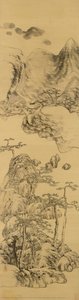
Landscape in the style of Wu Zhen, (1280-1354) (1696) od Bada Shanren

Landscape in the style of Wu Zhen, (1280-1354)

1696 · Ink · National Gallery of Victoria, Melbourne

In this landscape, we encounter a world where the physical and the spiritual are indistinguishable. Painted around 1696, this work reflects a profound engagement with the traditions of the Yuan dynasty, specifically the approach of Wu Zhen. The composition does not seek to document a specific place, but rather to map the interior terrain of the artist. There is a deliberate absence of human presence, leaving the viewer alone with…

2
Duck on a Branch (1691) od Bada Shanren

Duck on a Branch

1691 · Ink On Paper

In this ink wash painting from 1691, we encounter a solitary bird perched upon a gnarled, curving branch. The composition is defined by a profound sense of emptiness, where the cream-colored paper is not merely a background but an active presence, suggesting a vast, silent void. The bird, likely a duck, is rendered with a decisive, spontaneous brushwork that prioritizes its spirit over anatomical precision. There is a quiet tension…

3
Landscape (1698) od Bada Shanren

Landscape

1698 · Ink On Paper

In the year about 1698, Bada Shanren produced Landscape, a traditional Chinese landscape painting rendered in monochrome ink. The scene unfolds upon paper, where black ink defines a world of quietude. A tall tree with sparse foliage rises from a small hill, its branches reaching out with calligraphic precision. Beside this tree, a giraffe stands as a singular, unexpected presence within the composition. This unusual animal introduces a surreal quality…

4
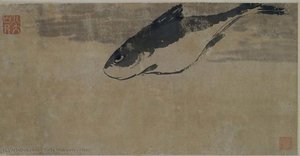
Fish and Rocks (1674) od Bada Shanren

Fish and Rocks

1674 · Ink On Paper · Cleveland Museum of Art, Cleveland

Executed in 1674, this ink wash painting on silk utilizes the principles of the literati tradition to capture a moment of profound stillness. The composition is defined by a deliberate use of negative space, where the unpainted background functions as an active element representing the fluid medium of water or air. A single fish moves through this void, its streamlined form contrasted against the jagged, organic silhouettes of large rocks.…

6
Landscape after Guo Zhongshu (1677) od Bada Shanren

Landscape after Guo Zhongshu

1677 · Ink · Cleveland Museum of Art, Cleveland

In this work, titled Landscape after Guo Zhongshu, we encounter a significant creation by the artist Bada Shanren. This piece was executed about 1677, a period that reflects the artist's mature engagement with the traditions of the past. The painting captures a specific vision of the natural world, filtered through the unique perspective of a man who lived through a time of profound transition in China.

7
Spray of Hibiscus (Spray of Flowering Shrub) (1681) od Bada Shanren

Spray of Hibiscus (Spray of Flowering Shrub)

1681 · Ink On Paper

In Spray of Hibiscus (Spray of Flowering Shrub), Bada Shanren employs an asymmetrical composition to establish a sense of natural movement. The botanical elements extend from the top and right edges toward the center and bottom left, utilizing the void of the paper to create essential breathing space. This arrangement follows the principles of classic literati painting, prioritizing the transmission of spirit over literal representation.

8
Plant (Bird of Paradise) (1681) od Bada Shanren

Plant (Bird of Paradise)

1681 · Ink On Paper

In Plant (Bird of Paradise) by Bada Shanren, the arrangement follows an asymmetrical logic. The primary subject, a Bird of Paradise plant, is positioned slightly off-center, breaking the formal symmetry often found in decorative works. This placement creates a tension between the organic form and the surrounding void. Large areas of significant negative space surround the plant, utilizing the light, neutral-toned paper or silk background to define the composition. This…

9
Branch of Hydrangea (1681) od Bada Shanren

Branch of Hydrangea

1681 · Ink On Paper

This traditional Chinese ink wash painting, dating to 1681, presents a minimalist depiction of a branch of hydrangea flowers on paper. The composition is characterized by an asymmetrical arrangement, featuring a thin, slightly gnarled branch that extends from the lower left toward the center and upper left of the frame. Clusters of hydrangea blossoms and leaves are distributed across the space, utilizing an elegant use of negative space.

10
Spray of Water Weed and Two Insects (1681) od Bada Shanren

Spray of Water Weed and Two Insects

1681 · Ink On Paper

In Spray of Water Weed and Two Insects by Bada Shanren, an intentional asymmetry governs the space. The main subject matter, consisting of delicate water weeds and two small insects, clings to the right side of the frame. This placement leaves a vast, significant void on the left. This emptiness is not merely a lack of content but a presence in itself. Within this negative space, vertical columns of Chinese…

Izbor umjetnika Bada Shanren se nastavlja, od 11 do 41

11Flowers and Insects (1683) od Bada ShanrenFlowers and Insects1683 12Spray of Tuberose (Spray of Fuchia) (1681) od Bada ShanrenSpray of Tuberose (Spray of Fuchia)1681 13Two Twigs of Camellia (Two Twigs of Flowering Fruit) (1681) od Bada ShanrenTwo Twigs of Camellia (Two Twigs of Flowering Fruit)1681 14Two Grasshoppers on Lotus Leaves (1681) od Bada ShanrenTwo Grasshoppers on Lotus Leaves1681 15Two Grape Leaves (1681) od Bada ShanrenTwo Grape Leaves1681 16Lotus and Ducks (1696) od Bada ShanrenLotus and Ducks1696 · Freer Gallery of Art 17Two Chicks (1694) od Bada ShanrenTwo Chicks1694 · Minneapolis Institute of Art 18清 八大山人 (朱耷) 蓮塘戲禽圖 卷 Birds in a lotus pond (1690) od Bada Shanren清 八大山人 (朱耷) 蓮塘戲禽圖 卷 Birds in a lotus pond1690 · Metropolitan Museum of Art 19清 朱耷 (八大山人) 倣王羲之 蘭亭序 軸 After Wang Xizhi's (303 361 ) Preface to the Orchid Pavilion Gathering (1694) od Bada Shanren清 朱耷 (八大山人) 倣王羲之 蘭亭序 軸 After Wang Xizhi's (303 361 ) Preface to the Orchid Pavilion Gathering1694 · Metropolitan Museum of Art 20清 朱耷 (八大山人) 山水圖 冊 Landscape album (1699) od Bada Shanren清 朱耷 (八大山人) 山水圖 冊 Landscape album1699 · Metropolitan Museum of Art 21Landscape in the style of Ni Zan, (1301 1374) (1696) od Bada ShanrenLandscape in the style of Ni Zan, (1301 1374)1696 · The Ian Potter Centre - Ngv Australia 22Untitled (D2X7RZ) (1699) od Bada ShanrenUntitled (D2X7RZ)1699 · Metropolitan Museum of Art 23Landscape in the style of Wu Zhen, (1280 1354) (1696) od Bada ShanrenLandscape in the style of Wu Zhen, (1280 1354)1696 · The Ian Potter Centre - Ngv Australia 24Landscape in the style of Wang Meng, (c. 1309 1385) (1696) od Bada ShanrenLandscape in the style of Wang Meng, (c. 1309 1385)1696 · The Ian Potter Centre - Ngv Australia 25Cedar Tree, Day Lily, and Wagtails (1700) od Bada ShanrenCedar Tree, Day Lily, and Wagtails1700 · Freer Gallery of Art 26Mynah Bird on an Old Tree (1703) od Bada ShanrenMynah Bird on an Old Tree1703 · The Palace Museum 27清 朱耷 (八大山人) 二鷹圖 軸 Two eagles (1702) od Bada Shanren清 朱耷 (八大山人) 二鷹圖 軸 Two eagles1702 · Metropolitan Museum of Art 28Fish (601) od Bada ShanrenFish601 29Podróżni na osiołkach od Bada ShanrenPodróżni na osiołkachNarodni muzej u Varšavi 30Landscape in the style of Huang Gongwang, (1269-1354) (1664) od Bada ShanrenLandscape in the style of Huang Gongwang, (1269-1354)1664 · National Gallery of Victoria 31Landscape in the style of Ni Zan, (1301-1374) (1696) od Bada ShanrenLandscape in the style of Ni Zan, (1301-1374)1696 · National Gallery of Victoria 32Landscape in the style of Wang Meng, (c. 1309-1385) (1696) od Bada ShanrenLandscape in the style of Wang Meng, (c. 1309-1385)1696 · National Gallery of Victoria 33twelve egrets in marsh grasses od Bada Shanrentwelve egrets in marsh grassesIndianapolis Museum of Art 34SEASCAPE WITH TREE AND BOAT od Bada ShanrenSEASCAPE WITH TREE AND BOATHarvard Art Museums 35SUMI ALBUM LEAF OF THREE LOTUS FLOWERS od Bada ShanrenSUMI ALBUM LEAF OF THREE LOTUS FLOWERSHarvard Art Museums 36Birds, in Qing style od Bada ShanrenBirds, in Qing style 37Bird on Rock, in Qing style od Bada ShanrenBird on Rock, in Qing style 38BIRD AND CHRYSANTHEMUM od Bada ShanrenBIRD AND CHRYSANTHEMUM 39Album od Bada ShanrenAlbumMetropolitan Museum of Art 40PINE TREE AND ROCK od Bada ShanrenPINE TREE AND ROCK 41Lotus and Birds od Bada ShanrenLotus and BirdsChina Modern and Contemporary Art Document Research Center

Slavna djela Bada Shanren po razdobljima

Motivi koji su privukli pažnju Bada Shanren

Četiri teme koje se najčešće ponavljaju u ovim originalima, svaka s svojim vrhunskim primjerom.

Muzeji koji čuvaju originalna djela umjetnika Bada Shanren

8 muzeja u kojima se nalazi najviše djela s ove stranice.

Muzej Grad Djela autora Bada Shanren Slike iz ovog popisa
Metropolitan Museum of Art, New YorkMetropolitan Museum of Art New York 6 清 八大山人 (朱耷) 蓮塘戲禽圖 卷 Birds in a lotus pond, 清 朱耷 (八大山人) 倣王羲之 蘭亭序 軸 After Wang Xizhi's (303 361 ) Preface to the Orchid Pavilion Gathering, 清 朱耷 (八大山人) 山水圖 冊 Landscape album
National Gallery of Victoria, MelbourneNational Gallery of Victoria Melbourne 4 Landscape in the style of Wu Zhen, (1280-1354), Landscape in the style of Huang Gongwang, (1269-1354), Landscape in the style of Ni Zan, (1301-1374)
The Ian Potter Centre - Ngv Australia, MelbourneThe Ian Potter Centre - Ngv Australia Melbourne 4 Landscape in the style of Huang Gongwang, (1269 1354), Landscape in the style of Ni Zan, (1301 1374), Landscape in the style of Wu Zhen, (1280 1354)
Cleveland Museum of Art, ClevelandCleveland Museum of Art Cleveland 2 Fish and Rocks, Landscape after Guo Zhongshu
Freer Gallery of Art, Washington, D.C.Freer Gallery of Art Washington, D.C. 2 Lotus and Ducks, Cedar Tree, Day Lily, and Wagtails
Harvard Art Museums, CambridgeHarvard Art Museums Cambridge 2 SEASCAPE WITH TREE AND BOAT, SUMI ALBUM LEAF OF THREE LOTUS FLOWERS
Minneapolis Institute of Art, MinneapolisMinneapolis Institute of Art Minneapolis 1 Two Chicks
The Palace Museum, PekingThe Palace Museum Peking 1 Mynah Bird on an Old Tree

Bada Shanren desetljeće po desetljeće: original koji definira svako od njih

Djela po desetljećima

Odaberite desetljeće kako biste vidjeli original koji ga definira.

Pitanja kolekcionara o slikama umjetnika Bada Shanren

Po kojem je djelu Bada Shanren najpoznatiji/a?Otkrijte odgovor

Landscape in the style of Wu Zhen, (1280-1354) (1696), National Gallery of Victoria, Melbourne. Nakon njih slijede Duck on a Branch (1691) i Landscape (1698).

Koliko je godina Bada Shanren imao/la kada je nastalo djelo Landscape in the style of Wu Zhen, (1280-1354)?Otkrijte odgovor

70 godina: Landscape in the style of Wu Zhen, (1280-1354) datira iz 1696, a Bada Shanren je rođen/a 1626.

Koja su deset najpoznatijih djela umjetnika Bada Shanren?Otkrijte odgovor

Landscape in the style of Wu Zhen, (1280-1354), Duck on a Branch, Landscape, Fish and Rocks, Landscape in the style of Huang Gongwang, (1269 1354), Landscape after Guo Zhongshu, Spray of Hibiscus (Spray of Flowering Shrub), Plant (Bird of Paradise), Branch of Hydrangea i Spray of Water Weed and Two Insects. Gornji rang prikazuje godinu i muzej za svako od njih.

Koliko je slika ostavio/la Bada Shanren?Otkrijte odgovor

Naš katalog sadrži 42 djela umjetnika Bada Shanren, datiranih od 1664 do 1703.

U kojim se muzejima nalaze remek-djela umjetnika Bada Shanren?Otkrijte odgovor

Većinom u Metropolitan Museum of Art (New York), National Gallery of Victoria (Melbourne) i The Ian Potter Centre - Ngv Australia (Melbourne). Gornja tablica muzeja navodi sve njih.

U kojim je godinama Bada Shanren naslikao svoja najpoznatija djela?Otkrijte odgovor

U 1690s: 14 od 41 djela na ovoj stranici nastalo je tada, od čega je Landscape in the style of Wu Zhen, (1280-1354) Landscape in the style of Wu Zhen, (1280-1354).

Koja su prva i posljednja poznata originalna djela umjetnika Bada Shanren?Otkrijte odgovor

Na ovoj stranici najstarije djelo je iz Landscape in the style of Huang Gongwang, (1269 1354) (1664), a najnovije iz Mynah Bird on an Old Tree (1703).

Koje je motive Bada Shanren najčešće birao?Otkrijte odgovor

Black ink (9), Leaves (8) i Mountains (7), kroz svih 41 djela na ovoj stranici.

Koju je tehniku najčešće koristio/la Bada Shanren?Otkrijte odgovor

Ink On Paper, za 15 od 41 djela na ovoj stranici.

Koji se radovi umjetnika Bada Shanren nalaze u muzeju Metropolitan Museum of Art?Otkrijte odgovor

清 八大山人 (朱耷) 蓮塘戲禽圖 卷 Birds in a lotus pond, 清 朱耷 (八大山人) 倣王羲之 蘭亭序 軸 After Wang Xizhi's (303 361 ) Preface to the Orchid Pavilion Gathering i 清 朱耷 (八大山人) 山水圖 冊 Landscape album: Metropolitan Museum of Art, New York posjeduje 6 djela s ove stranice.

Bada Shanren: život i djelo

Enigmatični čovjek osam planina: Naslijeđe otpornosti

Zhu Da, povijesti poznat pod evokativnim pseudonimom Bada Shanren, ostaje jedna od najdubljih i najenigmatičnijih figura u annalsima kineske umjetnosti. Rođen oko 1626. godine u sumrak dinastije Ming, njegov je život bio neodvojivo utkan u nasilni tapiserijski uzorak dinastičkih prijelaza. Kao član carske obitelji Zhu, živio je u sjeni političkih previranja; pad Ming dinastije pod silama Qing značio je da je njegova vlastita loza bila označena za uništenje. To razdoblje duboke nestabilnosti učinilo je više od toga da samo oblikuje njegovu biografiju; ono je iskovalo samu dušu njegove umjetničke prakse. Kako bi izbjegao pogrome koji su odnijeli njegove rođake, Zhu Da tražio je utočište u tišini budističkih samostana, prospendavši trideset godina kao monah. Upravo u toj kontemplativnoj izolaciji, usred učenja Zen budizma, razvio je duhovnu dubinu i minimalističku estetiku koja će kasnije revolucionirati kinesko slikarstvo tušem.

Vizija minimalističkog majstorstva

Umjetničko stvaralaštvo umjetnika Bada Shanren prepoznatljivo je po neviđenoj ekonomičnosti sredstava, stilu koji mnogi suvremeni stručnjaci vide kao preteču modernog minimalizma. Za razliku od pedantnih i često pretrpanih kompozicija njegovih prethodnika, Bada Shanrenovo djelo diše kroz prostrane, namjerne praznine. Savladao je umjetnost ostavljanja praznog prostora, koristeći bijelinu papira ne samo kao pozadinu, već kao aktivnog sudionika kompozicije — predstavljajući maglu, vodu ili beskrajnu tišinu uma. Njegov potez kistom bio je istovremeno odlučan i obmanjujuće jednostavan, sposoban prenijeti intenzivnu emociju kroz jedan, široki i zamukao potez. Bilo da je prikazivao usamljeniu stijenu ili skup trske, njegov fokus ostao je nepokoleben u pokušaju da uhvati samu bit umjesto doslovnog oblika, dajući prednost prijenosu raspoloženja i atmosfere u usporedbi s dekorativnim detaljima.

Simbolizam i tihi protest

Izvan tehničke briljantnosti njegovih pejzaža i kaligrafije, djelo koje je stvarao Bada Shanren slavi se zbog svoje dirljive, često oštre upotrebe metafore. Njegovi najpoznatiji motivi—enigmatične ptice i ribe—daleko su od običnih studija prirode. Mnogi povjesničari umjetnosti tumače njegove "podsmijenu ptice", s njihovim široko otvorenim, gotovo prezirnim pogledima, kao suptilne političke alegorije. Vjeruje se da ove tvorevine, koje se pojavljuju usamljeno i prkosno usred pustog pejzaža, odražavaju vlastiti osjećaj umjetnika izgubljenosti i njegov tihi protest protiv novog regime Qing. Ovaj sloj skrivenog značenja transformira njegove slike iz jednostavnih naturalističkih zapažanja u duboke psihološke portrete umjetnika-intelektualca koji plovi kroz svijet u stalnim promjenama. Njegovi kasniji pejzaži, koji su crpili inspiraciju iz velikih majstora dinastije Yuan, poput Ni Zana, dodatno su proširili njegov repertoar, miješajući klasičku odanost s njegovim jedinstvenim, idiosinkratičnim duhom.

Povijesni značaj i trajno utjecaj

Povijesni značaj umjetnika Bada Shanren leži u njegovoj sposobnosti da premosti jaz između klasičnih tradicija prošlosti i novog, izražajnijeg načina gledanja na svijet. Integracijom duhovne discipline Zen budizma s političkom traumom svog doba, stvorio je vizualni jezik koji je bio istovremeno duboko intiman i univerzalno snažan. Njegov utjecaj može se pratiti kroz stoljeća kineskog slikarstva tušem, gdje njegov pristup prostoru, temi i simbolizmu neprestano inspirira umjetnike koji nastoje izraziti ono što je duboko i neizrecivo kroz ono što je minimalističko. Danas se on ne pamti samo kao slikar pejzaža ili ptica, već kao majstor "neizrečenog" – umjetnik koji je pronašao način da prenese neizmjjerne količine značenja kroz najtiše poteze i najdublje tišine.