Portret Antoni Caba

Slike autora Antoni Caba: Najpoznatijih 9 djela, iz perspektive galerije

Ažurirano Listopad 2026 · rangirano prema našoj ocjeni popularnosti (pretraživanja, posjeti i narudžbe za svako djelo) · 9 djela Antoni Caba u našem katalogu

Ukratko

Iz perspektive galerije, najpoznatije djelo umjetnika Antoni Caba je The Heroine of Peralada (1864), čiji se original nalazi u muzeju Muzej Prado, Madrid. Portrait of the Painter Ramon Padró (1867) i Portrait of the painter Joaquim Vayreda (1870) upotpunjuju triju koju svako oko prepoznaje. Od 9 djela umjetnika Antoni Caba u našem katalogu, galerija u nastavku prikazuje 9 najpoznatijih, od kojih je svako originalno, s navedenom godinom nastanka, muzejom i onim što ga čini jedinstvenim.

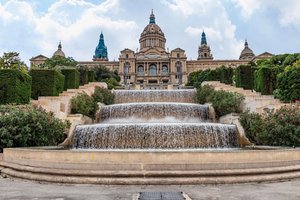
1838 – 1907, Barcelona Najviše djela: Museu Nacional d'Art de Catalunya

Top 10 najpopularnijih djela umjetnika Antoni Caba u galeriji

1
The Heroine of Peralada (1864) od Antoni Caba

The Heroine of Peralada

1864 · Oil On Canvas · Muzej Prado, Madrid

The composition centers on a physical struggle between a female figure and a mounted knight. A diagonal line directs the eye from the woman's raised sword, cutting through the air, down toward the horse and the knight's defensive posture. The woman's hair and fabric appear to flow with the momentum of her movement. The knight is positioned on a horse, creating a sense of urgent, kinetic energy. Light enters from…

Muzeji koji čuvaju originalna djela umjetnika Antoni Caba

2 muzeja u kojima se nalazi najviše djela s ove stranice.

Muzej Grad Djela autora Antoni Caba Slike iz ovog popisa
Museu Nacional d'Art de Catalunya, BarcelonaMuseu Nacional d'Art de Catalunya Barcelona 7 Portrait of the Painter Ramon Padró, Portrait of the painter Joaquim Vayreda, Self-portrait
Muzej Prado, MadridMuzej Prado Madrid 1 The Heroine of Peralada

Antoni Caba, jedna prepoznatljiva slika po desetljeću

Djela po desetljećima

Odaberite desetljeće kako biste vidjeli original koji ga definira.

Slike umjetnika Antoni Caba: odgovori galerije

Koja je najpoznatija slika umjetnika Antoni Caba?Otkrijte odgovor

The Heroine of Peralada (1864), Muzej Prado, Madrid. Nakon njih slijede Portrait of the Painter Ramon Padró (1867) i Portrait of the painter Joaquim Vayreda (1870).

Koliko je godina Antoni Caba imao/la kada je dovršio/la The Heroine of Peralada?Otkrijte odgovor

26 godina: The Heroine of Peralada datira iz 1864, a Antoni Caba je rođen/a 1838.

Koliko je djela stvorio/la Antoni Caba?Otkrijte odgovor

Naš katalog sadrži 9 djela umjetnika Antoni Caba, datiranih od 1864 do 1891.

Gdje se nalaze najpoznatija originalna djela umjetnika Antoni Caba?Otkrijte odgovor

Većinom u Museu Nacional d'Art de Catalunya (Barcelona) i Muzej Prado (Madrid). Gornja tablica muzeja navodi sve njih.

Kada je Antoni Caba stvorio svoje najpoznatije slike?Otkrijte odgovor

U 1860s: 2 od 9 djela na ovoj stranici nastalo je tada, od čega je The Heroine of Peralada The Heroine of Peralada.

Koja su najranija i najkasnija poznata djela umjetnika Antoni Caba?Otkrijte odgovor

Na ovoj stranici najstarije djelo je iz The Heroine of Peralada (1864), a najnovije iz Portrait of Claudi Lorenzale (1891).

Koje originale Antoni Caba ima u svojoj kolekciji Museu Nacional d'Art de Catalunya?Otkrijte odgovor

Portrait of the Painter Ramon Padró, Portrait of the painter Joaquim Vayreda i Self-portrait: Museu Nacional d'Art de Catalunya, Barcelona posjeduje 7 djela s ove stranice.

Antoni Caba: umjetnik

The brush and the shadow

Antoni Caba lived his life within the light and dark of Barcelona. His early years in the 1850s were spent at the Escola de la Llotja, sitting before the lessons of Pau Milà i Fontanals and Claudi Lorenzale. He later moved to Madrid to study at the Real Academia de Bellas Artes de San Fernando, where Federico de Madrazo guided his hand. A period in Paris brought him under the direction of Charles Gleyre at the Académie des Beaux-Arts, a time that helped shape how he handled the weight of oil on canvas.

His work often rests in the quiet space between light and deep shadow. He used chiaroscuro to pull figures out from dark backgrounds, a technique that earned him the nickname fotográficos among those who saw his portraits of the Catalan middle class. His brush moved through different phases, moving from flamigere and neo-greek styles toward more anecdotal, hard, and photographic approaches. In these works, one sees the careful placement of color and composition.

A life in the academy

Caba did not only paint; he taught the next generation how to see. From 1874, he held the position of Professor of Color and Composition at the Escola de la Llotja. Later, from 1887 to 1901, he served as the Director of the school. His presence in the halls of the academy was marked by a commitment to the realistic style.

His achievements were recognized through specific honors and public displays:

  • A Gold Medal won at the 1888 Universal Exposition of Barcelona.
  • The acquisition of his work by the government for the collection of the Museo del Prado.
  • The creation of decorative murals within the Gran Teatro del Liceo and various private homes.

Faces and figures

The faces he captured remain in collections like the Museu Nacional d'Art de Catalunya and the Museo del Prado. He painted many individuals, from the painter Joaquim Vayreda to Queen Maria Cristina of Spain and her son Alfonso XIII. Some of his portraits, such as those of Lluïsa Dulce i Tresserra or Ramon Padró, show a focus on the sitter's presence through strong contrasts.

Beyond the human face, he worked on larger compositions like The Triumph of Day over Night Preceded by Dawn. He also left behind smaller studies, such as a study of a hand or his own self-portraits. These pieces show a man deeply involved in the technicalities of his craft, from the way light hits a straw hat to the precise rendering of a blue bow.