Portret Alfred Joseph Casson

13 najpoznatijih djela umjetnika Alfred Joseph Casson, galerijska selekcija

Ažurirano Studeni 2026 · rangirano prema našoj ocjeni popularnosti (pretraživanja, posjeti i narudžbe za svako djelo) · 14 djela Alfred Joseph Casson u našem katalogu

Ukratko

Od svih originala koje je Alfred Joseph Casson ostavio, najpoznatiji je White Pine (1957) u kolekciji muzeja McMichael Canadian Art Collection, Vaughan. Samo iza njih slijede Twilight near Britt (1960) i Church and Graveyard (1933). Naš katalog sadrži 14 djela umjetnika Alfred Joseph Casson; galerija je čuvala onih 13 koja svijet najviše divi, a svako je prikazano s datumom nastanka, muzejom i pričanom.

1898 – 1992, Toronto Canadian realism Najviše djela: McMichael Canadian Art Collection

Top 10 djela umjetnika Alfred Joseph Casson: izbor galerije

4
Shore Pattern (1960) od Alfred Joseph Casson

Shore Pattern

1960 · Oil · McMichael Canadian Art Collection, Vaughan

In the quietude of Shore Pattern, we are invited into a sanctuary of light and stillness, where the boundary between the forest and the water dissolves into a rhythmic dance of nature. Painted in 1960 by the esteemed Canadian master Alfred Joseph Casson, this work serves as a profound meditation on the tranquility of the landscape. The composition draws the eye through a lush, verdant corridor of tall trees that…
5
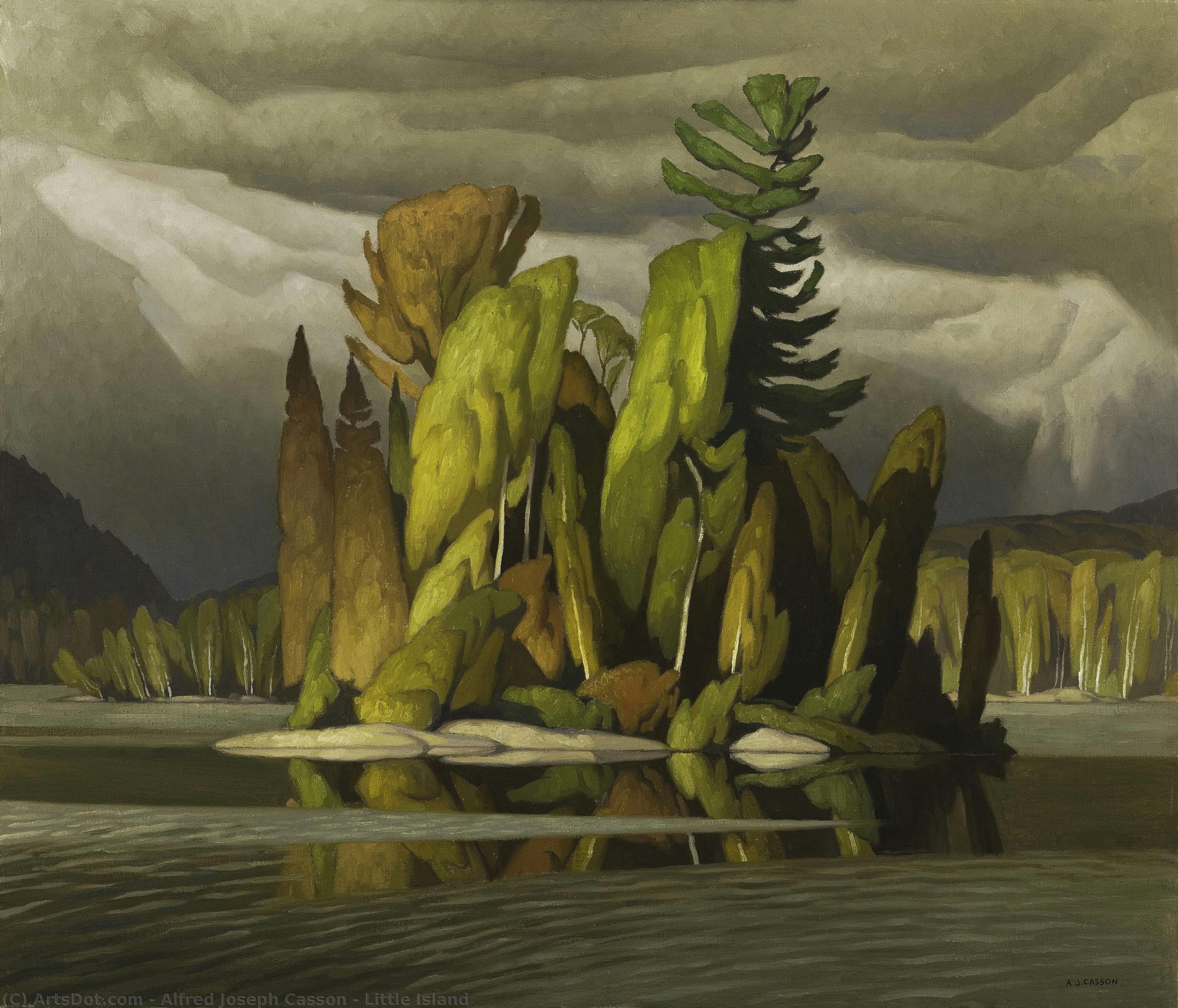
Little Island (1965) od Alfred Joseph Casson

Little Island

1965 · Oil · McMichael Canadian Art Collection, Vaughan

In the quietude of Little Island, created in 1965 by the esteemed Canadian master Alfred Joseph Casson, we find ourselves transported to a moment of profound stillness. The painting serves as a window into a secluded world, where a solitary patch of earth rests peacefully amidst the gentle ripples of a lake or river. This is not merely a depiction of geography, but an invitation to pause and breathe alongside…

Izbor umjetnika Alfred Joseph Casson se nastavlja, od 11 do 13

Motivi koji su privukli pažnju Alfred Joseph Casson

Četiri teme koje se najčešće ponavljaju u ovim originalima, svaka s svojim vrhunskim primjerom.

Muzeji koji čuvaju originalna djela umjetnika Alfred Joseph Casson

3 muzeja u kojima se nalazi najviše djela s ove stranice.

Muzej Grad Djela autora Alfred Joseph Casson Slike iz ovog popisa
McMichael Canadian Art Collection, VaughanMcMichael Canadian Art Collection Vaughan 8 White Pine, Church and Graveyard, Shore Pattern
Nacionalna galerija Kanade, OttawaNacionalna galerija Kanade Ottawa 3 Twilight near Britt, Clearing, Summer Landscape
The Robert McLaughlin Gallery, OshawaThe Robert McLaughlin Gallery Oshawa 1 Old House - Parry Sound

Alfred Joseph Casson desetljeće po desetljeće: original koji definira svako od njih

Djela po desetljećima

Odaberite desetljeće kako biste vidjeli original koji ga definira.

Pitanja kolekcionara o slikama umjetnika Alfred Joseph Casson

Po kojem je djelu Alfred Joseph Casson najpoznatiji/a?Otkrijte odgovor

White Pine (1957), McMichael Canadian Art Collection, Vaughan. Nakon njih slijede Twilight near Britt (1960) i Church and Graveyard (1933).

Koliko je godina Alfred Joseph Casson imao/la kada je nastalo djelo White Pine?Otkrijte odgovor

59 godina: White Pine datira iz 1957, a Alfred Joseph Casson je rođen/a 1898.

Koja su deset najpoznatijih djela umjetnika Alfred Joseph Casson?Otkrijte odgovor

White Pine, Twilight near Britt, Church and Graveyard, Shore Pattern, Little Island, Clearing, Summer Landscape, Old House - Parry Sound, In The Village of Markham i Tom Thomson. Gornji rang prikazuje godinu i muzej za svako od njih.

Koliko je slika ostavio/la Alfred Joseph Casson?Otkrijte odgovor

Naš katalog sadrži 14 djela umjetnika Alfred Joseph Casson, datiranih od 1923 do 1965.

U kojim se muzejima nalaze remek-djela umjetnika Alfred Joseph Casson?Otkrijte odgovor

Većinom u McMichael Canadian Art Collection (Vaughan), Nacionalna galerija Kanade (Ottawa) i The Robert McLaughlin Gallery (Oshawa). Gornja tablica muzeja navodi sve njih.

U kojim je godinama Alfred Joseph Casson naslikao svoja najpoznatija djela?Otkrijte odgovor

U 1960s: 4 od 13 djela na ovoj stranici nastalo je tada, od čega je Twilight near Britt Twilight near Britt.

Koja su prva i posljednja poznata originalna djela umjetnika Alfred Joseph Casson?Otkrijte odgovor

Na ovoj stranici najstarije djelo je iz Clearing (1923), a najnovije iz Little Island (1965).

Koje je motive Alfred Joseph Casson najčešće birao?Otkrijte odgovor

Landscape (5), Trees (4) i Water (3), kroz svih 13 djela na ovoj stranici.

Koju je tehniku najčešće koristio/la Alfred Joseph Casson?Otkrijte odgovor

Oil, za 6 od 13 djela na ovoj stranici.

Pripada li Alfred Joseph Casson kojem umjetničkom pokretu?Otkrijte odgovor

Canadian realism, sudeći po originalima na ovoj stranici.

Koji se radovi umjetnika Alfred Joseph Casson nalaze u muzeju McMichael Canadian Art Collection?Otkrijte odgovor

White Pine, Church and Graveyard i Shore Pattern: McMichael Canadian Art Collection, Vaughan posjeduje 8 djela s ove stranice.

Alfred Joseph Casson: život i djelo

A Life Rooted in the Canadian Landscape

Alfred Joseph Casson, a name synonymous with Canada’s artistic identity, was born in Toronto on May 17, 1898. His journey began not within the hallowed halls of an art academy, but amidst the practical demands of apprenticeship at a Hamilton lithography company following early studies at Hamilton Technical School. This formative period instilled in him a meticulous attention to detail and a deep understanding of visual processes – skills that would later prove invaluable as he translated his vision of the Canadian landscape onto canvas. Even these early experiences were nurtured by formal instruction; private lessons with Harry Britton introduced young Casson to both oil and watercolour techniques, igniting a lifelong passion for capturing the nuances of light and colour. A move back to Toronto in 1916 allowed him to further hone his skills at Central Technical School and the Ontario College of Art, setting the stage for a career that would profoundly shape Canadian art.

Joining the Chorus: The Group of Seven

The year 1926 marked a pivotal moment in Casson’s artistic trajectory. He received an invitation from Franklin Carmichael to join the esteemed Group of Seven, stepping into the role previously held by Frank Johnston. This wasn't merely acceptance into a collective; it was an embrace by a group actively forging a distinctly Canadian visual language. The Group of Seven sought to move beyond European conventions and depict the raw beauty and untamed spirit of their homeland. Casson’s contribution lay in his unique perspective, often focusing on the more settled regions of southern Ontario – picturesque villages, rolling farmlands, and tranquil forests. While others explored the dramatic grandeur of northern landscapes, Casson found poetry in the everyday scenes of rural life, imbuing them with a quiet dignity and subtle emotional resonance. His style, characterized by clear colours and carefully constructed compositions, offered a counterpoint to the bolder, more expressive brushwork of some of his colleagues, yet remained undeniably part of the Group’s unified vision.

Beyond the Seven: Expanding Artistic Horizons

Casson's commitment to fostering Canadian art extended beyond his involvement with the Group of Seven. In 1933, he co-founded the Canadian Group of Painters, an organization intended to provide a broader platform for artists working in various styles and mediums. This demonstrated a desire not only to promote his own work but also to nurture a thriving artistic community across the nation. Throughout his career, Casson balanced commercial work – notably as Art Director at Sampson-Matthews Ltd. for nearly two decades – with his personal artistic pursuits. He skillfully navigated these dual roles, using his position in the commercial world to support and promote Canadian art while simultaneously dedicating himself to painting full-time after his retirement in 1957. This dedication allowed him to fully immerse himself in capturing the landscapes that had captivated him since childhood.

A Lasting Legacy: Recognition and Influence

Alfred Joseph Casson’s impact on Canadian art is undeniable. His paintings, celebrated for their serene beauty and evocative depictions of Ontario's countryside, are held in prominent collections such as the McMichael Canadian Art Collection. He received numerous accolades throughout his life, including full membership in the Royal Canadian Academy of Arts, the Order of Canada, and honorary degrees from universities recognizing his significant contributions to the nation’s cultural heritage. The record-breaking sale of “Street in Glen Williams” for $542,800 in 2010 stands as a testament to the enduring appeal and increasing value of his work. Casson's legacy isn’t simply about the paintings he created; it’s about his role in defining what Canadian art could be – bold, independent, and deeply rooted in the unique character of the land. He passed away on February 20, 1992, leaving behind a body of work that continues to inspire artists and captivate audiences with its timeless beauty.