--- title: Non-objective art | Tate url: https://www.tate.org.uk/art/art-terms/n/non-objective-art hostname: tate.org.uk description: Tate glossary definition for Non-Objective art: Defines a type of abstract art that is usually, but not always, geom...
To understand the profound impact of Neo-Abstract art, one must first look beyond the mere absence of recognizable subjects and instead perceive it as a deliberate reconstruction of reality. The journey begins with the concept of non-objective art, a discipline that seeks to convey simplicity and purity by stripping away the identifiable, quantifiable characteristics of the living world. This movement was never merely an aesthetic rebellion; it was a philosophical pursuit. Inspired by the belief of Plato that geometry represented the highest form of beauty, early pioneers sought to visualize the spiritual through the medium of the square, the line, and the daub of color.
The roots of this movement are deeply intertwined with the search for a universal visual language. Wassily Kandinsky, a central figure in this evolution, viewed art as a vehicle for the soul, famously suggesting that the Stimmung—the essential spirit or mood—of a painting could deepen and purify the spectator. His first non-objective watercolor in 1910 marked a departure from the materialist preoccupations of the 19th century, moving toward a metaphysical exploration where color and form act as musical notes. This spiritual dimension was echoed by others like Kasimir Malevich, whose Suprematist works, such as the iconic Black Square, pushed art to the very borderline of nothingness, seeking an absolute reality beyond the visible.
The Evolution of Form: Tracing the Lineage from Cubism to Constructivism
Explore Olga Rozanova’s ‘Non-Objective Composition’ (1917). A dynamic geometric abstraction in red & white, influenced by Cubism & Constructivism. Discover its tension & unique style.
The transition from representational accuracy to pure abstraction was a gradual unfolding of intellectual and technical mastery. The seeds were sown in the revolutionary fragmentation of form introduced by Pablo Picasso and Georges Braque through Cubism. While Cubism subverted traditional perspective, it provided the essential groundwork for geometric abstraction by emphasizing the planarity of overlapping surfaces. This process of purifying art from the vestiges of visual reality allowed subsequent artists to focus on the inherent two-dimensional features of the canvas.
As the 20th century progressed, this lineage branched into powerful movements such as Constructivism and De Stijl. In Russia, practitioners like Alexander Rodchenko and Liubov Popova embraced a technological and futuristic aesthetic, utilizing geometric forms to reflect the dynamism of the modern age. Simultaneously, the De Stijl movement, led by Piet Mondrian, championed a reductive aesthetic based on primary colors and the rigid intersection of horizontal and vertical lines. This era also saw the rise of the Bauhaus school under Walter Gropius, where masters like Paul Klee and Wassily Kandinsky integrated geometric principles into the very fabric of modern design. Even the architectural influence of figures like Friedrich Vordemberge-Gildewart, who studied the structural discipline of sculpture, contributed to this era of rigorous, non-illusionistic space.
Neo-Abstract Mastery: The Dialogue Between Historical Modernism and Contemporary Energy
Abstract Composition [Triptych] by Vaclav Vytlacil (1937). Explore this dynamic black & white triptych featuring bold lines, textures & geometric shapes. A key example of American modernism.
Neo-Abstract art emerges as a sophisticated dialogue between the historical weight of modernism and the frenetic energy of our contemporary era. It is not a retreat from the world, but an intense engagement with it through a refined lens of symbolic geometry and structured spontaneity. This movement finds its inspiration in the structural rigor of American modernism—exemplified by works such as Vaclav Vytlacil’s 1937 Abstract Composition [triptych]—and bridges the gap between the raw, visceral energy of Abstract Expressionism and a more disciplined, architectural approach to composition.
In this contemporary iteration, we see a curated equilibrium. Where early abstractionists often grappled with the chaos of emotion, Neo-Abstract artists utilize geometric shapes not as static icons, but as dynamic actors within a larger narrative. We observe this in the use of concentric circles that create an illusion of infinite depth, reminiscent of Victor Vasarely’s Op Art, where gold and black interplay to manipulate perception. Contemporary masters like Amelia Toledo and Yanagisawa Kien continue this legacy, exploring the intersection of texture and landscape through bold, geometric forms. This movement represents a shift for the discerning collector from observing a fleeting moment of creation to contemplating a permanent state of balance.
Chromatic Depth and Tactile Texture: The Sensory Language of Modern Abstraction
Explore 'Purple & Gold Abstract' by Michele Elizabeth Field (2005). This dynamic oil painting showcases swirling forms, impasto texture, and vibrant hues – a captivating piece of abstract expressionism.
Color in Neo-Abstract art functions far beyond mere decoration; it is the primary vehicle for emotional resonance. The movement utilizes vibrant, often high-contrast palettes to evoke complex psychological states, moving from tranquil serenity to intense, rhythmic energy. A sophisticated collector understands that a masterpiece often contains hidden chromatic shifts—subtle transitions from deep ochre to brilliant gold that only reveal themselves under changing light. This depth ensures that the artwork remains a living entity within a room, offering new discoveries with every encounter.
Furthermore, the movement celebrates the tactile dimension through impasto techniques and visible brushstrokes. Unlike the flat surfaces of traditional prints, true Neo-Abstract works embrace the three-dimensional quality of paint, using thick applications to create shadows and highlights that dance across the canvas. This physical presence is evident in the works of Laurent Fabre, where a sweeping arc of deep crimson might orbit a deconstructed landscape of alabaster, creating a rhythmic tension between shape and void. The heavy impasto transforms the canvas into a tactile relief, making the abstract feel profoundly tangible and providing a sense of enduring vitality to any curated collection.
Curating the Future: Integrating Neo-Abstract Masterpieces into Sophisticated Interiors
A Spiraling Embrace of Modernity: The Guggenheim’s Enduring Vision The Solomon R. Guggenheim Museum in New York City transcends its function as a mere repository for art; it is an immersive experience, a dynamic interplay between artistic expression ...
For the professional decorator or the seasoned collector, integrating Neo-Abstract art into a space offers an unparalleled study in chromatic harmony and architectural permanence. These works serve as windows into a balanced universe where every line has purpose. In an age often characterized by digital fragmentation, the structured precision of a geometric composition provides a necessary moment of intellectual rigor and emotional stillness. Whether it is a large-scale mural that anchors a hotel lobby or a delicate color study for a private study, these pieces command the atmosphere.
When selecting works for a collection, one might look to the legacy of the Solomon R. Guggenheim Museum, where the very architecture of Frank Lloyd Wright encourages a continuous, spiraling encounter with art. Similarly, choosing a piece that utilizes the "multi-panel" trend can create a cohesive, modern architectural look across wide walls or staircases. As you curate your space, consider how the interplay of light and pigment—the way a sharp edge catches a simulated glow or a deep blue field seems to recede infinitely—can transform an interior into a sanctuary of structured light and mathematical grace.
At OriginalUniqueArt.com, we specialize in bringing this level of historical and contemporary sophistication to your collection through museum-quality, hand-painted oil reproductions. Our artists, trained in the finest academies, meticulously recreate the texture, impasto, and chromatic depth of masterworks on 100% cotton canvas, ensuring that the soul of the abstraction is preserved for generations.
Immerse yourself in the luminous world of Laurent Fabre. Explore our curated selection of 25 iconic Neo-Abstract masterpieces, celebrating geometric precision and chromatic harmony. Find museum-quality art reproductions for your space. Discover all masterpieces on OriginalUniqueArt.com.
Istražite 10 remek-djela geometrijske apstrakcije! Otkrijte priče Kandinskog, Mondriana i drugih majstora. Inspirirajte se za svoj interijer s vrhunskim reprodukcijama slika na OriginalUniqueArt.com
Immerse yourself in the luminous world of Laurent Fabre. Explore 25 iconic Neo-Abstract masterpieces defined by geometric precision and chromatic harmony. Find inspiration for your space with museum-quality art reproductions. Discover all masterpieces on OriginalUniqueArt.com.
Immerse yourself in the luminous world of Laurent Fabre. Explore 25 iconic Neo-Abstract masterpieces, from geometric precision to vibrant color fields. Find museum-quality art reproductions and curated decor inspiration. Discover all masterpieces on OriginalUniqueArt.com.

 Non-objective Composition
![Abstract Composition [triptych]](/media/artworks/images-thumb/08/3c/083c0675045645fd42d4e6c6d63f1ced.jpg) Abstract Composition [triptych]
Abstract Composition [triptych] Purple and Gold Abstract
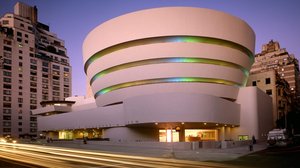 Solomon R. Guggenheim Museum




