Decoding Dalí: The Paranoiac-Critical Method and Surrealist Symbols Explained
Master the complexities of Salvador Dalí's work. Explore the Paranoiac-Critical Method, decode iconic Surrealist symbols, and understand the psychological depth behind his technical brilliance in this expert art history guide designed for students and collectors.
A Life Submerged in Dreams: The World of Salvador Dalí Salvador Domingo Felipe Jacinto Dalí i Domènech, a name synonymous with surrealism, was born on May 11, 1904, in the sun-drenched town of Figueres, Spain. His existence was destined to be anythin...
To step into the world of Salvador Dalí is to abandon the safety of the waking mind and surrender to a landscape where logic dissolves like wax under a summer sun. Born in 1904 in the sun-drenched town of Figueres, Spain, Dalí emerged not merely as a painter but as a provocateur of the subconscious, a figure whose very name became synonymous with the radical disruptions of the Surrealist movement. His existence was meticulously crafted as a performance, an exploration of the subconscious rendered visible through startling imagery and unparalleled technical brilliance. The shadows of his early life, marked by the profound trauma of losing an older brother also named Salvador, permeated his art with themes of duality, replacement, and the fluid boundaries between life and death.
Dalí’s journey was one of constant metamorphosis, moving from the formal training at the San Fernando Academy of Fine Arts in Madrid to the avant-garde crucible of Paris. While he initially drew inspiration from the Impressionists and Renaissance masters, his encounter with the rebellious spirit of Dadaism and the burgeoning Surrealist group in 1929 ignited a transformative fire. He did not simply join the revolution; he revolutionized it by merging the precision of classical draftsmanship with the irrationality of the dream state. His vision was never about random chaos, but rather a structured attempt to capture the profound psychological depth of the human condition through a lens that challenged our very perceptions of time, space, and identity.
Mastering the Irrational: The Mechanics of the Paranoiac-Critical Method
The Architect of Dreams: An Introduction to Dalí’s Surrealist Vision Decoding Dalí: The Paranoiac-Critical Method and Surrealist Symbols Explained The Architect of Dreams: An Introduction to Salvador Dalí and Surrealism To step into the world of Salv...
At the heart of Dalí’s revolutionary impact lies his self-developed technique known as the paranoiac-critical method. Developed in the early 1930s, this was not a descent into madness, but rather a deliberate, controlled cultivation of a hallucinatory state designed to unlock the hidden imagery of the subconscious mind. While many of his contemporaries in the Surrealist movement sought to capture the spontaneous flow of thought through automatism—a method of letting the hand move without conscious control—Dalí pursued a more structured, almost clinical approach to the irrational. He utilized this method to translate the fleeting, often unsettling images of dreams into a tangible reality on canvas.
The paranoiac-critical method functions by inducing a state where the artist can perceive multiple, overlapping meanings within a single image. It is a process of "organized" paranoia, where the mind identifies connections between seemingly unrelated objects, creating optical illusions and double images that force the viewer to question their own perception. This technique allowed Dalí to achieve an astonishing level of precision; he applied the meticulous detail of a Renaissance master to subjects that were fundamentally absurd or impossible. Through this method, the canvas becomes a window where the boundaries of reality and hallucination dissolve, inviting us to witness the structured exploration of personal anxieties and repressed desires.
Decoding the Canvas: Key Surrealist Symbols and Their Psychological Mean::ings
The Architect of Dreams: An Introduction to Salvador Dalí and Surrealism To step into the world of Salvador Dalí is to abandon the safety of the waking mind and surrender to a landscape where logic dissolves like wax under a summer sun. Born in 1904,...
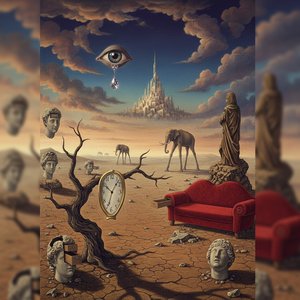
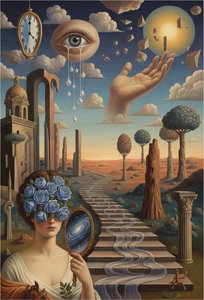
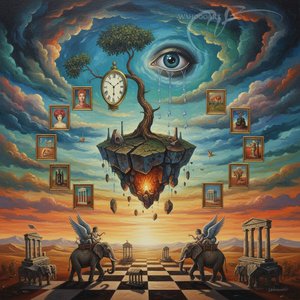
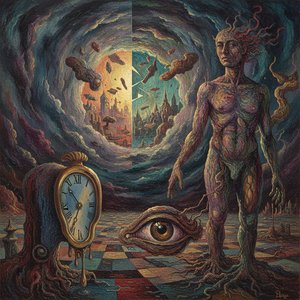
To encounter Dalí’s work is to enter a complex lexicon of symbols, each acting as a portal into the artist's intricate psyche. One cannot discuss his oeuvre without addressing the iconic melting clocks, perhaps the most recognizable symbol of the 20th century. These soft watches, famously depicted in The Persistence of Memory, serve as profound meditations on the fluidity and relativity of time, suggesting that in the realm of the subconscious, the rigid structures of the mechanical world hold no power. Alongside these, Dalí frequently employed imagery of ants, which often represented decay, mortality, and the frantic, consuming nature of human anxiety.
The artist's symbolic language extended into the realms of biology and mysticism as well. Crutches are a recurring motif, symbolizing support for the fragile ego or the physical necessity of stability in an unstable world. Ants, flies, and even the presence of certain anatomical fragments speak to themes of metamorphosis and the visceral reality of the flesh. Later in his career, his "nuclear mysticism" introduced elements of science and religion, blending classical motifs with the implications of modern physics. Every element, from the way a landscape stretches toward an infinite horizon to the specific placement of a shadow, is a deliberate clue in a larger psychological puzzle, designed to unsettative the senses and ignite the imagination.
From Madrid to Paris: The Evolution of Dalí’s Technical Mastery
Salvador Domingo Felipe Jacinto Dalí i Domènech, Marquess of Dalí de Púbol (11 May 1904 – 23 January 1989), known as Salvador Dalí, was a Spanish surrealist artist renowned for his technical skill, precise draftsmanship, and the striking and bizarre ...
Dalí’s technical evolution is a testament to his unwavering commitment to excellence and his ability to synthesize disparate influences into a singular voice. His early education in Madrid provided him with a foundation in classical draftsmanship, an attribute that remained the backbone of his work even as he embraced the most bizarre subject matter. This mastery of form allowed him to render the impossible with such convincing realism that the viewer is often left disoriented, unable to distinguish between the tangible and the imagined. His ability to manipulate light and texture was heavily influenced by his study of the Renaissance masters, a reverence that gave his Surrealist visions a weight and permanence rarely seen in avant-garde art.
As he moved through Paris and eventually into the international spotlight, Dalí’s style expanded to include influences from Cubism and even elements of Pop Art. His work became increasingly theatrical, reflecting his belief that life itself was a performance. This period saw him experimenting with various media, including film, sculpture, and photography, always pushing the boundaries of how much "reality" could be compressed into a single artistic statement. Whether through the fine, precise lines of his early drawings or the expansive, dreamlike landscapes of his mature oils, Dalist technical brilliance remained focused on one goal: making the invisible visible through the most sophisticated means possible.
The Living Masterpiece: Analyzing Iconic Works and Architectural Legacies
A Surreal Labyrinth: Stepping into Dalí’s Living Dream To enter the Dalí Theatre and Museum in Figueres is not merely to visit an exhibition, but to surrender oneself to a meticulously crafted hallucination. Located in the heart of the Spanish town w...
Dalí’s legacy is not confined to the edges of a frame; it extends into the very architecture of his life and his most ambitious projects. The Dalí Theatre and Museum in Figueres stands as his final, most profound masterpiece—a self-portrait rendered in stone, glass, and theatrical illusion. Built upon the ruins of an old theatre, this structure is a sprawling, surrealist labyrinth designed to disorient the rational mind. It is a total environment where the boundaries between art and reality are erased, featuring geodesic domes and rooms where furniture appears to cling to the ceilings, mirroring the fluid logic of his paintings.
His masterpieces, such as The Hallucinogenic Toreador, continue to serve as profound explorations of identity and desire, where figures dissolve into coastal scenes and landscapes embody the complexity of the human soul. Even in his later years, through works like his Tarot illustrations, Dalí continued to weave together classical painting with surrealist collage elements. His influence persists today, seen in the works of contemporary artists and the broader culture of visual storytelling. To study Dalí is to engage with a living legacy that challenges us to confront the hidden corners of our own minds and to find beauty in the profound absurdity of existence.
About OriginalUniqueArt.com
OriginalUniqueArt.com is a global leader in fine art reproductions, dedicated to making the world's greatest masterpieces accessible to collectors, decorators, and professionals worldwide. Since 2004, we have specialized in high-quality, hand-painted oil reproductions on 100% cotton canvas, ensuring that every brushstroke reflects the soul of the original artist. Whether you are looking for a single statement piece or large-scale architectural murals for hospitality projects, our professional service offers unparalleled customization, including digital mockups and bespoke sizing. We provide reliable global shipping via DHL and FedEx, complete with full tracking and a 100% satisfaction warranty. For expert art consultation or to transform your personal photos into museum-grade oil paintings, visit us at OriginalUniqueArt.com.
Explore the captivating world of Salvador Dalí! Discover his surrealist masterpieces, profound connection to Freud's theories, and lasting impact on art & culture. A deep dive into a visionary artist.
Journey into the dreamlike world of Surrealism! Explore 10 masterpieces by Dali, Magritte & Miró that redefined art. Discover their stories & find museum-quality reproductions to elevate your home decor on OriginalUniqueArt.com.
Otkrijte 10 remek-djela koja su definirala surrealizam! Uronite u svijet Dalija, Magritta i drugih genijalaca. Istražite priče iza slika, pronađite inspiraciju za svoj interijer te kupujte vrhunske reprodukcije na OriginalUniqueArt.com!
Explore the profound depths of Surrealist Expressionism. Discover how masters like Dalí used dream logic and subconscious imagery to redefine reality through emotionally resonant, museum-quality art.
Embark on a visual journey through the subconscious. Explore the profound symbolism of Surrealist masterpieces, from Dalí's melting clocks to dreamlike landscapes, and learn how to curate these evocative visions into your private art collection with expert guidance.

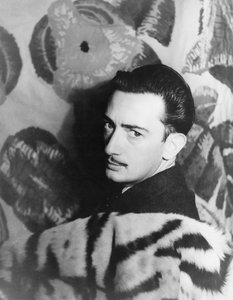 Salvador Dalí
 Decoding Dalí: The Secrets of the Paranoiac-Critical Method and Surrealist Symbols
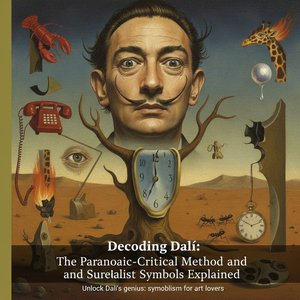 Decoding Dalí: The Paranoiac-Critical Method and Surrealist Symbols Explained
 Salvador Dalí
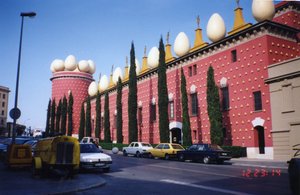 Dalí Theatre and Museum