


1


Ažurirano Listopad 2026 · rangirano prema našoj ocjeni popularnosti (pretraživanja, posjeti i narudžbe za svako djelo) · 48 djela Othon Friesz u našem katalogu
Ukratko
Scene in a Parisian Brasserie (1906) je slika autora Othon Friesz koja privlači najviše pogleda; original se nalazi u muzeju Museum Barberini, Potsdam. Nakon toga, pogled se usmjerava na The Bathers of Andelys (1908) i Interior (1914). Među 48 djela umjetnika Othon Friesz u našem katalogu, ovih 48 su najpoznatija, od kojih je svako jedinstveni original predstavljen s godinom nastanka, muzejom i razlogom zbog kojeg je vječno.


The oil on canvas titled Temptation (Adam and Eve) was painted by Othon Friesz in 1910. This work measures 73 x 60 cm. It captures a moment of profound weight through the figures of Adam and Eve. The scene is held within the permanent collection of the Hermitage Museum.


 Nude Reclining
12
 The CreekSan Diego Museum of Art
13
 The Harbour in Honfleur1907 · National Museum of Art, Architecture and Design
14
 Flowers (Tulips and Daisies)1910 · Ermitaž
15
 Vue du château Fallet1907 · Musée d'Unterlinden
16
 The Sunken Road in Winter1913 · Statens Museum For Kunst
17
 The Arbour in the Pine Wood1914 · Statens Museum For Kunst
18
 Still Life with Brioches1916 · Statens Museum For Kunst
19
 Still Life with Apples1915 · Statens Museum For Kunst
20
 Terrace with Palms1914 · Statens Museum For Kunst
21
 The Cliff at Sainte Marguerite1914 · Statens Museum For Kunst
22
 The Peaches1914 · Statens Museum For Kunst
23
 Spring1913 · Statens Museum For Kunst
24
 The Harbour of Le Havre1921 · Kraljevski muzej fine umjetnosti u Antverpenu
25
 Under the Fig1922 · Statens Museum For Kunst
26
 The Mountain Coudon Seen from Cap BrunKraljevski muzej fine umjetnosti u Antverpenu
27
 The ramparts of Saint-MaloMusée Toulouse-Lautrec
28
 Port
29
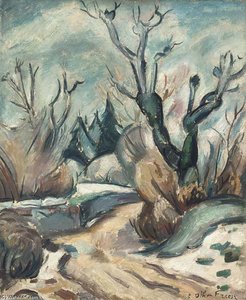 The Jura
30
 Landscape
31
 Port Of Toulon
32
 Baigneuses
33
 Flowers
34
 Construction Of Sheds At Istres
35
 Window On The Port Of Toulon
36
 Bateau Et Coquillages
37
 Seated Woman
38
 Nature Morte
39
 Landscape At Home
40
 A Village Street
41
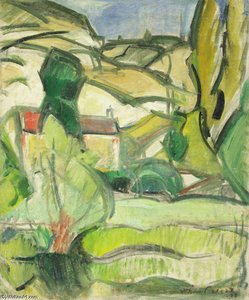 Landscape -
42
 A Still Life With Flowers In A Vase
43
 Drawings for ceramic platesMuseu do Caramulo
44
 Landscape of La Ciotat1907 · Centre Pompidou
45
 The Port of Anvers1906 · La Boverie
46
 Autumn Work1908 · National Museum of Art, Architecture and Design
47
 Roofs and Cathedral in Rouen1908 · Ermitaž
48
 Le Havre, Bassin du Roy1906
Četiri teme koje se najčešće ponavljaju u ovim originalima, svaka s svojim vrhunskim primjerom.
8 muzeja u kojima se nalazi najviše djela s ove stranice.
| Muzej | Grad | Djela autora Othon Friesz | Slike iz ovog popisa |
|---|---|---|---|
 Statens Museum For Kunst |
Kopenhagen | 13 | Interior, Mother's Love, The Lady on the Terrace |
 Ermitaž |
Sankt Peterburg | 3 | Temptation (Adam and Eve), Flowers (Tulips and Daisies), Roofs and Cathedral in Rouen |
 National Museum of Art, Architecture and Design |
Oslo | 2 | The Harbour in Honfleur, Autumn Work |
 Kraljevski muzej fine umjetnosti u Antverpenu |
Antverp | 2 | The Harbour of Le Havre, The Mountain Coudon Seen from Cap Brun |
 Museum Barberini |
Potsdam | 1 | Scene in a Parisian Brasserie |
 Musee du Petit Palais |
Geneva | 1 | The Bathers of Andelys |
 Izraelski muzej |
Jeruzalem | 1 | The Decorated Cruiser, Antwerp |
 San Diego Museum of Art |
San Diego | 1 | The Creek |
Odaberite desetljeće kako biste vidjeli original koji ga definira.
Scene in a Parisian Brasserie (1906), Museum Barberini, Potsdam. Nakon njih slijede The Bathers of Andelys (1908) i Interior (1914).
27 godina: Scene in a Parisian Brasserie datira iz 1906, a Othon Friesz je rođen/a 1879.
Scene in a Parisian Brasserie, The Bathers of Andelys, Interior, Mother's Love, The Lady on the Terrace, Female Nude, Temptation (Adam and Eve), The Decorated Cruiser, Antwerp, Le Havre Port i Nude Lying in a Landscape. Gornji rang prikazuje godinu i muzej za svako od njih.
Naš katalog sadrži 48 djela umjetnika Othon Friesz, datiranih od 1903 do 1923.
Većinom u Statens Museum For Kunst (Kopenhagen), Ermitaž (Sankt Peterburg) i National Museum of Art, Architecture and Design (Oslo). Gornja tablica muzeja navodi sve njih.
U 1910s: 13 od 48 djela na ovoj stranici nastalo je tada, od čega je Interior Interior.
Na ovoj stranici najstarije djelo je iz Le Havre Port (1903), a najnovije iz Female Nude (1923).
Flowers (2) i Landscape (2), kroz svih 48 djela na ovoj stranici.
Interior, Mother's Love i The Lady on the Terrace: Statens Museum For Kunst, Kopenhagen posjeduje 13 djela s ove stranice.