Portret Johann Carl Loth

46 najpoznatijih djela umjetnika Johann Carl Loth, svako jedinstveno

Ažurirano Studeni 2026 · rangirano prema našoj ocjeni popularnosti (pretraživanja, posjeti i narudžbe za svako djelo) · 47 djela Johann Carl Loth u našem katalogu

Ukratko

Selene and Endymion (1670) je slika autora Johann Carl Loth koja privlači najviše pogleda; original se nalazi u muzeju Rijksmuseum, Amsterdam. Nakon toga, pogled se usmjerava na Jacob Blesses Ephraim and Manasseh (1692) i Old Peasant Lighting a Pipe (1660). Među 47 djela umjetnika Johann Carl Loth u našem katalogu, ovih 46 su najpoznatija, od kojih je svako jedinstveni original predstavljen s godinom nastanka, muzejom i razlogom zbog kojeg je vječno.

1632 – 1698, München Baroque Najviše djela: Bavarske državne slikopisne zbirke

Top 10 djela Johann Carl Loth kroz oči galerije

1
Selene and Endymion (1670) od Johann Carl Loth

Selene and Endymion

1670 · Oil On Canvas · Rijksmuseum, Amsterdam

In this dramatic oil painting, we find ourselves witnessing a moment of profound stillness and longing. The scene captures the mythological meeting between Selene, the personification of the Moon, and the sleeping Endymion. The composition moves with a heavy, diagonal energy, pulling the eye from the upper left down toward the lower right, following the curve of the figures. Endymion lies in a deep, earthly slumber, his muscular form rendered…

2
Jacob Blesses Ephraim and Manasseh (1692) od Johann Carl Loth

Jacob Blesses Ephraim and Manasseh

1692 · Oil On Canvas · Kunsthistorisches Museum, Beč

In this 1692 oil on canvas, an aged, semi-nude patriarch leans forward to bestow a blessing upon two young boys, Ephraim and Manasseh. The composition is tightly packed, utilizing a dynamic, triangular formation that directs the viewer's eye toward the central elderly figure. The scene captures a moment of profound interpersonal drama, where the physical presence of the figures is emphasized through heavy drapery and muscular contours. Light falls theatrically…

3
Old Peasant Lighting a Pipe (1660) od Johann Carl Loth

Old Peasant Lighting a Pipe

1660 · Oil On Canvas · Art Institute of Chicago, Chicago

A single, focused light source pierces a heavy darkness, illuminating a weathered face in a moment of profound concentration. This profile view captures an elderly man as he attends to a clay pipe, the thin stem acting as a visual guide through the composition. The scene is defined by a stark chiaroscuro, where deep shadows recede into an indeterminate background, pushing the subject into the immediate foreground. Every wrinkle in…

4
Music Lesson (1650) od Johann Carl Loth

Music Lesson

1650 · Oil On Canvas · Muzeum Pałacu Kralja Jana III w Wilanowie, Varšava

In the oil painting Music Lesson by Johann Carl Loth, the artist employs an oval composition to frame a tightly cropped scene. The figures are arranged in a triangular formation, a structural choice that directs the viewer's eye toward the central action. A muscular male figure plays a pan flute, or syrinx, while an older man wearing a laurel wreath observes or instructs a younger woman. This arrangement creates a…

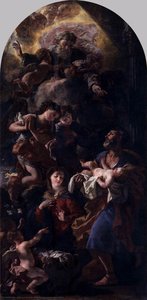
5
Diogenes (1650) od Johann Carl Loth

Diogenes

1650 · Oil On Canvas · Minneapolis Institute of Art, Minneapolis

A muscular, bearded man emerges from a dark, near-black background in this 1650 oil painting. He is positioned in a tight, close-up composition that focuses on his upper torso and head. His skin is rendered with detailed musculature, particularly across the shoulder, chest, and arm. A single light source, a lit candle contained within a handheld lantern, casts sharp highlights onto his anatomy. This light creates a strong chiaroscuro effect,…

6
Susannah and the Elders (1650) od Johann Carl Loth

Susannah and the Elders

1650 · Oil On Canvas · J. Paul Getty Museum, Los Angeles

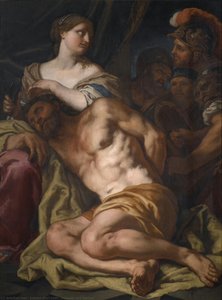
In Susannah and the Elders, Johann Carl Loth brings a heavy, dramatic tension to the canvas. The scene unfolds from a narrative found within the Old Testament, capturing a moment of profound intrusion. Susannah finds herself cornered by two men, their presence a sudden and unsettling weight in her private space. The air feels thick with the gravity of this confrontation, as the figures press into a tight, triangular arrangement…

7
The Exposure of the Infant Moses (1665) od Johann Carl Loth

The Exposure of the Infant Moses

1665 · Oil · Bavarske državne slikopisne zbirke, München

In The Exposure of the Infant Moses, Johann Carl Loth captures a heavy moment from the Book of Exodus. The scene centers on a small infant resting in a vessel upon the ground. A muscular man reaches toward the child, his body taut with effort. To the side, a woman collapses in grief, her hand pressed against her forehead as she faces a moment of profound despair. The weight of…

8
Christ Appears to Saint Anthony (1665) od Johann Carl Loth

Christ Appears to Saint Anthony

1665 · Oil · Bavarske državne slikopisne zbirke, München

In this dramatic Baroque oil painting, titled Christ Appears to Saint Anthony, Johann Carl Loth captures a profound mystical encounter. Created about 1665, the work focuses on the intimate connection between the Christ Child and the saint. The composition centers on the upper bodies of these two figures, drawing the viewer into a private moment of spiritual presence. The Christ Child is depicted as a plump, nude infant leaning forward…

9
The Penitent Mary Magdalene (1665) od Johann Carl Loth

The Penitent Mary Magdalene

1665 · Oil · Bavarske državne slikopisne zbirke, München

The Penitent Mary Magdalene emerges from the shadows as a profound oil painting by Johann Carl Loth. Created about 1665, the work captures a singular moment of spiritual intensity. The subject gazes upward, caught in a state of deep devotion that feels immediate and alive. Every brushstroke contributes to the weight of her presence within the frame.

10
John the Baptist (1665) od Johann Carl Loth

John the Baptist

1665 · Oil · Bavarske državne slikopisne zbirke, München

This oil painting, titled John the Baptist, was executed by the German Baroque painter Johann Carl Loth. The work dates to about 1665. It presents a vertical portrait that focuses on the head and the upper torso of the subject. The figure is a muscular man characterized by a beard and a gaze directed upward and to his right. He is depicted in a state of intense spiritual or emotional…

Slavna djela umjetnika Johann Carl Loth, od 11. do 46. broj

11Christ on the Cross (1665) od Johann Carl LothChrist on the Cross1665 · Bavarske državne slikopisne zbirke 12Adoration of the Shepherds (1665) od Johann Carl LothAdoration of the Shepherds1665 · Bavarske državne slikopisne zbirke 13David with the Head of Goliath (1665) od Johann Carl LothDavid with the Head of Goliath1665 · Bavarske državne slikopisne zbirke 14Mockery of Christ (1665) od Johann Carl LothMockery of Christ1665 · Bavarske državne slikopisne zbirke 15Isaac Blesses Jacob (1665) od Johann Carl LothIsaac Blesses Jacob1665 · Bavarske državne slikopisne zbirke 16The Shame of Noah (1674) od Johann Carl LothThe Shame of Noah1674 · Bavarske državne slikopisne zbirke 17The Dying Seneca (1665) od Johann Carl LothThe Dying Seneca1665 · Bavarske državne slikopisne zbirke 18The Rescue of Agrippina, Mother of Nero (1665) od Johann Carl LothThe Rescue of Agrippina, Mother of Nero1665 · Bavarske državne slikopisne zbirke 19Boy in Armor (1665) od Johann Carl LothBoy in Armor1665 20Cato the Younger's Death (1672) od Johann Carl LothCato the Younger's Death1672 · Statens Museum For Kunst 21Saint Joseph with the Christ Child (1680) od Johann Carl LothSaint Joseph with the Christ Child1680 · Bavarske državne slikopisne zbirke 22Holy Family with the Christ Child John (1680) od Johann Carl LothHoly Family with the Christ Child John1680 · Bavarske državne slikopisne zbirke 23Saint John the Baptist (1680) od Johann Carl LothSaint John the Baptist1680 · Slovačka nacionalna galerija 24Saint Paul (1675) od Johann Carl LothSaint Paul1675 · Narodni muzej u Varšavi 25Faun playing the flute. (1675) od Johann Carl LothFaun playing the flute.1675 · Narodni muzej u Varšavi 26Martyrdom of Gerard of Csanád (1677) od Johann Carl LothMartyrdom of Gerard of Csanád1677 · Musée des Beaux-Arts de Strasbourg 27Holy Family and God the Father (1681) od Johann Carl LothHoly Family and God the Father1681 · San Silvestro 28The Guardian Angel and Archangel Michael (1691) od Johann Carl LothThe Guardian Angel and Archangel Michael1691 · Bavarske državne slikopisne zbirke 29Saint Dominic Receives the Rosary (1691) od Johann Carl LothSaint Dominic Receives the Rosary1691 · Bavarske državne slikopisne zbirke 30The Death of Cato. (1700) od Johann Carl LothThe Death of Cato.1700 · Narodni muzej u Varšavi 31Abraham Visited by the Angels od Johann Carl LothAbraham Visited by the Angels 32Death of St Peter Martyr (1691) od Johann Carl LothDeath of St Peter Martyr1691 · Bazilika svetih Ivana i Pavla 33Lowering of Moses into the Nile (Amram and Jochebed lowering their son Moses in a basket into the Nile) (1700) od Johann Carl LothLowering of Moses into the Nile (Amram and Jochebed lowering their son Moses in a basket into the Nile)1700 · Ernest Zmeták Art Gallery 34Apollo, Pan, and Marsyas od Johann Carl LothApollo, Pan, and MarsyasStaatliche Museen zu Berlin 35Eliezer i Rebeka na Česmu (1670) od Johann Carl LothEliezer i Rebeka na Česmu1670 · Ermitaž 36Self-Portrait od Johann Carl LothSelf-PortraitBavarske državne slikopisne zbirke 37The Crowning with thorns od Johann Carl LothThe Crowning with thornsFinnish National Gallery 38Saint Sebastian od Johann Carl LothSaint SebastianNarodní galerie Praha 39Kampf des Jakob mit d. Engel ? od Johann Carl LothKampf des Jakob mit d. Engel ? 40Adam and Eve od Johann Carl LothAdam and EveKedleston Hall 41Lot and His Daughters od Johann Carl LothLot and His Daughters 42Samson and Delilah od Johann Carl LothSamson and DelilahFondazione Brescia Musei 43Mercury Piping to Argus od Johann Carl LothMercury Piping to ArgusNational Gallery 44Jupiter and Mercury at Philemon and Baucis od Johann Carl LothJupiter and Mercury at Philemon and BaucisKunsthistorisches Museum 45The Good Samaritan od Johann Carl LothThe Good SamaritanKunsthistorisches Museum 46The Good Samaritane (1676) od Johann Carl LothThe Good Samaritane1676 · Kunstsammlungen Graf von Schönborn

Motivi koji su privukli pažnju Johann Carl Loth

Četiri teme koje se najčešće ponavljaju u ovim originalima, svaka s svojim vrhunskim primjerom.

Muzeji koji čuvaju originalna djela umjetnika Johann Carl Loth

8 muzeja u kojima se nalazi najviše djela s ove stranice.

Muzej Grad Djela autora Johann Carl Loth Slike iz ovog popisa
Bavarske državne slikopisne zbirke, MünchenBavarske državne slikopisne zbirke München 17 The Exposure of the Infant Moses, Christ Appears to Saint Anthony, The Penitent Mary Magdalene
Kunsthistorisches Museum, BečKunsthistorisches Museum Beč 3 Jacob Blesses Ephraim and Manasseh, Jupiter and Mercury at Philemon and Baucis, The Good Samaritan
Narodni muzej u Varšavi, VaršavaNarodni muzej u Varšavi Varšava 3 Saint Paul, Faun playing the flute., The Death of Cato.
Rijksmuseum, AmsterdamRijksmuseum Amsterdam 1 Selene and Endymion
Art Institute of Chicago, ChicagoArt Institute of Chicago Chicago 1 Old Peasant Lighting a Pipe
Muzeum Pałacu Kralja Jana III w Wilanowie, VaršavaMuzeum Pałacu Kralja Jana III w Wilanowie Varšava 1 Music Lesson
Minneapolis Institute of Art, MinneapolisMinneapolis Institute of Art Minneapolis 1 Diogenes
J. Paul Getty Museum, Los AngelesJ. Paul Getty Museum Los Angeles 1 Susannah and the Elders

Johann Carl Loth kroz desetljeća: jedan jedinstveni original za svako

Djela po desetljećima

Odaberite desetljeće kako biste vidjeli original koji ga definira.

Slike umjetnika Johann Carl Loth: pitanja za galeriju

Koje je najpoznatije djelo umjetnika Johann Carl Loth?Otkrijte odgovor

Selene and Endymion (1670), Rijksmuseum, Amsterdam. Nakon njih slijede Jacob Blesses Ephraim and Manasseh (1692) i Old Peasant Lighting a Pipe (1660).

U kojoj je dobi Johann Carl Loth stvorio/la Selene and Endymion?Otkrijte odgovor

38 godina: Selene and Endymion datira iz 1670, a Johann Carl Loth je rođen/a 1632.

Koja su deset najpoznatijih slika umjetnika Johann Carl Loth?Otkrijte odgovor

Selene and Endymion, Jacob Blesses Ephraim and Manasseh, Old Peasant Lighting a Pipe, Music Lesson, Diogenes, Susannah and the Elders, The Exposure of the Infant Moses, Christ Appears to Saint Anthony, The Penitent Mary Magdalene i John the Baptist. Gornji rang prikazuje godinu i muzej za svako od njih.

Koliko je poznatih djela umjetnika Johann Carl Loth?Otkrijte odgovor

Naš katalog sadrži 47 djela umjetnika Johann Carl Loth, datiranih od 1650 do 1692.

Gdje se mogu vidjeti najpoznatiji originali umjetnika Johann Carl Loth?Otkrijte odgovor

Većinom u Bavarske državne slikopisne zbirke (München), Kunsthistorisches Museum (Beč) i Narodni muzej u Varšavi (Varšava). Gornja tablica muzeja navodi sve njih.

U kojem je razdoblju Johann Carl Loth stvorio/la svoje najpoznatije slike?Otkrijte odgovor

U 1660s: 13 od 46 djela na ovoj stranici nastalo je tada, od čega je Old Peasant Lighting a Pipe Old Peasant Lighting a Pipe.

Koje je najranije, a koje najkasnije poznato djelo Johann Carl Loth?Otkrijte odgovor

Na ovoj stranici najstarije djelo je iz Music Lesson (1650), a najnovije iz Jacob Blesses Ephraim and Manasseh (1692).

Koje je motive Johann Carl Loth preferirao?Otkrijte odgovor

Man (28), Drapery (15) i Skin (11), kroz svih 46 djela na ovoj stranici.

S kojim je materijalima Johann Carl Loth najčešće slikao?Otkrijte odgovor

Oil On Canvas, za 22 od 46 djela na ovoj stranici.

Kojem umjetničkom pravcu pripada rad Johann Carl Loth?Otkrijte odgovor

Baroque, sudeći po originalima na ovoj stranici.

Koje originale umjetnika Johann Carl Loth mogu vidjeti u muzeju Bavarske državne slikopisne zbirke?Otkrijte odgovor

The Exposure of the Infant Moses, Christ Appears to Saint Anthony i The Penitent Mary Magdalene: Bavarske državne slikopisne zbirke, München posjeduje 17 djela s ove stranice.

Johann Carl Loth: portret umjetnika

Venetski majstor drame: Život i naslijeđe Johann Carl Lotha

U suncem okupanoj, teatralnoj atmosferi sedamnaestog stoljeća u Veneciji, malo je umjetnika uspjelo uhvatiti duboku napetost između božanskog i zemaljskog tako majstorski kao Johann Carl Loth. Rođen oko 1632. godine u Münchenu, u okviru bavarskog kurijatnog elektora, Loth je bio slikar čiji je identitet premostio robusne tradicije njemačke umjetnosti s blistavim, emotivnim sjajem talijanskog baroka. Iako njegovo ime možda ne odzvanja s istim kućnim prepoznatljivošću kao Titian, njegovo prisustvo u venetskom krajoliku bilo je monumentalno. Slavio ga je biograf Arnold Houbraken kao jednog od tri velika majstora umjetnosti koji nose ime "Karel"—ugledna titula koja ga je postavila uz svjetionike poput Karla Duijerdina i Carla Maratte, označavajući njegov dolazak među elitu europskog slikarstva.

Lothovo umjetničko putovanje započelo je pod budnim okom njegovog oca, Johann Ulricha Lotha, slikara koji je osigurao temeljnu tehničku rigoroznost koja će kasnije omogućiti sinu eksperimentiranje s tako velikim razmjerima. Ova rani trening u Münchenu uviođen je discipliniran pristup kompoziciji, no upravo je njegov odlazak u Veneciju istinski zapalio njegovu kreativnu dušu. U vibrantnom venetskom okruženju, Loth je upio utjecaj Giovana Battista Langettija, usvajajući stil definiran chiaroscurom—dramatičnom igrom svjetla i sjene—te sklonost tenebrizmu. Ova tehnika omogućila mu je da iz tame izroni figure, prožimajući njegova platna osjećajem težine, misterije i duhovne hitnosti koji je postao njegov neprepoznatljiv potpis.

Tkanina mitova i svetog pisma

Pravo briljantno djelo Lothovog opusa leži u njegovoj sposobnosti transformirati platno u scenu za najepičnije narative ljudske povijesti. Specijalizirao se za povijesne slike velikih dimenzija, često karakterizirane gusto naseljenim, prepunim grupnim scenama koje su zahtijevale nevjerojatnu kompozicijsku vještinu. Njegove teme izvlačile su se iz izvorišta klasične mitologije i dubina Staroga zavjeta, tretirane ne samo kao ilustracije, već kao živi, dišući drami. Bilo da je prikazivao nebesku intervenciju bogova ili mučene pokušaje biblijskih patrijaraha, Loth je koristio paletu živopisnih boja i opušten, izražajni potez kistom kako bi potaknuo intenzivnu emociju.

Ovu majstorstvo možemo vidjeti u djelima kao što je Jupiter i Merkur kod Philemona i Baucisa, gdje se božansko prisustvo osjeća kroz iznenadnu, prosvjetljujuću svjetlost koja prožima skromno okruženje smrtne kolibe. Slično tome, njegove religijske kompozicije, poput Djece Božje i Boga Oca, pokazuju duboku kontrolu nad atmosferskom dubinom i sakralnom intimnošću. Njegova sposobnost tkanja složenih ljudskih emocija—predanosti, straha, divljenja i obiteljske ljubavi—u ove velike narative osigurala je da njegov rad odjekuje daleko izvan granica Italije, privlačeći pažnju prestižnih pokrovitelja, uključujući car Emicera Leopolda I iz havzurskog dvora u Beču.

Utjecaj, suradnja i trajno značaj

Lothova karijera nije bila usamljeni poduhvat, već ona obilježena značajnom umjetničkom sinergijom. U Veneciji je sudjelovao u plodnim suradnjama s kolegama majstorima poput Pietra Liberija, radeći zajedno na ispunjavanju ambicioznih narudžbi koje su podizile standarde povijesnog pripovijedanja. Njegov studio postao je svjetionik za ambiciozne talente; mentorirao je generaciju slikara, uključujući Michaela Wenzela Halbaxa i Johanna Michaela Rottmayra, osiguravajući da njegovi stilski obeležja—dramatično osvjetljenje i teatralne kompozicije—prostruju kroz iduće desetljeća barokne umjetnosti. Čak i izvan svijeta slikarstva, Lothova reputacija privlačila je imućne putnike i umjetnike, poput Cornelisa de Bruyna, u njegove vrata, čineći njegov studio vitalnim čvorom u europskoj umjetničkoj mreži.

Kako se približavao kraju života, boraveći u Veneciji do svoje smrti 1698. godine, Loth je osigurao naslijeđe koje je nadraslo njegove njemačke korijene. Bio je slikar koji je mogao vladati i intimnom tamom pojedinačne figure i kaotičnom energijom mnoštva. Danas se njegova djela nalaze u nekim od najuglednijih svjetskih institucija, od Umjetničkog povijesnog muzeja u Beču do Ermitaže u Sankt Peterburgu. Kroz svoju sposobnost spajanja strukturne discipline svog mladunčastog doba s emotivnom fluidnošću venetske škole, Johann Carl Loth ostaje nedvojbeni glas barokne ere, podsjećajući nas na vrijeme kada je umjetnost bila grandiozno, teatralno težnje prema uzvišenom.