Portret Ferdinand Georg Waldmüller

Slike autora Ferdinand Georg Waldmüller: Najpoznatijih 100 djela, iz perspektive galerije

Ažurirano Studeni 2026 · rangirano prema našoj ocjeni popularnosti (pretraživanja, posjeti i narudžbe za svako djelo) · 210 djela Ferdinand Georg Waldmüller u našem katalogu

Ukratko

Iz perspektive galerije, najpoznatije djelo umjetnika Ferdinand Georg Waldmüller je Portrait of Ludwig van Beethoven (1823), čiji se original nalazi u muzeju Kunsthistorisches Museum, Beč. The young boy with the stable-lantern / The Young Stableboy with a Stable Lamp (1824) i The Actor Maximilian Korn in a Landscape (1828) upotpunjuju triju koju svako oko prepoznaje. Od 210 djela umjetnika Ferdinand Georg Waldmüller u našem katalogu, galerija u nastavku prikazuje 100 najpoznatijih, od kojih je svako originalno, s navedenom godinom nastanka, muzejom i onim što ga čini jedinstvenim.

1793 – 1865, Beč Biedermeier Najviše djela: Bavarske državne slikopisne zbirke

Top 10 najpopularnijih djela umjetnika Ferdinand Georg Waldmüller u galeriji

1
Portrait of Ludwig van Beethoven (1823) od Ferdinand Georg Waldmüller

Portrait of Ludwig van Beethoven

1823 · Oil On Canvas · Kunsthistorisches Museum, Beč

A heavy, dark coat absorbs the light, framing a face etched by internal storms. The subject sits in a bust-length pose, his gaze directed toward the right, away from the viewer's immediate line of sight. Shadows pool deeply in the folds of his white neckcloth and the hollows of his cheeks, creating a sharp, three-dimensional presence. His hair, a wild, wavy mass of grey-white, catches the directional light from the…

2
The young boy with the stable-lantern / The Young Stableboy with a Stable Lamp (1824) od Ferdinand Georg Waldmüller

The young boy with the stable-lantern / The Young Stableboy with a Stable Lamp

1824 · Oil · Hamburger Kunsthalle, Hamburg

The young boy with the stable-lantern / The Young Stableboy with a Stable Lamp is an oil on oak painting by Ferdinand Georg Waldmüller. Created in 1824, the work measures 17.87 x 21.3 in (45.4 x 54.1 cm). It resides within the collection of the Kunsthalle Hamburg, identified by the accession number 1351 and the note Feuchtmüller-WV-Nr.154.

3
The Actor Maximilian Korn in a Landscape (1828) od Ferdinand Georg Waldmüller

The Actor Maximilian Korn in a Landscape

1828 · Oil On Panel · Art Institute of Chicago, Chicago

The Actor Maximilian Korn in a Landscape is an oil on panel work created in 1828. The portrait captures a specific presence within a quiet, expansive setting. Ferdinand Georg Waldmüller, an Austrian painter, rendered the figure with a focus on the textures of the era. The subject is Maximilian Korn, a man whose likeness is fixed against the soft light of the natural world.

4
Peasant Lovers (1863) od Ferdinand Georg Waldmüller

Peasant Lovers

1863 · Wood · Städel Museum, Frankfurt

In 1863, Ferdinand Georg Waldmüller painted Peasant Lovers (Bäuerliches Liebespaar) in Austria. The work captures a tender moment between two young lovers. They are locked in an embrace amidst the quietude of a rural setting. This genre painting focuses on the intimate realities of peasant life.

5
The Interrupted Pilgrimage (The Sick Pilgrim) (1858) od Ferdinand Georg Waldmüller

The Interrupted Pilgrimage (The Sick Pilgrim)

1858 · Oil · Leopold Museum, Beč

The Interrupted Pilgrimage (The Sick Pilgrim) is an oil on wood painting by Ferdinand Georg Waldmüller. Created in 1858, the work captures a moment of stillness amidst a rocky landscape. The artist, Ferdinand Georg Waldmüller, was born in Vienna, Austria, in 1793. He lived until 1865, passing away in Hinterbrühl near Mödling.

6
After Confiscation (1859) od Ferdinand Georg Waldmüller

After Confiscation

1859 · Oil On Canvas · Gemäldegalerie, Dresden

Sunlight streams through an open doorway, cutting a sharp path across a crowded courtyard where life unfolds in a series of hushed, heavy moments. A group of women and children gather in this intimate space, their forms caught in a delicate dance between light and shadow. The air feels thick with the weight of their shared experience, a quiet community huddled together amidst the stone walls and textured fabrics of…

7
The Conscript’s Farewell (1854) od Ferdinand Georg Waldmüller

The Conscript’s Farewell

1854 · Leopold Museum, Beč

The Conscript’s Farewell is a painting by Ferdinand Georg Waldmüller. Created in 1854, this work captures a heavy moment within a farmhouse parlor. A young man, called up for military service, stands at the center of a domestic storm. He is surrounded by his family, each member caught in the gravity of his departure. The scene is a genre painting, a slice of life frozen in the quiet tension of…

8
Children at the Window (1853) od Ferdinand Georg Waldmüller

Children at the Window

1853 · Oil · Residenzgalerie, Salzburg

In this 1853 painting, a group of five children is gathered around a window, which serves as the central focal point of the scene. The arrangement of the figures creates a sense of quiet interaction: one child stands on the left side of the window, while two children are positioned close to each other in the middle. On the right side, another child stands by the window, and a fifth…

9
Children (1834) od Ferdinand Georg Waldmüller

Children

1834 · Acrylic On Canvas · Ermitaž, Sankt Peterburg

Ferdinand Georg Waldmüller's "Children," painted in 1834, isn’t merely a portrait; it’s a carefully constructed tableau of quiet dignity and poignant observation. The painting captures two young girls returning home from school along a winding path, bathed in the soft, diffused light characteristic of the Biedermeier style – an artistic movement deeply rooted in the appreciation of nature and the celebration of everyday life. Waldmüller, a pivotal figure within this…

10
Catharina Freifrau von Koudelka (1821) od Ferdinand Georg Waldmüller

Catharina Freifrau von Koudelka

1821 · Oil On Canvas

Catharina Freifrau von Koudelka is a portrait executed by the Austrian painter Ferdinand Georg Waldmüller. Created about 1821, the work emerged during a period of significant artistic transition in Vienna. The subject is presented with the formal dignity characteristic of the era's social hierarchies.

Slike autora Ferdinand Georg Waldmüller, rangirane od 11 do 100

11Rosina Wieser in her 83rd Year of Life (1820) od Ferdinand Georg WaldmüllerRosina Wieser in her 83rd Year of Life1820 12Portrait of Archduke Johann of Österreich in Uniform (1818) od Ferdinand Georg WaldmüllerPortrait of Archduke Johann of Österreich in Uniform1818 13Portrait of Frau Rossini (Isabella Colbran) (1818) od Ferdinand Georg WaldmüllerPortrait of Frau Rossini (Isabella Colbran)1818 14The court actress Sophie Müller (1822) od Ferdinand Georg WaldmüllerThe court actress Sophie Müller1822 15Rosina Wieser in Armchair (1822) od Ferdinand Georg WaldmüllerRosina Wieser in Armchair1822 16Portrait of a knight of the Golden fleece (1818) od Ferdinand Georg WaldmüllerPortrait of a knight of the Golden fleece1818 17Portrait of the artists mother (1818) od Ferdinand Georg WaldmüllerPortrait of the artists mother1818 18Peasant woman crosing a creek in a ravine (1818) od Ferdinand Georg WaldmüllerPeasant woman crosing a creek in a ravine1818 19Portrait of a child (1822) od Ferdinand Georg WaldmüllerPortrait of a child1822 20man with writing plate (1817) od Ferdinand Georg Waldmüllerman with writing plate1817 21Girl with flowers (1817) od Ferdinand Georg WaldmüllerGirl with flowers1817 22maid with snake (1817) od Ferdinand Georg Waldmüllermaid with snake1817 23Man with book (1817) od Ferdinand Georg WaldmüllerMan with book1817 24Christ and the Samaritan Woman at the Well (1818) od Ferdinand Georg WaldmüllerChrist and the Samaritan Woman at the Well1818 25Portrait of a Middle-Aged Lady (1828) od Ferdinand Georg WaldmüllerPortrait of a Middle-Aged Lady1828 · Bavarske državne slikopisne zbirke 26Lady in White Dress before a Wienerwald Landscape (1829) od Ferdinand Georg WaldmüllerLady in White Dress before a Wienerwald Landscape1829 27Elisabeth Waldmüller, the Mother of the Artist (1830) od Ferdinand Georg WaldmüllerElisabeth Waldmüller, the Mother of the Artist1830 28Day Laborer with His Son (1823) od Ferdinand Georg WaldmüllerDay Laborer with His Son1823 29Mrs. Theresia Rupprecht (1825) od Ferdinand Georg WaldmüllerMrs. Theresia Rupprecht1825 30Female Portrait in White Ball Toilette (1830) od Ferdinand Georg WaldmüllerFemale Portrait in White Ball Toilette1830 31Countess Széchenyi (1828) od Ferdinand Georg WaldmüllerCountess Széchenyi1828 · Cleveland Museum of Art 32Self-portrait (1828) od Ferdinand Georg WaldmüllerSelf-portrait1828 33Portr. of a gentleman with sabre (1830) od Ferdinand Georg WaldmüllerPortr. of a gentleman with sabre1830 34Portrait of a lady, half figure (1829) od Ferdinand Georg WaldmüllerPortrait of a lady, half figure1829 35portrait of a lady (1829) od Ferdinand Georg Waldmüllerportrait of a lady1829 36Cows in a meadow (1823) od Ferdinand Georg WaldmüllerCows in a meadow1823 37Little Count Esterhazy in trousers with a rabbit (1827) od Ferdinand Georg WaldmüllerLittle Count Esterhazy in trousers with a rabbit1827 38Portrait of a Cartographer with his Wife (1824) od Ferdinand Georg WaldmüllerPortrait of a Cartographer with his Wife1824 · Westfälisches Landesmuseum 39Portrait of a lady (1825) od Ferdinand Georg WaldmüllerPortrait of a lady1825 40Old soldier with children (1827) od Ferdinand Georg WaldmüllerOld soldier with children1827 41Portrait of the family Geymüller in a park (1827) od Ferdinand Georg WaldmüllerPortrait of the family Geymüller in a park1827 42two hunters in the mountains (1829) od Ferdinand Georg Waldmüllertwo hunters in the mountains1829 43Boy with a Stable Lantern (1825) od Ferdinand Georg WaldmüllerBoy with a Stable Lantern1825 44Portrait of a Woman in Riding Attire, with her Greyhound (1839) od Ferdinand Georg WaldmüllerPortrait of a Woman in Riding Attire, with her Greyhound1839 45The Engraver François Haury (1834) od Ferdinand Georg WaldmüllerThe Engraver François Haury1834 46Woman in Green, Salmon-Pink Shimmering Dress (1837) od Ferdinand Georg WaldmüllerWoman in Green, Salmon-Pink Shimmering Dress1837 47The Wife of the Court Official Josef von Stadler (1835) od Ferdinand Georg WaldmüllerThe Wife of the Court Official Josef von Stadler1835 48The Roman Ruin in Schönbrunn (1832) od Ferdinand Georg WaldmüllerThe Roman Ruin in Schönbrunn1832 49Aloisia Eltz in the Armchair (1834) od Ferdinand Georg WaldmüllerAloisia Eltz in the Armchair1834 50Josephine Schaumburg, née Stahel (1834) od Ferdinand Georg WaldmüllerJosephine Schaumburg, née Stahel1834 51A Girl Adorns the Mother of God with a Rose (1836) od Ferdinand Georg WaldmüllerA Girl Adorns the Mother of God with a Rose1836 52Old Woman with White Ribbon Cap (1832) od Ferdinand Georg WaldmüllerOld Woman with White Ribbon Cap1832 53Heinrich Werner (1830 - 1861), the son of the married couple Johann and Magdalena Werner (1835) od Ferdinand Georg WaldmüllerHeinrich Werner (1830 - 1861), the son of the married couple Johann and Magdalena Werner1835 54Count Demetrius Apraxin as a Child before a Mountain Landscape (1832) od Ferdinand Georg WaldmüllerCount Demetrius Apraxin as a Child before a Mountain Landscape1832 55The Imperial and Royal Börsenkammerrat Johann Werner (1788-1879) (1835) od Ferdinand Georg WaldmüllerThe Imperial and Royal Börsenkammerrat Johann Werner (1788-1879)1835 56Magdalena Werner (1804-1872) (1835) od Ferdinand Georg WaldmüllerMagdalena Werner (1804-1872)1835 57The Princely Esterházy Counselor Mathias Kerzmann with his second wife Maria Helena, née Mikolischütz, and daughter Maria (1835) od Ferdinand Georg WaldmüllerThe Princely Esterházy Counselor Mathias Kerzmann with his second wife Maria Helena, née Mikolischütz, and daughter Maria1835 58Lady in Cinnabar Green Dress (1838) od Ferdinand Georg WaldmüllerLady in Cinnabar Green Dress1838 59Girl's Head with Blue Headscarf (1836) od Ferdinand Georg WaldmüllerGirl's Head with Blue Headscarf1836 60Countess Dimitri Tatischeff (1838) od Ferdinand Georg WaldmüllerCountess Dimitri Tatischeff1838 · Städel Museum 61A Greek in a red coat (1839) od Ferdinand Georg WaldmüllerA Greek in a red coat1839 · Moravska galerija u Brnu 62View of Ischl (1838) od Ferdinand Georg WaldmüllerView of Ischl1838 · Alte Nationalgalerie 63Am Allerseelentag (1839) od Ferdinand Georg WaldmüllerAm Allerseelentag1839 · Alte Nationalgalerie 64Portrait of a young lady with a pearl necklace (1835) od Ferdinand Georg WaldmüllerPortrait of a young lady with a pearl necklace1835 · Bavarske državne slikopisne zbirke 65Portrait of a Woman (1836) od Ferdinand Georg WaldmüllerPortrait of a Woman1836 · Bavarske državne slikopisne zbirke 66Portrait of a lady from the family of the nobles of Managetta and Lerchenau (Katharina Jackson, née Bonin-Ghibaud?) (1837) od Ferdinand Georg WaldmüllerPortrait of a lady from the family of the nobles of Managetta and Lerchenau (Katharina Jackson, née Bonin-Ghibaud?)1837 · Bavarske državne slikopisne zbirke 67Portrait of a Noblewoman Managetta von Lerchenau (1837) od Ferdinand Georg WaldmüllerPortrait of a Noblewoman Managetta von Lerchenau1837 · Bavarske državne slikopisne zbirke 68Julia Comtesse Apraxin (1835) od Ferdinand Georg WaldmüllerJulia Comtesse Apraxin1835 69Mr. Wohlleben, the brother of the Mayor of Vienna, Stephan Edler von Wohlleben (1836) od Ferdinand Georg WaldmüllerMr. Wohlleben, the brother of the Mayor of Vienna, Stephan Edler von Wohlleben1836 70Portrait of Emilie Werner (1832 - 1835), daughter of Johann and Magdalena Werner (1835) od Ferdinand Georg WaldmüllerPortrait of Emilie Werner (1832 - 1835), daughter of Johann and Magdalena Werner1835 71Emperor Ferdinand I of Austria (1839) od Ferdinand Georg WaldmüllerEmperor Ferdinand I of Austria1839 72portrait of a young lady (1839) od Ferdinand Georg Waldmüllerportrait of a young lady1839 73Portrait of Friedrich von Guaita Bürgermeister von Frankfurt/Main (1834) od Ferdinand Georg WaldmüllerPortrait of Friedrich von Guaita Bürgermeister von Frankfurt/Main1834 74Portrait of a girl (1837) od Ferdinand Georg WaldmüllerPortrait of a girl1837 75Portrait of a young gentleman in uniform (1836) od Ferdinand Georg WaldmüllerPortrait of a young gentleman in uniform1836 76Portrait of sitting lady (1837) od Ferdinand Georg WaldmüllerPortrait of sitting lady1837 77Visit of the grand Parents (1835) od Ferdinand Georg WaldmüllerVisit of the grand Parents1835 78The Beggar (1836) od Ferdinand Georg WaldmüllerThe Beggar1836 79A traveling family of beggars is rewarded by poor peasants on Christmas Eve (1834) od Ferdinand Georg WaldmüllerA traveling family of beggars is rewarded by poor peasants on Christmas Eve1834 80Three graces garlanded with roses (1836) od Ferdinand Georg WaldmüllerThree graces garlanded with roses1836 81Gustav Barth, Choir Master of the Wiener Männergesangsverein (1843) od Ferdinand Georg WaldmüllerGustav Barth, Choir Master of the Wiener Männergesangsverein1843 82Lower Austrian Peasants' Wedding (1843) od Ferdinand Georg WaldmüllerLower Austrian Peasants' Wedding1843 83Christmas Morning (1844) od Ferdinand Georg WaldmüllerChristmas Morning1844 84Gentleman in black skirt with white vest (1841) od Ferdinand Georg WaldmüllerGentleman in black skirt with white vest1841 85Portrait of a young woman. (1840) od Ferdinand Georg WaldmüllerPortrait of a young woman.1840 · Narodni muzej u Varšavi 86Women Bathing at the Brook (1848) od Ferdinand Georg WaldmüllerWomen Bathing at the Brook1848 87Lime kiln in the Hinterbrühl (1845) od Ferdinand Georg WaldmüllerLime kiln in the Hinterbrühl1845 · Liechtenstein Museum 88At the ruins of the fire (1847) od Ferdinand Georg WaldmüllerAt the ruins of the fire1847 89The bridesmaid / Wreath-Bearing Virgin (1843) od Ferdinand Georg WaldmüllerThe bridesmaid / Wreath-Bearing Virgin1843 90The Adoption. (1847) od Ferdinand Georg WaldmüllerThe Adoption.1847 · National Museum in Wrocław 91Portrait of a Lady in a Black Silk Dress Sitting on a Red Fauteuil (1850) od Ferdinand Georg WaldmüllerPortrait of a Lady in a Black Silk Dress Sitting on a Red Fauteuil1850 92Portrait of Madame Josef Bayer (1854) od Ferdinand Georg WaldmüllerPortrait of Madame Josef Bayer1854 · Petit Palais 93Palm Sunday (1853) od Ferdinand Georg WaldmüllerPalm Sunday1853 · Moravska galerija u Brnu 94Brushwood collectors in the Wienerwald (1855) od Ferdinand Georg WaldmüllerBrushwood collectors in the Wienerwald1855 95Anna Bayer, the artists second wife (1850) od Ferdinand Georg WaldmüllerAnna Bayer, the artists second wife1850 96Depleted power (1854) od Ferdinand Georg WaldmüllerDepleted power1854 97Restored to New Life (1852) od Ferdinand Georg WaldmüllerRestored to New Life1852 98Old woman with children (1854) od Ferdinand Georg WaldmüllerOld woman with children1854 99Woman with child (1855) od Ferdinand Georg WaldmüllerWoman with child1855 100Homecoming into the fathers house (1855) od Ferdinand Georg WaldmüllerHomecoming into the fathers house1855

Slavna djela Ferdinand Georg Waldmüller po razdobljima

Motivi koji su privukli pažnju Ferdinand Georg Waldmüller

Četiri teme koje se najčešće ponavljaju u ovim originalima, svaka s svojim vrhunskim primjerom.

Muzeji koji čuvaju originalna djela umjetnika Ferdinand Georg Waldmüller

8 muzeja u kojima se nalazi najviše djela s ove stranice.

Muzej Grad Djela autora Ferdinand Georg Waldmüller Slike iz ovog popisa
Bavarske državne slikopisne zbirke, MünchenBavarske državne slikopisne zbirke München 11 Portrait of a Middle-Aged Lady, Portrait of a young lady with a pearl necklace, Portrait of a Woman
Alte Nationalgalerie, BerlinAlte Nationalgalerie Berlin 8 View of Ischl, Am Allerseelentag
Moravska galerija u Brnu, BrnoMoravska galerija u Brnu Brno 4 A Greek in a red coat, Palm Sunday
Städel Museum, FrankfurtStädel Museum Frankfurt 2 Peasant Lovers, Countess Dimitri Tatischeff
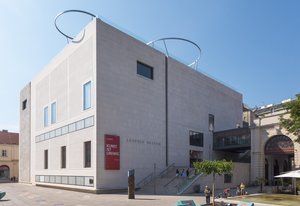
Leopold Museum, BečLeopold Museum Beč 2 The Interrupted Pilgrimage (The Sick Pilgrim), The Conscript’s Farewell
Kunsthistorisches Museum, BečKunsthistorisches Museum Beč 2 Portrait of Ludwig van Beethoven
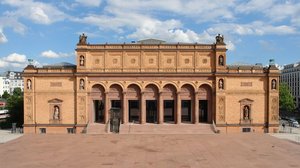
Hamburger Kunsthalle, HamburgHamburger Kunsthalle Hamburg 2 The young boy with the stable-lantern / The Young Stableboy with a Stable Lamp
Cleveland Museum of Art, ClevelandCleveland Museum of Art Cleveland 2 Countess Széchenyi

Ferdinand Georg Waldmüller, jedna prepoznatljiva slika po desetljeću

Djela po desetljećima

Odaberite desetljeće kako biste vidjeli original koji ga definira.

Slike umjetnika Ferdinand Georg Waldmüller: odgovori galerije

Koja je najpoznatija slika umjetnika Ferdinand Georg Waldmüller?Otkrijte odgovor

Portrait of Ludwig van Beethoven (1823), Kunsthistorisches Museum, Beč. Nakon njih slijede The young boy with the stable-lantern / The Young Stableboy with a Stable Lamp (1824) i The Actor Maximilian Korn in a Landscape (1828).

Koliko je godina Ferdinand Georg Waldmüller imao/la kada je dovršio/la Portrait of Ludwig van Beethoven?Otkrijte odgovor

30 godina: Portrait of Ludwig van Beethoven datira iz 1823, a Ferdinand Georg Waldmüller je rođen/a 1793.

Koje su najpoznatije slike umjetnika Ferdinand Georg Waldmüller?Otkrijte odgovor

Portrait of Ludwig van Beethoven, The young boy with the stable-lantern / The Young Stableboy with a Stable Lamp, The Actor Maximilian Korn in a Landscape, Peasant Lovers, The Interrupted Pilgrimage (The Sick Pilgrim), After Confiscation, The Conscript’s Farewell, Children at the Window, Children i Catharina Freifrau von Koudelka. Gornji rang prikazuje godinu i muzej za svako od njih.

Koliko je djela stvorio/la Ferdinand Georg Waldmüller?Otkrijte odgovor

Naš katalog sadrži 210 djela umjetnika Ferdinand Georg Waldmüller, datiranih od 1817 do 1863.

Gdje se nalaze najpoznatija originalna djela umjetnika Ferdinand Georg Waldmüller?Otkrijte odgovor

Većinom u Bavarske državne slikopisne zbirke (München), Alte Nationalgalerie (Berlin) i Moravska galerija u Brnu (Brno). Gornja tablica muzeja navodi sve njih.

Kada je Ferdinand Georg Waldmüller stvorio svoje najpoznatije slike?Otkrijte odgovor

U 1830s: 41 od 100 djela na ovoj stranici nastalo je tada, od čega je Children Children.

Koja su najranija i najkasnija poznata djela umjetnika Ferdinand Georg Waldmüller?Otkrijte odgovor

Na ovoj stranici najstarije djelo je iz man with writing plate (1817), a najnovije iz Peasant Lovers (1863).

Kojim se temama Ferdinand Georg Waldmüller najčešće bavio/la?Otkrijte odgovor

Woman (53), Man (31) i Portrait (19), kroz svih 100 djela na ovoj stranici.

U kojem je mediju Ferdinand Georg Waldmüller najviše radio/la?Otkrijte odgovor

Oil, za 47 od 100 djela na ovoj stranici.

S kojim je umjetničkim pravcem Ferdinand Georg Waldmüller povezan/a?Otkrijte odgovor

Biedermeier, sudeći po originalima na ovoj stranici.

Koje originale Ferdinand Georg Waldmüller ima u svojoj kolekciji Bavarske državne slikopisne zbirke?Otkrijte odgovor

Portrait of a Middle-Aged Lady, Portrait of a young lady with a pearl necklace i Portrait of a Woman: Bavarske državne slikopisne zbirke, München posjeduje 5 djela s ove stranice.

Ferdinand Georg Waldmüller: umjetnik

Rano djetinjstvo i umjetni počeci

Ferdinand Georg Waldmüller došao je na svijet u Beču, u Austriji, 15. siječnika 1793. godine, u razdoblju značajnih društvenih promjena i umjetničkog ferventa. Njegovo rano djetinjstvo nažalost bilo je obilježeno nedaćama; prerana smrt oca bacio je sjenu na obiteljsku sudbinu, u tvoreći u mladom Ferdinandu rano svijest o nestabilnosti života — temu koja će kasnije duboko odjeknuti u njegovoj umjetnosti. Unatoč tim izazovima, Waldmüller je pokazao izrazitu talenat za crtanje i slikanje, što ga je dovelo do upisa na Bečka akademiju likovnih umjetnosti 1807. godine. Međutim, njegovo prisustovanje bilo je pomalo nestabilno, što je možda odražavalo nemirnog duha ili nezadovoljstvo rigidnim akademskim ograničenjima tog vremena. U početku je težio portretizmu, što je bio pouzdan put za ambicioznog umjetnika koji traži pokroviteljstvo, ali upravo su ga privlačnost pejzaža i žanrovskih scena — prikaza svakodnevnog života — istinski osvojili i na kraju definirali njegovo umjetničko naslijeđe. Ova rana istraživanja postavila su temelje za stil okarakteriziran pedantnim opažanjem i dubokom povezanošću s prirodnim svijetom.

Karijera iskovana u realizmu i kontroverzi

Waldmüllerova karijera odvijala se kao dinamična interakcija između umjetničke inovacije i institucionalnog otpora. Tijekom svojih formativnih godina dopunjavao je prihode radeći kao scenograf i nastavljajući slikati portrete, često putujući s svojom suprugom, pjevačicom Katharinom Weidner. Taj nomadski stil života izložio ga je različitim okruženjima i proširio njegove umjetničke horizonte. Do 1820-ih, Waldmüller je počeo razvijati prepoznatljiv stil — predanost realističkim prikazima svakodnevnog života, posebno u ruralnim ambijentima. Nije ga zanimalo idealiziranje ili romantiziranje; umjesto toga, nastojao je uhvatiti svijet onakvim kakav je doista, sa svim njegovim ljepotama i nesavršenostima. Ova posvećenost realizmu donijela mu je i priznanje i kritiku. Godine 1819. stekao je profesorsko mjesto na Bečkoj akademiji likovnih umjetnosti, ali je njegov mandat bio prožet sukobima. Waldmüller je strastveno zastupao izravno promatranje prirode — slikanje na otvorenom, odnosno plein air tehniku — i otvoreno je kritizirao naglasak akademije na formularnoj nastavi i pridržavanju utvrđenih konvencija. Njegova izraženost dovela je do ponovljenih sukoba s umjetničkim autoritetima i na kraju pridonijela njegovom prisilnom odlasku u mirovinu 1857. godine. Česta putovanja u Italiju, koja su započela 1825. godine, te idilična regija Salzkammergut duboko su utjecali na njegovo slikarstvo pejzaža, usavršavajući njegovu sposobnost da s iznimnom preciznošću uhvati svjetlost, teksturu i atmosferu.

Teme ruralnog života i društvena komentacija

Waldmüllerov umjetnički opus iznimno je raznolik, obuhvaćajući portrete, pejzaže i žanrovske scene, ali zajednička nit povezuje ove raznolike teme: duboko angažiranje u stvarnosti austrijskog života 19. stoljeća. Djela poput Venecijanske prodavačice voća (1826.), rani primjer njegovog žanrovskog stila, pokazuju njegovu vještinu u hvatanju prolaznih trenutaka svakodnevnog postojanja. Njegov autoportret iz 1acije 1828. godine otkriva oštro razumijevanje ljudske psihologije i nijansi karaktera. Louise Mayer (1836.) stoji kao svjedočanstvo njegove majstorstva u portretiranju, dok Pogled na Ischl (1838.) prikazuje njegov razvoj pejzažnih sposobnosti. Ipak, upravo su slike poput Na sve sveti dane (1839.), Ljubavno pismo (1849.) i Kupke (oko 1848. – 1849.) istinski izdvojile njegov rad. Ova djela nisu bila samo slikoviti prikazi ruralnog života; bila su prožeta društveno kritičkom perspektivom, suptilno razotkrivajući teškoće s kojima se suočavaju obični ljudi — utjecaj siromaštva, nesreće i složenosti obiteljske dinamike. Nije se slagao skrivati od prikazivanja manje glamuroznih aspekata postojanja, nudeći iskreniju i nijansiraniju predstavu društva od one koja se u to vrijeme u akademskoj umjetnosti uobičajeno viđala.

Naslijeđe i povijesni značaj

Ferdinand Georg Waldmüller s pravom se smatra jednim od najvažnijih austrijskih slikara razdoblja Biedermeiera. Njegova nepokolebljiva posvećenost prirodnom promatranju i plein air slikanju predvidjela su mnoge umjetničke inovacije koje će desetljećima kasnije okarakterizirati impresionizam. Izazvao je konvencionalne prikaze ruralnog života, unoseći dozu realizma i društvene komentacije u žanr koji je često dominirala idealizirana slika. Unatoč kritikama i neuspjesima tijekom cijele karijere — uključujući prisilni odlazak iz Akademije — Waldmüllerovo djelo je na kraju steklo međunarodno priznanje, što je kulminiralo izložbama na Svjetskoj izložbi u Parizu (1855.) i u Buckinghamskoj palači (1856.), gdje je primio pohvale od cara Napoleona III. i kraljice Victorije. Unio je viteški čin neposredno prije svoje smrti 23. kolovoza 1865. godine u Hinterbrülu, što je bilo zakasnjelo priznanje njegovog umjetničkog doprinosa. Waldmüllerovo naslijeđe nadilazi njegove pojedinačne slike; on je utjecao na generacije umjetnika svojim detaljnim realizmom, fokusom na svakodnevne teme i hrabrošću da ospori status quo. On ostaje ključna figura u povijesti austrijske umjetnosti — pravi pionir koji je utrljao put novim pristupima pejzažnom i žanrovskom slikarstvu.