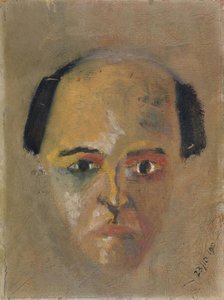
Portret Arnold Schönberg

65 najpoznatijih djela umjetnika Arnold Schönberg, svako jedinstveno

Ažurirano Listopad 2026 · rangirano prema našoj ocjeni popularnosti (pretraživanja, posjeti i narudžbe za svako djelo) · 65 djela Arnold Schönberg u našem katalogu

Ukratko

Pierrot lunaire, op. 21 - Night (1912) je slika autora Arnold Schönberg koja privlači najviše pogleda; original se nalazi u muzeju Arnold Schönberg Center, Beč. Nakon toga, pogled se usmjerava na Arnold Schönberg’s calendar (1935) i Suite, op. 29 - Bi-directional twelve-tone row chart (1924). Među 65 djela umjetnika Arnold Schönberg u našem katalogu, ovih 65 su najpoznatija, od kojih je svako jedinstveni original predstavljen s godinom nastanka, muzejom i razlogom zbog kojeg je vječno.

1874 – 1951, Beč Expressionism Najviše djela: Arnold Schönberg Center

Top 10 djela Arnold Schönberg kroz oči galerije

1
Pierrot lunaire, op. 21 - Night (1912) od Arnold Schönberg

Pierrot lunaire, op. 21 - Night

1912 · Acrylic On Canvas · Arnold Schönberg Center, Beč

Arnold Schönberg’s *Pierrot lunaire*, op. 21, stands as a monumental achievement in the evolution of modern music, a work born from the anxieties and aesthetic explorations of early 20th-century Europe. This particular rendition, “Night,” meticulously captured in this evocative photographic reproduction, offers a profound glimpse into Schönberg’s expressionistic vision – a world of fractured emotion, haunting beauty, and unsettling psychological depth. Composed in Berlin in 1912, the piece was commissioned…

2
Arnold Schönberg’s calendar (1935) od Arnold Schönberg

Arnold Schönberg’s calendar

1935 · Black and White Photography · Arnold Schönberg Center, Beč

The scene unfolds within the frame of Arnold Schönberg’s calendar, a work by the artist Arnold Schoenberg. In this captured moment from 1935, the air feels heavy with the quiet transition of a life in motion. We find Arnold Schönberg and his wife, Gertrud Kolisch Schoenberg, sharing a private space within the backseat of a vintage automobile. They are travelers, caught in the midst of their relocation to Los Angeles,…

3
Suite, op. 29 - Bi-directional twelve-tone row chart (1924) od Arnold Schönberg

Suite, op. 29 - Bi-directional twelve-tone row chart

1924 · Acrylic On Canvas · Arnold Schönberg Center, Beč

Arnold Schönberg's "Suite, op. 29 – Bi-directional twelve-tone row chart" isn’t merely a musical score; it’s a visual manifestation of radical innovation, a testament to the composer’s relentless pursuit of sonic and artistic boundaries. Created in 1924, during a period of intense experimentation within his own compositional methods—specifically, his “Method of composing with twelve tones which are related only with one another”—this work represents a pivotal moment in 20th-century music…

4
Peace on Earth, op. 13 (1907) od Arnold Schönberg

Peace on Earth, op. 13

1907 · Black and White Photography · Arnold Schönberg Center, Beč

To gaze upon this depiction of Arnold Schoenberg's "Peace on Earth, op. 13" is not merely to look at an aged sheet of music; it is to encounter a preserved echo of profound human yearning. This composition, born from the charged atmosphere of early twentieth-century Europe, transcends its musical notation to become a tangible artifact of hope. The visual evidence—the sepia tones, the delicate creases, the faint patina of time…

5
Phantasy for Violin with Piano Accompaniment, op. 47 (1949) od Arnold Schönberg

Phantasy for Violin with Piano Accompaniment, op. 47

1949 · Acrylic On Canvas · Arnold Schönberg Center, Beč

This meticulously crafted hand-painted reproduction captures a pivotal moment in the oeuvre of Arnold Schoenberg, a composer who irrevocably altered the landscape of 20th-century music. The piece, “Phantasy for Violin with Piano Accompaniment,” op. 47, born from a commission in 1949, represents more than just a musical composition; it’s a tangible link to a brilliant mind grappling with radical innovation and profound personal transformation. The photograph itself – a stark…

6
Accompaniment to a Cinematographic Scene, op. 34 - Pogovor filmu (1929) od Arnold Schönberg

Accompaniment to a Cinematographic Scene, op. 34 - Pogovor filmu

1929 · Crno-bijela fotografija · Arnold Schönberg Center, Beč

To look upon this twelve-tone row chart is to witness the very architecture of a musical revolution. This black and white photograph captures a moment of profound transition, where the fluid emotion of melody is distilled into a precise, systematic arrangement of chromatic tones. It is a visual representation of a conceptual framework, a map of the mind that sought to move beyond the comforts of traditional harmony. The sheet…

7
Blue Gaze (1910) od Arnold Schönberg

Blue Gaze

1910 · Oil On Board · Arnold Schönberg Center, Beč

“Blue Gaze,” painted in 1910 by the titan of musical innovation, Arnold Schoenberg, is more than just a portrait; it's a visceral manifestation of artistic struggle and a testament to the burgeoning power of abstraction. Created during a pivotal period in Schoenberg’s life – a time when he was simultaneously wrestling with the radical new techniques of atonality in music and exploring the uncharted territories of visual expression – this…

8
Transfer ticket for public transport in Berlin (1927) od Arnold Schönberg

Transfer ticket for public transport in Berlin

1927 · Acrylic On Canvas · Arnold Schönberg Center, Beč

This meticulously crafted hand-painted reproduction captures a pivotal moment in design history – the 1927 transfer ticket for the Berlin tram system, conceived by the visionary composer Arnold Schönberg. Far more than simply a means of payment, this circular artifact represents a radical shift towards efficiency and user experience, anticipating modern transit systems by nearly a century. Schönberg’s design wasn't born from artistic indulgence; it stemmed from a pragmatic desire…

9
The Musical Idea - W. A. Mozart K 465 (1934) od Arnold Schönberg

The Musical Idea - W. A. Mozart K 465

1934 · Giclée Print · Arnold Schönberg Center, Beč

W.A. Mozart’s K. 465, “The Musical Idea,” takes on an entirely new dimension through the lens of Arnold Schönberg's profound inquiry into musical representation. This isn’t merely a reproduction of a classical score; it’s a visual echo of Schönberg’s seminal work, "Der Musikalische Gedanke," a treatise that fundamentally shifted our understanding of composition and its relationship to logic, technique, and artistic expression. The photograph itself – a meticulously annotated music…

10
Piano Piece, op. 19/6 (1911) od Arnold Schönberg

Piano Piece, op. 19/6

1911 · Acrylic On Canvas · Arnold Schönberg Center, Beč

This meticulously crafted hand-painted reproduction captures Arnold Schönberg’s poignant “Piano Piece, op. 19/6,” a deceptively simple work born from a moment of profound grief and artistic experimentation. Created in 1911, shortly after the death of Gustav Mahler – a figure Schönberg deeply revered as both mentor and friend – the piece offers a rare glimpse into the composer’s emotional landscape during a period of intense creative upheaval. The image presented…

Slavna djela umjetnika Arnold Schönberg, od 11. do 65. broj

11Excerpt from Arnold Schönberg’s own handwritten library catalogue: Works of Richard Strauss (1914) od Arnold SchönbergExcerpt from Arnold Schönberg’s own handwritten library catalogue: Works of Richard Strauss1914 · Arnold Schönberg Center 12Self-Portrait (1910) od Arnold SchönbergSelf-Portrait1910 · Arnold Schönberg Center 13The Biblical Way (Act I, Scene 2), Stadium (1927) od Arnold SchönbergThe Biblical Way (Act I, Scene 2), Stadium1927 · Arnold Schönberg Center 14The Lucky Hand (scene 1) (1910) od Arnold SchönbergThe Lucky Hand (scene 1)1910 · Arnold Schönberg Center 15Gertrud Schönberg (1930) od Arnold SchönbergGertrud Schönberg1930 · Arnold Schönberg Center 16Tears (1910) od Arnold SchönbergTears1910 · Arnold Schönberg Center 17Garden Scene (1907) od Arnold SchönbergGarden Scene1907 · Arnold Schönberg Center 18Playing Cards for Whist/Bridge - Jack of Spades (1910) od Arnold SchönbergPlaying Cards for Whist/Bridge - Jack of Spades1910 · Arnold Schönberg Center 19Formation scheme for the Gurrelieder (1918) od Arnold SchönbergFormation scheme for the Gurrelieder1918 · Arnold Schönberg Center 20The Lucky Hand (scene 2) (1910) od Arnold SchönbergThe Lucky Hand (scene 2)1910 · Arnold Schönberg Center 21Red Gaze (1910) od Arnold SchönbergRed Gaze1910 · Arnold Schönberg Center 22Piano Concerto, op. 42 - Programmatic keywords (1942) od Arnold SchönbergPiano Concerto, op. 42 - Programmatic keywords1942 · Arnold Schönberg Center 23Playing Cards for Whist/Bridge - King of Hearts (1910) od Arnold SchönbergPlaying Cards for Whist/Bridge - King of Hearts1910 · Arnold Schönberg Center 24Structural Functions of Harmony - Chart of the Regions (1948) od Arnold SchönbergStructural Functions of Harmony - Chart of the Regions1948 · Arnold Schönberg Center 25Interior and Portrait of a Woman (1910) od Arnold SchönbergInterior and Portrait of a Woman1910 · Arnold Schönberg Center 26Blue Self-Portrait (1910) od Arnold SchönbergBlue Self-Portrait1910 · Arnold Schönberg Center 27Self-Portrait (1918) od Arnold SchönbergSelf-Portrait1918 · Arnold Schönberg Center 28Mathilde Schönberg (1909) od Arnold SchönbergMathilde Schönberg1909 · Arnold Schönberg Center 29Expectation (Scene 3) (1911) od Arnold SchönbergExpectation (Scene 3)1911 · Arnold Schönberg Center 30Handwriting samples (1923) od Arnold SchönbergHandwriting samples1923 · Arnold Schönberg Center 31Suite for Piano, op. 25 - Prelude (1921) od Arnold SchönbergSuite for Piano, op. 25 - Prelude1921 · Arnold Schönberg Center 32Landscape (1910) od Arnold SchönbergLandscape1910 · Arnold Schönberg Center 33Erwartung, op. 17 (1909) od Arnold SchönbergErwartung, op. 171909 · Arnold Schönberg Center 34Exlibris (1910) od Arnold SchönbergExlibris1910 · Arnold Schönberg Center 35Alliance (Hands) (1910) od Arnold SchönbergAlliance (Hands)1910 · Arnold Schönberg Center 36Portrait of a Woman (1910) od Arnold SchönbergPortrait of a Woman1910 · Arnold Schönberg Center 37Coalition Chess (1925) od Arnold SchönbergCoalition Chess1925 · Arnold Schönberg Center 38Moses and Aron (1930) od Arnold SchönbergMoses and Aron1930 · Arnold Schönberg Center 39Playing Cards for Whist/Bridge - Queen of clubs (1909) od Arnold SchönbergPlaying Cards for Whist/Bridge - Queen of clubs1909 · Arnold Schönberg Center 40Playing card design (1910) od Arnold SchönbergPlaying card design1910 · Arnold Schönberg Center 41Brief to Wilhelm von Wymetal (1907) od Arnold SchönbergBrief to Wilhelm von Wymetal1907 · Arnold Schönberg Center 42Alexander Zemlinsky (1910) od Arnold SchönbergAlexander Zemlinsky1910 · Arnold Schönberg Center 43Green Self-Portrait (1910) od Arnold SchönbergGreen Self-Portrait1910 · Arnold Schönberg Center 44Memory of Oskar Kokoschka (1910) od Arnold SchönbergMemory of Oskar Kokoschka1910 · Arnold Schönberg Center 45Mathilde Schönberg cooking (1912) od Arnold SchönbergMathilde Schönberg cooking1912 · Arnold Schönberg Center 46Model of a set of dentures (1926) od Arnold SchönbergModel of a set of dentures1926 · Arnold Schönberg Center 47Coalition Chess - Plane (1925) od Arnold SchönbergCoalition Chess - Plane1925 · Arnold Schönberg Center 48Gaze (Karl Kraus – The Great Wall of China) (1910) od Arnold SchönbergGaze (Karl Kraus – The Great Wall of China)1910 · Arnold Schönberg Center 49Furniture design (1931) od Arnold SchönbergFurniture design1931 · Arnold Schönberg Center 50Self-Portrait (1935) od Arnold SchönbergSelf-Portrait1935 · Arnold Schönberg Center 51Self-Portrait (1922) od Arnold SchönbergSelf-Portrait1922 · Arnold Schönberg Center 52The Musical Idea - Chart of the Regions (1934) od Arnold SchönbergThe Musical Idea - Chart of the Regions1934 · Arnold Schönberg Center 53Schematic representation of European Jewry (1934) od Arnold SchönbergSchematic representation of European Jewry1934 · Arnold Schönberg Center 54Model of a chair / library ladder (1945) od Arnold SchönbergModel of a chair / library ladder1945 · Arnold Schönberg Center 55Five Pieces for Orchestra, op. 16/5 – First written copy (1909) od Arnold SchönbergFive Pieces for Orchestra, op. 16/5 – First written copy1909 · Arnold Schönberg Center 56Staffliner for drawing staves (1950) od Arnold SchönbergStaffliner for drawing staves1950 · Arnold Schönberg Center 57Mauricio Zam (1935) od Arnold SchönbergMauricio Zam1935 · Arnold Schönberg Center 58Critic I (1910) od Arnold SchönbergCritic I1910 · Arnold Schönberg Center 59Emil Hertzka (1910) od Arnold SchönbergEmil Hertzka1910 · Arnold Schönberg Center 60Speak not always of the leaves, op. 15/14 (1909) od Arnold SchönbergSpeak not always of the leaves, op. 15/141909 · Arnold Schönberg Center 61Muzički pisarčev (1909) od Arnold SchönbergMuzički pisarčev1909 · Arnold Schönberg Center 62Piano Piece, op. 11/2 (1909) od Arnold SchönbergPiano Piece, op. 11/21909 · Arnold Schönberg Center 63Walking Self-Portrait (1911) od Arnold SchönbergWalking Self-Portrait1911 · Arnold Schönberg Center 64Chess Set od Arnold SchönbergChess SetArnold Schönberg Center 65Tape Dispenser (1945) od Arnold SchönbergTape Dispenser1945 · Arnold Schönberg Center

Slavna djela Arnold Schönberg po razdobljima

Motivi koji su privukli pažnju Arnold Schönberg

Četiri teme koje se najčešće ponavljaju u ovim originalima, svaka s svojim vrhunskim primjerom.

Muzeji koji čuvaju originalna djela umjetnika Arnold Schönberg

1 muzeja u kojima se nalazi najviše djela s ove stranice.

Muzej Grad Djela autora Arnold Schönberg Slike iz ovog popisa
Arnold Schönberg Center, BečArnold Schönberg Center Beč 65 Pierrot lunaire, op. 21 - Night, Arnold Schönberg’s calendar, Suite, op. 29 - Bi-directional twelve-tone row chart

Arnold Schönberg kroz desetljeća: jedan jedinstveni original za svako

Djela po desetljećima

Odaberite desetljeće kako biste vidjeli original koji ga definira.

Slike umjetnika Arnold Schönberg: pitanja za galeriju

Koje je najpoznatije djelo umjetnika Arnold Schönberg?Otkrijte odgovor

Pierrot lunaire, op. 21 - Night (1912), Arnold Schönberg Center, Beč. Nakon njih slijede Arnold Schönberg’s calendar (1935) i Suite, op. 29 - Bi-directional twelve-tone row chart (1924).

U kojoj je dobi Arnold Schönberg stvorio/la Pierrot lunaire, op. 21 - Night?Otkrijte odgovor

38 godina: Pierrot lunaire, op. 21 - Night datira iz 1912, a Arnold Schönberg je rođen/a 1874.

Koja su deset najpoznatijih slika umjetnika Arnold Schönberg?Otkrijte odgovor

Pierrot lunaire, op. 21 - Night, Arnold Schönberg’s calendar, Suite, op. 29 - Bi-directional twelve-tone row chart, Peace on Earth, op. 13, Phantasy for Violin with Piano Accompaniment, op. 47, Accompaniment to a Cinematographic Scene, op. 34 - Pogovor filmu, Blue Gaze, Transfer ticket for public transport in Berlin, The Musical Idea - W. A. Mozart K 465 i Piano Piece, op. 19/6. Gornji rang prikazuje godinu i muzej za svako od njih.

Koliko je poznatih djela umjetnika Arnold Schönberg?Otkrijte odgovor

Naš katalog sadrži 65 djela umjetnika Arnold Schönberg, datiranih od 1907 do 1950.

Gdje se mogu vidjeti najpoznatiji originali umjetnika Arnold Schönberg?Otkrijte odgovor

Većinom u Arnold Schönberg Center (Beč). Gornja tablica muzeja navodi sve njih.

U kojem je razdoblju Arnold Schönberg stvorio/la svoje najpoznatije slike?Otkrijte odgovor

U 1910s: 29 od 65 djela na ovoj stranici nastalo je tada, od čega je Pierrot lunaire, op. 21 - Night Pierrot lunaire, op. 21 - Night.

Koje je najranije, a koje najkasnije poznato djelo Arnold Schönberg?Otkrijte odgovor

Na ovoj stranici najstarije djelo je iz Peace on Earth, op. 13 (1907), a najnovije iz Staffliner for drawing staves (1950).

Koje je motive Arnold Schönberg preferirao?Otkrijte odgovor

Atonality (10), Schoenberg (8) i Musical notation (6), kroz svih 65 djela na ovoj stranici.

S kojim je materijalima Arnold Schönberg najčešće slikao?Otkrijte odgovor

Acrylic On Canvas, za 16 od 65 djela na ovoj stranici.

Kojem umjetničkom pravcu pripada rad Arnold Schönberg?Otkrijte odgovor

Expressionism i Expressionist modernism, sudeći po originalima na ovoj stranici.

Koje originale umjetnika Arnold Schönberg mogu vidjeti u muzeju Arnold Schönberg Center?Otkrijte odgovor

Pierrot lunaire, op. 21 - Night, Arnold Schönberg’s calendar i Suite, op. 29 - Bi-directional twelve-tone row chart: Arnold Schönberg Center, Beč posjeduje 65 djela s ove stranice.

Arnold Schönberg: portret umjetnika

Rano život i glazbeni počeci

Arnold Schoenberg, austrijsko-američki skladatelj, rođen je 13. septembra 1874. godine u Beču, u Austriji. Njegovo rano djetinjstvo obilježeno je skromnim početkom, budući da je njegov otac bio vlasnik obućarske trgovine. Unatoč tome, Schoenbergova urođena strast prema glazbi dovela ga je do toga da se u tom području uglavnom samobrazovao.

Glazbena evolucija i značajna djela

Schoenbergova rana djela, poput Verklärte Nacht (1899), pokazala su brahmsijansko-wagnerovsku sintezu. Kako je napredovao, postao je centralna figura druge Bečke škole, uz Antona Weberna i Albana Berga. Njegove kompozicije, uključujući Strijelni kvartet br. 2 (1907–1908), Erwartung (19omg) i Pierrot Lunaire (1912), exemplificirale su njegov inovativni pristup atonalnosti.

Podučavanje, emigracija i kasniji život

Schoenberg je podređeno odustao od mjesta u Pruskoj akademiji umjetnosti 1933. godine zbog uspona nacista na vlast, koji su njegovu glazbu označili kao "degeneriranom". Nakon toga je predavao u SAD-u, uključujući Sveučilište Kalifornije u Los Angelesu (1936–1944), gdje su sadržaji nazvani po njemu u znak čast. [https://OriginalUniqueArt.com/@/arnold-sokolberg](otkrijte više o Schoenbergovom životu i djelima na OriginalUniqueArt).

Nasljeđe i utjecaj

Dok je svijet saznavao za Holokaust, Schoenberg je vječnom memorijom odamio njegove žrtve u djelu Preživjeli iz Varšave (1947). Izraelski konzervatorij i akademija glazbe izabrali su ga za počasnog predsjednika 1951. godine. [https://OriginalUniqueArt.com/@@/a@d3bqc7-the-museum-destroyed-by-fire-(united-states)](saznajte više o utjecaju njegovog rada na OriginalUniqueArt). Ključne točke:
  • Schoenbergova inovativna glazba bila je među najutjecajnijom i najkontroverznijom klasičnom glazbom 20. stoljeća.
  • Najmanje tri generacije skladatelja proširilo je njezine gotovo formalne principe.
  • Njegovi estetski i glazbeno-povijesni pogledi utjecali su na muzikologe Theodore W. Adornoa i Carla Dahlhausa.
[https://OriginalUniqueArt.com/@@/a@d3cl2x--a-journey-through-art-history-with-OriginalUniqueArt-s-extensive-collection-](istražite golemu kolekciju umjetnina na OriginalUniqueArt, koja obuhvaća razdoblje od 12. do 20. stoljeća).