Santuario della Verna: A Pilgrimage of Faith and Art in Tuscany’s Heart
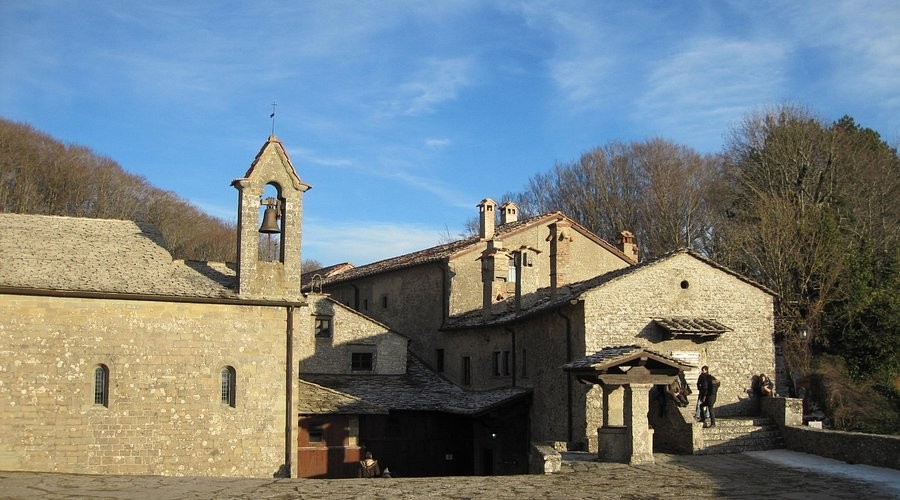
Nestled within the verdant embrace of the Casentino woods in Tuscany, Italy, the Santuario della Verna stands as a profoundly moving testament to faith, history, and artistic devotion. More than just a sanctuary, it's a place where legend intertwines with reality, where the mystical stigmata received by Saint Francis of Assisi echoes through centuries of pilgrimage and prayer. The sanctuary’s origins trace back to the early 13th century, when Francis, seeking solace and spiritual renewal, chose this remote mountain location as his retreat. Initially a small chapel built on the very spot where he experienced this transformative event – the receiving of the stigmata – it has evolved over time into the magnificent complex visitors encounter today, a harmonious blend of Romanesque solidity, Gothic grace, and Renaissance artistry. The setting itself—a dramatic rock face rising from the Tuscan landscape—contributes to an atmosphere of unparalleled serenity and spiritual resonance. The sanctuary’s architecture is not merely functional; it's a deliberate expression of devotion, designed to draw visitors deeper into contemplation and connection with the divine.
A Tapestry of Architectural Styles and Devotional Spaces
The Santuario della Verna’s design is a captivating narrative in itself, reflecting the evolving tastes and beliefs of those who shaped it over centuries. The core of the sanctuary is undoubtedly the Chapel of the Stigmata (Cappella delle Stimmate), meticulously reconstructed to resemble the original grotto where Saint Francis received his sacred wounds. Stepping inside this space feels akin to entering a sacred portal, imbued with an almost palpable sense of history and spiritual significance. Adjacent to it stands the Great Church, a spacious and ornate structure showcasing a masterful fusion of Romanesque and Gothic elements. Frescoes depicting scenes from the life of Saint Francis adorn its walls, while sculptures – many dating back to the 15th century – narrate key moments in his journey. But the sanctuary’s beauty extends beyond these central spaces; the terraced levels carved into the mountainside offer breathtaking panoramic views of the surrounding Tuscan countryside, creating a visual connection between the earthly realm and the divine. These terraces are not simply scenic additions but integral to the sanctuary's design, providing space for reflection and contemplation amidst the stunning natural backdrop.
Renaissance Treasures: The Legacy of Andrea Della Robbia
Within the Santuario della Verna’s museum lies a remarkable collection that illuminates both Franciscan history and artistic achievement. A particular highlight is the presence of masterpieces by Andrea Della Robbia, a pivotal figure in Renaissance terracotta sculpture. His works, prominently displayed throughout the museum, demonstrate an unparalleled mastery of form, texture, and expressive detail. The collection includes several exquisite sculptures depicting scenes from the Bible and the lives of saints, showcasing Della Robbia’s signature technique of creating remarkably lifelike figures with subtle gradations of color and a remarkable attention to surface detail. These terracotta pieces are not merely decorative; they represent a profound engagement with religious themes and a testament to the artistic sensibilities of the Renaissance period. Beyond Della Robbia's contributions, the museum also houses a rich assortment of medieval manuscripts—illuminated volumes offering invaluable insights into Franciscan theology and spirituality – alongside religious artifacts, historical documents detailing the sanctuary’s evolution as a pilgrimage site, and a fascinating array of relics associated with Saint Francis himself.
A Pilgrimage Through Time: Historical Context and Significance
The Santuario della Verna is more than just an artistic treasure; it's a living embodiment of history and faith. Its significance extends far beyond its architectural beauty and artistic collections. The sanctuary’s story is inextricably linked to the life and legacy of Saint Francis, whose receipt of the stigmata here in 1224 cemented its place as one of the most important pilgrimage destinations in Christendom. Accounts from figures like Dante Alighieri, who described the site as a “naked crag” in *Paradiso*, underscore the sanctuary’s enduring importance and spiritual resonance. The museum's historical documents provide a detailed account of the sanctuary’s development over centuries, revealing how it has evolved alongside changing religious practices and architectural styles. Furthermore, the sanctuary’s location within the Casentino Woods—a region steeped in ancient traditions and folklore—adds another layer of depth to its historical significance.
A Sanctuary for the Soul: Unparalleled Beauty and Spiritual Resonance
The Santuario della Verna stands apart not only for its religious importance but also for its breathtaking natural setting and artistic treasures. The combination of a profoundly spiritual atmosphere, centuries of historical depth, and the sheer beauty of the Tuscan landscape creates an experience that is both deeply moving and unforgettable. It’s a place where art, faith, and nature converge—a sanctuary where visitors can find solace, contemplation, and a profound connection to something larger than themselves. The echoes of Saint Francis's journey resonate within its walls, inviting all who enter to embark on their own pilgrimage of the soul.