कोनराड विट्ज़ का चित्र

33 सबसे प्रसिद्ध कोनराड विट्ज़ पेंटिंग्स, जिनमें से प्रत्येक अद्वितीय है

नवमबर 2026 में अपडेट किया गया · हमारे लोकप्रियता स्कोर (प्रत्येक कृति के लिए खोज, विज़िट और ऑर्डर) के आधार पर रैंक किया गया · 33 कृतियाँ कोनराड विट्ज़ की हमारे कैटलॉग में

संक्षेप में

Mary with child (1430) वह कोनराड विट्ज़ की पेंटिंग है जो सबसे अधिक ध्यान आकर्षित करती है; इसका मूल Kunstmuseum Basel, बासेल में है। इसके बाद, दृष्टि Antipater before Julius Caesar (1435) और Abraham before Melchizedek (1435) पर जाती है। हमारे कैटलॉग में कोनराड विट्ज़ की 33 कृतियों में से, ये 33 सबसे प्रसिद्ध हैं, जिनमें से प्रत्येक को उसके वर्ष, उसके संग्रहालय और उसके चिरस्थायी होने के कारण के साथ एक अद्वितीय मूल कृति के रूप में प्रस्तुत किया गया है।

1400 – 1445, रॉटवाइल Northern renaissance सर्वाधिक कृतियाँ: Kunstmuseum Basel

गैलरी की दृष्टि से कोनराड विट्ज़ की शीर्ष 10 पेंटिंग्स

1
Mary with child (1430) द्वारा कोनराड विट्ज़

Mary with child

1430 · Tempera On Panel · Kunstmuseum Basel, बासेल

The air feels heavy with the scent of incense and the weight of devotion as we gaze upon this intimate encounter. A luminous, textured gold background envelops the figures, pushing them forward into our immediate space. This is not a scene of vast landscapes, but a close-up portrait of profound spiritual intimacy. Mary, draped in deep blues and soft pinks, holds the infant Jesus against a backdrop of embossed, patterned…

2
Antipater before Julius Caesar (1435) द्वारा कोनराड विट्ज़

Antipater before Julius Caesar

1435 · Tempera On Panel · Kunstmuseum Basel, बासेल

In this work, titled Antipater before Julius Caesar, the artist Konrad Witz presents a moment of profound political and personal tension. Created about 1435, the painting captures a specific encounter from Roman history, focusing on the interaction between the figure of Antipater and the Roman leader Julius Caesar. The scene is characterized by a sense of gravity, focusing on the weight of the figures and the significance of their meeting.

3
Abraham before Melchizedek (1435) द्वारा कोनराड विट्ज़

Abraham before Melchizedek

1435 · Tempera On Panel · Kunstmuseum Basel, बासेल

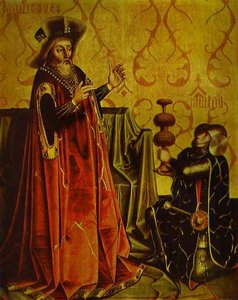
The scene unfolds in a compressed, intimate space where two figures command the center of the frame. On the left, a regal man sits enthroned, his presence defined by the heavy, sculptural folds of his deep crimson robes. Opposite him, a knight kneels in a gesture of reverence. They are locked in a ritualistic exchange, their hands meeting over a golden chalice that catches the light. This central interaction anchors…

4
St Augustine (1435) द्वारा कोनराड विट्ज़

St Augustine

1435 · Oil On Panel · Musée des Beaux-Arts de Dijon, डिजों

In this 1435 portrait, St. Augustine is presented as a solemn and highly detailed figure within an interior setting. The subject is depicted as an elderly man with a weathered face, standing in a vertical profile-oriented composition. He is adorned in elaborate liturgical vestments, including a white alb and a heavy green cope featuring wide gold borders. Atop his head sits a tall white mitre decorated with gold. In his…

5
Heilsspiegelaltar - Augustus and Sibyl of Tibur (1435) द्वारा कोनराड विट्ज़

Heilsspiegelaltar - Augustus and Sibyl of Tibur

1435 · Tempera On Panel · Musée des Beaux-Arts de Dijon, डिजों

The air feels heavy with a sacred stillness as two figures emerge from a shimmering expanse of gold. On the left, Augustus, the Roman emperor, reaches upward, his hands raised in a sudden, trembling gesture of prayer or awe. He is draped in a voluminous red robe, the fabric heavy and sculptural, trimmed with thick grey fur that suggests a tangible, physical weight. His gaze is fixed on something unseen…

6
Pietà (1440) द्वारा कोनराड विट्ज़

Pietà

1440 · Tempera On Panel · The Frick Collection, न्यूयॉर्क शहर

The Pietà is a painting attributed to the artist Konrad Witz. This work was executed about 1440. The subject matter depicts the Virgin Mary cradling the lifeless body of Jesus, a composition accompanied by two mourning figures in heavy, voluminous robes. The figures are set against a landscape that includes a detailed cityscape and a Gothic cathedral.

7
Byblis Writing to Caunus (1450) द्वारा कोनराड विट्ज़

Byblis Writing to Caunus

A reclining female figure dominates the composition, her pale skin luminous against a backdrop of deep crimson and forest green drapery. She lies horizontally across the frame, propped by white pillows that catch the directional light. One arm is tucked behind her head, while the other rests near her torso, creating a pose of relaxed poise. The heavy folds of the fabric suggest weight and texture, framing the subject within…

8
Saint Christopher (Berlin) (1445) द्वारा कोनराड विट्ज़

Saint Christopher (Berlin)

1445 · Oil On Panel · Gemäldegalerie, बर्लिन

The river churns with a dark, restless energy, its surface broken into white foam and heavy, muddy swells. Through this turbulent water, a massive figure wades, his body leaning into the weight of the current. This is Saint Christopher, his muscles strained as he navigates the deep. Perched upon his shoulders sits the Christ Child, a small, luminous presence amidst the chaos of the elements. The saint’s tunic is a…

9
The Council of Salvation (1445) द्वारा कोनराड विट्ज़

The Council of Salvation

1445 · Tempera On Panel · Gemäldegalerie, बर्लिन

In "The Council of Salvation" by Konrad Witz, a celestial council unfolds within a highly detailed and ornate Late Gothic altarpiece design. The scene is structured around a central throne-like setting that anchors the divine assembly. To the left, God the Father, Christ, and the Holy Spirit, appearing as a dove, occupy the sacred space. Opposite them, on the right, two female figures face the divine presence. This arrangement creates…

10
St Bartholomew (1435) द्वारा कोनराड विट्ज़

St Bartholomew

1435 · Oil On Panel · Öffentliche Kunstsammlung, बासेल

In this work, titled St Bartholomew, the artist Konrad Witz presents a quiet, religious study of a saint. Created around 1435, the painting focuses on the figure of the apostle, rendered with a sense of stillness that invites close observation. The subject is depicted in a three-quarter pose, a choice that allows for a detailed view of his traditional attire and the subtle expression on his face.

कोनराड विट्ज़ की प्रसिद्ध पेंटिंग्स, संख्या 11 से 33 तक

वे विषय जिन्होंने कोनराड विट्ज़ का मन मोह लिया

इन मूल कृतियों में बार-बार आने वाले चार विषय, जिनमें से प्रत्येक का सबसे उत्कृष्ट उदाहरण यहाँ प्रस्तुत है।

वे संग्रहालय जहाँ कोनराड विट्ज़ की मूल कृतियाँ रखी गई हैं

वे 8 संग्रहालय जिनमें इस पृष्ठ की सर्वाधिक पेंटिंग्स मौजूद हैं।

संग्रहालय शहर कोनराड विट्ज़ की कृतियाँ इस सूची की पेंटिंग्स
Kunstmuseum Basel, बासेलKunstmuseum Basel बासेल 9 Mary with child, Antipater before Julius Caesar, Abraham before Melchizedek
Gemäldegalerie, बर्लिनGemäldegalerie बर्लिन 3 Saint Christopher (Berlin), The Council of Salvation, Crucifixion
Öffentliche Kunstsammlung, बासेलÖffentliche Kunstsammlung बासेल 3 St Bartholomew, Saint Christopher, The Synagoge
Musée des Beaux-Arts de Dijon, डिजोंMusée des Beaux-Arts de Dijon डिजों 2 St Augustine, Heilsspiegelaltar - Augustus and Sibyl of Tibur
Staatliche Museen zu Berlin, बर्लिनStaatliche Museen zu Berlin बर्लिन 2 King Solomon and the Queen of Sheba, Christ on the Cross
Musée d'Art et d'Histoire, जिनेवाMusée d'Art et d'Histoire जिनेवा 2 The Liberation of St Peter, The Miraculous Draught of Fishes
The Frick Collection, न्यूयॉर्क शहरThe Frick Collection न्यूयॉर्क शहर 1 Pietà
Glasgow Museums Resource CentreGlasgow Museums Resource Centre 1 Byblis Writing to Caunus

वर्षों के दौरान कोनराड विट्ज़: प्रत्येक की अनूठी मूल कृतियाँ

16 वर्षों का लंबा करियर, 1430 से 1445 तक: कोनराड विट्ज़ की सबसे प्रसिद्ध मूल कृतियाँ, वर्ष-दर-वर्ष।

वर्षानुसार कृतियाँ

मूल कृतियों को देखने के लिए एक वर्ष चुनें।

कोनराड विट्ज़ की पेंटिंग्स: गैलरी के लिए प्रश्न

कोनराड विट्ज़ की सबसे प्रसिद्ध कृति कौन सी है?उत्तर देखें

Mary with child (1430), Kunstmuseum Basel, बासेल. इसके बाद Antipater before Julius Caesar (1435) और Abraham before Melchizedek (1435) आते हैं।

कोनराड विट्ज़ ने Mary with child किस उम्र में बनाया था?उत्तर देखें

30 वर्ष की आयु: Mary with child 1430 का है, और कोनराड विट्ज़ का जन्म 1400 में हुआ था।

कोनराड विट्ज़ की कौन सी दस पेंटिंग्स सबसे प्रसिद्ध हैं?उत्तर देखें

Mary with child, Antipater before Julius Caesar, Abraham before Melchizedek, St Augustine, Heilsspiegelaltar - Augustus and Sibyl of Tibur, Pietà, Byblis Writing to Caunus, Saint Christopher (Berlin), The Council of Salvation और St Bartholomew। ऊपर दी गई रैंकिंग में प्रत्येक का वर्ष और संग्रहालय दिया गया है।

कोनराड विट्ज़ की कितनी कृतियाँ ज्ञात हैं?उत्तर देखें

हमारे कैटलॉग में कोनराड विट्ज़ की 33 कृतियाँ हैं, जो 1430 से 1445 तक की हैं।

सबसे प्रसिद्ध कोनराड विट्ज़ मूल कृतियाँ कहाँ देखी जा सकती हैं?उत्तर देखें

अधिकतर Kunstmuseum Basel (बासेल), Gemäldegalerie (बर्लिन) और Öffentliche Kunstsammlung (बासेल) में। ऊपर दी गई संग्रहालय तालिका में उन सभी की सूची दी गई है।

कोनराड विट्ज़ ने अपनी सबसे प्रसिद्ध पेंटिंग किस काल के दौरान बनाई थीं?उत्तर देखें

1435 में: इस पृष्ठ पर मौजूद 33 कृतियों में से 14 उस समय बनाई गई थीं, जिनमें से Antipater before Julius Caesar इनमें से हैं।

कोनराड विट्ज़ की कौन सी प्रसिद्ध पेंटिंग सबसे पुरानी है, और कौन सी सबसे नवीनतम?उत्तर देखें

इस पृष्ठ पर, सबसे पुरानी कृति Mary with child (1430) है और नवीनतम Saint Christopher (Berlin) (1445) है।

कोनराड विट्ज़ किन विषयों को पसंद करते थे?उत्तर देखें

इस पृष्ठ पर 33 कृतियों में Woman (10), Man (10) और Book (6)

कोनराड विट्ज़ ने सबसे अधिक किन सामग्रियों से पेंटिंग की?उत्तर देखें

इस पृष्ठ पर मौजूद 33 कृतियों में से 16 के लिए Oil On Panel।

कोनराड विट्ज़ की कलाकृति किस आंदोलन (movement) से संबंधित है?उत्तर देखें

इस पृष्ठ पर मूल कृतियों को देखते हुए, Northern renaissance।

मैं Kunstmuseum Basel में कोनराड विट्ज़ की कौन सी मूल कृतियाँ देख सकता हूँ?उत्तर देखें

Mary with child, Antipater before Julius Caesar और Abraham before Melchizedek: Kunstmuseum Basel, बासेल में इस पृष्ठ पर मौजूद कृतियों में से 9 मौजूद हैं।

कोनराड विट्ज़: कलाकार का एक चित्र

यथार्थवाद का उदय: कोनराड विट्ज़ का जीवन और विरासत

पंद्रहवीं शताब्दी की यूरोपीय कला के बदलते परिदृश्य में, गोथिक परंपरा से पुनर्जागरण के प्रकृतिवाद (naturalism) के संक्रमण काल में कोनराड विट्ज़ जितनी लंबी छाया डालने वाले बहुत कम व्यक्तित्व हुए हैं। लगभग 1400 में जर्मनी के रोटनबर्ग एम नेकार क्षेत्र में जन्मे, विट्ज़ एक ऐसे दूरदर्शी के रूप में उभरे जिनके ब्रश के काम ने मध्य युग के शैलीबद्ध अमूर्त रूपों को हटाकर उसके नीचे छिपी जीवंत और बनावट वाली दुनिया को प्रकट करना शुरू कर दिया था। यद्यपि उनके प्रारंभिक जीवन का अधिकांश हिस्सा इतिहास के धुंधलके में छिपा हुआ है, स्विट्जरलैंड के बासेल में उनकी उपस्थिति अच्छी तरह से प्रलेखित है, जो उन्हें उस युग की प्रतिष्ठित गिल्ड प्रणालियों के भीतर फलने-फूलने वाले एक उस्ताद के रूप में चिह्नित करती है। उनकी यात्रा गहन तकनीकी विकास की थी, जो देर गोथिक कला की कठोर औपचारिकता से निकलकर स्थलाकृतिक सटीकता और भावनात्मक गहराई के प्रति एक अभूतपूर्व समर्पण की ओर बढ़ी।

विट्ज़ की वास्तविक प्रतिभा पवित्र कथाओं को भौतिक दुनिया की मूर्त वास्तविकता के साथ जोड़ने की उनकी क्षमता में निहित है। उन्हें परिदृश्य चित्रण (landscape painting) में उनकी अग्रणी भूमिका के लिए सबसे अधिक सराहा जाता है, जिसका प्रतीक उनकी उत्कृष्ट कृति, मिरेकुलस ड्राफ्ट ऑफ फिशेस है। इस कार्य में, विद्वान पश्चिमी कला में एक निष्ठावान, पहचानने योग्य स्थलाकृतिक दृश्य के सबसे शुरुआती उदाहरणों में से एक की पहचान करते हैं। एक सामान्य, प्रतीकात्मक पृष्ठभूमि प्रस्तुत करने के बजाय, विट्ज़ ने किसी स्थान के विशिष्ट सार को कैद किया, जिससे दर्शक एक पहचानने योग्य वातावरण में कदम रखने के लिए आमंत्रित हुआ। इस नवाचार ने परिदृश्य को धार्मिक नाटक के लिए मात्र एक मंच से बदलकर एक जीवित नायक बना दिया, जो वातावरण, प्रकाश और गहराई को व्यक्त करने में सक्षम था।

भक्ति और सूक्ष्मता की उत्कृष्ट कृतियाँ

विट्ज़ की कलाकृतियों की विशेषता एक लुभावनी द्वैतता है: छोटी भक्तिपूर्ण दृश्यों में एक अंतरंग, मार्मिक स्पर्श बनाए रखते हुए विशाल और जटिल वेदी-चित्रों (altarpieces) को निष्पादित करने की क्षमता। उनका हेलस्पिगेल अल्टरपीस उनके करियर की एक महान उपलब्धि के रूप में खड़ा है, जो उच्च स्तरीय चर्च संबंधी कार्यों के लिए आवश्यक सूक्ष्म शिल्प कौशल को प्रदर्शित करता है। जटिल रूप से नक्काशीदार पैनलों और जीवंत भित्ति चित्रों के माध्यम से, विट्ज़ ने बाइबिल की कथाओं और संतों की आकृतियों को विवरण के उस स्तर के साथ बुना जिसने श्रद्धा पैदा की। यह कार्य देर गोथिक शैली पर उनके प्रभुत्व के प्रमाण के रूप में कार्य करता है, भले ही उन्होंने उस उभरते यथार्थवाद के साथ प्रयोग करना शुरू कर दिया था जो आने वाली शताब्दी को परिभाषित करने वाला था।

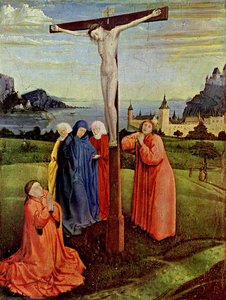
वेदी-चित्रों के भव्य पैमाने से परे, मानवीय भावनाओं को पकड़ने की विट्ज़ की प्रतिभा क्राइस्ट ऑन द क्रॉस जैसे कार्यों में गहराई से स्पष्ट है। यहाँ, कलाकार गोथिक नाटक को प्रारंभिक, कच्चे यथार्थवाद के साथ मिश्रित करते हैं, और करुणा की गहरी भावना जगाने के लिए सूक्ष्म छायांकन और अभिव्यंजक हाव-भाव का उपयोग करते हैं। इसी तरह, राजा सुलेमान और शेबा की रानी का उनका चित्रण समृद्ध विवरण और परिदृश्य नवाचार के माध्यम से कहानी कहने की उनकी क्षमता को प्रदर्शित करता है, जो पुनर्जागरण कला के लेंस के माध्यम से बाइबिल की भव्यता को चित्रित करता है। चाहे किसी संत के शांत दुख को चित्रित करना हो या सम्राटों के राजसी मिलन को, विट्ज़ ने दिव्य और मानवीय अनुभव के बीच की खाई को पाटने के लिए प्रकाश और रूप का उपयोग किया।

ऐतिहासिक महत्व और कलात्मक विकास

कोनराड विट्ज़ के ऐतिहासिक महत्व को कम करके नहीं आंका जा सकता; उन्होंने दो युगों के बीच एक महत्वपूर्ण सेतु के रूप में कार्य किया। उनका विकास 14वीं शताब्दी की प्रतीकात्मक भाषा से पुनर्जागरण के अवलोकन संबंधी विज्ञान की ओर एक धीमी, सचेत गति का प्रतिनिधित्व करता है। धार्मिक प्रतिमा विज्ञान में पहचानने योग्य परिदृश्यों और प्राकृतिक बनावटों को एकीकृत करके, उन्होंने उत्तरी यूरोपीय चित्रकारों की भविष्य की पीढ़ियों के लिए प्राकृतिक दुनिया की सुंदरता का पता लगाने का मार्ग प्रशस्त किया।

उनकी स्थायी विरासत निम्नलिखित कलात्मक मील के पत्थरों में पाई जाती है:

  • परिदृश्य नवाचार: स्थलाकृतिक सटीकता की शुरुआत, जिससे पर्यावरण कथात्मक पेंटिंग का एक केंद्रीय तत्व बन गया।
  • तकनीकी महारत: देर गोथिक सजावटी भव्यता का प्रारंभिक पुनर्जागरण प्रकृतिवाद और प्रकाश हेरफेर के साथ निर्बाध मिश्रण।
  • भावनात्मक गहराई: बाइबिल की आकृतियों के अधिक मानवीकृत, अभिव्यंजक चित्रण की ओर बदलाव, जिससे दर्शक के साथ गहरा भावनात्मक संबंध विकसित हुआ।

यद्यपि उनका जीवन अपेक्षाकृत छोटा था, जो लगभग 1446 में समाप्त हुआ, कोनराड विट्ज़ का प्रभाव पश्चिमी चित्रकला की नींव में अंकित है। उन्होंने आँखों को पृथ्वी और आकाश को करीब से देखना सिखाया, और उस दुनिया के सूक्ष्म विवरणों के भीतर पवित्रता को खोजना सिखाया जिसमें हम निवास करते हैं।