Robert Smithson का चित्र

Robert Smithson की पेंटिंग्स: एक गैलरी की नज़र से, 4 सबसे प्रसिद्ध कृतियाँ

नवमबर 2026 में अपडेट किया गया · हमारे लोकप्रियता स्कोर (प्रत्येक कृति के लिए खोज, विज़िट और ऑर्डर) के आधार पर रैंक किया गया · 6 कृतियाँ Robert Smithson की हमारे कैटलॉग में

संक्षेप में

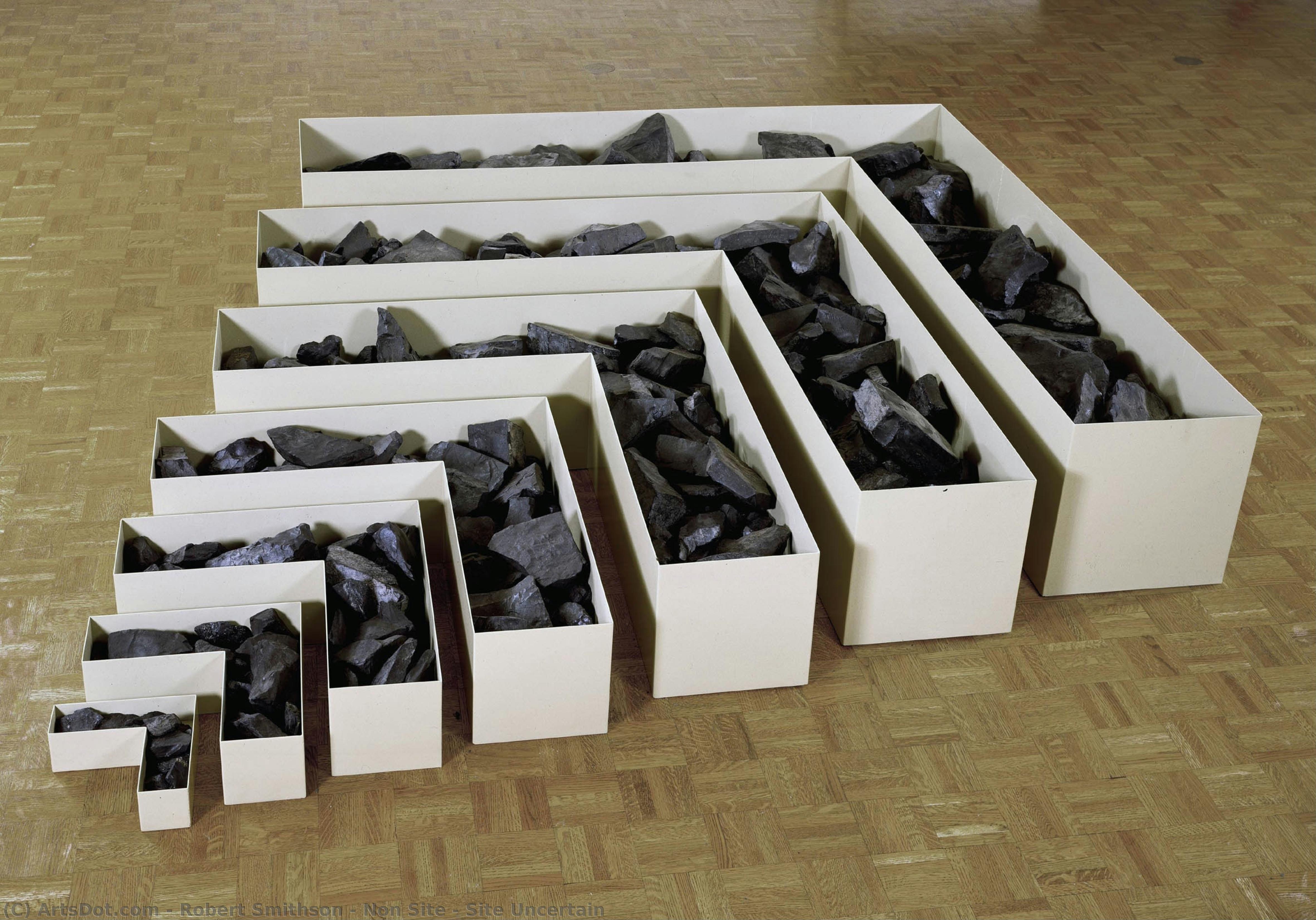
गैलरी की दृष्टि में, Robert Smithson की सबसे प्रसिद्ध पेंटिंग Non Site - Site Uncertain है, जिसका मूल Detroit Institute of Arts, डेट्रॉइट में लगा हुआ है। Three-Sided Vortex (1966) और Ruin of Map of Hipparchus (100 B.C.) in Oswego Lake Quadrangle (1954 55) (1967) उस त्रयी को पूरा करते हैं जिसे हर कोई पहचानता है। हमारे कैटलॉग में Robert Smithson की 6 कृतियों में से, गैलरी नीचे सबसे प्रसिद्ध 4 कृतियाँ प्रस्तुत करती है, जिनमें से प्रत्येक मूल है और उनके वर्ष, उनके संग्रहालय और उनकी विशिष्टता का विवरण दिया गया है।

1938 – 1973, Passaic सर्वाधिक कृतियाँ: Detroit Institute of Arts

गैलरी की शीर्ष 10 Robert Smithson पेंटिंग्स

वे संग्रहालय जहाँ Robert Smithson की मूल कृतियाँ रखी गई हैं

वे 2 संग्रहालय जिनमें इस पृष्ठ की सर्वाधिक पेंटिंग्स मौजूद हैं।

संग्रहालय शहर Robert Smithson की कृतियाँ इस सूची की पेंटिंग्स
Detroit Institute of Arts, डेट्रॉइटDetroit Institute of Arts डेट्रॉइट 1 Non Site - Site Uncertain
Chrysler Museum of Art, नॉरफ़ॉकChrysler Museum of Art नॉरफ़ॉक 1 Three-Sided Vortex

Robert Smithson, प्रत्येक वर्ष की विशिष्ट पेंटिंग्स

5 वर्ष, 1966 से 1970 तक, इस पृष्ठ पर Robert Smithson के पूरे ऐतिहासिक करियर को संजोया गया है: एक संक्षिप्त यात्रा, जिसे यहाँ उनके सबसे प्रसिद्ध मूल चित्रों के माध्यम से वर्ष-दर-वर्ष देखा जा सकता है।

वर्षानुसार कृतियाँ

मूल कृतियों को देखने के लिए एक वर्ष चुनें।

Robert Smithson की पेंटिंग्स: गैलरी के उत्तर

सभी में से Robert Smithson की कौन सी पेंटिंग सबसे प्रसिद्ध है?उत्तर देखें

Non Site - Site Uncertain, Detroit Institute of Arts, डेट्रॉइट. इसके बाद Three-Sided Vortex (1966) और Ruin of Map of Hipparchus (100 B.C.) in Oswego Lake Quadrangle (1954 55) (1967) आते हैं।

Robert Smithson ने कितनी कृतियाँ बनाईं?उत्तर देखें

हमारे कैटलॉग में Robert Smithson की 6 कृतियाँ हैं, जो 1966 से 1970 तक की हैं।

Robert Smithson की सबसे प्रसिद्ध मूल कृतियाँ कहाँ प्रदर्शित हैं?उत्तर देखें

अधिकतर Detroit Institute of Arts (डेट्रॉइट) और Chrysler Museum of Art (नॉरफ़ॉक) में। ऊपर दी गई संग्रहालय तालिका में उन सभी की सूची दी गई है।

Robert Smithson की सबसे शुरुआती और नवीनतम प्रसिद्ध कृतियाँ कौन सी हैं?उत्तर देखें

इस पृष्ठ पर, सबसे पुरानी कृति Three-Sided Vortex (1966) है और नवीनतम Torn Photograph from the 2nd Stop (Rubble) (2nd Mountain of Six Stops on a Section) from Artists Photographs (1970) है।

Robert Smithson: कलाकार

Early Life and Artistic Beginnings

  • Born: January 2, 1938, in Passaic, New Jersey
  • Early years spent in Rutherford and Clifton, New Jersey
  • Studied painting and drawing at the Art Students League of New York (1955-1956)
  • Early artwork explored collage influenced by homoerotic themes, science fiction, and pop art. Primarily identified as a painter during this period.
  • Influenced by William Carlos Williams, who was his pediatrician.

The Shift to Minimalism and Conceptual Art

  • After a three-year break from the art world, emerged in 1964 as a proponent of the minimalist movement.
  • Abandoned figurative work, focusing on glass sheet and neon lighting tubes exploring visual refraction and mirroring.
  • Developed interest in entropy (the second law of thermodynamics) – decay, renewal, chaos, order, non-sites, and earthworks. Saw entropy not as a disadvantage but as a form of transformation.
  • Associated with minimalist artists like Nancy Holt (his wife), Robert Morris, and Sol LeWitt.
  • Became a critic for *Arts Magazine* and *Artforum*, gaining recognition as a writer before his art.

Land Art and Earthworks: Spiral Jetty and Beyond

  • Fascination with industrial areas in New Jersey led to the development of "Non-Sites" – sculptures incorporating earth and rocks from specific locations, often combined with mirrors or glass.
  • Spiral Jetty (1970): His most famous work, a massive coil of basalt rock extending into the Great Salt Lake in Utah. A key example of land art, exploring themes of entropy, time, and geological processes.
  • Explored temporary sculptures using mirrors in the Yucatan Peninsula, documented in "Incidents of Mirror-Travel in the Yucatan."
  • Recovered 18th- and 19th-century conceptions of landscape architecture, influencing his later earthwork explorations.

Theoretical Writings and Landscape Perspectives

  • Wrote extensively on art theory, including "A Heap of Language," exploring how writing could become an artwork.
  • Examined Frederick Law Olmsted's design for Central Park in New York City, recovering issues of site specificity, human intervention, and the picturesque landscape.
  • His writings demonstrate a deep engagement with history, philosophy, geology, and cultural theory.

Legacy and Historical Significance

  • Died: July 20, 1973, in Tucson, Arizona (due to a heart attack while hiking).
  • Considered a pivotal figure in Land Art and Earthworks movements.
  • His work expanded the definition of art, blurring boundaries between sculpture, landscape, and natural processes.
  • Influenced generations of artists with his conceptual approach, exploration of entropy, and engagement with geological time scales.
  • The Holt/Smithson Foundation continues to preserve and promote his legacy.