


1


नवमबर 2026 में अपडेट किया गया · हमारे लोकप्रियता स्कोर (प्रत्येक कृति के लिए खोज, विज़िट और ऑर्डर) के आधार पर रैंक किया गया · 32 कृतियाँ Morris Graves की हमारे कैटलॉग में
संक्षेप में
गैलरी की दृष्टि में, Morris Graves की सबसे प्रसिद्ध पेंटिंग Bird Singing in the Moonlight (1938) है। Crow, Surf and Moon (1943) और Logged Mountains (1943) उस त्रयी को पूरा करते हैं जिसे हर कोई पहचानता है। हमारे कैटलॉग में Morris Graves की 32 कृतियों में से, गैलरी नीचे सबसे प्रसिद्ध 30 कृतियाँ प्रस्तुत करती है, जिनमें से प्रत्येक मूल है और उनके वर्ष, उनके संग्रहालय और उनकी विशिष्टता का विवरण दिया गया है।


The Logged Mountains painting by Morris Graves is a thought-provoking artwork that showcases the artist's skill in combining natural elements with artistic expression. Created in 1943, this oil on canvas painting measures 66 x 92 cm and is currently housed at the Smithsonian American Art Museum in the United States. Artist Background Morris Graves was an American artist known for his delicate and contemplative drawings that capture the essence of…


 Woodpeckers1941
12
 Bird And Chalice1939
13
 Folded Wings Memory the Moon Weeping1943
14
 Night Sky No. 21944 · Art Museum
15
 South American Brush Bird1944
16
 Oregon, from the United States Series1948
17
 Young Gander Ready for Flight1952 · The Phillips Collection
18
 August Still Life1952 · The Phillips Collection
19
 Young Gander1952
20
 Bird Masking1953
21
 Marsh Orchids1955 · Art Museum
22
 Spirit Bird1956
23
 Bouquet1954
24
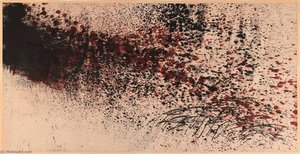 Spring with Machine Age Noise V1957
25
 Flowers1954
26
 Poverty Winter - Still Life1982 · Art Museum
27
 Summer Still Life1988
28
 Hibernation1954
29
 State of the World (Double Necked Vessel)
30
 Winter Flower (Ireland)
वे 3 संग्रहालय जिनमें इस पृष्ठ की सर्वाधिक पेंटिंग्स मौजूद हैं।
| संग्रहालय | शहर | Morris Graves की कृतियाँ | इस सूची की पेंटिंग्स |
|---|---|---|---|
 Art Museum |
Seattle | 6 | Crow, Surf and Moon, Bird in the Night, Sea, Fish and Constellation |
 The Phillips Collection |
वाशिंगटन डी.सी. | 3 | Surf and Bird, Young Gander Ready for Flight, August Still Life |
 स्मिथसोनियन अमेरिकन आर्ट म्यूजियम |
वॉशिंगटन डी.सी. | 1 | Logged Mountains |
उस दशक को चुनें जो उसकी पहचान है और उसकी मूल कृतियाँ देखें।


Bird Singing in the Moonlight (1938)। इसके बाद Crow, Surf and Moon (1943) और Logged Mountains (1943) आते हैं।
28 वर्ष की आयु: Bird Singing in the Moonlight 1938 का है, और Morris Graves का जन्म 1910 में हुआ था।
Bird Singing in the Moonlight, Crow, Surf and Moon, Logged Mountains, Surf and Bird, Snake and Moon, Wheelbarrow, Bird in the Night, Sea, Fish and Constellation, Bird in the Spirit और Nestling। ऊपर दी गई रैंकिंग में प्रत्येक का वर्ष और संग्रहालय दिया गया है।
हमारे कैटलॉग में Morris Graves की 32 कृतियाँ हैं, जो 1934 से 1988 तक की हैं।
अधिकतर Art Museum (Seattle), The Phillips Collection (वाशिंगटन डी.सी.) और स्मिथसोनियन अमेरिकन आर्ट म्यूजियम (वॉशिंगटन डी.सी.) में। ऊपर दी गई संग्रहालय तालिका में उन सभी की सूची दी गई है।
1940s में: इस पृष्ठ पर मौजूद 30 कृतियों में से 11 उस समय बनाई गई थीं, जिनमें से Crow, Surf and Moon इनमें से हैं।
इस पृष्ठ पर, सबसे पुरानी कृति Wheelbarrow (1934) है और नवीनतम Summer Still Life (1988) है।
Crow, Surf and Moon, Bird in the Night और Sea, Fish and Constellation: Art Museum, Seattle में इस पृष्ठ पर मौजूद कृतियों में से 6 मौजूद हैं।