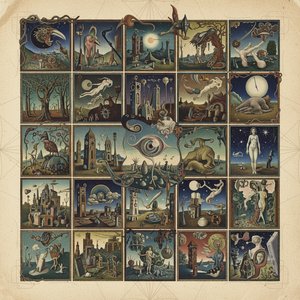
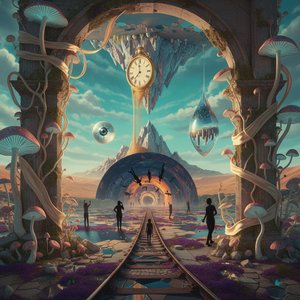
The Architect of Unconscious Realms: Max Ernst, Yves Tanguy & Urs Fischer
To step into the creative universe shared by Max Ernst, Yves Tanguy, and Urs Fischer is to abandon the safety of logic and surrender to the profound mysteries of the subconscious. While separated by decades and distinct historical epochs, these artists are bound by a singular, haunting thread: the ability to manifest the intangible. Their collective legacy does not merely represent a collection of objects or images, but rather a continuous exploration of the dreamscape, where the boundaries between reality and illusion dissolve into a beautiful, unsettling haze.
The foundations of this surrealist lineage were laid by Max Ernst, a pioneer whose very existence challenged the traditional definitions of art. Born in Germany in 1891, Ernst emerged from the wreckage of World War I, a period of immense societal upheaval that fueled his involvement with the Dada movement. For Ernst, art was a tool for rebellion—a way to dismantle the rationalist structures that had led to global catastrophe. He sought to bypass the conscious mind through revolutionary techniques such as frottage and grattage, using pencil rubbings and scraped paint to allow chance and texture to dictate form. His work became a portal into a world of myth and psychological depth, where the familiar is stripped of its certainty and reassembled into something primal and strange.
As the Surrealist movement matured, Yves Tanguy expanded this vocabulary of the uncanny. His canvases offered a different kind of surrealism—one characterized by vast, desolate landscapes that felt both infinite and claustrophobic. In Tanguy’s work, organic and inorganic shapes float within an eerie, dreamlike vacuum, evoking a sense of profound solitude. His contribution to the movement provided a visual language for the silent, waiting tensions of the psyche, creating spaces where time seems to stand still and the eye wanders through a landscape of pure, unadultered imagination.
In the contemporary era, this lineage finds a startlingly modern expression in the work of Urs Fischer. Born in Zurich in 1973, Fischer carries the torch of his predecessors by operating across a multidisciplinary spectrum that includes sculpture, photography, and painting. His practice is a masterful exercise in paradox, blending the whimsical with the macabre. Much like Ernst, Fischer embraces the power of chance and the unexpected, often creating large-scale installations that feature meticulously crafted objects arranged in seemingly illogical or decaying configurations. His work invites a sense of childlike wonder while simultaneously forcing the viewer to confront themes of repetition, memory, and the inevitable passage of time.
A Legacy of Experimentation and Transformation
The historical significance of these artists lies not only in their individual masterpieces but in their shared commitment to artistic innovation. They did not merely observe the world; they sought to reinvent it through the following transformative approaches:
- The Mastery of Chance: From Ernst’s use of texture-based automatism to Fischer’s exploration of decay and spontaneous arrangement, each artist utilizes randomness to bypass the ego and tap into a deeper, more universal truth.
- Materiality and Form: Whether it is the tactile surfaces of an Ernst collage, the ethereal depths of a Tanguy landscape, or the heavy, sculptural presence in Fischer’s installations, the physical medium serves as a bridge between the tangible world and the spirit.
- The Subversion of Reality: Each artist challenges the viewer's perception, using the uncanny to transform everyday objects and landscapes into symbols of psychological complexity and existential inquiry.
Ultimately, the journey from the Dadaist provocations of Ernst through the dream-landscapes of Tanguy to the contemporary paradoxes of Fischer represents a continuous evolution of human expression. They remind us that art is most potent when it functions as a mirror to our deepest anxieties and our most luminous dreams, proving that even in a world governed by logic, there remains an eternal, irresistible pull toward the unknown.