Max Beerbohm का चित्र

45 सबसे प्रसिद्ध Max Beerbohm पेंटिंग्स, जिनमें से प्रत्येक अद्वितीय है

नवमबर 2026 में अपडेट किया गया · हमारे लोकप्रियता स्कोर (प्रत्येक कृति के लिए खोज, विज़िट और ऑर्डर) के आधार पर रैंक किया गया · 49 कृतियाँ Max Beerbohm की हमारे कैटलॉग में

संक्षेप में

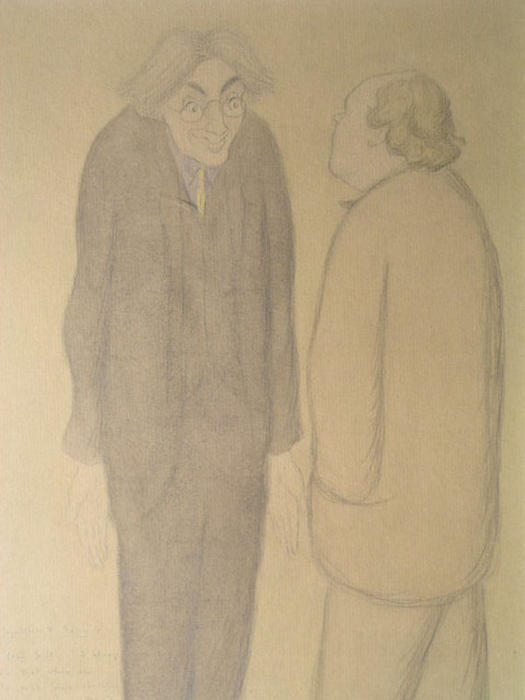
John S. Sargent वह Max Beerbohm की पेंटिंग है जो सबसे अधिक ध्यान आकर्षित करती है। इसके बाद, दृष्टि D.G. Rossetti Precociously Manifesting ... that Queer Indifference to Politics और Untitled (360) पर जाती है। हमारे कैटलॉग में Max Beerbohm की 49 कृतियों में से, ये 45 सबसे प्रसिद्ध हैं, जिनमें से प्रत्येक को उसके वर्ष, उसके संग्रहालय और उसके चिरस्थायी होने के कारण के साथ एक अद्वितीय मूल कृति के रूप में प्रस्तुत किया गया है।

1872 – 1956, London

गैलरी की दृष्टि से Max Beerbohm की शीर्ष 10 पेंटिंग्स

Max Beerbohm की प्रसिद्ध पेंटिंग्स, संख्या 11 से 45 तक

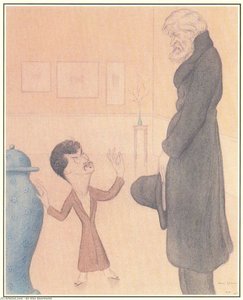
11Frontispiece द्वारा Max BeerbohmFrontispiece 12Boy in a high top-hat द्वारा Max BeerbohmBoy in a high top-hat 13Annual Banquet. A Suggestion to the New English Art Club द्वारा Max BeerbohmAnnual Banquet. A Suggestion to the New English Art Club 14Miss Cornforth. `Oh, very pleased to meet Mr Ruskin, I'm sure द्वारा Max BeerbohmMiss Cornforth. `Oh, very pleased to meet Mr Ruskin, I'm sure 15The Small Hours in the ’Sixties at 16, Cheyne Walk द्वारा Max BeerbohmThe Small Hours in the ’Sixties at 16, Cheyne Walk 16Caricature of a man in a frock coat द्वारा Max BeerbohmCaricature of a man in a frock coat 17Rossetti in his worldlier daysleaving the Arundel Club with George Augustus Sala द्वारा Max BeerbohmRossetti in his worldlier daysleaving the Arundel Club with George Augustus Sala 18An introduction द्वारा Max BeerbohmAn introduction 19Mr. Browing brings a lady of rank and fashion to see Mr.Rossetti द्वारा Max BeerbohmMr. Browing brings a lady of rank and fashion to see Mr.Rossetti 20A Quiet Morning in the Tate Gallery द्वारा Max BeerbohmA Quiet Morning in the Tate Gallery 21Swinburne and Miss Sophia Grimes द्वारा Max BeerbohmSwinburne and Miss Sophia Grimes 22A Momentary Vision that once befell Young Millais द्वारा Max BeerbohmA Momentary Vision that once befell Young Millais 23Mr. Morley of Blackburn, on an afternoon in the Spring of ’69, introduces Mr. John Stuart Mill द्वारा Max BeerbohmMr. Morley of Blackburn, on an afternoon in the Spring of ’69, introduces Mr. John Stuart Mill 24Quis Custodiet Ipsum Custodem द्वारा Max BeerbohmQuis Custodiet Ipsum Custodem 25The New English Art Club द्वारा Max BeerbohmThe New English Art Club 26Mr. Robert Browning, taking tea with the Browning Society द्वारा Max BeerbohmMr. Robert Browning, taking tea with the Browning Society 27Mr. Tennyson reading In Memoriam to his Sovereign द्वारा Max BeerbohmMr. Tennyson reading In Memoriam to his Sovereign 28Swinburne, Elizabeth Siddal, and Rossetti द्वारा Max BeerbohmSwinburne, Elizabeth Siddal, and Rossetti 29Rossetti’s Courtship. Chatham Place द्वारा Max BeerbohmRossetti’s Courtship. Chatham Place 30Mr. William Bell Scott wondering what it is those fellows seem to see in Gabriel द्वारा Max BeerbohmMr. William Bell Scott wondering what it is those fellows seem to see in Gabriel 31Lord Halsbury द्वारा Max BeerbohmLord Halsbury 32Dante Gabriel Rossetti, in his back garden द्वारा Max BeerbohmDante Gabriel Rossetti, in his back garden 33Topsy and Ned Jones, settled on the settle in Red Lion Square द्वारा Max BeerbohmTopsy and Ned Jones, settled on the settle in Red Lion Square 34Rossetti द्वारा Max BeerbohmRossetti 35Blue China द्वारा Max BeerbohmBlue China 36Woolner at Farringford द्वारा Max BeerbohmWoolner at Farringford 37The sole remark likely to have been made by Benjamin Jowett about the mural paintings at the Oxford Union. द्वारा Max BeerbohmThe sole remark likely to have been made by Benjamin Jowett about the mural paintings at the Oxford Union. 38Ford Madox Brown being patronised by Holman Hunt द्वारा Max BeerbohmFord Madox Brown being patronised by Holman Hunt 39Riverside Scene द्वारा Max BeerbohmRiverside Scene 40Princeps Triplumiferus द्वारा Max BeerbohmPrinceps Triplumiferus 41Untitled (730) द्वारा Max BeerbohmUntitled (730) 42Sylvester Herringham vainly endeavouring to enlist D. G. R.’s interest in some singulary interesting experiment द्वारा Max BeerbohmSylvester Herringham vainly endeavouring to enlist D. G. R.’s interest in some singulary interesting experiment 43Mr.--- and Miss--- nervously perpetuating the touch of a vanished hand द्वारा Max BeerbohmMr.--- and Miss--- nervously perpetuating the touch of a vanished hand 44Rossetti insistently exhorted by George Meredith to come forth into the glorius sun and wind for a walk to Hendon and beyond द्वारा Max BeerbohmRossetti insistently exhorted by George Meredith to come forth into the glorius sun and wind for a walk to Hendon and beyond 45The name of Dante Gabriel Rossetti is heard for the first time in the Western States of America द्वारा Max BeerbohmThe name of Dante Gabriel Rossetti is heard for the first time in the Western States of America

वे विषय जिन्होंने Max Beerbohm का मन मोह लिया

इन मूल कृतियों में बार-बार आने वाले चार विषय, जिनमें से प्रत्येक का सबसे उत्कृष्ट उदाहरण यहाँ प्रस्तुत है।

Max Beerbohm की पेंटिंग्स: गैलरी के लिए प्रश्न

Max Beerbohm की सबसे प्रसिद्ध कृति कौन सी है?उत्तर देखें

John S. Sargent। इसके बाद D.G. Rossetti Precociously Manifesting ... that Queer Indifference to Politics और Untitled (360) आते हैं।

Max Beerbohm की कौन सी दस पेंटिंग्स सबसे प्रसिद्ध हैं?उत्तर देखें

John S. Sargent, D.G. Rossetti Precociously Manifesting ... that Queer Indifference to Politics, Untitled (360), Untitled (428), Mr. Arnold Dolmetsch, The Mirror of the Past 1, The Mirror of the Past, Lord Rosebery, Bravura. Sir William Orpen और Significant Form। ऊपर दी गई रैंकिंग में प्रत्येक का वर्ष और संग्रहालय दिया गया है।

Max Beerbohm की कितनी कृतियाँ ज्ञात हैं?उत्तर देखें

हमारे कैटलॉग में Max Beerbohm की 49 कृतियाँ उपलब्ध हैं।

Max Beerbohm किन विषयों को पसंद करते थे?उत्तर देखें

इस पृष्ठ पर 45 कृतियों में Men (10), Clothing (4) और Caricature (3)

Max Beerbohm: कलाकार का एक चित्र

The Architect of Wit and Elegance


Henry Maximilian Beerbohm, known to the world as Sir Max Beerbohm, was a singular figure who navigated the twilight of the Victorian era and the dawn of the Edwardian age with unparalleled grace. Born in Munich to German parents, his journey through the hallowed halls of Eton and Trinity College Cambridge instilled in him a profound reverence for classical literature and intellectual debate. He was not merely an artist or a writer; he was a dandy of the intellect, a man whose very existence seemed a performance of refined irony. His prose and his pen worked in tandem to capture the shifting sands of British society, distilling the complexities of a changing world into forms that were as deceptively simple as they were biting in their social commentary.

Mastery of the Meticulous Line


In the realm of illustration, Beerbohm’s genius resided in his ability to marry naive realism with a sophisticated, stylized elegance. His technique, primarily centered on the delicate medium of pen and ink, allowed him to sculpt characters through the careful application of hatching and stippling. There was an ethereal quality to his work, a subtle grace that could convey deep emotion or sharp mockery with a single, well-placed stroke. Whether he was creating intricate woodcut prints like Quis Custodiet Ipsum Custodem or capturing the formal gravity of a gathering in Annual Banquet, his hand remained steady and his eye remained keen. His drawings were more than mere caricatures; they were psychological portraits that utilized:

  • Meticulous detail to ground his subjects in a tangible reality.
  • Layered lines to create a sense of profound depth and texture.
  • Tonal variations achieved through masterful, delicate shading.


This artistic precision ensured that even his most satirical works possessed an aristocratic charm, making the sting of his critique all the more palatable to the very society he sought to lampoon.

A Legacy Written in Ink


Beyond the ink-stained page of the illustrator lay the profound literary legacy of a master parodist. Beerbohm’s writing, most notably his fantastical reimagining of Shakespeare in Zuleika Dobson, showcased a command of language that was both playful and erudite. He possessed a rare linguistic dexterity, capable of weaving tales that were simultaneously absurd and deeply insightful. Through his contributions to the Saturday Review and his various essays, he championed a brand of intellectual honesty that refused to shy away from the follies of his contemporaries. His life, spanning from the late nineteenth century to the mid-twentieth, serves as a bridge between eras, leaving behind a body of work that remains a testament to the power of wit, the beauty of the line, and the enduring relevance of social satire.