John D. Batten का चित्र

9 सबसे प्रसिद्ध John D. Batten पेंटिंग्स, एक गैलरी चयन

नवमबर 2026 में अपडेट किया गया · हमारे लोकप्रियता स्कोर (प्रत्येक कृति के लिए खोज, विज़िट और ऑर्डर) के आधार पर रैंक किया गया · 10 कृतियाँ John D. Batten की हमारे कैटलॉग में

संक्षेप में

John D. Batten द्वारा बनाई गई सभी मूल कृतियों में से, सबसे प्रसिद्ध Eve and the Serpent (1895) है। इसके ठीक बाद Pandora (1913) और Snowdrop and the seven little men (1897) का स्थान आता है। हमारे कैटलॉग में John D. Batten की 10 कृतियाँ हैं; गैलरी ने उन 9 कृतियों को सहेज कर रखा है जिन्हें दुनिया सबसे अधिक पसंद करती है, जिनमें से प्रत्येक को उनकी तिथि, उनके संग्रहालय और उनकी कहानी के साथ प्रदर्शित किया गया है।

1865 – 1932, Plymouth सर्वाधिक कृतियाँ: The University of Reading

John D. Batten की शीर्ष 10 पेंटिंग: गैलरी का चयन

1
Eve and the Serpent (1895) द्वारा John D. Batten

Eve and the Serpent

1895 · Tempera

John D. Batten’s Eve and the Serpent, created about 1895, captures a pivotal moment of theological narrative within the Garden of Eden. The work focuses on the encounter between Eve and the serpent, a scene central to the biblical story of temptation. Batten utilizes the subject to explore the intersection of myth and human emotion through a structured, detailed lens.

3
Snowdrop and the seven little men (1897) द्वारा John D. Batten

Snowdrop and the seven little men

Snowdrop and the seven little men by John D. Batten presents a narrative scene from folklore within a horizontal composition. The central focus is a woman resting in a large, canopy bed. Surrounding her are several small, gnome-like figures, creating a scene of interaction between a sleeping figure and industrious, miniature creatures. The arrangement utilizes a shallow, stage-like perspective, where depth is established through the overlapping of figures and the…

4
Beauty and the Beast (1904) द्वारा John D. Batten

Beauty and the Beast

In this work, Beauty and the Beast, John D. Batten constructs a scene of profound emotional tension within the quiet confines of an enclosed garden. The composition relies on a deliberate imbalance; on the left, the verticality of a woman in a long, flowing blue gown draws the eye upward, her face turned toward the sky with an expression of either anguish or ecstasy. This movement is countered on the…

वे विषय जिन्होंने John D. Batten का मन मोह लिया

इन मूल कृतियों में बार-बार आने वाले चार विषय, जिनमें से प्रत्येक का सबसे उत्कृष्ट उदाहरण यहाँ प्रस्तुत है।

वे संग्रहालय जहाँ John D. Batten की मूल कृतियाँ रखी गई हैं

वे 3 संग्रहालय जिनमें इस पृष्ठ की सर्वाधिक पेंटिंग्स मौजूद हैं।

संग्रहालय शहर John D. Batten की कृतियाँ इस सूची की पेंटिंग्स
The University of Reading, ReadingThe University of Reading Reading 1 Pandora
आर्ट गैलरी ऑफ़ न्यू साउथ वेल्स, सिडनीआर्ट गैलरी ऑफ़ न्यू साउथ वेल्स सिडनी 1 Snowdrop and the seven little men
बर्मिंघम म्यूज़ियम एंड आर्ट गैलरी, बर्मिंघमबर्मिंघम म्यूज़ियम एंड आर्ट गैलरी बर्मिंघम 1 Beauty and the Beast

John D. Batten दशक दर दशक: प्रत्येक को परिभाषित करने वाली मूल कृतियाँ

दशकवार कृतियाँ

उस दशक को चुनें जो उसकी पहचान है और उसकी मूल कृतियाँ देखें।

John D. Batten की पेंटिंग्स के बारे में संग्रहकर्ताओं के प्रश्न

John D. Batten किस कृति के लिए सबसे अधिक प्रसिद्ध हैं?उत्तर देखें

Eve and the Serpent (1895)। इसके बाद Pandora (1913) और Snowdrop and the seven little men (1897) आते हैं।

Eve and the Serpent के निर्माण के समय John D. Batten की आयु क्या थी?उत्तर देखें

30 वर्ष की आयु: Eve and the Serpent 1895 का है, और John D. Batten का जन्म 1865 में हुआ था।

John D. Batten ने कितनी पेंटिंगें छोड़ीं?उत्तर देखें

हमारे कैटलॉग में John D. Batten की 10 कृतियाँ हैं, जो 1886 से 1922 तक की हैं।

John D. Batten की उत्कृष्ट कृतियाँ किन संग्रहालयों में प्रदर्शित हैं?उत्तर देखें

अधिकतर The University of Reading (Reading), आर्ट गैलरी ऑफ़ न्यू साउथ वेल्स (सिडनी) और बर्मिंघम म्यूज़ियम एंड आर्ट गैलरी (बर्मिंघम) में। ऊपर दी गई संग्रहालय तालिका में उन सभी की सूची दी गई है।

John D. Batten ने अपने सबसे प्रसिद्ध कार्यों की रचना किन वर्षों में की थी?उत्तर देखें

1880s में: इस पृष्ठ पर मौजूद 9 कृतियों में से 2 उस समय बनाई गई थीं, जिनमें से The Family इनमें से हैं।

John D. Batten की पहली और आखिरी प्रसिद्ध मूल कृतियाँ कौन सी हैं?उत्तर देखें

इस पृष्ठ पर, सबसे पुरानी कृति The Family (1886) है और नवीनतम Atlanta and Milanion (detail for the fresco painting 'Atlanta's Race') (1922) है।

John D. Batten ने सबसे अधिक बार किन विषयों को चुना?उत्तर देखें

इस पृष्ठ पर 9 कृतियों में Woman (4) और Garden (2)

John D. Batten ने किस तकनीक का सबसे अधिक उपयोग किया?उत्तर देखें

इस पृष्ठ पर मौजूद 9 कृतियों में से 2 के लिए Tempera।

John D. Batten: जीवन और कार्य

The Tempera Revivalist

To understand the impact of John Dickson Batten, one must look at the specific technical vacuum he helped fill during the Edwardian era. He did not merely paint; he revived a dying language. By turning to egg tempera, Batten moved away from the heavy, oily textures common in his time, opting instead for a medium that demanded precision and a certain luminous austerity. His work is defined by this discipline. He was a man of dualities, beginning his professional life reading law at Trinity College, Cambridge, before abandoning the legal career of a barrister to study at the Slade School of Fine Arts. This transition from the rigid logic of law to the meticulous observation of art shaped a style that was both intellectually structured and visually detailed.

His early fascination with ornithology and the mechanics of animal flight provided a scientific foundation for his later, more imaginative works. This wasn't mere whimsy. There is a structural accuracy in his depictions of movement that separates his illustrations from the purely decorative. He brought a researcher's eye to the mythological and the allegorical, ensuring that even his most fantastical subjects possessed a tangible, physical presence.

Narrative and Myth

Batten’s output was vast, ranging from small-scale book illustrations to large-scale frescoes. He possessed a specific ability to translate complex folklore into visual narratives. His work often focused on the intersection of myth and human emotion, utilizing the delicate qualities of tempera to bring light to ancient stories. His repertoire included:

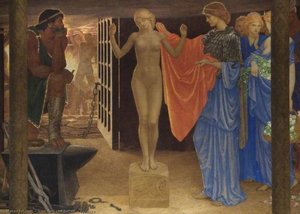
His involvement with the Society of Painters in Tempera was not a side interest; it was a central part of his professional identity. Alongside figures like Arthur Gaskin, he helped establish a renewed appreciation for the medium's expressive potential. His 1913 work, Pandora, which was presented to Reading University, remains a primary example of his ability to handle large-scale narrative depth through the tempera technique.

A Legacy of Precision

The significance of Batten lies in his refusal to settle for the easy or the ephemeral. While many of his contemporaries were moving toward more fluid or abstract expressions, he doubled down on the technical rigors of the past. He was a prolific writer as well, producing volumes of poetry and an article on the practice of tempera painting, proving that his interest in art was as much academic as it was creative. He understood the mechanics of his craft from the inside out.

His work remains a vital point of reference for anyone studying the revival of traditional painting methods in Britain. He did not just illustrate stories; he gave them a specific, luminous weight. From the detailed rendering of a bird's flight to the somber emotion of a religious portrait, Batten’s career was a sustained argument for the power of meticulous, disciplined art.