1


नवमबर 2026 में अपडेट किया गया · हमारे लोकप्रियता स्कोर (प्रत्येक कृति के लिए खोज, विज़िट और ऑर्डर) के आधार पर रैंक किया गया · 19 कृतियाँ Florent Willems की हमारे कैटलॉग में
संक्षेप में
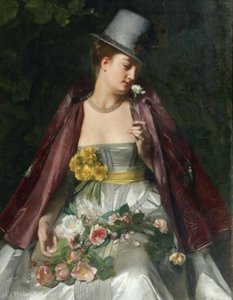
A Seated Page with a Dog (1848) वह Florent Willems की पेंटिंग है जो सबसे अधिक ध्यान आकर्षित करती है; इसका मूल Amsterdam Museum, एम्स्टर्डम में है। इसके बाद, दृष्टि The Woman with the Mirror / Coquetry (1854) और A Painter for His Easel Shows a Painting to a Girl (1852) पर जाती है। हमारे कैटलॉग में Florent Willems की 19 कृतियों में से, ये 18 सबसे प्रसिद्ध हैं, जिनमें से प्रत्येक को उसके वर्ष, उसके संग्रहालय और उसके चिरस्थायी होने के कारण के साथ एक अद्वितीय मूल कृति के रूप में प्रस्तुत किया गया है।


इन मूल कृतियों में बार-बार आने वाले चार विषय, जिनमें से प्रत्येक का सबसे उत्कृष्ट उदाहरण यहाँ प्रस्तुत है।
वे 5 संग्रहालय जिनमें इस पृष्ठ की सर्वाधिक पेंटिंग्स मौजूद हैं।
| संग्रहालय | शहर | Florent Willems की कृतियाँ | इस सूची की पेंटिंग्स |
|---|---|---|---|
 Amsterdam Museum |
एम्स्टर्डम | 2 | A Seated Page with a Dog, A Painter for His Easel Shows a Painting to a Girl |
 रॉयल म्यूजियम ऑफ फाइन आर्ट्स एंटवर्प |
एंटवर्प | 2 | Market Scene in the 17th Century, Musician |
 Groeningemuseum |
ब्रुग्स | 1 | The Woman with the Mirror / Coquetry |
 New York Historical Society |
न्यूयॉर्क सिटी | 1 | Revery |
 Walters Art Museum |
बाल्टीमोर | 1 | The Important Response |
उस दशक को चुनें जो उसकी पहचान है और उसकी मूल कृतियाँ देखें।
A Seated Page with a Dog (1848), Amsterdam Museum, एम्स्टर्डम. इसके बाद The Woman with the Mirror / Coquetry (1854) और A Painter for His Easel Shows a Painting to a Girl (1852) आते हैं।
25 वर्ष की आयु: A Seated Page with a Dog 1848 का है, और Florent Willems का जन्म 1823 में हुआ था।
A Seated Page with a Dog, The Woman with the Mirror / Coquetry, A Painter for His Easel Shows a Painting to a Girl, The departure, Market Scene in the 17th Century, Musician, Revery, The mirror, Sympathetic friends और The valentine letter। ऊपर दी गई रैंकिंग में प्रत्येक का वर्ष और संग्रहालय दिया गया है।
हमारे कैटलॉग में Florent Willems की 19 कृतियाँ हैं, जो 1848 से 1886 तक की हैं।
अधिकतर Amsterdam Museum (एम्स्टर्डम), रॉयल म्यूजियम ऑफ फाइन आर्ट्स एंटवर्प (एंटवर्प) और Groeningemuseum (ब्रुग्स) में। ऊपर दी गई संग्रहालय तालिका में उन सभी की सूची दी गई है।
1850s में: इस पृष्ठ पर मौजूद 18 कृतियों में से 2 उस समय बनाई गई थीं, जिनमें से The Woman with the Mirror / Coquetry इनमें से हैं।
इस पृष्ठ पर, सबसे पुरानी कृति A Seated Page with a Dog (1848) है और नवीनतम Market Scene in the 17th Century (1886) है।
इस पृष्ठ पर 18 कृतियों में Mirrors (2) और Women (2)
A Seated Page with a Dog और A Painter for His Easel Shows a Painting to a Girl: Amsterdam Museum, एम्स्टर्डम में इस पृष्ठ पर मौजूद कृतियों में से 2 मौजूद हैं।
In the grand tapestry of nineteenth-century European art, where many painters sought to break from tradition through the advent of Impressionism and realism, Florent Joseph Marie Willems chose a different, more nostalgic path. Born in Liège in 1823, Willems did not merely observe history; he breathed life back into it. Often referred to by the evocative moniker “the modern Ter Borch,” this Belgian master possessed an uncanny ability to transcend his own era, transporting viewers to the golden age of the Dutch and Flemish Baroque. His work serves as a bridge across centuries, meticulously recreating the intimate, light-drenched atmospheres of masters like Gerard Ter Borch and Gabriel Metsu with a precision that feels both timeless and profoundly personal.
Willems’s artistic journey was deeply rooted in the discipline of restoration and the study of the Old Masters. While his formal training took place at the Academy of Mechelen, much of his true education came from the quiet, painstaking work of copying and restoring ancient canvases. This intimate contact with the textures of the past allowed him to master the subtle interplay of light and shadow—the chiaroscuro—that defines the Baroque aesthetic. His early years in Brussels, working as an art restorer for the dealer Héris, provided him with a unique laboratory of technique, where he learned to render the heavy sheen of satin, the delicate translucency of lace, and the rugged weight of velvet with such startling realism that his contemporaries could scarcely believe they were looking at contemporary works.
The ascent of Willems was marked by a series of prestigious encounters and triumphs that solidified his reputation across Europe. His talent was recognized remarkably early; at just eighteen years old, he caught the eye of Hamilton Seymour, the English ambassador to the Belgian king, who commissioned him to paint a grand family portrait. This early success paved the way for his debut at the Brussels Salon in 1842, where works such as “A Music Party” and “An Interior of a Seventeenth-Century Guard Room” immediately signaled the arrival of a master of genre painting. The Belgian King Leopold I himself became an admirer, acquiring his work and placing Willems within the highest circles of artistic patronage.
As his career progressed, Willems moved to Paris, a city that would become the stage for his greatest international acclaim. During the Second French Empire, his evocative scenes of domestic intimacy flourished. His ability to capture the quiet, dignified moments of life—a woman gazing into a mirror, a letter being read in soft light, or a tranquil domestic scene—resonated deeply with the Parisian elite. This period of his life was not only marked by artistic growth but also by significant honors, including the rank of Chevalier of the French Legion of Honour and the prestigious Chevalier cross in the Order of Leopold of Belgium. His studio in Paris even served as a creative hub, hosting fellow Belgian luminaries like Alfred Stevens, who was himself influenced by Willems’s masterful approach to depicting women in interior settings.
The historical significance of Florent Willems lies in his role as a guardian of classical excellence. While he did not seek to revolutionize the subject matter of his time, his technical virtuosity ensured that the aesthetic values of the seventeenth century remained vibrant and relevant in the nineteenth. His paintings are more than mere imitations; they are soulful reinterpretations that celebrate the enduring beauty of light, texture, and human connection. Through his brush, the vanished worlds of the Dutch and Flemish masters were resurrected, offering a sense of continuity and grace to an age of rapid change.
Today, the works of Willems continue to captivate collectors and historians alike, preserved in museums and galleries worldwide as testament to his skill. His legacy is defined by several key artistic pillars: