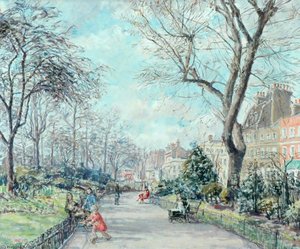
Fairlie Harmar का चित्र

18 सबसे प्रसिद्ध Fairlie Harmar पेंटिंग्स, एक गैलरी चयन

नवमबर 2026 में अपडेट किया गया · हमारे लोकप्रियता स्कोर (प्रत्येक कृति के लिए खोज, विज़िट और ऑर्डर) के आधार पर रैंक किया गया · 18 कृतियाँ Fairlie Harmar की हमारे कैटलॉग में

संक्षेप में

Fairlie Harmar द्वारा छोड़ी गई सभी मूल कृतियों में से, सबसे प्रसिद्ध After A Game Of Tennis (1923) है, जो बर्मिंघम के बर्मिंघम म्यूज़ियम एंड आर्ट गैलरी के संग्रह में है। इसके ठीक बाद St Giles, Oxford और The Bridge at Monxton (1916) का स्थान आता है। हमारे कैटलॉग में Fairlie Harmar की 18 कृतियाँ हैं; गैलरी ने उन 18 कृतियों को सहेज कर रखा है जिन्हें दुनिया सबसे अधिक पसंद करती है, जिनमें से प्रत्येक को उनकी तिथि, उनके संग्रहालय और उनकी कहानी के साथ प्रदर्शित किया गया है।

1876 – 1945, Weymouth सर्वाधिक कृतियाँ: Wolverhampton Art Gallery

Fairlie Harmar की शीर्ष 10 पेंटिंग: गैलरी का चयन

1
After A Game Of Tennis (1923) द्वारा Fairlie Harmar

After A Game Of Tennis

A woman rests in a state of quietude, her form positioned diagonally across a patterned sofa. The composition focuses on a private, domestic interval, capturing a sense of stillness following physical exertion. Her garment, defined by bold blue and white stripes, provides a sharp chromatic contrast to the warm, muted tones of the upholstery and the neutral, textured background. Soft, diffused light enters from the front left, casting gentle shadows…

Fairlie Harmar का चयन जारी है, 11 से 18 तक

वे विषय जिन्होंने Fairlie Harmar का मन मोह लिया

इन मूल कृतियों में बार-बार आने वाले चार विषय, जिनमें से प्रत्येक का सबसे उत्कृष्ट उदाहरण यहाँ प्रस्तुत है।

British painting 2 कृतियाँ

वे संग्रहालय जहाँ Fairlie Harmar की मूल कृतियाँ रखी गई हैं

वे 5 संग्रहालय जिनमें इस पृष्ठ की सर्वाधिक पेंटिंग्स मौजूद हैं।

संग्रहालय शहर Fairlie Harmar की कृतियाँ इस सूची की पेंटिंग्स
Wolverhampton Art Gallery, वॉल्वरहैम्प्टनWolverhampton Art Gallery वॉल्वरहैम्प्टन 2 Ships on the Thames, Flowers
बर्मिंघम म्यूज़ियम एंड आर्ट गैलरी, बर्मिंघमबर्मिंघम म्यूज़ियम एंड आर्ट गैलरी बर्मिंघम 1 After A Game Of Tennis
वॉकर आर्ट गैलरी, लिवरपूलवॉकर आर्ट गैलरी लिवरपूल 1 The Bridge at Monxton
द एशमोलीन म्यूजियम ऑफ आर्ट एंड आर्कियोलॉजी, ऑक्सफोर्डद एशमोलीन म्यूजियम ऑफ आर्ट एंड आर्कियोलॉजी ऑक्सफोर्ड 1 The Laurel Walk
Darlington Library, DarlingtonDarlington Library Darlington 1 Chibbet, Exmoor, Somerset

Fairlie Harmar दशक दर दशक: प्रत्येक को परिभाषित करने वाली मूल कृतियाँ

दशकवार कृतियाँ

उस दशक को चुनें जो उसकी पहचान है और उसकी मूल कृतियाँ देखें।

Fairlie Harmar की पेंटिंग्स के बारे में संग्रहकर्ताओं के प्रश्न

Fairlie Harmar किस कृति के लिए सबसे अधिक प्रसिद्ध हैं?उत्तर देखें

After A Game Of Tennis (1923), बर्मिंघम म्यूज़ियम एंड आर्ट गैलरी, बर्मिंघम. इसके बाद St Giles, Oxford और The Bridge at Monxton (1916) आते हैं।

After A Game Of Tennis के निर्माण के समय Fairlie Harmar की आयु क्या थी?उत्तर देखें

47 वर्ष की आयु: After A Game Of Tennis 1923 का है, और Fairlie Harmar का जन्म 1876 में हुआ था।

Fairlie Harmar की दस सबसे प्रसिद्ध पेंटिंग्स कौन सी हैं?उत्तर देखें

After A Game Of Tennis, St Giles, Oxford, The Bridge at Monxton, The Laurel Walk, Women's Royal Air Force Workers Drilling at Andover Aerodrome, Birthday Celebration, Garden Gate, L'Aveyron, Cheyne Walk Gardens और Sarson Farm, Early Spring। ऊपर दी गई रैंकिंग में प्रत्येक का वर्ष और संग्रहालय दिया गया है।

Fairlie Harmar ने कितनी पेंटिंगें छोड़ीं?उत्तर देखें

हमारे कैटलॉग में Fairlie Harmar की 18 कृतियाँ हैं, जो 1912 से 1938 तक की हैं।

Fairlie Harmar की उत्कृष्ट कृतियाँ किन संग्रहालयों में प्रदर्शित हैं?उत्तर देखें

अधिकतर Wolverhampton Art Gallery (वॉल्वरहैम्प्टन), बर्मिंघम म्यूज़ियम एंड आर्ट गैलरी (बर्मिंघम) और वॉकर आर्ट गैलरी (लिवरपूल) में। ऊपर दी गई संग्रहालय तालिका में उन सभी की सूची दी गई है।

Fairlie Harmar ने अपने सबसे प्रसिद्ध कार्यों की रचना किन वर्षों में की थी?उत्तर देखें

1920s में: इस पृष्ठ पर मौजूद 18 कृतियों में से 4 उस समय बनाई गई थीं, जिनमें से After A Game Of Tennis इनमें से हैं।

Fairlie Harmar की पहली और आखिरी प्रसिद्ध मूल कृतियाँ कौन सी हैं?उत्तर देखें

इस पृष्ठ पर, सबसे पुरानी कृति The Laurel Walk (1912) है और नवीनतम Cheyne Walk Gardens (1938) है।

Wolverhampton Art Gallery में Fairlie Harmar की कौन सी कृतियाँ प्रदर्शित हैं?उत्तर देखें

Ships on the Thames और Flowers: Wolverhampton Art Gallery, वॉल्वरहैम्प्टन में इस पृष्ठ पर मौजूद कृतियों में से 2 मौजूद हैं।

Fairlie Harmar: जीवन और कार्य

Fairlie Harmar (1876–1945): A Painter of Quiet Landscapes and Intimate Portraits

Fairlie Harmar (1876-1945) was an English painter who quietly established herself as a significant figure in early 20th-century British art. Born in Weymouth, Dorset, she pursued her artistic ambitions at the Slade School of Fine Art under the tutelage of Henry Tonks and Fred Brown—a formative experience that instilled in her a meticulous approach to observation and representation. Her oeuvre is characterized by evocative landscapes imbued with subtle tonal harmonies alongside delicately rendered portraits capturing fleeting moments of human emotion. Harmar’s work offers a poignant glimpse into the domestic life and artistic sensibilities of her era, reflecting both Impressionistic influences and a deep connection to the natural world.
  • Early Life & Education: Fairlie Harmar's formative years were spent in Weymouth, Dorset, where she absorbed the beauty of the coastal landscape—a visual element that would permeate much of her subsequent artistic output. Her studies at the Slade School of Fine Art provided her with invaluable technical skills and intellectual grounding, fostering a disciplined eye for detail and composition.
  • Style & Technique: Harmar’s distinctive style leaned heavily towards Impressionism, prioritizing capturing atmospheric conditions and conveying subjective experience rather than striving for photographic accuracy. She skillfully employed muted palettes—often dominated by greens, blues, and browns—to evoke mood and atmosphere, layering brushstrokes to create textured surfaces that subtly shimmered with light.
  • Notable Works: Among Harmar’s most celebrated paintings are “A la Chaumière” (1928), a luminous depiction of a Parisian apartment interior bathed in diffused sunlight, and “St Giles, Oxford” (1920), which captures the serene grandeur of Oxford University Chapel. These pieces exemplify her ability to distill complex emotions into simple visual forms—a hallmark of her artistic vision.
  • Influences & Connections: Harmar’s artistic sensibilities were undoubtedly shaped by the broader intellectual currents of her time, including discussions surrounding Symbolism and Modernism. Her association with Ezra Pound and fellow artists fostered a stimulating environment for experimentation and critical engagement.
  • Legacy & Recognition: Fairlie Harmar's contribution to British art history is recognized through inclusion in prominent collections such as the Ashmolean Museum and the Royal Collection, where her paintings continue to inspire admiration for their understated beauty and psychological depth. Her work stands as a testament to the power of quiet observation and skillful execution—qualities that resonate powerfully with viewers today.

Exploring Landscapes & Domestic Interiors

Harmar’s landscapes frequently depict tranquil scenes of Dorset countryside, capturing the subtle shifts in light and color throughout the seasons. She meticulously rendered details—such as foliage textures and reflections on water surfaces—to convey a profound sense of place. Simultaneously, her portraits delve into the inner lives of her subjects, portraying them with sensitivity and empathy. These intimate depictions reveal nuanced expressions of emotion and capture fleeting moments of human connection. Her ability to translate psychological states onto canvas solidified her reputation as one of Britain’s foremost portrait artists.

The Royal Collection & Artistic Patronage

Fairlie Harmar’s artistic achievements gained considerable recognition when she secured a place within the Royal Collection—a prestigious honor bestowed upon artists whose work embodies excellence and reflects the spirit of their time. Notably, she smuggled in drawing paper to create sketches for a painting that was subsequently acquired by King George VI. This episode underscores Harmar's unwavering dedication to her craft and her commitment to artistic innovation.

Further Information & Resources

For more detailed biographical information and scholarly analyses of Fairlie Harmar’s life and work, consult the Ashmolean Museum Complete Illustrated Catalogue of Paintings (Art UK) and explore online resources dedicated to Modern British Art.