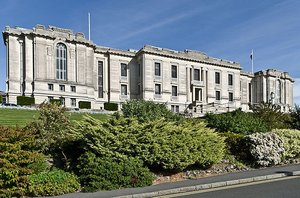
एयर क्रो का चित्र

13 सबसे प्रसिद्ध एयर क्रो पेंटिंग्स, जिनमें से प्रत्येक अद्वितीय है

नवमबर 2026 में अपडेट किया गया · हमारे लोकप्रियता स्कोर (प्रत्येक कृति के लिए खोज, विज़िट और ऑर्डर) के आधार पर रैंक किया गया · 16 कृतियाँ एयर क्रो की हमारे कैटलॉग में

संक्षेप में

Mrs Eugenie Maria Wynne, née Crowe (1827–1899) (1850) वह एयर क्रो की पेंटिंग है जो सबसे अधिक ध्यान आकर्षित करती है; इसका मूल Llyfrgell Genedlaethol Cymru / The National Library of Wales, एबरिस्टविथ में है। इसके बाद, दृष्टि Johnson (1709–1784), Doing Penance in the Market Place of Uttoxeter, Staffordshire (1869) और Nelson's Last Farewell to England (1888) पर जाती है। हमारे कैटलॉग में एयर क्रो की 16 कृतियों में से, ये 13 सबसे प्रसिद्ध हैं, जिनमें से प्रत्येक को उसके वर्ष, उसके संग्रहालय और उसके चिरस्थायी होने के कारण के साथ एक अद्वितीय मूल कृति के रूप में प्रस्तुत किया गया है।

1864 – 1925, लीपज़िग सर्वाधिक कृतियाँ: Llyfrgell Genedlaethol Cymru / The National Library of Wales

गैलरी की दृष्टि से एयर क्रो की शीर्ष 10 पेंटिंग्स

1
Mrs Eugenie Maria Wynne, née Crowe (1827–1899) (1850) द्वारा एयर क्रो

Mrs Eugenie Maria Wynne, née Crowe (1827–1899)

1850 · Oil On Canvas · Llyfrgell Genedlaethol Cymru / The National Library of Wales, एबरिस्टविथ

The woman sits anchored in a room of dark wood and heavy silence. She is positioned slightly off-center, a quiet weight against the backdrop of a richly carved cabinet. Light falls softly across her face, catching the pale cream of her clothing and the subtle texture of her shawl. It is a portrait of stillness. The air in the room feels thick, held in place by the deep browns and…

2
Johnson (1709–1784), Doing Penance in the Market Place of Uttoxeter, Staffordshire (1869) द्वारा एयर क्रो

Johnson (1709–1784), Doing Penance in the Market Place of Uttoxeter, Staffordshire

1869 · Oil On Canvas · dr Johnson's House, London

The air in the market square feels heavy with the dampness of a Staffordshire afternoon. Rain or the threat of it hangs in the atmosphere, casting a soft, diffused light over the bustling crowd. Amidst the commerce of fishmongers and merchants, a solitary figure stands apart from the rhythmic flow of trade. He is a man caught in a private moment of profound regret, performing a ritual of penance that…

3
Nelson's Last Farewell to England (1888) द्वारा एयर क्रो

Nelson's Last Farewell to England

1888 · Oil On Canvas

The air feels heavy with the scent of brine and the weight of an impending storm. On a choppy, restless sea, a cluster of vessels struggles against the swell, their hulls cutting through the grey, churning water. Figures move with a frantic, purposeful energy, their bodies leaning into the rhythm of the waves. There is a palpable sense of movement here; oars dip into the dark water, and flags snap…

एयर क्रो की प्रसिद्ध पेंटिंग्स, संख्या 11 से 13 तक

वे विषय जिन्होंने एयर क्रो का मन मोह लिया

इन मूल कृतियों में बार-बार आने वाले चार विषय, जिनमें से प्रत्येक का सबसे उत्कृष्ट उदाहरण यहाँ प्रस्तुत है।

वे संग्रहालय जहाँ एयर क्रो की मूल कृतियाँ रखी गई हैं

वे 7 संग्रहालय जिनमें इस पृष्ठ की सर्वाधिक पेंटिंग्स मौजूद हैं।

संग्रहालय शहर एयर क्रो की कृतियाँ इस सूची की पेंटिंग्स
Llyfrgell Genedlaethol Cymru / The National Library of Wales, एबरिस्टविथLlyfrgell Genedlaethol Cymru / The National Library of Wales एबरिस्टविथ 1 Mrs Eugenie Maria Wynne, née Crowe (1827–1899)
dr Johnson's House, Londondr Johnson's House London 1 Johnson (1709–1784), Doing Penance in the Market Place of Uttoxeter, Staffordshire
फिट्ज़विलियम कॉलेज, Cambridgeफिट्ज़विलियम कॉलेज Cambridge 1 Capo le case, Rome
सैलफोर्ड म्यूजियम - आर्ट गैलरी, ग्रेटर मैनचेस्टरसैलफोर्ड म्यूजियम - आर्ट गैलरी ग्रेटर मैनचेस्टर 1 Daniel Defoe in the Pillory
Christ's Hospital, HorshamChrist's Hospital Horsham 1 Christ's Hospital Children in London Quad
वॉकर आर्ट गैलरी, लिवरपूलवॉकर आर्ट गैलरी लिवरपूल 1 The Founder of English Astronomy
Fitzwilliam MuseumFitzwilliam Museum 1 Horses in a Field with Gypsies and a Caravan

दशकों तक एयर क्रो: प्रत्येक के लिए एक अद्वितीय मूल कृति

दशकवार कृतियाँ

उस दशक को चुनें जो उसकी पहचान है और उसकी मूल कृतियाँ देखें।

एयर क्रो की पेंटिंग्स: गैलरी के लिए प्रश्न

एयर क्रो की सबसे प्रसिद्ध कृति कौन सी है?उत्तर देखें

Mrs Eugenie Maria Wynne, née Crowe (1827–1899) (1850), Llyfrgell Genedlaethol Cymru / The National Library of Wales, एबरिस्टविथ. इसके बाद Johnson (1709–1784), Doing Penance in the Market Place of Uttoxeter, Staffordshire (1869) और Nelson's Last Farewell to England (1888) आते हैं।

एयर क्रो की कौन सी दस पेंटिंग्स सबसे प्रसिद्ध हैं?उत्तर देखें

Mrs Eugenie Maria Wynne, née Crowe (1827–1899), Johnson (1709–1784), Doing Penance in the Market Place of Uttoxeter, Staffordshire, Nelson's Last Farewell to England, Capo le case, Rome, Daniel Defoe in the Pillory, Darning Day, the Red Maids of Bristol, The Dinner Hour, Wigan, Christ's Hospital Children in London Quad, The Founder of English Astronomy और Military Honours। ऊपर दी गई रैंकिंग में प्रत्येक का वर्ष और संग्रहालय दिया गया है।

एयर क्रो की कितनी कृतियाँ ज्ञात हैं?उत्तर देखें

हमारे कैटलॉग में एयर क्रो की 16 कृतियाँ हैं, जो 1874 से 1894 तक की हैं।

सबसे प्रसिद्ध एयर क्रो मूल कृतियाँ कहाँ देखी जा सकती हैं?उत्तर देखें

अधिकतर Llyfrgell Genedlaethol Cymru / The National Library of Wales (एबरिस्टविथ), dr Johnson's House (London) और फिट्ज़विलियम कॉलेज (Cambridge) में। ऊपर दी गई संग्रहालय तालिका में उन सभी की सूची दी गई है।

एयर क्रो ने अपनी सबसे प्रसिद्ध पेंटिंग किस काल के दौरान बनाई थीं?उत्तर देखें

1870s में: इस पृष्ठ पर मौजूद 13 कृतियों में से 3 उस समय बनाई गई थीं, जिनमें से Darning Day, the Red Maids of Bristol इनमें से हैं।

एयर क्रो की कौन सी प्रसिद्ध पेंटिंग सबसे पुरानी है, और कौन सी सबसे नवीनतम?उत्तर देखें

इस पृष्ठ पर, सबसे पुरानी कृति The Dinner Hour, Wigan (1874) है और नवीनतम The Twa Brigs (1894) है।

एयर क्रो ने सबसे अधिक किन सामग्रियों से पेंटिंग की?उत्तर देखें

इस पृष्ठ पर मौजूद 13 कृतियों में से 3 के लिए Oil On Canvas।

एयर क्रो: कलाकार का एक चित्र

A Life Between Two Worlds


Eyre Crowe was a painter of profound dualities, a man whose very existence bridged the gap between the high-stakes corridors of international diplomacy and the soot-stained, unvarnished reality of the Victorian working class. Born in Leipzig, Germany, in 1864, his early years were steeped in an atmosphere of Germanic scholarship and cosmopolitan intrigue. As the son of Joseph Archer Crowe, a distinguished British Consul-General, young Eyre was exposed to the complexities of global affairs from a tender age. This unique upbringing instilled in him a dual passion: a keen interest in the delicate dance of diplomacy and a deep, abiding reverence for the power of art to document the human condition.

His artistic journey was one of continuous movement and cultural immersion. Crowe honed his technical prowess through rigorous training in the prestigious academies of Düsseldorf and Berlin, before venturing into France, where he encountered the burgeoning influence of the Impressionist movement. This exposure to the fleeting play of light and color provided a vital counterpoint to his academic foundations. It allowed him to infuse his later works with a certain luminosity, even when depicting the most somber of urban landscapes. His style became a sophisticated marriage of meticulous academic realism and a sensitive, modern understanding of atmosphere.

The Soul of Social Realism

While many of his contemporaries sought refuge in the grand, idealized narratives of mythology or the sweeping histories of empires, Crowe turned his gaze toward the heartbeat of London. He became a chronicler of the everyday, finding profound beauty and tragic dignity in the lives of those often overlooked by the Victorian elite. His work is characterized by a humanist concern for social realities, capturing the grit and grace of the industrial revolution's subjects.

His oeuvre serves as a poignant window into a changing world, featuring works that range from intimate portraits to expansive scenes of labor. Some of his most evocative contributions to the genre include:
  • The Dinner Hour, Wigan: A moving depiction of working-class life in Lancashire, capturing the quiet moments of respite amidst industrial toil.
  • Johnson (1869): A masterful exploration of Victorian market life, showcasing his ability to navigate complex social dynamics within a single frame.
  • Mrs Eugenie Maria Wynne: A striking example of his skill in academic realism, where opulent detail and rich hues meet the precision of portraiture.
Through these pieces, Crowe challenged the prevailing aesthetic of his time. He was not afraid of the "vulgar" or the raw; instead, he embraced a social realism that forced his audience to confront the lived experiences of the urban poor, making him a progressive voice in the late 19th-century art scene.

The Precision of a Diplomat's Eye

As his life progressed, Crowe’s career took an extraordinary turn as he ascended within the British Foreign Office. Serving as the Permanent Under-Secretary from 1920 until his death in 1925, he brought the same analytical rigor and precision required for high-level diplomacy to his artistic vision. There was a seamlessness to his dual identity; the meticulous observation needed to interpret international treaties found its parallel in the careful rendering of texture, light, and human psychology on canvas.

This period of his life was marked by an intense awareness of the shifting tides of European power. His political insights and his artistic observations were both driven by a profound understanding of change. Though he passed away in 1925, his legacy remains etched in the canvases that continue to tell the story of a transformative era. Eyre Crowe stands not merely as a painter of London life, but as an artist who possessed the rare ability to see the monumental significance within the most mundane moments of human existence.