The Sculptor of Classical Grace
Bartolomeo Ammanati (1511-1592) stands as a pivotal figure in the transition from the idealized Renaissance to the burgeoning Baroque aesthetic, cementing his legacy as one of Florence’s most celebrated sculptors. Born in Settignano, near Florence, he emerged from a family steeped in artistic tradition—his father was also a sculptor—and quickly established himself as a prodigious talent within the vibrant intellectual landscape of the Italian Renaissance. His early years were defined by a deep immersion in the classical ideals that governed the era, allowing him to bridge the gap between the serene stability of the 15th century and the dramatic movement of the late 16th century.
Ammanati’s formative years were spent honing his craft under the tutelage of Andrea del Verrocchio, arguably Florence's most influential artist of the era. Verrocchio’s workshop served as a crucible for innovation and realism, fostering Ammanati’s understanding of anatomical accuracy and masterful execution. This apprenticeship instilled in him a deep appreciation for classical ideals—particularly those championed by Michelangelo—which would profoundly shape his artistic vision. As he matured, his work began to reflect a sophisticated command over marble, moving beyond mere imitation to capture the very essence of life and motion.
The Triumph of Baroque Vision
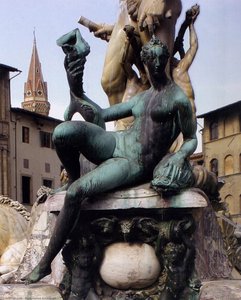
Perhaps Ammanati’s most enduring masterpiece is undoubtedly the Fountain of Neptune in Piazza Navona, Rome. Completed in 1587, it represents a dramatic departure from earlier Renaissance fountains—characterized by serene symmetry and restrained ornamentation—towards a more dynamic and theatrical Baroque style. The sculpture depicts Neptune astride his chariot, pulling up the sea monster Caryatid, symbolizing Roman imperial power and artistic ambition. Through this work, Ammanati skillfully employed marble to convey movement and grandeur, utilizing innovative techniques that foreshadowed the stylistic developments of later masters like Bernini.
The fountain serves as a testament to his ability to transform stone into fluid, living energy. In the heart of Rome, this monumental achievement stands not just as a feat of engineering, but as a poetic expression of the sea's untamed power. The way the light interacts with the carved surfaces and the integration of water elements demonstrate a visionary approach to public art that would influence urban design for centuries to come.
Legacy and Artistic Significance
Beyond his monumental fountains, Ammanati’s repertoire included an array of exquisite portrait busts and architectural embellishments that showcased his versatility. His ability to navigate the complexities of Florentine Mannerism allowed him to create works that were both intellectually rigorous and visually captivating. His contributions to the decorative landscapes of Italy, including significant work on courtyards and public spaces, helped define the aesthetic character of the late Renaissance.
The historical significance of Bartolomeo Ammanati lies in his role as a stylistic bridge. He carried the weight of classical tradition while simultaneously embracing the emotional intensity and theatricality that would define the Baroque period. His life's work remains a vital chapter in the story of Italian art, reminding us of a time when sculpture was used to command the very elements of nature and celebrate the enduring spirit of human creativity.
प्रश्न और उत्तर
क्या मैं Bartolomeo Ammanati की कलाकृतियों के वर्चुअल म्यूजियम का भ्रमण कर सकता हूँ?
एक वर्चुअल यात्रा संभव है: Bartolomeo Ammanati का 3D गैलरी पेज एक थ्री-डायमेंशनल गैलरी में कलाकार की कृतियों को प्रस्तुत करता है।
मैं Bartolomeo Ammanati की कलाकृतियों को उनके भाव (atmosphere) के अनुसार कहाँ देख सकता हूँ?
Bartolomeo Ammanati का मनोभाव संग्रह एक ऐसा पेज है जहाँ कलाकार की कलाकृतियों को उनके मूड के अनुसार व्यवस्थित किया गया है।
Bartolomeo Ammanati कहाँ के रहने वाले हैं?
Bartolomeo Ammanati का जन्म Italy में हुआ था।