आई वेईवेई का चित्र

10 सबसे प्रसिद्ध आई वेईवेई पेंटिंग्स, जिनमें से प्रत्येक अद्वितीय है

नवमबर 2026 में अपडेट किया गया · हमारे लोकप्रियता स्कोर (प्रत्येक कृति के लिए खोज, विज़िट और ऑर्डर) के आधार पर रैंक किया गया · 10 कृतियाँ आई वेईवेई की हमारे कैटलॉग में

संक्षेप में

He Xie (2011) वह आई वेईवेई की पेंटिंग है जो सबसे अधिक ध्यान आकर्षित करती है; इसका मूल ऑस्कर नीमेयर संग्रहालय, कुर्तिबा में है। इसके बाद, दृष्टि Works from Juazeiro do Norte (2018) और Sunflower Seeds (2010) पर जाती है। हमारे कैटलॉग में आई वेईवेई की 10 कृतियों में से, ये 10 सबसे प्रसिद्ध हैं, जिनमें से प्रत्येक को उसके वर्ष, उसके संग्रहालय और उसके चिरस्थायी होने के कारण के साथ एक अद्वितीय मूल कृति के रूप में प्रस्तुत किया गया है।

जन्म 1957, बीजिंग Contemporary art सर्वाधिक कृतियाँ: ऑस्कर नीमेयर संग्रहालय

गैलरी की दृष्टि से आई वेईवेई की शीर्ष 10 पेंटिंग्स

1
He Xie (2011) द्वारा आई वेईवेई

He Xie

2011 · Ceramics · ऑस्कर नीमेयर संग्रहालय, कुर्तिबा

One thousand individual crabs, hand-crafted from porcelain, form the body of this work. The medium carries deep historical weight; in various Chinese dynasties, artists utilized jade, bamboo, or onyx to sculpt similar crustaceans. Here, the choice of porcelain connects the delicate, fragile nature of the material to the political fragility of the artist's situation.

2
Works from Juazeiro do Norte (2018) द्वारा आई वेईवेई

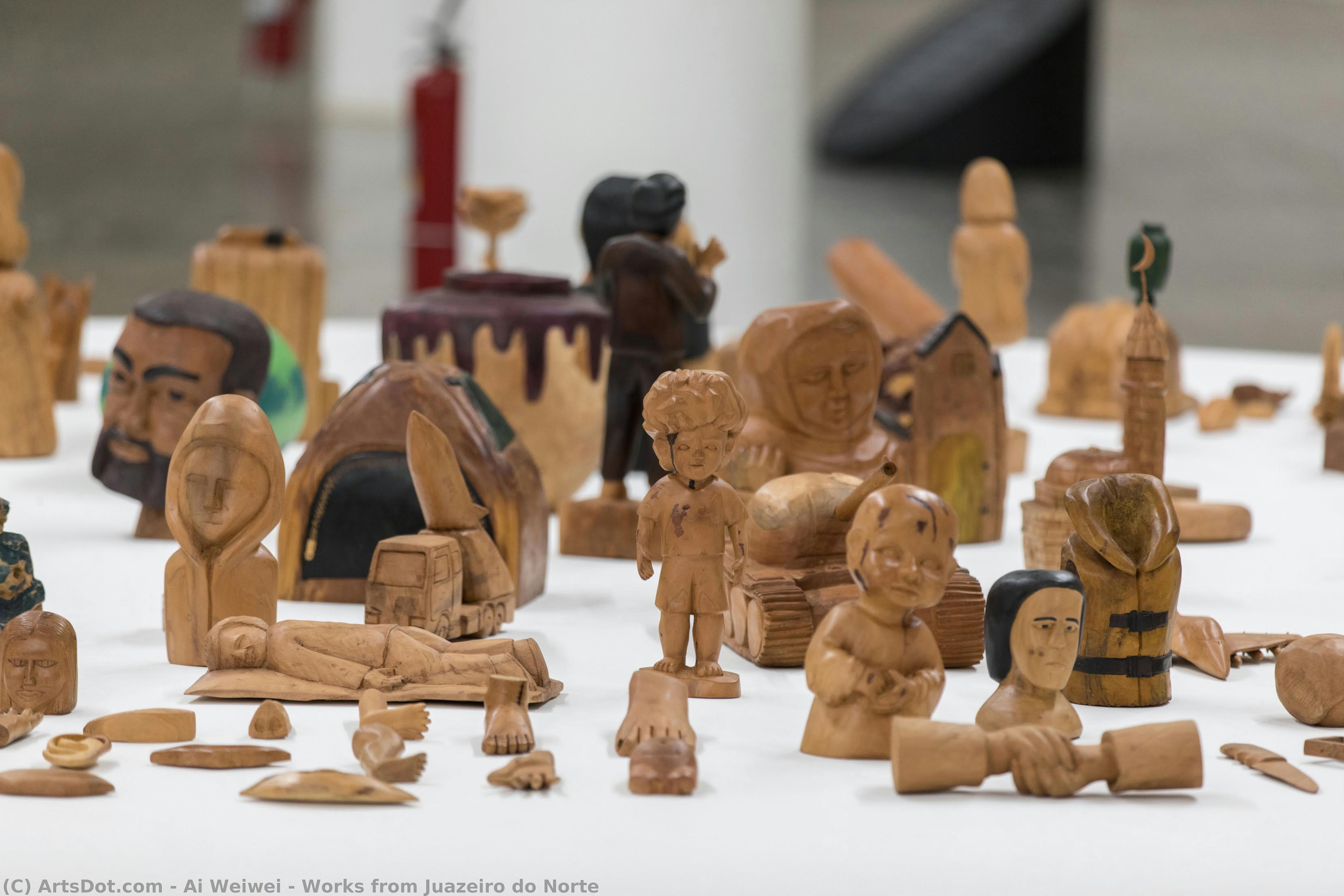
Works from Juazeiro do Norte

2018 · Carved · ऑस्कर नीमेयर संग्रहालय, कुर्तिबा

In the quiet, rhythmic dance of a chisel against grain, one finds the profound intersection of global activism and local devotion. Works from Juazeiro do Norte is not merely a collection of sculptures; it is a living tapestry of faith, memory, and social commentary. Created in 2018 through a soulful collaboration between the world-renowned contemporary artist Ai Weiwei and the skilled artisans of a community in Brazil, these wooden carvings…

3
Sunflower Seeds (2010) द्वारा आई वेईवेई

Sunflower Seeds

2010 · Installation Art · ऑस्कर नीमेयर संग्रहालय, कुर्तिबा

In Sunflower Seeds, Ai Weiwei presents an installation that commands the space through sheer scale and repetition. The work consists of one hundred million individually hand-crafted porcelain sunflower seeds, spread across a 1,000 square metre floor. When first encountered in the Turbine Hall, these seeds covered the ground to a depth of 10 cm. The sheer volume of the material is immense, with the total weight of the work reaching…

6
Study of Perspective - Berne (2003) द्वारा आई वेईवेई

Study of Perspective - Berne

2003 · Black and White Photography · MOMA - Museum of Modern Art, न्यूयॉर्क सिटी

In the quiet, monochromatic depths of Ai Weiwei’s Study of Perspective - Berne, we find ourselves transported to a streetscape that feels simultaneously intimate and vast. This evocative work, captured in 2003, serves as a profound meditation on the geometry of human existence within the modern cityscape. At first glance, the eye is drawn to the rhythmic interplay of light and shadow, where the starkness of black and white strips…

10
Camera with Plint (2015) द्वारा आई वेईवेई

Camera with Plint

Following Ai Weiwei’s 81 days under secret detention, he was released on bail with strict restrictions. His passport was confiscated, he was barred from leaving Beijing for a year, and he was told to avoid speaking to the media. In addition to those restrictions, Ai noticed more than twenty surveillance cameras were installed all around his studio house in Caochangdi, Beijing. Camera with Plinth monumentalizes in marble the surveillance camera,…

वे विषय जिन्होंने आई वेईवेई का मन मोह लिया

इन मूल कृतियों में बार-बार आने वाले चार विषय, जिनमें से प्रत्येक का सबसे उत्कृष्ट उदाहरण यहाँ प्रस्तुत है।

वे संग्रहालय जहाँ आई वेईवेई की मूल कृतियाँ रखी गई हैं

वे 3 संग्रहालय जिनमें इस पृष्ठ की सर्वाधिक पेंटिंग्स मौजूद हैं।

संग्रहालय शहर आई वेईवेई की कृतियाँ इस सूची की पेंटिंग्स
ऑस्कर नीमेयर संग्रहालय, कुर्तिबाऑस्कर नीमेयर संग्रहालय कुर्तिबा 4 He Xie, Works from Juazeiro do Norte, Sunflower Seeds
MOMA - Museum of Modern Art, न्यूयॉर्क सिटीMOMA - Museum of Modern Art न्यूयॉर्क सिटी 2 Study of Perspective - Berne, Study of Perspective - Hong Kong
UCCA सेंटर फॉर कंटेम्परेरी आर्ट, बीजिंगUCCA सेंटर फॉर कंटेम्परेरी आर्ट बीजिंग 1 Ai Weiwei, Swatter

दशकों तक आई वेईवेई: प्रत्येक के लिए एक अद्वितीय मूल कृति

दशकवार कृतियाँ

उस दशक को चुनें जो उसकी पहचान है और उसकी मूल कृतियाँ देखें।

आई वेईवेई की पेंटिंग्स: गैलरी के लिए प्रश्न

आई वेईवेई की सबसे प्रसिद्ध कृति कौन सी है?उत्तर देखें

He Xie (2011), ऑस्कर नीमेयर संग्रहालय, कुर्तिबा. इसके बाद Works from Juazeiro do Norte (2018) और Sunflower Seeds (2010) आते हैं।

आई वेईवेई ने He Xie किस उम्र में बनाया था?उत्तर देखें

54 वर्ष की आयु: He Xie 2011 का है, और आई वेईवेई का जन्म 1957 में हुआ था।

आई वेईवेई की कौन सी दस पेंटिंग्स सबसे प्रसिद्ध हैं?उत्तर देखें

He Xie, Works from Juazeiro do Norte, Sunflower Seeds, Dropping a Han Dynasty Urn, Stools, Study of Perspective - Berne, Study of Perspective - Hong Kong, Ai Weiwei, Swatter, Bang और Camera with Plint। ऊपर दी गई रैंकिंग में प्रत्येक का वर्ष और संग्रहालय दिया गया है।

आई वेईवेई की कितनी कृतियाँ ज्ञात हैं?उत्तर देखें

हमारे कैटलॉग में आई वेईवेई की 10 कृतियाँ हैं, जो 1995 से 2018 तक की हैं।

सबसे प्रसिद्ध आई वेईवेई मूल कृतियाँ कहाँ देखी जा सकती हैं?उत्तर देखें

अधिकतर ऑस्कर नीमेयर संग्रहालय (कुर्तिबा), MOMA - Museum of Modern Art (न्यूयॉर्क सिटी) और UCCA सेंटर फॉर कंटेम्परेरी आर्ट (बीजिंग) में। ऊपर दी गई संग्रहालय तालिका में उन सभी की सूची दी गई है।

आई वेईवेई ने अपनी सबसे प्रसिद्ध पेंटिंग किस काल के दौरान बनाई थीं?उत्तर देखें

2010s में: इस पृष्ठ पर मौजूद 10 कृतियों में से 6 उस समय बनाई गई थीं, जिनमें से He Xie इनमें से हैं।

आई वेईवेई की कौन सी प्रसिद्ध पेंटिंग सबसे पुरानी है, और कौन सी सबसे नवीनतम?उत्तर देखें

इस पृष्ठ पर, सबसे पुरानी कृति Dropping a Han Dynasty Urn (1995) है और नवीनतम Works from Juazeiro do Norte (2018) है।

आई वेईवेई की कलाकृति किस आंदोलन (movement) से संबंधित है?उत्तर देखें

इस पृष्ठ पर मूल कृतियों को देखते हुए, Contemporary art।

मैं ऑस्कर नीमेयर संग्रहालय में आई वेईवेई की कौन सी मूल कृतियाँ देख सकता हूँ?उत्तर देखें

He Xie, Works from Juazeiro do Norte और Sunflower Seeds: ऑस्कर नीमेयर संग्रहालय, कुर्तिबा में इस पृष्ठ पर मौजूद कृतियों में से 4 मौजूद हैं।

आई वेईवेई: कलाकार का एक चित्र

A Voice for Contemporary China

Ai Weiwei, born in Beijing in 1957, stands as one of the most recognizable and controversial figures in contemporary Chinese art. His upbringing amidst the stark realities of rural northwest China—marked by his father’s exile under Mao Zedong’s regime—shaped his worldview and fueled a lifelong commitment to artistic expression as a vehicle for social critique. From an early age, Weiwei demonstrated an innate fascination with sculpture and design, honing his skills through formal education at Tsinghua University before embarking on a career that would propel him into the global spotlight. His life has been a continuous dialogue between the personal and the political, where the boundaries of art and activism are perpetually blurred.

Weiwei’s initial artistic endeavors focused on minimalist sculptural forms—often utilizing industrial materials like steel and concrete—reflecting a deliberate rejection of traditional Chinese aesthetics. This stylistic choice was not merely aesthetic; it symbolized his desire to challenge established conventions and forge his own path within the evolving landscape of Chinese art. Influenced by the conceptual rigor of artists such as Donald Judd and Sol LeWitt, he embraced principles that prioritized ideas over visual ornamentation. His early works explored themes of fragmentation and repetition, mirroring deep-seated anxieties about societal uniformity and governmental control—a preoccupation that would become the heartbeat of his entire artistic practice.

The Intersection of Art and Activism

The trajectory of Weiwei’s career shifted dramatically in the late 1990s as he began engaging in activism against corruption within China's education system. This transformation was catalyzed by the devastating "Tofu Dreg Schools" scandal, where a massive earthquake exposed systemic negligence and bribery in school construction. Galvanized by this tragedy, Weiwei utilized his artistic platform to expose injustices and amplify marginalized voices, turning his studio into a site of investigation and protest. His work transitioned from purely formal explorations into profound social investigations, often involving the collection of data, names, and evidence to hold power to account.

This period marked the rise of his monumental installations that command global attention. One of his most iconic achievements, Sunflower Seeds (2010), featured millions of handcrafted porcelain seeds spread across the floor of the Tate Modern. This work served as a powerful metaphor for the relationship between the individual and the masses, reflecting on themes of mass production, Chinese craftsmanship, and the weight of history. Through such large-scale installations, he forces the viewer to confront the sheer scale of human existence and the fragility of the individual within a vast, often indifferent, political machine.

Legacy and Global Significance

Beyond his physical sculptures, Ai Weiwei has mastered the use of photography and digital media to document contemporary struggles. His ability to weave together the personal narrative with global crises—such as the refugee crisis or the erosion of freedom of speech—has cemented his status as a global icon of resistance. His work does not merely exist in galleries; it exists in the streets, on social media, and in the very conscience of the international community.

The historical significance of Ai Weiwei lies in his refusal to remain silent. His career serves as a testament to the power of the artist as a witness. Through his diverse body of work, we see:

  • A profound exploration of materiality and its connection to cultural heritage.
  • The use of conceptual art to challenge political censorship and corruption.
  • A relentless pursuit of transparency in an era of information control.
  • The transformation of social protest into a high-art aesthetic experience.
Ultimately, Ai Weiwei remains a vital force, ensuring that the complexities of modern history are never forgotten and that the dialogue between art and truth continues to spark global change.