


1

White Pine
The artwork titled White Pine is an oil on canvas painting by the artist A. J. Casson. This specific work measures 76 x 101.3 cm. The creation of this piece is dated to about 1957.

नवमबर 2026 में अपडेट किया गया · हमारे लोकप्रियता स्कोर (प्रत्येक कृति के लिए खोज, विज़िट और ऑर्डर) के आधार पर रैंक किया गया · 14 कृतियाँ अल्फ्रेड जोसेफ कैसन की हमारे कैटलॉग में
संक्षेप में
अल्फ्रेड जोसेफ कैसन द्वारा छोड़ी गई सभी मूल कृतियों में से, सबसे प्रसिद्ध White Pine (1957) है, जो वॉन के McMichael Canadian Art Collection के संग्रह में है। इसके ठीक बाद Church and Graveyard (1933) और Shore Pattern (1960) का स्थान आता है। हमारे कैटलॉग में अल्फ्रेड जोसेफ कैसन की 14 कृतियाँ हैं; गैलरी ने उन 10 कृतियों को सहेज कर रखा है जिन्हें दुनिया सबसे अधिक पसंद करती है, जिनमें से प्रत्येक को उनकी तिथि, उनके संग्रहालय और उनकी कहानी के साथ प्रदर्शित किया गया है।
The artwork titled White Pine is an oil on canvas painting by the artist A. J. Casson. This specific work measures 76 x 101.3 cm. The creation of this piece is dated to about 1957.

is a painting by A. J. Casson. The work was created about 1933. It captures a specific moment of stillness within the Canadian landscape, focusing on the quiet intersection of a steeple and the earth.

In the quietude of Shore Pattern, we are invited into a sanctuary of light and stillness, where the boundary between the forest and the water dissolves into a rhythmic dance of nature. Painted in 1960 by the esteemed Canadian master Alfred Joseph Casson, this work serves as a profound meditation on the tranquility of the landscape. The composition draws the eye through a lush, verdant corridor of tall trees that…
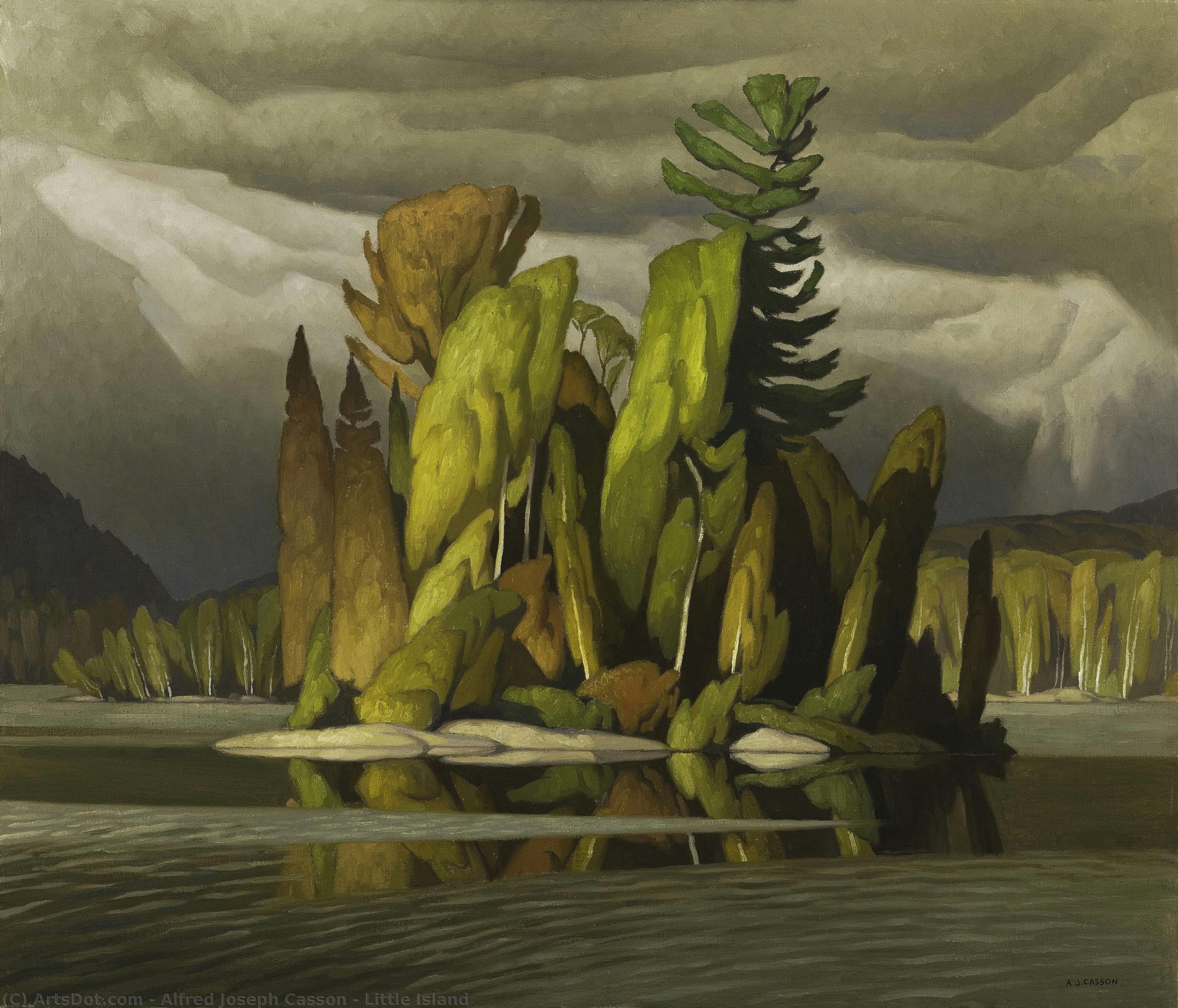
In the quietude of Little Island, created in 1965 by the esteemed Canadian master Alfred Joseph Casson, we find ourselves transported to a moment of profound stillness. The painting serves as a window into a secluded world, where a solitary patch of earth rests peacefully amidst the gentle ripples of a lake or river. This is not merely a depiction of geography, but an invitation to pause and breathe alongside…


Mill at Cobaconk - Adaptation: A Window Into Casson's Vision of Ontario Alfred Joseph Casson’s “Mill at Cobaconk – Adaptation” (1924) stands as a quintessential example of Group of Seven painterliness and Canadian landscape art, capturing the serene beauty of Southern Ontario with an impressionistic eye. Painted during Casson’s formative years as a professional artist—a period deeply influenced by his apprenticeship at Hamilton Lithography Company—the canvas embodies a meticulous understanding…
इन मूल कृतियों में बार-बार आने वाले चार विषय, जिनमें से प्रत्येक का सबसे उत्कृष्ट उदाहरण यहाँ प्रस्तुत है।
वे 2 संग्रहालय जिनमें इस पृष्ठ की सर्वाधिक पेंटिंग्स मौजूद हैं।
| संग्रहालय | शहर | अल्फ्रेड जोसेफ कैसन की कृतियाँ | इस सूची की पेंटिंग्स |
|---|---|---|---|
 McMichael Canadian Art Collection |
वॉन | 8 | White Pine, Church and Graveyard, Shore Pattern |
 The Robert McLaughlin Gallery |
ओशावा | 1 | Old House - Parry Sound |
उस दशक को चुनें जो उसकी पहचान है और उसकी मूल कृतियाँ देखें।
Mill at Cobaconk - Adaptation: A Window Into Casson's Vision of Ontario Alfred Joseph Casson’s “Mill at Cobaconk – Adaptation” (1924) stands as a quintessential example of Group of Seven painterliness and Canadian landscape art, capturing the serene beauty of Southern Ontario with an impressionistic eye. Painted during Casson’s formative years as a professional artist—a period deeply influenced by his apprenticeship at Hamilton Lithography Company—the canvas embodies a meticulous understanding…
is a painting by A. J. Casson. The work was created about 1933. It captures a specific moment of stillness within the Canadian landscape, focusing on the quiet intersection of a steeple and the earth.
The artwork titled White Pine is an oil on canvas painting by the artist A. J. Casson. This specific work measures 76 x 101.3 cm. The creation of this piece is dated to about 1957.
In the quietude of Shore Pattern, we are invited into a sanctuary of light and stillness, where the boundary between the forest and the water dissolves into a rhythmic dance of nature. Painted in 1960 by the esteemed Canadian master Alfred Joseph Casson, this work serves as a profound meditation on the tranquility of the landscape. The composition draws the eye through a lush, verdant corridor of tall trees that…
White Pine (1957), McMichael Canadian Art Collection, वॉन. इसके बाद Church and Graveyard (1933) और Shore Pattern (1960) आते हैं।
59 वर्ष की आयु: White Pine 1957 का है, और अल्फ्रेड जोसेफ कैसन का जन्म 1898 में हुआ था।
White Pine, Church and Graveyard, Shore Pattern, Little Island, Old House - Parry Sound, In The Village of Markham, Tom Thomson, Below Ragged Falls, Oxtongue River, Hillside near Nashville, Ontario और Mill at Cobaconk - Adaptation। ऊपर दी गई रैंकिंग में प्रत्येक का वर्ष और संग्रहालय दिया गया है।
हमारे कैटलॉग में अल्फ्रेड जोसेफ कैसन की 14 कृतियाँ हैं, जो 1924 से 1965 तक की हैं।
अधिकतर McMichael Canadian Art Collection (वॉन) और The Robert McLaughlin Gallery (ओशावा) में। ऊपर दी गई संग्रहालय तालिका में उन सभी की सूची दी गई है।
1930s में: इस पृष्ठ पर मौजूद 10 कृतियों में से 3 उस समय बनाई गई थीं, जिनमें से Church and Graveyard इनमें से हैं।
इस पृष्ठ पर, सबसे पुरानी कृति Mill at Cobaconk - Adaptation (1924) है और नवीनतम Little Island (1965) है।
इस पृष्ठ पर 10 कृतियों में Landscape (5), Trees (4) और Water (3)
इस पृष्ठ पर मौजूद 10 कृतियों में से 6 के लिए Oil।
इस पृष्ठ पर मूल कृतियों को देखते हुए, Canadian realism।
White Pine, Church and Graveyard और Shore Pattern: McMichael Canadian Art Collection, वॉन में इस पृष्ठ पर मौजूद कृतियों में से 8 मौजूद हैं।


