Capturing Light: A Definitive Guide to the Impressionist Movement and Its Timeless Masterpieces
Explore the luminous world of Impressionism with our expert guide. Discover the revolutionary techniques of Claude Monet, the essence of en plein air painting, and how to bring these timeless masterpieces into your home through museum-quality handmade oil reproductions.
Impressionism was a 19th-century art movement characterised by visible brush strokes, open composition, emphasis on accurate depiction of light in its changing qualities (often accentuating the effects of the passage of time), ordinary subject matter...
To understand the seismic shift brought about by Impressionism, one must first envision the rigid, somber corridors of the 19th-century French Academy. For decades, the art world was governed by strict hierarchies and a preference for historical, mythological, and religious subjects rendered with invisible brushstrokes and muted, studio-bound palettes. The Salon, the ultimate arbiter of taste, demanded perfection through meticulous detail and idealized forms. However, a group of rebellious visionaries, led by figures such as Claude Monet, began to chaul the foundations of this establishment. They sought not to replicate reality with photographic precision, but to capture the impression—the immediate, sensory experience of a single moment in time.
This movement was born from a profound dissatisfaction with the stifling constraints of academic painting. These artists turned their gaze away from grand historical narratives and toward the beauty of the everyday: a sun-drenched landscape, a bustling Parisian street, or the simple elegance of a garden in bloom. By organizing independent exhibitions, they bypassed the conservative gatekeepers of the Salon, effectively launching an artistic revolution that would pave the way for modernism. This era was not merely about a change in subject matter; it was a fundamental reimagining of what art could achieve, moving from the depiction of permanent truths to the celebration of the transient and the ephemeral.
The Science of Sight: Mastering Light, Color, and En Plein Air
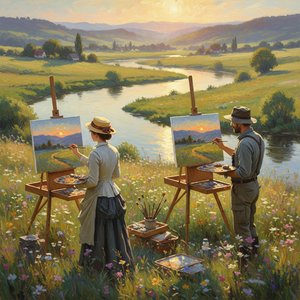
The Genesis of 'En Plein Air': From Studio Tradition to Landscape Portraiture Wikipedia: En plein air En plein air (pronounced [ɑ̃ plɛ.n‿ɛʁ]; French for 'outdoors'), or plein-air painting, is the act of painting outdoors. This method contrasts with s...
At the heart of the Impressionist revolution lay a scientific fascination with the behavior of light. The movement’s practitioners understood that color is never static; it is a living entity, constantly transformed by the angle of the sun, the moisture in the air, and the passing of shadows. To capture this, they embraced the technique of en plein air—painting outdoors, directly from nature. This practice allowed artists to witness the subtle shifts in atmosphere firsthand, moving away from the controlled, artificial lighting of the studio to embrace the unpredictable brilliance of the natural world.
This method required a radical new vocabulary of brushwork. Instead of smooth, blended transitions, Impressionists utilized broken color and visible, energetic strokes. By placing dabs of pure, unmixed pigment side-by-side on the canvas, they allowed the viewer's eye to perform the optical mixing, creating a sense of vibration and luminosity that traditional methods could never achieve. This approach captured the very essence of movement—the way light dances upon water or how shadows appear to pulse with deep blues and violets rather than mere blacks. It was an attempt to paint not just the object itself, but the very air that surrounds it, making the atmosphere a tangible protagonist in every composition.
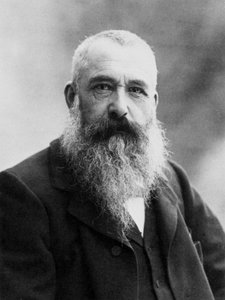
A Life Immersed in Light: The World of Claude Monet Oscar-Claude Monet, a name synonymous with Impressionism, wasn't merely a painter of landscapes; he was a chronicler of fleeting moments, a poet of light and color. Born in Paris on November 14, 184...
No name is more inextricably linked to this luminous era than Oscar-Claude Monet. A true poet of light and color, Monet did not merely observe nature; he chronicled its most fleeting breaths. His journey, which began with charcoal caricatures in Le Havre and evolved into a lifelong obsession with the ephemeral, reflects the very trajectory of Impressionism itself. Influenced by the landscape master Eugène Boudin, Monet adopted the plein air philosophy that would become his hallmark, transforming the canvas into a window through which we glimpse the soul of the natural world.
Monet’s genius was perhaps most evident in his groundbreaking series paintings. By returning to the same subject—be it the Rouen Cathedral, haystacks, or the iconic water lilies of Giverny—at different hours of the day and under varying weather conditions, he demonstrated that a single subject could possess infinite identities. In works like Chrysanthemums, one can observe his mastery of texture and tone, where the delicate petals are rendered with a vitality that suggests the movement of a gentle breeze. His later works, particularly the immersive water lily series, push the boundaries of form so far that they border on abstraction, inviting the viewer to lose themselves in a dreamlike haze of reflection and light. To possess a reproduction of such a work is to bring a piece of this eternal, shifting beauty into one's own sanctuary.
Beyond the Moment: The Evolution into Post-Impressionism
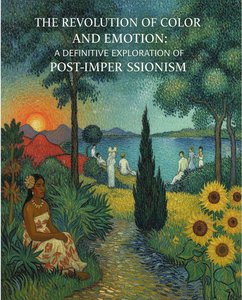
Post-Impressionism (also spelled Postimpressionism) was a predominantly French art movement which developed roughly between 1886 and 1905, from the last Impressionist exhibition to the birth of Fauvism. Post-Impressionism emerged as a reaction agains...
As the initial fervor of Impressionism began to settle, a new generation of artists emerged to build upon its foundations while simultaneously challenging its perceived limitations. This period, known as Post-Impressionism, sought to move beyond the purely naturalistic depiction of light and color. While they retained the vibrant palettes and expressive brushwork of their predecessors, artists like Paul Cézanne, Vincent van Gogh, and Georges Seurat introduced a greater emphasis on structure, symbolism, and emotional depth.
Where the Impressionists focused on the fleeting sensation, the Post-Impressionists sought something more permanent and profound. Cézanne, often regarded as the father of this movement, worked to restore a sense of order and geometric solidity to the canvas, treating nature through the lens of the cylinder, the sphere, and the cone. Meanwhile, Seurat pioneered Neo-Impressionism through Pointillism, a highly disciplined method of applying tiny dots of color to create a luminous, structured composition. This evolution represents a fascinating tension in art history: a movement that began with the pursuit of the momentary eventually blossomed into an exploration of the symbolic and the structural, forever altering the trajectory of Western art.
Preserving the Impression: Bringing Masterpieces into the Modern Home
Introduction Imagine stepping into a world bathed in dappled sunlight, where water lilies shimmer and fields of poppies dance in the breeze. Claude Monet’s art isn't merely about depicting scenes; it’s about capturing an *impression* – a fleeting mom...
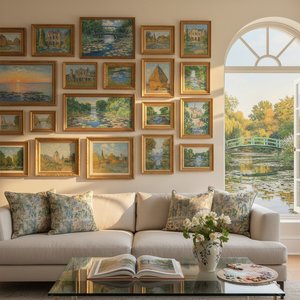
The enduring allure of Impressionist art lies in its ability to evoke tranquility, nostalgia, and a profound connection to the natural world. In our fast-paced, digital age, the soft textures and luminous atmospheres of these 19th-century masterpieces serve as a vital reminder to slow down and observe the beauty in the transient. Integrating such works into a contemporary interior is more than a decorative choice; it is an invitation to experience the world through a lens of wonder and light.
At OriginalUniqueArt.com, we believe that the majesty of these historical moments should be accessible to all art enthusiasts. We specialize in creating museum-quality, handmade oil reproductions that honor the academic excellence of the original masters. Our artists, holders of prestigious Fine Arts degrees, meticulously recreate the visible brushstrokes and deep tonal ranges that define the Impressionist style, ensuring that every piece is a unique work of art rather than a mere print. Whether you seek a large-scale multi-panel landscape to anchor a room or a custom "remixed" portrait in the style of Monet, our process—from digital mockup to hand-painted perfection on 100% cotton canvas—is designed to bring the soul of the museum into your home. Through our dedication to craftsmanship and global delivery, we allow you to preserve the light of history for generations to come.
Explore the luminous soul of Impressionism. From the revolution of en plein air to the mastery of light, discover how our hand-painted oil reproductions capture the ephemeral beauty of Monet and Renoir for your home. Expertly crafted, museum-quality art for the true connoisseur.
Explore the captivating world of Impressionism! Discover the techniques, artists (Monet, Renoir, Degas), and enduring legacy of this revolutionary art movement. Expert insights for collectors & enthusiasts.
Immerse yourself in the luminous world of Claude Monet. Explore 25 iconic Impressionist masterpieces, from Water Lilies to Sunrise, and find inspiration for your decor with museum-quality reproductions. Discover all masterpieces on OriginalUniqueArt.com.
Explore the profound revolution of Post-Impressionism. Delve into the history, techniques, and emotional depth of masters like Van Gogh and Seurat. Discover how to transform your space with museum-quality, hand-painted oil reproductions of these iconic masterpieces.
Explore the ethereal beauty of Impressionism through an expert guide on light, color, and technique. Discover how masters like Monet captured fleeting moments and learn to appreciate the profound legacy of this revolutionary art movement.

 Impressionism
 Capturing Ephemeral Light: Plein Air Painting from Impressionism to Today
 Claude Monet
 Post-Impressionism
 Monet's Masterpieces: 25 Iconic Artworks to Transform Your Home