Arrival at the Highland Boundary: A Landscape Defined Scottish Highlands The Highlands (Scottish Gaelic: a' Ghàidhealtachd [ə ˈɣɛːəl̪ˠt̪ʰəxk], lit. 'the place of the Gaels'; Scots: the Hielands) is a historical region of Scotland, comprising the Nort...
To approach the Scottish Highlands is to cross a threshold where geography dictates a different rhythm of life. This region, known in Gaelic as A' Ghàidhe.healtachd, is far more than a collection of mountain ranges; it is a territory carved by the Great Glen and defined by the rugged peaks of the Grampians. Historically, the boundary between the Highlands and the Lowlands was not merely a line on a map but a profound cultural divide. While the Lowlands developed into fertile, industrialised hubs like Glasgow and Edinburgh, the Highlands remained a landscape of deep glens and ancient forests.
In the eighteenth century, these dramatic mountain wildernesses began to emerge as a central element of Scottish national identity. The terrain, characterized by its immense scale—from Ben Nevis to the sprawling reaches of the Northwest Highlands—provided the essential raw material for an era of art that sought to move beyond simple topography. The landscape was never just scenery; it was a protagonist in its own right, possessing a character that could shift from serene to menacing within the span of a single afternoon.
The Architecture of Awe: Paul Doré and the Sublime Sky
A Dramatic Vision of the Scottish Highlands This magnificent oil painting, “Scottish Highlands,” transports the viewer directly into the heart of a landscape forged by both raw power and serene beauty. Executed in 1875 by the renowned artist Paul Gus...
When we look closer at the works of the nineteenth century, specifically through the lens of Romanticism, we see a fascination with the concept of the sublime. This was an era that found beauty in the overwhelming and even the terrifying aspects of nature. Paul Gustave Doré, an artist celebrated for his meticulous wood engravings, brought this intensity to the canvas in his 1875 work, Scottish Highlands. In this large-scale oil painting, the sky is not a mere backdrop but a brooding presence that dominates the composition.
Doré employs a strong diagonal perspective, drawing the eye deep into the landscape and emphasizing the scale of nature's grandeur. His technique is characterized by strong contrasts of light and shadow, creating a sense of depth and atmosphere that draws the viewer into the scene. The inclusion of small figures within this vastness suggests a narrative element—perhaps travelers experiencing the wonder of the Highlands—adding to the painting's emotional weight. It is an exploration of humanity's relationship with the forces beyond our control.
Luminous Depths: Capturing the Atmospheric Pulse of Lochs and Mist
Early Life and Artistic Beginnings Samuel Bough, born in Carlisle, England in 1822, was destined to become one of the most celebrated landscape painters of his generation. His early life unfolded against the backdrop of a rapidly industrializing Brit...
The true essence of the Highlands often resides in the ephemeral—the way light filters through mist or dances across a water surface. Artists like Samuel Bough, born in Carlisle but moved by the untamed beauty of Scotland, were masters of this atmospheric pulse. Bough was not merely recording what he saw; he was striving to convey the feeling of a place. He became particularly adept at rendering water, whether it was the crashing waves of the coastline or the still reflections of inland lochs.
This sensitivity to light and atmosphere allowed for a depiction of the Highlands that felt alive. The mastery of light and shadow in such works captures the ethereal quality of Highland light—the way it clings to a lonely glen or creates a golden glow on a heather-covered hillside. This approach prioritizes emotional resonance over precise topographical detail, seeking to evoke the feeling of being within a landscape rather than simply observing it from a distance.
A Visionary Scotland: Horatio McCulloch and the Romantic Ideal
A Scottish Visionary: The Life and Art of Horatio McCulloch Horatio McCulloch, born in Glasgow in 1805, stands as Scotland’s most celebrated landscape painter—a figure who eloquently captured the nation's wild beauty during a period of profound chang...
Horatio McCulloch stands as perhaps Scotland’s most celebrated landscape painter, a figure who eloquently captured the nation's wild beauty during a period of profound change. His paintings were renowned for their depictions of the Scottish Highlands—not simply as geographical locations, but as spaces imbued with grandeur, poetic truthfulness, and an almost spiritual quality. Influenced by literary figures like Sir Walter Scott, McCulloch moved beyond mere representation to create a romantic vision of Scotland.
His canvases often feature expansive skies, rugged mountains, and shimmering lochs, all rendered with a meticulous attention to light and shadow that creates an immersive experience. These works epitomize the nineteenth-century view of Scotland as a dramatic wilderness, where rocky cliffs, stormy waters, and crumbling castles contribute to a sense of historical depth. Through his brush, the Highlands became a space of legend and myth, a landscape shaped by both memory and imagination.
The Evolution of Sight: From Grandeur to the Naturalism of the Glasgow Boys
Introduction To gaze upon a landscape is to witness the silent dialogue between the earth and the sky, a conversation captured through centuries of human perception. Landscapes are far more than mere topographical records; they are windows into the s...
As the nineteenth century progressed, the grandiose views of castles and glens began to feel outmoded to a new generation of artists. The dawn of the photographic era and the rise of naturalism brought a shift in focus toward more humble subjects, such as villages, crofts, and the truthful observation of nature. This movement saw the emergence of the 'Glasgow Boys', including James Guthrie and William York Macgregor, who moved away from studio painting to work directly outdoors.
This evolution continued through the 'Scottish Colourists', who adopted the brilliant colouring of French post-Impressionists like Derain, applying a new, vibrant energy to their native country. The tradition of landscape painting in Scotland remained strong, moving from the structured, topographical records of the eighteenth century toward the more subjective, sensory experiences of the twentieth century. From the abstract possibilities explored by Joan Eardley to the hard-edged naturalism of James Cowie, the Scottish landscape remains a continuous, evolving dialogue between the earth and the artist's eye.
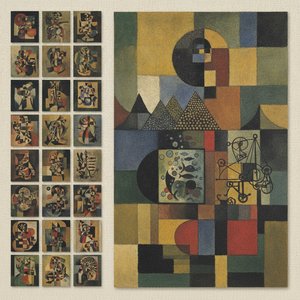
Immerse yourself in the vibrant world of Paul Klee. Explore 25 iconic masterpieces of abstraction, from rhythmic lines to bold colors. Find inspiration for your decor with museum-quality art reproductions. Discover all masterpieces on OriginalUniqueArt.com.
Journey through the vibrant world of Paul Klee. Explore 25 iconic masterpieces of abstraction and color, from Bauhaus classics to surrealist gems. Find inspiration for your collection with museum-quality art reproductions at OriginalUniqueArt.com. Discover all masterpieces online.
Embark on a visual journey through Paul Klee's most iconic works. From rhythmic lines to vibrant abstraction, explore the stories behind 25 timeless masterpieces. Find museum-quality art reproductions and decor inspiration. Discover all masterpieces on OriginalUniqueArt.com.
Step into the dramatic world of Gustave Doré. Explore 25 iconic masterpieces of light and shadow, from epic Bible illustrations to gothic legends. Find museum-quality art reproductions and timeless decor inspiration. Discover all masterpieces on OriginalUniqueArt.com.

 Wild Beauty and Romantic Drama: The Grandeur of Scottish Highland Landscape Art
 Scottish Highlands
 Samuel Bough
 Horatio McCulloch
 Beyond the Horizon: 10 Masterpieces That Redefine Landscape Art