


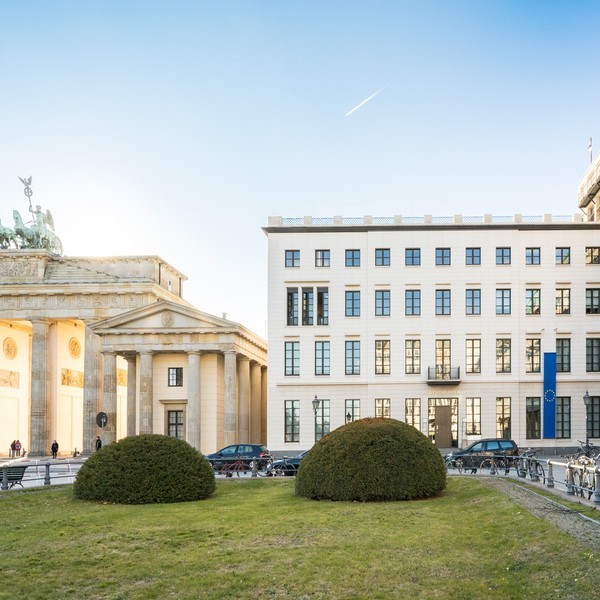
Un Phare de l'Art Allemand et du Souvenir
Niché au cœur battant de Berlin, adjacent à l'emblématique Porte de Brandebourg, la Stiftung Brandenburger Tor s'érige comme un témoignage profond de l'esprit artistique indomptable de l'Allemagne et de sa capacité de renaissance. Bien plus qu'un simple conservatoire d'artéfacts, cette institution sert de pont vital entre les ombres pesantes de l'histoire et la lumière vibrante du dialogue culturel contemporain. La fondation opère au sein des murs sacrés de la Max Liebermann Haus , une structure qui est elle-même un chef-d'œuvre du modernisme. Conçue par le légendaire Erich Mendelsohn en 1928, cette résidence d'inspiration Bauhaus offre une expérience architecturale définie par son atrium majestueux et ses fenêtres expansives, qui invitent la lumière changeante de Berlin à danser sur ses surfaces, reflétant ainsi la mission du musée : éclairer l'évolution de l'identité allemande.
Chef-d'œuvre d'Émotion et d'Identité
L'âme de la collection réside dans sa curation méticuleuse de chefs-d'œuvre allemands, embrassant les époques transformatrices allant du Romantisme jusqu'à l'intensité brute de l'Expressionnisme. Les visiteurs sont invités à errer à travers un récit d'émotion nationale, à la rencontre d'œuvres créées par des luminaires qui ont redéfini les frontières de la perception. On ne peut parcourir l'institution sans être ému par la puissance expressive d' Ernst Ludwig Kirchner . Sa peinture monumentale, Brandenburg Gate in Berlin , capture le monument historique de la ville avec un sentiment de grandeur solennelle, utilisant des coups de pinceau audacieux et rythmiques ainsi qu'une palette feutrée pour transmettre le poids psychologique du passé d'une nation.
En contraste avec la tension urbaine présente dans l'œuvre de Kirchner, la collection offre la précision délicate de Max Liebermann , dont les séries de portraits dévoilent avec maestria l'intimité de ses sujets, révélant la vulnérabilité humaine à travers des jeux subtils d'ombre et de lumière. Ces œuvres, aux côtés des pièces provocatrices d' Otto Dix et de Georg Baselitz , créent un dialogue qui est à la fois profondément personnel et largement historique. Pour le collectionneur ou le décorateur d'intérieur, l'institution représente un sommet d'inspiration esthétique, offrant un regard profond sur la manière dont le mouvement, la couleur et la forme peuvent encapsuler le zeitgeist d'une époque.
Un Dialogue Vivant avec le Présent
Ce qui distingue véritablement la Stiftung Brandenburger Tor , c'est son refus de rester statique dans les confins du passé. Tout en honorant les maîtres du patrimoine allemand, la fondation se nourrit de l'énergie du présent à travers des expositions temporaires qui abordent des thèmes sociaux et politiques pressants. Ces expositions curatées servent de creusets intellectuels, stimulant une réflexion critique sur les enjeux contemporains et favorisant un espace où l'art rencontre l'activisme. Grâce à ses partenariats internationaux et à ses initiatives éducatives robustes, la fondation continue de cultiver une appréciation mondiale pour le pouvoir transformateur de l'art, garantissant que l'héritage de la créativité allemande demeure une force vivante et vibrante dans le monde moderne.


