Menu
CONSEIL EN ART GRATUIT

Pinacothèque Communale

Informations clés

  • Featured artists: Domenico Ghirlandaio
  • Location: Volterra, Italie
  • Alternate names:
    • Pinacothèque et Musée Civique de Volterra
    • Pinacothèque Communale
    • Galerie de peinture et Musée Civique de Volterra
    • Pinacothèque et Musée Civique
    • Pinacoteca Comunale
  • Works on APS: 1

Quiz d'art

Chaque question ne comporte qu'une seule réponse correcte.

Question 1:
Quel est le domaine artistique majeur auquel la Pinacothèque Communale de Volterra est particulièrement dédiée ?
Question 2:
Quel peintre italien célèbre est représenté dans la Pinacothèque Communale grâce à son œuvre emblématique « La Déposition » ?
Question 3:
Dans quelle période historique les œuvres principales de la Pinacothèque Communale sont-elles principalement issues ?
Question 4:
Quel élément architectural remarquable abrite le musée et contribue à l’expérience du visiteur ?
Question 5:
La Pinacothèque Communale possède une collection importante d'artefacts étrusques, ce qui permet aux visiteurs de découvrir...

Pinacoteca Comunale : Un Voyage à Travers l’Art et l’Histoire de Volterra

The Pinacoteca Comunale (Civic Museum) of Volterra invites you on a journey through Tuscan art and history, nestled within the magnificent Palazzo Minucci-Solaini—a building that itself narrates centuries of evolution. More than just a repository of artworks, it's an immersive experience designed to captivate visitors who appreciate beauty, craftsmanship, and the enduring legacy of artistic patronage. Its intimate atmosphere encourages contemplation and fosters a deeper understanding of Volterra’s cultural identity—making it a destination unlike any other in Tuscany.

Renaissance Masterpieces: Echoes of Florentine Innovation

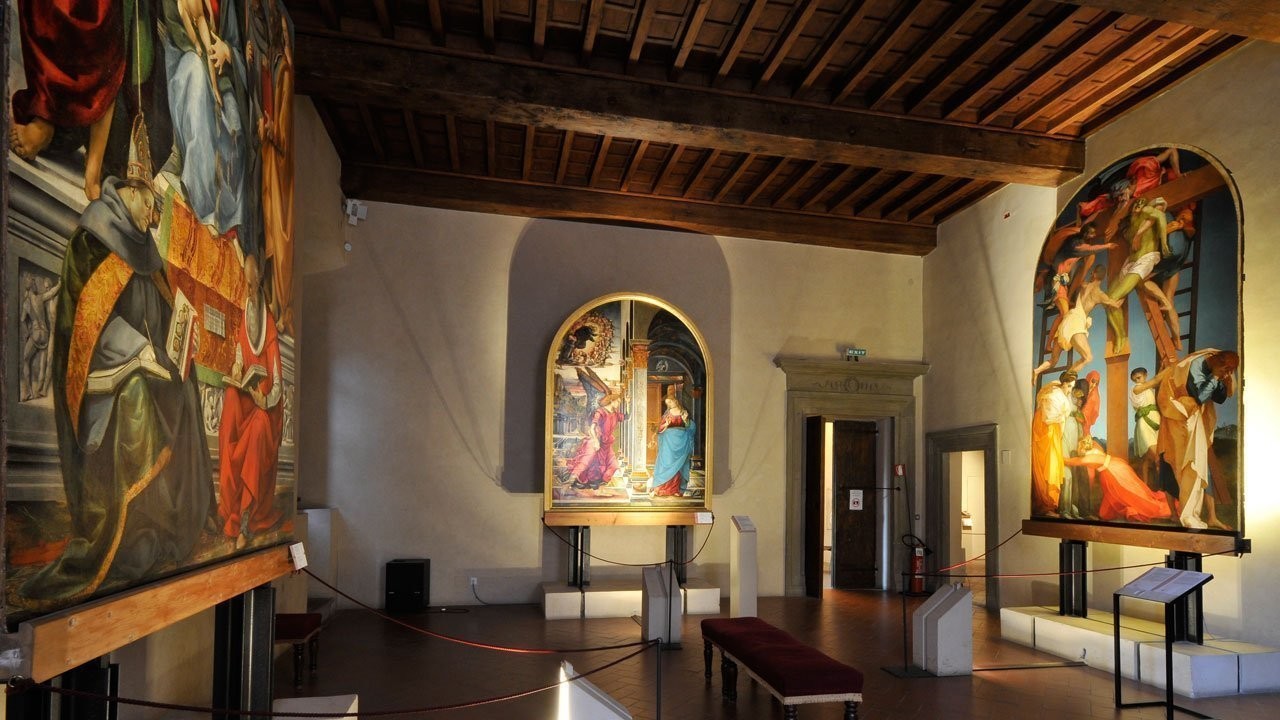
The Pinacoteca's core collection revolves around masterpieces from the Renaissance, reflecting Florence’s ascendancy as Europe’s artistic epicenter during this transformative period. Among its treasures stands Rosso Fiorentino’s “La Déposition,” a monumental painting that embodies Mannerist drama and emotional intensity. The artist skillfully manipulated perspective and color—creating a scene brimming with palpable sorrow—capturing the poignant gaze of Mary Magdalene and the solemn posture of Nicodemus. This evocative depiction exemplifies Florentine artistic excellence, demonstrating Rosso Fiorentino’s mastery of sculptural form and spatial illusion. Adjacent to it are Ghirlandaio's frescoes adorning Palazzo Minucci Solaini—bursting with vibrant hues and intricate detail—a testament to the humanist spirit that fueled Florentine creativity. Luca Signorelli’s “Madonna e Bambino con Santi” exemplifies his unparalleled skill in sculpting form and conveying spiritual devotion—transporting viewers into a serene sanctuary of faith. The influence of Michelangelo Buonarroti is palpable, particularly evident in the dynamic movement of figures—a stylistic hallmark of the era.

Medieval Art: Reflections of Faith and Tradition

Delving deeper into Volterra’s artistic past reveals treasures from the Medieval period—primarily ecclesiastical art that testifies to the profound religious convictions of its inhabitants. Fragments of frescoes unearthed during excavations illuminate the stylistic conventions of medieval painting—characterized by stylized figures and symbolic narratives rooted in Christian iconography. The meticulous craftsmanship evident in illuminated manuscripts and alabaster sculptures speaks to a reverence for sacred traditions—preserving fragments of Volterra’s spiritual heritage. These artworks serve as tangible reminders of Volterra's connection to its religious roots—a testament to the enduring power of faith throughout history.

Civic Museum Collection: Beyond Painting – Treasures of Etruscan Heritage

The Pinacoteca’s collection extends far beyond Renaissance paintings—embracing a diverse array of artifacts that illuminate Volterra’s multifaceted past. Sculptures crafted from alabaster and terracotta showcase the artistic prowess of Etruscan artisans—demonstrating their mastery of form and material manipulation. Ancient coins unearthed during excavations offer insights into Volterra’s economic history—reflecting its role as a vital trading center within the Mediterranean world. Ceramics adorned with intricate designs reveal stylistic influences from Greek and Roman cultures—underscoring Volterra's engagement with broader artistic currents. These treasures collectively contribute to a holistic understanding of Volterra’s cultural identity—enriching visitors’ appreciation for its artistic heritage.

Palazzo Minucci Solaini: An Architectural Testimony

The Pinacoteca Comunale occupies Palazzo Minucci-Solaini—a building that embodies Volterra's architectural history—dating back to the late 1400s and attributed to Antonio da S. Gallo il Vecchio. Its soaring ceilings and ornate decorations evoke a sense of timeless grandeur—enhancing appreciation for the artworks housed within. The palazzo’s façade reflects influences from Renaissance architecture—harmoniously blending classical elements with decorative motifs—creating an elegant backdrop for Volterra's artistic treasures. Ongoing research aims to uncover more details about the palazzo’s construction—illuminating its role as a symbol of civic pride and artistic patronage throughout centuries past.