Menu
CONSEIL EN ART GRATUIT

Palazzo Gondi

Informations clés

  • Works on APS: 1
  • Featured artists: Giuliano da Sangallo
  • Alternate names: Palazzo Gondi
  • Location: Florence, Italie

Quiz d'art

Chaque question ne comporte qu'une seule réponse correcte.

Question 1:
Quel élément architectural distingue Palazzo Gondi des autres palais florentins ?
Question 2:
Qui a conçu Palazzo Gondi ?
Question 3:
Pourquoi Palazzo Gondi est-il célèbre ?
Question 4:
Où Palazzo Gondi est-il situé ?
Question 5:
Quel personnage historique a vécu dans une maison détruite pour agrandir la rue Via dei Gondi ?

A Renaissance Jewel Preserved in Stone: Palazzo Gondi

Palazzo Gondi stands as a testament to Florence’s golden age, embodying the ideals of humanist architecture and artistic patronage that defined the fifteenth century. Located just steps from Piazza San Firenze—a vibrant hub of Florentine life—this palace isn't merely a building; it’s a window into the ambitions and achievements of one of Italy’s most influential families. Commissioned by Giovanni Gondi, a wealthy banker and merchant, construction began in 1490 under the watchful eye of Giuliano da Sangallo, arguably Florence’s foremost architect at the time—a protégé of Leonardo da Vinci himself.

Architectural Grandeur: The Vision of Sangallo

Giuliano da Sangallo's design prioritized harmony and proportion, reflecting the prevailing Renaissance aesthetic. The palazzo’s façade is dominated by a robust rusticated stone wall, providing an immediate impression of strength and stability—a deliberate choice intended to convey prestige and authority. Beyond its imposing exterior lies a courtyard adorned with a magnificent fountain, meticulously crafted to create a tranquil oasis amidst the bustling city. Innovative window designs contribute significantly to the palace’s elegance, maximizing natural light while maintaining structural integrity – techniques that foreshadowed advancements in architectural engineering during this period. The palazzo's cube-shape set around a central courtyard, the ashlar sloping on each of three floors, and the arched windows—elements borrowed from earlier monumental buildings like Palazzo Medici and Palazzo Strozzi—were carefully considered to elevate the palazzo’s status as a symbol of Florentine civic pride.

Treasures Within: Frescoes and Artistic Legacy

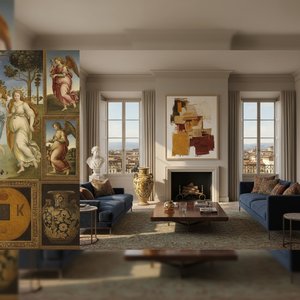
Entering Palazzo Gondi unveils a captivating panorama of artistic treasures. The interior walls are adorned with breathtaking frescoes—a remarkable feat of pigment preparation and execution—that depict scenes from classical mythology and heraldic emblems representing the Gondi family’s lineage. These artworks offer invaluable insight into Florentine artistic sensibilities during Sangallo's time, showcasing masterful draftsmanship and vibrant color palettes. Furthermore, a collection of paintings spanning various styles – including Mannerism – showcases the breadth of artistic talent active in Florence at the turn of the century. Notably, a Roman statue—likely originating from Hadrian’s Villa—adds to the palazzo’s historical richness, reminding visitors of Rome's enduring influence on Florentine culture and art. Recent exhibitions have explored themes of patronage and artistic innovation—demonstrating that Palazzo Gondi continues to inspire scholars and artists alike.

A Reflection of Florentine Society

Palazzo Gondi served as more than just a residence; it functioned as a symbol of Gondi family power and prestige within the complex political landscape of Renaissance Florence. Its construction coincided with a period of significant economic expansion driven by mercantile activity—a fact reflected in the palazzo’s opulent decoration and its role as a focal point for social gatherings. The palace's understated elegance distinguishes it from some of Florence’s grander palaces, prioritizing refined beauty over ostentation—a stylistic choice that speaks to the Gondi family’s discerning taste and their commitment to upholding humanist ideals.

Exploring Palazzo Gondi Today

Today, Palazzo Gondi welcomes visitors eager to immerse themselves in Florentine history and art. Guided tours illuminate the palazzo's architectural marvels and artistic treasures, providing context for understanding its significance within the broader Renaissance narrative. Its location—adjacent to Piazza San Firenze—offers unparalleled access to Florence’s cultural heart, allowing visitors to experience the palazzo alongside other iconic landmarks. Palazzo Gondi stands as a testament to Florentine artistry and ambition—a legacy that continues to resonate through centuries of history!