Simon Vouet (1590-1649) : Peintre baroque français majeur, il introduit les tendances artistiques italiennes en France et influence des générations d'artistes par ses portraits & compositions grandioses.
Musée Réattu : Un sanctuaire de couleur et de mémoire
Niché au cœur de l'historique Grand Prieuré de Malte, le Musée Réattu s'érige comme un témoignage du patrimoine artistique d'Arles et une célébration singulière de l'impressionnisme. Fondé par Jacques Réattu lui-même — un peintre qui sut capturer l'âme vibrante de la Provence — le musée n'est pas qu'un simple conservatoire d'œuvres d'art ; c'est une expérience immersive qui transporte les visiteurs à la Belle Époque et bien au-delà. Ses murs murmurent des récits de dévotion monastique, d'expérimentations artistiques et de l'influence durable de visionnaires tels que Vincent van Gogh.
Jacques Réattu : Le cœur battant de la Provence
Pablo Picasso : Un dialogue entre les générations
La vision pionnière de la photographie
Au-delà de l'impressionnisme : exploration de l'art contemporain
L'âme architecturale du Prieuré
Jacques Réattu : Le cœur battant de la Provence
Jacques Réattu, né à Arles en 1760, demeure la pierre angulaire du musée. Plus de huit cents peintures et dessins — principalement des paysages imprégnés de touches impressionnistes — témoignent de sa fascination de toute une vie pour la lumière et les couleurs de la région. Ces œuvres ne sont pas de simples représentations de la Provence ; elles incarnent un lien profond avec son sol, sa flore et son atmosphère. L'évolution artistique de Réattu est tracée méticuleusement dans les galeries du musée, révélant un artiste qui s'est confronté à l'innovation formelle tout en conservant un respect profond pour la tradition. La scène d'atelier de son oncle Antoine Raspal — aperçu poignant de la vie familiale de Réattu — offre un portrait particulièrement intime de son esprit créatif.
Pablo Picasso : Un dialogue entre les générations
Le Musée Réattu abrite une collection extraordinaire de cinquante-sept dessins offerts par Pablo Picasso lui-même, représentant une période charnière des années de formation de l'artiste. Ces esquisses illustrent les premières explorations de la forme et de la perspective chez Picasso — précurseurs de son style cubiste révolutionnaire. L'examen de ces dessins aux côtés des paysages de Réattu éclaire les approches contrastées de l'expression artistique à travers le temps, invitant à la contemplation sur la manière dont les influences façonnent la vision créative. Les conservateurs du musée ont su contextualiser avec brio l'œuvre de Picasso au sein du paysage artistique plus large de la fin du XIXe siècle.
La vision pionnière de la photographie
Reconnaissant l'importance naissante de la photographie en tant que forme d'art des décennies avant sa reconnaissance généralisée, le Musée Réattu a établi un département dédié — une prouesse remarquable pour son époque. Plus de quatre mille images photographiques — allant des portraits iconiques de Richard Avedon aux expérimentations surréalistes de Man Ray — démontrent l'engagement du musée à repousser les frontières artistiques. Ces photographies ne sont pas de simples reproductions de la réalité ; elles sont des interprétations imprégnées d'une sensibilité esthétique, reflétant les angoisses et les aspirations d'un monde en mutation. L'histoire des expositions du Musée Réattu souligne son rôle de catalyseur du dialogue artistique.
Au-delà de l'impressionnisme : exploration de l'art contemporain
Bien que fermement ancré dans l'esthétique impressionniste, le Musée Réattu s'engage activement avec les tendances artistiques contemporaines. Des sculptures de César, Richier, Bourdelle et Zadkine — des artistes qui ont défié les formes sculpturales conventionnelles — sont juxtaposées à des peintures de l'ère moderne, invitant les visiteurs à réfléchir à l'évolution de l'art à travers les générations. Des expositions récentes ont mis en lumière des installations et des performances innovantes, démontrant la volonté du musée d'embrasser de nouveaux médiums et de nouvelles perspectives.
L'âme architecturale du Prieuré
L'emplacement du musée au sein du Grand Prieuré de Malte — un édifice remontant au XVe siècle — contribue grandement à son atmosphère unique. Conçu à l'origine comme siège monastique, il a connu de nombreuses transformations au fil de l'histoire, servant d'entrepôt de tabac et d'école de dessin avant que Réattu ne l'acquière à la fin du XIXe siècle. Inauguré officiellement en 1868, la rénovation du prieuré entre 1956 et 1964, supervisée par Jean-Michel Wilmotte, ainsi que les réaménagements ultérieurs, ont renforcé sa grandeur. Classé monument historique depuis 1958, ses arches élancées et ses vitraux offrent une toile de fond inspirante pour les œuvres d'art qu'il abrite — un rappel tangible du riche héritage culturel d'Arles. Notons que Van Gogh lui-même l'aurait décrit avec humour comme « affreux et une plaisanterie », offrant une anecdote délicieusement incongrue qui souligne la fascination durable exercée par ce musée.
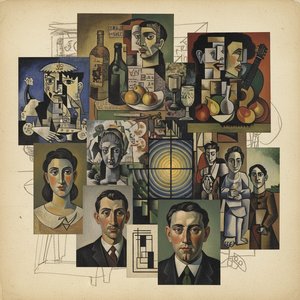
Plongez au cœur du cubisme avec les 10 œuvres révolutionnaires de Picasso, Braque et Gris. Découvrez l'histoire, les techniques et l'impact de ce mouvement artistique majeur. Reproductions d'art de qualité musée sur OriginalUniqueArt.com !
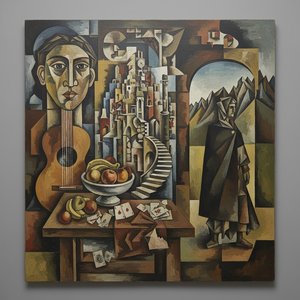
Plongez au cœur du cubisme avec OriginalUniqueArt ! Découvrez 10 chefs-d'œuvre révolutionnaires de Picasso, Braque et autres artistes majeurs. Explorez l'histoire, les techniques et les couleurs vibrantes de ce mouvement artistique unique. Retrouvez ces œuvres en reproduction sur OriginalUniqueArt.com.
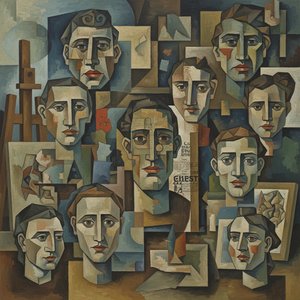
Plongez au cœur du cubisme avec les 10 portraits emblématiques de Picasso, Braque et Gris. Découvrez l'histoire, la technique & l'impact de ces chefs-d'œuvre. Reproductions d'art de qualité musée sur OriginalUniqueArt.com !
OAssistant du studioEn ligne · répond en une minute
Bonjour ! Je peux vous aider à choisir une œuvre d'art, à suivre une commande ou à répondre à vos questions sur la garantie. Comment puis-je vous aider ?